Which rules control a Norman food plant's sewer discharge?
Food and beverage plants near Norman meet sewer pretreatment requirements through a permit-driven treatment train: characterize the wastewater, equalize production and clean-in-place flows, remove suspended solids and FOG, reduce dissolved organics biologically, and add polishing only where the permit requires it. Federal rules under 40 CFR Part 403 provide the framework, while the current permit from the receiving publicly owned treatment works (POTW) controls the enforceable point-of-connect local limits. Equipment sizing must use measured flow, peak-to-average ratio, BOD, FOG and pH—not generic design assumptions.
Three documents must be separated when establishing the compliance basis. First, 40 CFR Part 403 establishes the EPA National Pretreatment Program for industrial users discharging to a POTW. Second, the applicable food-industry category supplies categorical requirements: Part 405 for dairy, Part 406 for grain mills, Part 407 for canned and preserved fruits and vegetables, Part 408 for canned and preserved seafood, and Part 409 for meat products (HydropureWater, current source accessed in 2026). Third, the receiving POTW’s current permit and local limits determine enforceable site-specific conditions.
EPA defines local limits as site-specific numeric or narrative discharge limits, including best management practices, imposed at the end of an industrial user’s pipe discharging to the POTW collection system. They address the POTW’s treatment, sludge processes and receiving waters; they are not a general national limit (EPA, Pretreatment Standards and Requirements—Local Limits, current page accessed in 2026). HydropureWater’s regulatory summary likewise states that categorical limits are the federal floor and local permit conditions are the enforceable ceiling (HydropureWater, current source accessed in 2026).
The controlling document is therefore the permit issued by the authority receiving the discharge—not a federal category alone and not a treatment-vendor brochure. Confirm whether the point of connection is to the Norman city system or another POTW; the supplied research does not establish that receiving authority. A Norman-named academic result concerning western yellow pine is unrelated to wastewater regulation and provides no substantive support.
| Control layer | What it establishes | Project decision |
|---|---|---|
| 40 CFR Part 403 | National Pretreatment Program framework and general prohibitions | Determine how the POTW administers and enforces industrial-user requirements |
| 40 CFR Parts 405–409 | Food-processing categorical requirements, as applicable | Identify the category and applicable production-process provisions |
| POTW permit and local limits | Site-specific numeric or narrative requirements at the point of connection | Use these conditions to set treatment guarantees, monitoring and reporting |
For broader background on food and beverage pretreatment limits near Oklahoma City, use the permit and accepted drawings—not the article—as the project’s controlling references.
How to build a Norman-area pretreatment approval package
A defensible application begins by identifying the receiving POTW and obtaining its current industrial-user permit, local limits, sewer-use manual, forms, monitoring rules and fee schedule. This is the first approval gate because the research provides no site-specific Norman permit limits or receiving-authority contact details; those documents must be secured rather than inferred.
- Establish the regulatory basis. Identify the POTW, confirm the point of connection, determine the applicable food-processing category, and reconcile categorical requirements with current local limits.
- Map the drainage system. Identify every production, washdown, product-changeover and clean-in-place drain, its destination, and its proposed treatment step. Show any sanitary discharge that will not pass through the proposed pretreatment system.
- Measure the wastewater. Obtain source-separated characterization during representative production, peak production, product changeover, CIP discharge, equipment cleaning and off-production periods. Record flow, peak-to-average ratio, BOD, COD, TSS, FOG, total phosphorus, pH and temperature.
- Calculate loads. Present both concentration and mass-loading performance at the permitted discharge point. Use measured production data rather than food-sector benchmarks alone.
- Submit one review-ready basis. Include the wastewater flow diagram, unit sizing calculations, redundancy, control philosophy, sampling locations, equipment guarantees, commissioning plan and monitoring schedule.
Keep the permit, POTW guidance and current regulations controlling. The supplied technical sources provide general design context, not a substitute for a site-specific permit review. Where a change in ownership, product mix or production volume occurs, ask the control authority whether the application must be amended; the project-acquisition review discussed in wastewater requirements for acquired plants illustrates why operating changes and permit status need to be reconciled.
Characterize the wastewater before selecting equipment

The design basis must preserve both average concentration and the operating peaks that can overtax equalization, DAF and biological treatment. HydropureWater identifies six governing parameters for food and beverage pretreatment: BOD/COD, TSS, FOG, total phosphorus, pH and temperature (HydropureWater, current source accessed in 2026). These parameters should be measured at the stream or combined-wastewater level that the treatment equipment will actually receive.
Raw wastewater strength can be substantial. HydropureWater reports dairy and meat processing at 1,000–10,000 mg/L BOD, while fryer, rendering and stickwater streams can contain several thousand mg/L FOG. It also reports total phosphorus of 10–100 mg/L as P in cereal, dairy and meat wastewater, compared with a 1 mg/L ceiling commonly applied at POTW headworks (HydropureWater, current source accessed in 2026). These values are context for sampling priorities, not substitute permit limits or guaranteed plant influents.
Hixson reports that food-processing effluent can be 10–100 times stronger than domestic wastewater in BOD and COD terms. Production schedules, cleaning cycles and seasonal peaks change volume, organic load, pH and temperature (Hixson, current source accessed in 2026). Source-separated samples are therefore preferable for dairy, meat, brewing, beverage and intensive CIP operations. Composite samples may be necessary for permit reporting, but they can conceal a short, high-strength batch if used as the only design sample.
| Design input | Evidence-based context | Buyer must obtain |
|---|---|---|
| BOD and COD | Dairy and meat raw BOD reported at 1,000–10,000 mg/L; food-processing effluent can be 10–100 times domestic strength | Source-separated and production-period measurements for the actual plant |
| TSS and FOG | FOG can reach several thousand mg/L in fryer, rendering and stickwater streams | Peak batch concentrations, settleability and emulsification behavior |
| Total phosphorus | 10–100 mg/L as P reported in cereal, dairy and meat wastewater | Measured phosphorus and alkalinity needed for precipitation design |
| pH and temperature | CIP and cooking operations can cause excursions; HydropureWater reports temperatures above 40 °C as routine in some operations | Continuous or time-series records during CIP, production and shutdown |
Capture normal production, peak production, changeover, CIP release, equipment cleaning and off-production periods. Then reconcile those results with the forward flow and industrial DAF system for food processing wastewater duty point, or size PLC-controlled chemical dosing system capacity around actual chemical demand.
Choose a treatment train that matches the permit
The treatment train should assign each flow and pollutant problem to a defined unit, with the permit determining the required performance. Screening protects pumps and downstream equipment from product pieces, packaging debris and fibrous material. Equalization buffers production surges and concentrated CIP releases, reducing the risk of hydraulic overload and shock loading to biological treatment (Hixson, current source accessed in 2026).
DAF normally follows equalization where FOG, oil, soluble fats or recoverable suspended solids are material. HydropureWater identifies DAF as relevant to food processing and reports pretreatment performance of 25–50 mg/L oil and grease and 50–100 mg/L TSS (HydropureWater, current source accessed in 2026). Its industrial DAF system for food processing wastewater should be evaluated for removable oil, solids capture, skimming and sludge handling—not only nominal flow.
Activated sludge or an MBR follows when dissolved BOD and COD remain. HydropureWater gives hydraulic retention time of 8–24 hours for conventional activated sludge and 4–10 hours for MBR (HydropureWater, current source accessed in 2026). Where the MBR integrated wastewater treatment system is proposed, compare its solids separation, footprint, aeration demand, membrane maintenance and effluent guarantee against the permit.
Chemical precipitation is justified where total phosphorus still requires removal. HydropureWater reports biological phosphorus uptake of 5–15 mg/L and chemical doses of 50–250 mg/L of alum or 30–150 mg/L of ferric chloride (HydropureWater, current source accessed in 2026). A PLC-controlled chemical dosing system should be paired with jar or field testing because phosphorus form and mixed-liquor alkalinity affect performance.
Add final polishing only where the permit, reuse objective or remaining constituent requires it. Hixson cites a beverage-plant MBR pilot producing effluent COD of 16.9 mg/L, TSS of 3.8 mg/L and COD removal of 92.6% (Hixson, current source accessed in 2026). Those pilot results do not establish a Norman permit limit; they show the performance level for which an MBR may be justified.
| Decision condition | Assigned stage | Verification |
|---|---|---|
| Debris or fibrous material reaches pumps | Screening | Screen opening selection and captured-solids handling |
| Production or CIP creates hydraulic and strength swings | Equalization | Peak inventory and controlled release rate |
| FOG or recoverable solids exceed biological-feed targets | DAF | Oil-and-grease and TSS performance under peak feed |
| Dissolved BOD or COD remains | Activated sludge or MBR | Load, HRT, aeration and solids-separation calculation |
| Total phosphorus remains above the permit condition | Biological uptake plus chemical precipitation | Phosphorus, alkalinity and sludge-solids balance |
Show stream segregation, equalization, DAF, biological treatment, chemical addition, polishing and the permitted sampling point on one wastewater flow diagram.
Size the system from loads, peaks and permit mass limits
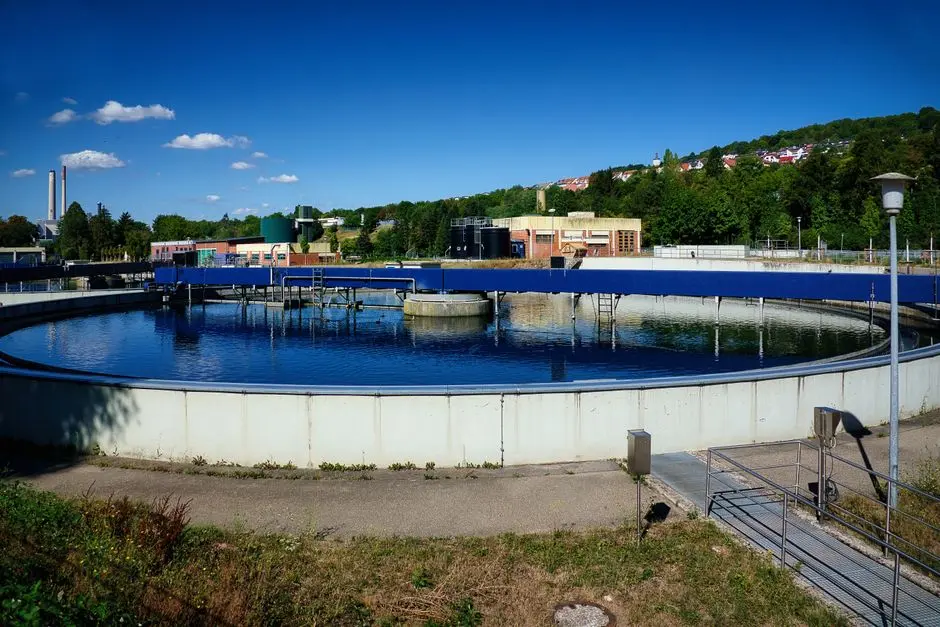
Equipment sizing must respond to peak hydraulic load and peak pollutant mass together. HydropureWater identifies four governing inputs: forward flow, peak-to-average ratio, raw BOD and raw FOG (HydropureWater, current source accessed in 2026). Averaging a concentrated batch with a larger dilute flow can conceal both a hydraulic exceedance and an organic shock load.
For DAF, HydropureWater cites a 4–25 m/h surface-loading rate, an air-to-solids ratio of 0.005–0.02 and a 20–40% recycle rate as food-and-beverage design references (HydropureWater, current source accessed in 2026). These are preliminary references, not substitutes for vendor calculations using measured FOG, TSS, flow characteristics and coagulant trials. The proposed duty point must identify the assumed forward flow, recycle flow and internal solids loading.
Biological sizing requires the measured organic load and selected reactor configuration. HydropureWater cites 3,000–5,000 mg/L MLSS for conventional activated sludge and 8,000–12,000 mg/L for MBR, with a 1.5–2.5 mg/L dissolved-oxygen setpoint where nitrification is required (HydropureWater, current source accessed in 2026). Confirm whether nitrogen removal is actually required by the POTW permit before including nitrification, oxygen demand and associated equipment.
| Check | Input or reference | Required proposal detail |
|---|---|---|
| Hydraulic basis | Forward flow and peak-to-average ratio | Average, peak and equalization release rates |
| Organic basis | Raw BOD and raw FOG | Peak concentration, daily mass and applied safety factor |
| DAF duty | Surface loading, air-to-solids ratio and recycle reference | Calculated cell duty, recycle flow and sludge capture |
| Biological duty | HRT, MLSS and DO references | F/M basis, aeration demand, sludge age and redundancy |
| Permit compliance | Current concentration and mass limits | Worst-case demonstration and surcharge treatment |
Check mass limits as well as concentration limits, including any surcharge provisions in the current POTW permit. Require the final proposal to state the measured influent basis, design peak, selected safety factor, duty point, utility demand and performance guarantee. A high-efficiency sedimentation tank may serve as a solids-polish option, but only after the permit and upstream process establish a need.
Build monitoring and reporting into the system
Monitoring must be designed around the permit’s required sample points, methods, frequencies and reporting deadlines. HydropureWater reports that most food and beverage categorical permits require 24-hour composite sampling for BOD, TSS, FOG and total phosphorus at monthly-to-quarterly frequencies, with continuous pH and flow monitoring for significant industrial users (HydropureWater, current source accessed in 2026). That is a planning reference; the Norman-area POTW permit must control.
Confirm the composite protocol, analytical methods, preservation, chain of custody, reporting deadlines and any electronic-submission requirement directly with the control authority. Configure SCADA alarms for flow, pH, temperature and equipment status. A PLC-controlled chemical dosing system can trim dose to actual load; HydropureWater reports 10–20% lower chemical consumption than manual feeding (HydropureWater, current source accessed in 2026). Confirm that benefit in a site-specific operating comparison.
Define operator responses before commissioning:
- High flow: divert eligible flows to equalization, identify the responsible production or CIP event, and record the operating envelope affected.
- pH excursion: isolate the drain, verify the trim system and preserve evidence of corrective action.
- FOG breakthrough: inspect DAF recycle, coagulant feed, surface condition and hydraulic loading.
- Solids carryover: verify flocculation, chemical feed, sludge withdrawal and downstream clarification or membrane performance.
- Biological upset: examine load, temperature, pH, nutrients, toxicity indicators and equalization performance.
Give operators authority to divert a CIP batch to equalization when capacity and process compatibility allow. Maintain calibration records, laboratory coordination, event logs, chain-of-custody procedures and corrective-action records. Sludge dewatering should be covered in the operating plan as well; HydropureWater identifies a plate-and-frame filter press for combined DAF skummings and waste activated sludge (HydropureWater, current source accessed in 2026).
Evaluate pretreatment suppliers without buying the wrong system

The lowest purchase price is not necessarily the lowest compliance cost. A comparable bid should trace from measured plant data to duty point, treatment performance, controls, sludge handling and lifecycle operating assumptions. HydropureWater notes that food-processing wastewater can be among the most complex and costly streams to manage (Hixson, current source accessed in 2026).
- Demand the sizing basis. Bidders must use measured forward flow, peak-to-average ratio, raw BOD and raw FOG—not merely a catalog model and nominal capacity.
- Compare a common scope. Apply the same treatment train, redundancy, materials of construction, utilities, footprint, sludge handling, controls, commissioning and training assumptions to every proposal.
- Define performance acceptance. Tie guarantees to the current permit or an agreed project influent basis and specify how field testing resolves discrepancies.
- Price the lifecycle. Compare chemicals, aeration, pumping, sludge dewatering, operator labor, maintenance, monitoring and disposal—not equipment cost alone.
- Check support and delivery. Confirm commissioning, spare parts, service scope, controls integration, training, schedule and facility-access constraints.
HydropureWater reports a DAF capacity range of 4–300 m³/h and PLC-controlled automatic chemical-dosing skids; these figures must be matched to the actual Norman-area plant rather than accepted as project sizing (HydropureWater, current source accessed in 2026). For a DAF versus induced-air flotation comparison, DAF versus induced-air flotation comparison provides context, but measured FOG, solids and site constraints should decide the application.
| Bid comparison area | Acceptable evidence | Commercial or compliance risk |
|---|---|---|
| Equipment sizing | Measured influent basis, peak load, calculations and selected duty point | Oversizing capital waste or undersized shock-load exposure |
| Performance | Permit-linked guarantee and agreed field-test method | Disputed acceptance performance |
| Controls | Cause-and-effect matrix, alarms, interlocks, data retention and reporting interface | Unrecorded excursions or delayed notification |
| Sludge | Source, solids estimate, dewatering method and disposal route | Operating bottleneck and additional handling cost |
| Lifecycle cost | Consumables, utilities, labor, maintenance and monitoring assumptions | Apparent savings that increase operating burden |
| Delivery | Documented manufacturing, shipment, installation and commissioning schedule | Production delay or incomplete commissioning scope |
HydropureWater reports a 1–500 m² plate-and-frame filter-press range for dewatering combined DAF skummings and biological waste activated sludge (HydropureWater, current source accessed in 2026). Include sludge handling in the bid comparison, because a compliant liquid outlet can still produce an unmanageable waste stream.
Frequently Asked Questions
Can a food and beverage plant use the federal categorical standard instead of the Norman-area POTW permit?
No. Obtain the current receiving POTW permit and match it to the applicable federal categorical standard. EPA states that local limits are site-specific numeric or narrative discharge limits imposed at the industrial user’s point of connection to protect the POTW, sludge processes and receiving waters (EPA, current page accessed in 2026). The permit controls the project’s enforceable concentration, mass, monitoring and reporting conditions.
Can we size pretreatment equipment from food-industry averages?
Do not size from averages alone. Obtain measured forward flow, peak-to-average ratio, raw BOD and raw FOG, and preserve the peak production and CIP conditions that drive the duty point. Where source-separated sampling is impractical, document why the sampling plan still represents the operating envelope and explain its uncertainty.
Is DAF sufficient for food-process wastewater?
Usually not as a complete treatment train. DAF is generally the first major separation step for FOG and suspended solids, but equalization protects downstream equipment and biological treatment, while biological treatment addresses dissolved BOD and COD. Add chemical precipitation or other polishing only when the permit, reuse objective or remaining constituent requires it.
How should we compare supplier price and compliance risk during budgeting?
Request a written lifecycle-cost breakdown covering chemicals, aeration, pumping, sludge dewatering, operator labor, maintenance and monitoring, together with the assumptions behind each item. Do not accept an unexplained equipment-only price. Also require permit-linked performance guarantees, a field-test method and defined limits for chemicals, sludge and utilities; the research provides no defensible Norman-area price, so the project must obtain vendor quotations based on the measured design basis.
What should be confirmed before selecting and scheduling a pretreatment skid?
Confirm the final wastewater mix, available footprint, utilities, monitoring, reporting and lead-time constraints with the control authority and selected equipment supplier. The vendor should also provide the wastewater treatment skid’s sizing calculations, redundancy, controls scope, sludge plan, installation requirements, commissioning tests and delivery schedule. Verify the current permit and technical proposal before releasing the purchase order.