Start with the POTW limit and the plant's actual discharge
Food and beverage plants near Russellville meet sewer pretreatment limits through an auditable chain: obtain the Russellville POTW permit, characterize each wastewater stream, size the treatment train from measured loads, control shocks through equalization, and verify compliance at the point of connection. The 40 CFR Part 403 framework governs industrial users discharging to a POTW, while EPA states that each POTW establishes site-specific local limits at the end-of-pipe connection. Local limits may be numeric or narrative, including best management practices, so the plant must confirm the current permit, analytical methods, averaging periods, and surcharge rules before selecting equipment.
Do not confuse a permit condition with an operating target. A concentration limit, mass-loading limit, or both may apply, and a manufacturer’s removal claim is neither. The frequently cited 250 mg/L thresholds for BOD and suspended solids are general pretreatment thresholds described by Hixson, not substitutes for the receiving POTW’s requirements.
HydropureWater’s 2026 guide gives indicative Russellville screening values of 100 mg/L FOG, 250 mg/L TSS, 250 mg/L BOD, and pH 6.0–9.0. It explicitly requires site-specific verification. Use these values to build a procurement checklist, not to substitute for the approved permit. The permit-to-equipment compliance workflow for industrial dischargers provides a useful format for documenting the same chain.
| Requirement | Evidence class | Procurement meaning |
|---|---|---|
| 40 CFR Part 403 pretreatment requirements | Binding framework | Applies to industrial users discharging to a POTW. |
| Russellville POTW local limits and narrative BMPs | Binding site-specific requirement | Obtain the approved permit and confirm limits, monitoring, averaging, and surcharges. |
| FOG 100 mg/L; TSS 250 mg/L; BOD 250 mg/L; pH 6.0–9.0 | Vendor-published 2026 screening values | Use only as preliminary screening until verified with the POTW. |
| Equipment removal or throughput claims | Vendor or sector benchmark | Require actual-wastewater pilot evidence and a guarantee tied to the permit. |
Characterize every production and cleaning stream
A single composite sample will not define a food-processing design load when production, product changeover, and clean-in-place operations create different wastewater profiles. Map poultry, dairy, beverage, and CIP streams separately, including syrup washouts, scalder or evaporator discharges, and equipment-cleaning flows. The sampling program should establish normal production, peak production, product changeover, and representative CIP conditions, with flow and water-use records synchronized to each sample.
Hixson’s 2026 food-processing wastewater guide illustrates why a generic food-plant assumption is unsafe. Its brewery example reports approximately 338 mg/L BOD5 and 1,118 mg/L COD; dairy examples report approximately 170 mg/L BOD5, 1,007 mg/L COD, and 300 mg/L TSS; and poultry examples report approximately 4,067 mg/L BOD5, 10,906 mg/L COD, and 10,793 mg/L TSS. Hixson also cites dairy BOD literature spanning 40 to 48,000 mg/L, depending on product type and water management. These are sector examples, not Russellville design values.
For each stream, measure flow, BOD5, COD, TSS, FOG, pH, and temperature; add nutrients or process-specific contaminants where the permit or process warrants. Use EPA Method 1664 for oil and grease, as identified in HydropureWater’s guide, and ask the POTW which approved methods and averaging periods govern permit compliance. Protect the sample plan with screening; the mechanical bar screen for preliminary solids removal can reduce debris entering pumps and treatment units.
| Stream | Representative variability to capture | Required design output |
|---|---|---|
| Poultry or meat processing | Scalder overflow, blood and protein, animal fats, washdown | Peak flow, organic load, FOG, TSS, temperature |
| Dairy processing | Milk products, lactose, fats, proteins, evaporator and CIP streams | Peak and average loads by production state |
| Beverage processing | Sugars, yeast, acids, syrup washouts, packaging cleanup | COD, BOD5, TSS, pH, and flow profile |
| CIP and cleaning | Concentrated cleaners, sanitizers, temperature and pH excursions | Event flow and constituent mass; isolation and control plan |
Build a treatment train that controls shock loads
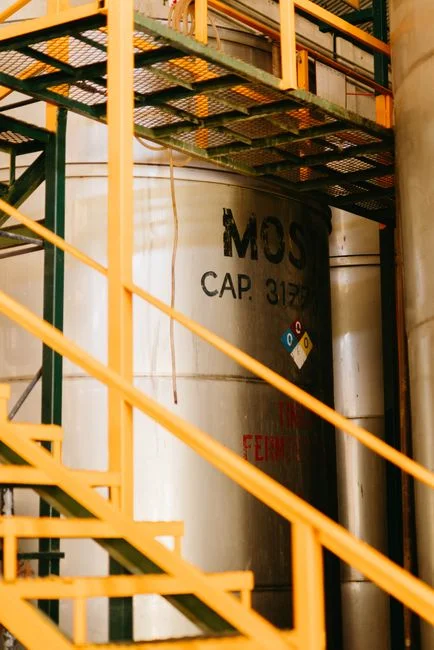
A treatment train should control flow, strength, FOG, and solids before biology or membranes; one flotation or clarification unit cannot replace that sequence. The practical sequence is source control and screening, equalization, pH adjustment, FOG and solids removal, biological treatment, and polishing where required. Equalization buffers production surges and concentrated CIP releases so downstream biology sees a more stable load.
For high-strength organic streams, anaerobic digestion can be considered. Hixson’s 2026 guide reports COD removal of 89.8–96.5% in food-processing applications and methane yields of 0.27–0.33 liters CH4 per gram of COD removed. Those figures are sector results, not guarantees for a specific plant. Anaerobic treatment may be especially relevant to concentrated streams; the UASB treatment guide for high-strength yeast wastewater provides a focused example.
Polishing becomes a permit- or reuse-driven decision. In Hixson’s 2026 beverage-plant MBR pilot, effluent COD was 16.9 mg/L, effluent TSS was 3.8 mg/L, and COD removal was 92.6%. Those pilot results justify evaluating an MBR where the required quality and footprint support it, but they do not establish guaranteed performance for another wastewater. Review the integrated MBR treatment option and the ultrafiltration system for reuse applications against the verified reuse-water specification.
DAF should precede membranes when it is needed to remove FOG and protect downstream equipment. Install online flow and pH monitoring, add load-sensitive measurements where justified, and define alarms and operator responses for excursions. End-of-pipe grab samples remain necessary for permit compliance, but they do not replace process control.
| Train stage | Primary function | Evidence needed before procurement |
|---|---|---|
| Screening and source control | Remove debris and prevent excessive solids at the treatment headworks | Stream map, solids observations, screen or interceptor duty |
| Equalization | Buffer production and CIP shocks | Hydrograph, event volumes, downstream hydraulic response |
| pH adjustment | Protect biological and chemical processes | Continuous pH record and chemical-demand estimate |
| DAF or clarification | Remove FOG and suspended solids | Pilot performance under representative swings |
| Biological treatment | Remove soluble BOD and COD | Influent load range, temperature, nutrients, response plan |
| Polishing and reuse | Meet tighter discharge or reuse quality | Binding quality specification and membrane-compatibility evidence |
Choose DAF or clarification from the wastewater profile
Choose dissolved air flotation when free oil, FOG, colloidal material, variable flow, constrained retrofit area, or membrane protection drives the decision. Choose a gravity or lamella clarifier when the stream is mainly settleable TSS, FOG has already been removed, or very high steady flow and available civil works justify a basin. A combined train can remove bulk FOG by flotation and residual solids by clarification.
HydropureWater’s 2026 Russellville guide reports 90–98% FOG removal for engineered DAF in 15–30 minutes of retention, compared with 50–70% for a conventional clarifier and 60–80% for a lamella clarifier with polymer. These are vendor-reported performance ranges and require confirmation with plant wastewater. The same guide gives preliminary DAF sizing as peak flow at 1.5 times average flow plus 20% saturated recycle, with surface hydraulic loading of 15–30 m/h. That is a vendor-recommended starting basis, not final engineering.
Chemical conditioning is part of the primary unit, not an accessory. Production changes and CIP can alter pH, TSS, FOG, and coagulation demand. Use a PLC-controlled chemical dosing system with dose control based on the available flow or solids signal. The food-processing chemical dosing guide explains why automatic dose adjustment should be evaluated with the treatment process.
Also price the residuals. DAF float and clarifier sludge need a defined thickening and dewatering route, not an assumed disposal path. The equipment decision therefore includes float or sludge solids, expected chemical demand, odors, containment, and the hours available for handling residuals. For the equipment comparison, see the Russellville food and beverage DAF versus clarifier guide and the industrial DAF system for food-processing wastewater.
| Decision factor | Favors DAF | Favors clarification |
|---|---|---|
| Dominant contaminant | Free oil, FOG, or colloidal material | Predominantly settleable TSS |
| Hydraulic behavior | Variable or batch production | High, steady flow |
| Downstream constraint | Oil-sensitive membrane or reuse train | FOG removed upstream |
| Site condition | Constrained retrofit footprint | Civil works and basin area available |
| Residuals | DAF float requiring selected dewatering | Clarifier sludge requiring selected dewatering |
Pilot, commission, and prove compliance at the point of connection
Compliance is demonstrated by an operating record at the point of connection, not by a vendor’s equipment brochure. HydropureWater’s 2026 guide describes rental pilots in the 48–100 GPM range and two- to four-week trials. Run the pilot with actual wastewater across representative production and sanitation shifts. The acceptance protocol should connect test results to the POTW’s actual concentration and mass-loading limits, not merely to equipment removal percentages.
Test worst-case operating conditions, chemical consumption, float or sludge quality, odor, containment, automatic controls, and alarm response. The final sampling plan must use the POTW’s required locations, frequencies, analytical methods, and averaging periods for pH, flow, BOD5, COD, TSS, and FOG. Include calibration procedures, chain-of-custody controls, operator training, and a corrective-action threshold for each monitored parameter.
HydropureWater’s 2026 guide places a mid-size Russellville DAF headworks at $150,000–$400,000 before the biological train. That is an indicative vendor-published figure, not a quotation or universal bid. Require a project-specific installed-cost breakdown covering civil work, biological treatment, controls, chemicals, sludge handling, monitoring, commissioning, and training. Residuals can determine the need for a plate-and-frame filter press; verify that selection from pilot solids data.
| Procurement gate | Required proof | Approval question |
|---|---|---|
| Wastewater characterization | Stream-specific sampling and mass balance | Does the design cover production, changeover, and CIP loads? |
| Permit interpretation | Current POTW requirements and written clarifications | Are concentration, loading, monitoring, and surcharge conditions addressed? |
| Equipment sizing | Calculated basis plus representative pilot | Is the selected unit sized for verified peaks and variable chemistry? |
| Chemicals and residuals | Verified demand and selected handling route | Are float or sludge characteristics and final disposition defined? |
| Commissioning | Acceptance tests, calibration, and training records | Can the plant demonstrate compliance at the point of connection? |
Frequently Asked Questions
How should a Russellville food plant preliminarily size a DAF?
Use measured average and peak flows, production and CIP load profiles, and the POTW’s averaging requirements. HydropureWater’s preliminary basis is peak flow at 1.5 times average flow plus 20% saturated recycle, with surface hydraulic loading of 15–30 m/h. Validate that basis through representative pilot testing before final sizing.
What should the budget request include?
Request an itemized installed-cost quote rather than a DAF price alone. HydropureWater’s $150,000–$400,000 mid-size DAF headworks figure excludes the biological train and is an indicative 2026 vendor estimate. The quote should separately identify civil work, biological treatment, controls, chemicals, sludge handling, monitoring, commissioning, and training.
How should a buyer select a treatment-equipment supplier?
Require a plant-specific wastewater mass balance, permit-linked guarantee criteria, pilot data from representative shifts, a control philosophy, chemical and sludge handling criteria, commissioning tests, and lifecycle documentation. Check that each guarantee references a defined influent condition and an accepted test method rather than a generic removal percentage.
What is the main compliance risk when preparing a treatment train?
The main risk is allowing free-phase oil and grease to enter the sewer or losing control during production and CIP excursions. Document source control, maintain equalization, verify chemical-dose control, and tie continuous or frequent monitoring to corrective-action thresholds. Then sample at the point of connection using the POTW’s required methods and averaging periods.
Can food-processing wastewater be sent directly to membranes for reuse?
No, not when FOG remains a meaningful risk. Use DAF and biological pretreatment where required, then confirm membrane compatibility and reuse-water quality through pilot testing. The sequencing protects the membrane system and creates an auditable basis for reuse.
Related Equipment
- industrial DAF system for food-processing wastewater — specifications, capacity range, and technical data