What Should an Effluent Treatment Plant in Leon Achieve?
An effluent treatment plant in Leon should be selected from the required wastewater characteristics and final use of the treated water, not from a generic “ETP package.” Industrial projects commonly combine pretreatment for suspended solids, oil and colloidal material, biological or membrane treatment, and final polishing where water reuse is required. HydropureWater DAF systems cover 4–300 m³/h, MBR systems cover 10–2,000 m³/day, and UF systems cover 2,000–40,000 L/h with 0.03 micron membranes. Academic research also identifies nanofiltration as an option for polishing effluent to EU Water Framework Directive standards, while an industrial case study demonstrates reuse for irrigation and boiler feedwater.
The first procurement decision is not which equipment to buy; it is whether the project must deliver compliant discharge, recover process water, support irrigation, provide boiler feedwater, or meet another specified reuse outcome. These objectives can be linked, but they are not interchangeable. A discharge permit may define an acceptable effluent, while a reuse application adds a separate quality envelope based on the receiving process.
Before requesting a proposal, document average and peak flow, the operating schedule, wastewater composition, discharge-permit conditions, reuse temperature and quality requirements, and the consequences of stopping production. The commercial example from Leo Group shows reuse at industrial scale: its Penrith plant recycles wastewater on site for bio-filter irrigation and boiler feedwater while reducing reliance on mains water, as described in the wastewater reuse case study.
Also define the package boundary. A production effluent treatment requirement is not automatically a complete municipal sewage treatment requirement. The origin and variation of the wastewater determine whether screening, biological treatment, membranes, polishing and sludge handling are necessary.
Characterize the Wastewater Before Choosing Equipment
A process train cannot be defined reliably from flow and a generic pollution load. Representative sampling establishes what the equipment must remove and reveals whether the wastewater changes enough to require equalization or operating adjustments.
Request samples across production, cleaning, downtime and discharge conditions. The analytical programme should cover pH, suspended solids, oil and grease, COD, BOD, nutrients, conductivity and temperature, plus contaminants specific to the industrial process. Record the sampling point, flow condition and production activity alongside each result; otherwise, a single laboratory result may hide the peaks that determine equipment sizing.
The physical inspection should include plastics, fibres and floating material. The GX rotary mechanical bar screen is designed to remove suspended solids, rags, plastics and fibrous debris at wastewater headworks, making those items relevant to both equipment selection and downstream maintenance.
Do not assume conventional biological treatment will solve every industrial stream. A review in Case Studies in Chemical and Environmental Engineering (2022) describes textile wet processing as chemically and technologically complex, with dyes and auxiliary chemicals creating a major pollution problem. The applicable contaminants and treatment barriers must therefore come from the site analysis.
| Information to obtain | Why it affects design |
|---|---|
| Average and peak flow, operating schedule | Sets hydraulic capacity, equalization, redundancy and maintenance access. |
| pH, suspended solids, oil and grease, COD, BOD, nutrients | Indicates whether physical separation, biological treatment or both are required. |
| Conductivity and temperature | Influences biological activity, membrane operation and reuse assessment. |
| Industry-specific contaminants | Prevents selection of a process that does not address the actual pollutants. |
| Plastics, fibres, floating material and microplastics | Defines screening, solids management and monitoring needs. |
| Discharge permit and reuse specification | Defines the acceptance limits and required polishing. |
For inspection purposes, microplastics are plastic pieces smaller than 5 mm, according to the Environmental Engineering Research review “Sources, fate, effects, and analysis of microplastic in wastewater treatment plants.” Their presence alone does not identify the treatment train, but it should prompt explicit sampling and a defined management route.
Match Each Treatment Stage to the Contaminant
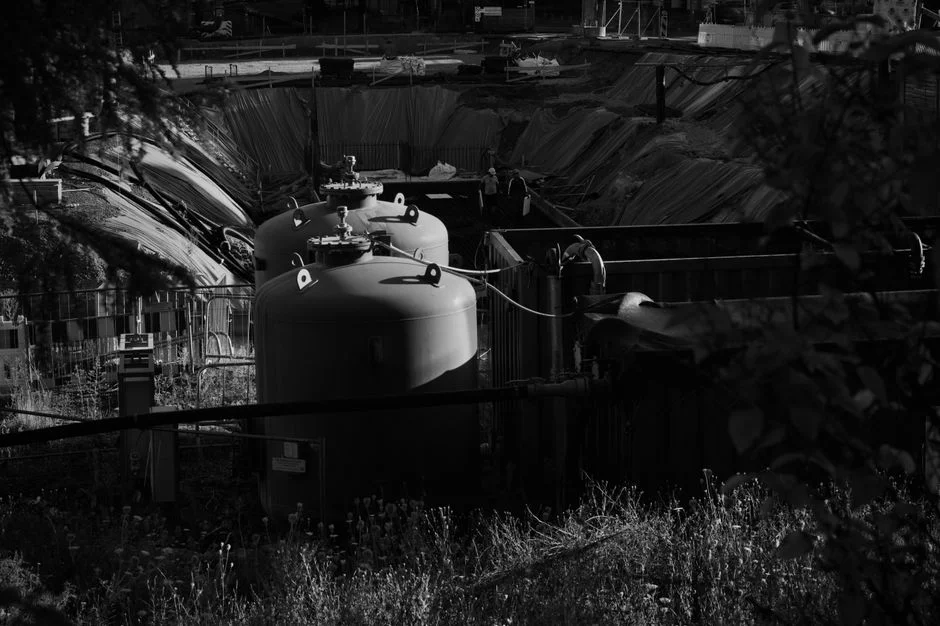
Each stage should remove a defined contaminant class before the next stage receives the wastewater. The appropriate sequence is therefore screening, pretreatment, biological or membrane treatment, and polishing or disinfection where the reuse target requires it.
Start with screening where solids, plastics or fibrous debris could damage pumps, biological stages or membranes. Then use dissolved air flotation where the stream contains suspended solids, oil and grease, FOG or colloidal matter. The industrial DAF pretreatment system range includes 13 models from 4–300 m³/h and uses micro-bubble technology with automatic skimming.
Use an integrated MBR wastewater treatment system where biological treatment and membrane separation must be combined. The published MBR range covers 10–2,000 m³/day, and the manufacturer specifies near-reuse-quality effluent with filtration below 1 μm. These are manufacturer specifications, so the buyer should confirm applicability against the actual wastewater and acceptance criteria.
Use UF when a physical membrane barrier is required for suspended solids, colloids and bacteria. The manufacturer’s UF range covers 2,000–40,000 L/h and uses 0.03 micron PVDF membranes with automatic backwash and air scour. UF is primarily a polishing or pretreatment barrier; it should not be presented as a substitute for biological removal of dissolved organic contaminants.
For high-value reuse, define the required quality before selecting the final barrier. University of Twente research identifies nanofiltration as suitable for polishing wastewater-treatment-plant effluent to EU Water Framework Directive standards and producing water suitable for agricultural or direct/indirect potable usage. That research supports the role of advanced polishing; it does not replace project-specific confirmation of the applicable Leon permit or reuse route.
| Stage | Primary role | Decision trigger |
|---|---|---|
| Screening | Remove solids, plastics and fibrous debris | Physical inspection indicates debris or a downstream-protection requirement. |
| DAF | Separate suspended solids, oil and grease, FOG and colloidal material | Physical contaminants are present and recoverable by flotation. |
| MBR | Integrate biological treatment and membrane separation | Organic removal and membrane filtration are both required. |
| UF | Provide a physical barrier for solids, colloids and bacteria | Fine filtration or polishing is required. |
| Nanofiltration or another advanced barrier | Polish effluent for a defined reuse objective | The reuse specification requires treatment beyond the preceding stages. |
Compare DAF, MBR and UF for a Leon Project
DAF, MBR and UF are not interchangeable equipment categories. DAF is primarily a physical separation step, MBR combines biological treatment with membrane filtration, and UF is a fine physical filtration barrier. The contaminant load and required output quality determine which belongs in the train.
DAF is the strongest catalog match when the first objective is removal of suspended solids, FOG, oil and grease or colloidal material. The published DAF range is 4–300 m³/h, with micro-bubble operation and automatic skimming. For a variable oily stream, the oily wastewater treatment process selection guide provides a useful basis for checking the pretreatment assumptions.
MBR is suited to municipal sewage, industrial process water and reuse projects where biological treatment and membrane separation are required together. The published range is 10–2,000 m³/day. HydropureWater states that its MBR systems provide a 60% smaller footprint than conventional systems; buyers should ask for the comparison basis, installed equipment scope and site conditions rather than treat the figure as a universal site outcome.
UF provides fine physical filtration without chemicals and accepts turbidity up to 300 ppm according to the product specification. It is generally more appropriate as a polishing or pretreatment stage than as a stand-alone substitute for dissolved-organic removal. Any UF proposal should state the expected feed quality, because that specification limits reliable operation.
| Criterion | DAF | MBR | UF |
|---|---|---|---|
| Core function | Physical separation by flotation | Biological treatment plus membrane separation | Fine physical membrane filtration |
| Published capacity range | 4–300 m³/h | 10–2,000 m³/day | 2,000–40,000 L/h |
| Best initial fit | Oil, grease, FOG, suspended solids and colloids | Organic removal and membrane separation | Suspended solids, colloids and bacteria |
| Key risk if misapplied | Poor separation or unstable loading outside the intended stream | Wrong biological design or inadequate pretreatment | Feed contamination outside stated turbidity limits |
Do not compare proposals by flow units alone. Reconcile m³/h, m³/day and L/h against the plant’s operating profile, design-day flow and required redundancy. A nominal capacity that only applies during a short peak is not equivalent to a system selected for sustained operation.
Design for Reuse, Discharge and Permit Risk
Compliance risk begins with treating discharge and reuse as separate acceptance obligations. A discharge specification does not establish suitability for boiler feedwater, manufacturing reuse, agriculture or potable use, and “treated effluent” is not a water-quality parameter.
For boiler feedwater or manufacturing reuse, issue the receiving unit’s required water quality and then identify the necessary polishing stage. Leo Group’s Penrith example demonstrates on-site recycling for bio-filter irrigation and boiler feedwater, with reverse osmosis providing further purification; the case shows a reuse configuration, not a universal Leon design.
For agricultural or potable-use applications, use the University of Twente study as evidence that advanced membrane polishing may be needed to meet the relevant quality objective. Confirm the applicable local industrial wastewater permit and the intended reuse route; the European reference in the research does not itself establish authorisation for a Leon installation.
Evaluate micropollutants and other trace contaminants when the industrial process or reuse application requires it. Wageningen University and Research’s 2022 thesis examined micropollutant removal from wastewater-treatment-plant effluent using constructed wetlands. That work supports trace-contaminant evaluation, but it does not show that every wastewater stream requires the same wetland process.
Microplastics also require explicit monitoring and management. The Environmental Engineering Research review reports that more than 90% can be removed in wastewater treatment plants, while noting that residual concentrations still matter because of the large effluent volumes discharged.
Place an independent performance demonstration, commissioning acceptance criteria and wastewater-composition change control in the supplier scope. Define sampling points, test methods, acceptance values, retest conditions and response duties. For reuse requiring a higher-grade barrier, ask suppliers to price and define the polishing scope rather than leaving it as an optional extra.
Build the Procurement and Commissioning Plan
A defensible procurement process turns wastewater data and the reuse objective into a testable package before commercial commitments are made.
- Establish the basis of design. Obtain a representative wastewater analysis, flow profile, discharge permit, reuse requirements and operating schedule.
- Select and size the treatment train. Define design flow, redundancy, footprint, utilities, sludge route, access constraints and treatment objectives for each stage.
- Request comparable proposals. Require process guarantees, membrane or media life, control philosophy, scope exclusions, installation, commissioning, training and spare parts.
- Compare operating cost. Use measured consumption and actual process conditions. HydropureWater’s 2026 DAF plant operating cost breakdown identifies measured power, trial-based chemical dosing and wet sludge handling as core cost factors.
- Define handover and support. Agree performance testing, operator training, documentation, maintenance support and response requirements before placing the order.
Check comparable references against similar wastewater, flows, operating hours and reuse targets. Ask each supplier to identify design assumptions, excluded works, start-up chemical requirements, waste-handling obligations and utility connections. This separates comparable proposals from packages using different scope boundaries.
Automation should be compared explicitly rather than inferred from an equipment name. HydropureWater’s UF platform specifies automatic backwash and air scour, while the DAF platform specifies automatic skimming. Confirm what remains manual, what interlocks are included, how alarms are recorded and whether local operating staff need to intervene routinely. The industrial wastewater plant operation and maintenance guide provides a useful framework for comparing routine operating tasks.
Commissioning acceptance should connect to the original objectives: verified flow, observed pollutant removal, stable solids or sludge handling, control-system checks, operator competence and demonstration of the agreed discharge or reuse quality. Define what happens if incoming wastewater exceeds the characterized load; that change-control pathway is part of the operating risk, not an administrative detail.
Frequently Asked Questions
How much should an effluent treatment plant in Leon cost?
There is no defensible price without a scoped wastewater analysis, flow profile, reuse target and equipment basis. Ask each supplier for a capital quotation separating pretreatment, biological or membrane treatment, polishing, sludge handling, controls, installation, commissioning and optional reuse equipment. Also request an operating-cost estimate based on measured power, chemical dosing and sludge disposition. HydropureWater’s 2026 DAF plant operating cost breakdown provides the cost inputs that should appear in that comparison.
Should I choose DAF, MBR or UF for my industrial wastewater?
Choose DAF when the primary contaminants are physically separable suspended solids, oil and grease, FOG or colloidal material. Choose MBR when biological treatment and membrane separation are both required. Choose UF when fine physical filtration of solids, colloids and bacteria is the required barrier. UF should not be treated as a substitute for biological removal of dissolved organics, and the manufacturer’s turbidity limit must be checked against the proposed feed.
How do I size an ETP when my wastewater flow varies?
Use the measured operating profile, including average flow, peak flow, production schedule, downtime discharges and required redundancy. Do not convert catalog capacities into a selection without reconciling m³/h, m³/day and L/h. Ask the supplier to state which flow condition defines each piece of equipment and what operating response protects the process when the wastewater load changes.
What should I include when requesting a wastewater treatment proposal?
Include the wastewater analysis, representative samples, flow record, operating schedule, permit conditions, reuse specification, site constraints, utilities and sludge route. Require stage-by-stage objectives, performance guarantees, scope boundaries, membrane or media life, controls, installation, commissioning, training, spares and maintenance support. This is a more reliable basis for comparison than a headline price or an unqualified “complete ETP” label.
Can an effluent treatment plant support water reuse instead of discharge?
Yes, when the reuse target is defined and the train includes the required polishing. University of Twente research identifies nanofiltration as suitable for polishing wastewater-treatment-plant effluent to EU Water Framework Directive standards and producing water suitable for agricultural or direct/indirect potable usage. Leo Group’s Penrith example shows industrial reuse for bio-filter irrigation and boiler feedwater. Both examples still require project-specific quality, permit and acceptance checks before adoption in Leon.