Separate the Data Center's Liquid Waste Streams First
Akure data-center wastewater should be handled as five or more distinct streams because their chemistry, reuse options and disposal routes differ. Cooling-tower blowdown is the liquid purge used to control mineral concentration after evaporation; unlike evaporated water, it remains available for treatment and reuse. Fill-and-flush water, closed-loop equipment flushing, sanitary sewage, process wastewater and glycol- or maintenance-liquid waste should not be combined by default. A routine cooling-water sample cannot characterize construction fill-and-flush water: the U.S.-based E&E News report describes utility testing requirements and off-site disposal where construction flushing water contains chemicals or biological contaminants. This is an analogy, not an Akure requirement.
The first design deliverable should be a controlled stream inventory. For each stream, record its source, flow, destination, contamination risks, treatment objective, receiving-utility constraint and responsible operator. A project-specific flow and chemistry dataset is required before selecting an Akure discharge route or equipment capacity; generic data-center examples cannot provide either.
| Liquid stream | Distinct contamination risks | Treatment or disposal decision |
|---|---|---|
| Cooling-tower blowdown | Concentrated salts, scaling compounds, corrosion and biological-control chemicals | Characterize for physical treatment, demineralization and controlled reuse or discharge |
| Construction fill-and-flush water | Possible pipe-treatment chemicals and biological contaminants | Test separately; obtain utility or authority acceptance before sewer discharge |
| Closed-loop equipment flushing | Residual coolant, corrosion products, chemicals or biocides | Keep segregated until composition and receiving route are confirmed |
| Sanitary sewage | Organic matter, nutrients and pathogens | Route through the appropriate sanitary treatment system |
| Process wastewater | Project-specific contaminants and flow variability | Determine whether onsite treatment or controlled removal is required |
| Glycol-bearing and maintenance liquids | Concentrated glycol, oils, solvents, metals or other regulated constituents | Use documented segregation, testing and licensed handling where applicable |
The data-center wastewater treatment planning guide provides a useful source-separation framework, but Akure’s sewer acceptance, receiving-water conditions and waste-handling arrangements must be verified locally.
Characterize Akure Makeup Water and Blowdown Before Selecting a Process
A measured site water balance must precede equipment sizing because cooling-tower blowdown depends on operating conditions rather than server capacity alone. NONA Technologies identifies makeup-water flow, blowdown flow, cycles of concentration, cooling load, operating schedule, and local water and sewer rates as inputs for assessing the water and cost opportunity. The same source notes that cooling architecture, climate, IT load, utilization and operating strategy change water use, so there is no universal water-use number for an Akure data center.
The theoretical blowdown ratio is 1/(CoC−1). At 4 cycles of concentration, this gives 25% of makeup-water volume; at 6 cycles, it gives 20%. Genesis Water Technologies, in its 2026 discussion of cooling-water efficiency, corrects a common calculation error: moving from 4 to 6 cycles reduces blowdown by 5 percentage points, or 20%, rather than 50%. That calculation is a design relationship, not a substitute for metering actual flows.
Request source-water and circulating-water analyses covering conductivity, pH, turbidity, suspended solids, calcium, hardness, alkalinity, silica, sulfate, chloride, total dissolved solids and residual treatment chemicals. The makeup analysis matters because evaporation concentrates the incoming dissolved load. Sample across representative operating conditions, including changes in cooling load and chemical dosing.
Genesis also reports that biological and scaling risks increase materially above 5–6 cycles without advanced treatment. Do not raise cycles merely to enlarge the apparent blowdown-recovery opportunity without reviewing corrosion, fouling and microbiological control.
| Design input | Evidence or calculation | Akure action |
|---|---|---|
| Makeup and blowdown flow | Both are required by NONA Technologies for site assessment | Install or verify independent metering and reconcile with evaporation |
| Cycles of concentration | 4 cycles: theoretical blowdown ratio 25%; 6 cycles: 20% | Calculate the operating range, then validate against measured blowdown |
| Makeup-water chemistry | Cooling chemistry concentrates incoming dissolved minerals | Analyze source water before defining pretreatment or recovery targets |
| Operating conditions | Cooling load and schedule affect water demand | Test seasonal and peak-duty cases |
| Local infrastructure | No supplied research establishes Akure freshwater rates, sewer capacity or disposal charges | Obtain current utility and authority information |
Genesis’s illustrative 10 MW case uses 15 million gallons monthly at 4 cycles and a 25% ratio, yielding 3.75 million gallons of recoverable blowdown monthly. It is scale illustration only, not an Akure design assumption. Compare the data center wastewater treatment approach for a water-scarce city with the cooling-blowdown treatment scope for another data-center location; both require local inputs rather than transferable capacity assumptions.
Choose the Treatment Route by Intended Reuse
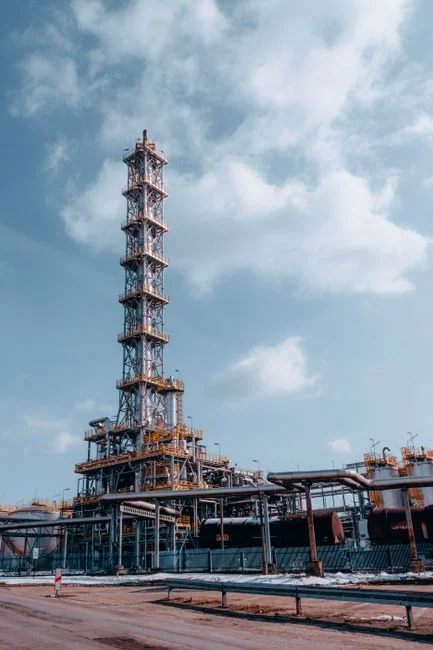
The treatment train should follow the intended destination of the recovered water: lower-risk non-process uses where permitted, cooling-tower make-up after demineralization, or discharge only when the treated stream satisfies applicable receiving requirements. Physical separation can remove suspended material and support non-process reuse, but it does not remove dissolved silica, hardness or salts; those require targeted treatment before make-up-water reuse.
Genesis describes a modular sequence of physical separation followed by treatment of specific contaminants for enterprise and colocation facilities. Its 100–300 GPM modular example is not an Akure requirement. HydropureWater’s UF pretreatment for data-center wastewater is specified for 2,000–40,000 L/h, uses 0.03-micron PVDF membranes, and provides automatic backwash and air scour; the stated turbidity acceptance extends to 300 ppm. Confirm that the actual feed remains within that envelope after characterization.
For higher-grade reuse, HydropureWater’s industrial RO system for cooling-water reuse is specified with recovery up to 95%, PLC automation and low chemical consumption. That is equipment capability, not a guaranteed site recovery. Apply the RO membrane system design criteria to feed chemistry, recovery, pretreatment and scaling controls.
IDE reports that conventional brackish-water RO is often limited to 75–80% recovery because silica, calcium carbonate and calcium sulfate scaling becomes unmanageable. Its MAXH₂O approach uses RO below local scaling limits and controlled precipitation in a fluidized-bed reactor, converting sparingly soluble salts into dense solids and leaving a concentrate primarily composed of sodium chloride. The same source reports an industrial blended-stream application at around 95% recovery with approximately 1 mg/L permeate silica. That result belongs to a site-specific stream blend and must not be generalized to an Akure installation without equivalent chemistry and process development.
| Route | Appropriate use | Decision condition | Residual issue |
|---|---|---|---|
| Physical separation or DAF | Remove suspended solids, oil and grease or colloidal material before sensitive treatment | Use only when analysis confirms the contaminant load | Sludge and retained chemicals require disposal |
| UF | Clarification and pretreatment before sensitive membrane duty | Feed chemistry must remain within the specified operating envelope | Retained solids and membrane cleaning waste |
| Conventional brackish-water RO | Demineralized cooling-tower make-up | Address silica, calcium carbonate and calcium sulfate scaling | Brine and concentrated pretreatment waste |
| Controlled precipitation plus RO | Higher-recovery reuse where conventional RO cannot meet the objective | Require project-specific chemistry, solids handling and pilot or validated design | Solid salts and residual brine |
| Disinfection | Microbial control where required for the reuse destination | Select the method after biological assessment | By-products and residual-disinfectant control |
DAF is not a substitute for demineralization. The DAF configuration guide for industrial reuse and discharge is useful where the measured feed contains solids, oil and grease or colloidal material that must be removed before membrane or biological treatment.
Protect the Cooling System and the Receiving Environment
Water recovery must not transfer scaling, corrosion or biological risks from the cooling tower into the reuse system or receiving environment. Higher cycles of concentration can reduce blowdown, but Genesis reports materially increased biological and scaling risks above 5–6 cycles without advanced treatment. The recovered stream therefore needs treatment controls matched to its new duty, including residual disinfectant, alkalinity, hardness, silica and other chemistry that could affect the cooling loop.
Where hardness reduction is required for RO pretreatment or another relevant process duty, specify an industrial softener sized from the measured flow and hardness. HydropureWater specifies twin-tank systems from 1 to 45 T/h with paired brine tanks from 60 to 2,000 L. This is a vendor equipment range, not a recommendation to install the largest unit. The softener, brine disposal, regeneration controls and permeate quality all remain part of the process design.
For microbial control, HydropureWater offers on-site chlorine-dioxide generation configurations from 50 to 20,000 g/h and identifies industrial cooling loops among their applications. The selected output and feed strength must be based on the water chemistry, contact conditions and disinfection objective. Monitoring should cover turbidity, conductivity, pH, residual disinfectant, scaling indicators and biological activity before reuse or discharge.
No universal Akure effluent limit is established by the supplied research. The project team must confirm current Nigerian, state and local requirements, along with Akure sewer or receiving-water acceptance conditions, with the responsible authorities. Equipment performance and regulatory acceptance are separate checks: a treatment skid cannot demonstrate legal permission to discharge.
Fill-and-flush, sanitizing and maintenance streams should remain physically segregated and controlled by documented procedures. E&E News reports that Loudoun Water requires testing of data-center construction fill-and-flush water before treatment-plant acceptance, and that some utilities have directed developers to use appropriate off-site disposal facilities. That U.S. experience supports a conservative Akure rule: do not route construction water automatically into the blowdown-recovery train.
The online analyzer buyer’s guide provides a useful framework for specifying online monitoring, but only the parameters needed for the confirmed treatment and discharge objectives should be installed.
Build a Procurement and Commissioning Plan
The request for proposals should state the guaranteed feed-water envelope, treated-water quality, recovery, availability, controls, chemical consumption, solids handling and commissioning acceptance tests. Bidders should distinguish values demonstrated by their own equipment from values reported for broader field installations. IDE’s around 95% recovery and approximately 1 mg/L permeate silica were reported for an industrial blended-stream application. Separately, NONA Technologies states that its RECOVER process recovers 90% of cooling-tower blowdown on site using Ion Concentration Polarization rather than reverse osmosis. Neither value establishes the expected performance of an Akure system.
Require quotations to include pretreatment, feed and permeate tanks, pumping, controls, membranes or separation equipment, pretreatment consumables, chemical storage, drainage, solids management, installation and local commissioning support. Verify shipping and import arrangements, installation access, spares, electrical requirements, service capability, operator competency and behavior during power interruptions. Mission-critical reuse should not depend on an unverified remote service response.
| Procurement package | Evidence the bidder must provide | Acceptance focus |
|---|---|---|
| Feed-water envelope | Analysis range, flow data and sampling method | Site feed remains within the guaranteed envelope |
| Treatment performance | Guaranteed permeate quality, recovery and test method | Performance demonstrated in a FAT or valid site history |
| Controls and utilities | PLC requirements, power demand, chemical use and failure response | Automatic controls and safe shutdown demonstrated |
| Residual handling | Brine, sludge, spent media and chemical-waste routes | Every residual has a documented destination |
| Execution | Freight, import, installation, spares and local support | Delivery and service plan is commercially credible |
| Commissioning | FAT/SAT protocol and acceptance samples | Design flow, quality and controls are demonstrated |
Use a staged factory and site acceptance sequence: verify installation; calibrate instruments; perform leak tests; confirm feed characterization; challenge the system at design flow; test interlocks and automatic controls; verify treated-water quality; and demonstrate safe handling of residual waste. Include power-failure, high-turbidity and chemical-out-of-condition scenarios where relevant.
Do not use Genesis’s illustrative 15 MW case, which lists a $200,000 capital cost and an improved three-to-five-year payback, as an Akure estimate. Build the project business case from verified local water, sewer, power, chemical, disposal and avoided-water costs. The skid-mounted industrial treatment selection guide and skid-mounted system configuration guide support scope development, but neither replaces site data.
Frequently Asked Questions
What will the Akure treatment system cost?
No universal Akure price is supported by the research. Request a quotation using measured flow, complete feed analysis, intended reuse quality, recovery target, local utility costs, residual-disposal cost, electrical requirements and site-access constraints. Ask the bidder to separate pretreatment, membranes, pumps, tanks, controls, commissioning and annual operating costs.
How should cooling-blowdown equipment be sized?
Measure makeup and blowdown flow, operating schedule and evaporation, then reconcile them with the selected cycles of concentration. Verify the result across normal and peak cooling conditions. A 4-cycle theoretical ratio of 25% and a 6-cycle ratio of 20% provide checks, not equipment ratings.
How should treatment suppliers be screened?
Require performance evidence in the proposed feed chemistry, a clear recovery definition, quality guarantees, membrane or separation guarantees, automatic-control documentation, local service arrangements and FAT/SAT support. Ask which figures come from supplied equipment and which are based on broader installations.
What permits and compliance checks are required before discharge?
Confirm the current Nigerian, state and local requirements with the responsible authorities, then obtain written Akure sewer or receiving-water acceptance. No supplied source establishes a specific Akure effluent limit. The discharge decision must follow treatment selection, not precede it.