
Determine Which Limits Actually Control the Discharge
The controlling requirements for a plastics or rubber plant near Hutchinson are established by the receiving sewer authority and the plant’s applicable industrial discharge permit—not by a generic pretreatment-equipment specification. A plant must identify its receiving sanitary sewer authority, confirm whether it qualifies as an industrial user, and review the discharge permit, sewer-use ordinance, local pretreatment limits, monitoring requirements, and authorization to discharge.
The permit hierarchy should be resolved before treatment is selected. Start with the current industrial discharge permit, then compare its conditions with the sewer authority’s pretreatment requirements and sewer-use ordinance. If those documents conflict or use different terminology, obtain a written interpretation before freezing the design basis. The permit, local requirements, sampling protocol, discharge location, reporting frequency, and enforcement process must be obtained directly from the authority.
National or secondary information should not be substituted for those local controls. The New Lede reported in November 2024 that the U.S. EPA had not updated wastewater limits for plastics plants, which illustrates regulatory uncertainty rather than defining the legal limits applicable to a Hutchinson-area discharger. An outdated national reference cannot establish current compliance for the plant.
Ask the sewer authority for the complete permit and supporting documents, the full monitoring list, sampling method and location, authorized laboratory requirements, reporting frequency, bypass provisions, and the process used to resolve discrepancies.
| Document or confirmation | What the engineer must establish | Design consequence |
|---|---|---|
| Industrial discharge permit | Authorized discharge point, conditions, monitoring, reporting, and authorization status | Defines the enforceable project basis |
| Sewer-use ordinance and local pretreatment limits | Whether the plant is an industrial user and which constituent limits apply | Sets the required treatment performance |
| Monitoring protocol | Sample method, timing, location, laboratory, chain of custody, and reporting frequency | Determines monitoring design and recordkeeping |
| Written authority interpretations | Resolution of ambiguous or conflicting requirements | Avoids designing against an unsupported interpretation |
Use the IFAS design for rubber processing wastewater guide as an engineering reference, while keeping current local permit values separate from general treatment guidance.
Characterize Each Plastics and Rubber Wastewater Stream
Each production stream must be characterized before a unit operation is assigned because washing, curing, compounding, and washdown water carry different contaminant loads. Begin with a process map that identifies washing, rinsing, molding, extrusion, compounding, curing, cooling, scrap handling, equipment cleanup, and every point where process water, chemicals, or wash residues enter the wastewater system.
Then segment the wastewater by source and discharge behavior. Separate batch dumps from continuous blowdown, floor washdown, equipment washdown, stormwater-contaminated flows, and off-spec material. This distinction determines whether equalization is needed for variable batches, whether contamination must be excluded at the source, and whether treatment must handle intermittent high-strength discharges.
Develop a representative sampling plan by production condition and production stage. Include the parameters named in the applicable permit, along with flow, pH, oil and grease, suspended solids, and constituents relevant to the products and chemicals used. Submit samples under the sewer authority’s protocol rather than relying only on an internal grab sample.
| Stream or condition | Information to document | Treatment decision supported |
|---|---|---|
| Batch dumps | Frequency, volume, production condition, constituents and sampling results | Equalization, segregation, and batch-specific treatment |
| Continuous blowdown | Flow pattern, temperature, pH, oil and grease, suspended solids, and process additives | DAF or other separation, chemical control, and polishing |
| Floor and equipment washdown | Cleaning chemicals, solids, washwater generation, and contamination pathway | Source control, equalization, screening, and solids management |
| Stormwater contamination | Contact points, pollutants, and whether contact with process wastewater is prevented | Segregation or separate management before discharge |
| Off-spec material | Material type, quantity, and recovery or disposal route | Recovery rather than dilution or wastewater treatment |
For rubber processing, compare How Do Plastics and Rubber Plants Near Romeo Meet Limits? with the 2026 rubber-processing IFAS guide. A physical separator may remove free oil, grease, FOG, and some solids, but biological suitability should be confirmed from the residual stream rather than assumed from the plant sector.
Build a Source-to-Treatment Pretreatment Train
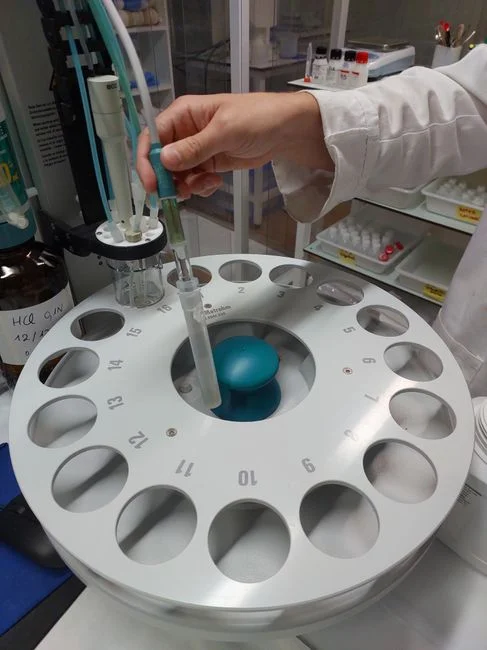
The treatment train should remove contaminants in the sequence required by the wastewater character, with each stage defending a defined permit or operating objective. Start with source control and segregation, then add mechanical pretreatment, separation, chemical control, biological treatment or filtration where justified, and controlled solids handling.
- Remove debris at headworks. A rotary mechanical bar screen can protect downstream pumps, valves, and biological processes from suspended solids, rags, plastics, and fibrous debris.
- Separate floatable and suspended material. Where oil, grease, FOG, suspended solids, or colloidal matter require removal, evaluate an industrial DAF system for oily plastics and rubber wastewater. The referenced DAF product range covers 4–300 m³/h across 13 standard models.
- Control chemistry against measured conditions. A PLC-controlled chemical dosing system can meter coagulants, flocculants, pH adjusters, and specialty chemicals. Control logic should use measured flow and wastewater characteristics rather than a fixed schedule.
- Add membrane polishing where justified. The referenced UF systems use 0.03-micron PVDF membranes, operate from 2,000 to 40,000 L/h, and accept up to 300 ppm turbidity. These specifications require a project-specific check of feed quality, membrane compatibility, and fouling controls.
- Apply biological treatment only after suitability is confirmed. The designer must establish that the residual wastewater is biologically treatable and that the proposed reactor configuration fits its flow, loading, and discharge characteristics.
- Manage separated solids deliberately. Where on-site dewatering is required, evaluate a plate and frame filter press and confirm the final disposal route before equipment selection.
| Treatment objective | Potential unit operation | Required engineering basis |
|---|---|---|
| Remove debris and fibrous solids | Rotary mechanical bar screen | Wastewater solids character, debris type, and required headworks duty |
| Remove oil, grease, FOG, or floatable solids | DAF | Contaminant loading, flow profile, required recovery, and sludge handling |
| Adjust pH or condition solids | Chemical dosing | Measured pH, chemical demand, mixing, flow signal, and control requirements |
| Polish for fine solids or colloids | UF | Membrane compatibility, pretreatment, turbidity, recovery, and cleaning |
| Remove biodegradable residual load | Biological treatment | Biodegradability, reactor loading, operating mode, and polishing needs |
| Dewater separated solids | Plate and frame filter press | Solid volume and character, cycle requirements, filtrate destination, and disposal route |
This sequence is a selection framework. The permit, source characterization, and treatment objectives determine the final train.
Prove Compliance Through Monitoring and Records
Installed equipment creates no defensible compliance case unless monitoring demonstrates that the permitted discharge remains within applicable conditions. Define monitoring points for raw wastewater, each treatment stage, final effluent, and sludge or concentrate streams. The purpose is to show where a deviation originates and what corrective action followed.
Calibrate flow, pH, and other online instruments according to a documented schedule. Record the instrument’s operating range, alarm behavior, calibration method, acceptance criteria, and corrective actions. This turns an alarm into usable evidence rather than an uninvestigated event.
Follow the sewer authority’s sampling method, time, location, laboratory, chain-of-custody, and reporting requirements. Internal monitoring can support process control, but it does not replace required compliance sampling. The final sample plan should also identify responsible personnel and the route from instrument reading to laboratory result and permit record.
LiQ Tech states that some industrial pretreatment effluent-limitation guidelines use a pH of six or greater before treatment. Confirm the binding value and sampling condition with the Hutchinson-area authority.
Retain influent and effluent results, flow records, chemical usage, equipment operating logs, bypass records, deviations, and corrective-action evidence. Preserve the version of the permit and sampling protocol used for each compliance period. When results approach a limit or an alarm occurs, document the response, release decision, investigation, and verification sample.
The monitoring system should connect three records: what the permit required, what the process measured, and what action the plant took when those two differed.
Choose and Size Pretreatment Equipment for Permit Risk
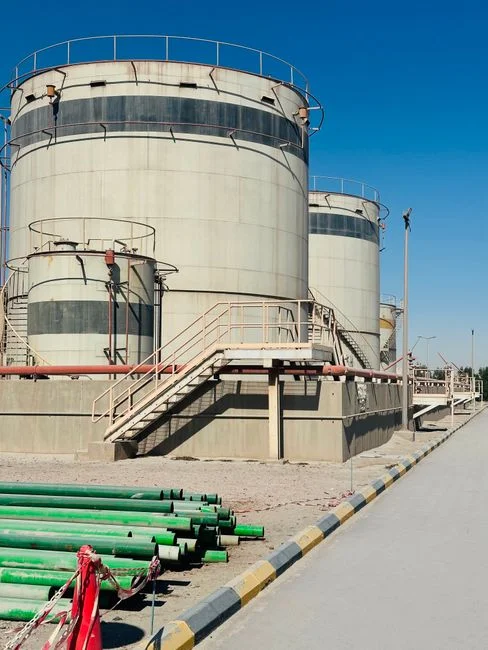
Equipment sizing begins with the plant’s wastewater profile and enforceable discharge conditions, not with a catalog flow range. The procurement basis should include peak and average flow, batch-discharge profile, constituent characterization, permit limits, required treatment performance, operating hours, available footprint, utilities, and anticipated production changes.
Compare DAF, clarifier-based separation, biological treatment, UF, and chemical dosing by the problem each addresses. DAF targets floatable material and suspended solids; biological treatment addresses biodegradable residual load; UF provides fine-particle separation under a defined feed specification; and dosing controls chemistry or conditions particles for separation.
| Supplier submission | Question the supplier must answer | Buyer check |
|---|---|---|
| Design flow | Is the stated flow average, peak, or design envelope? | Compare it with measured flow and batch data |
| Contaminant loading basis | Which measurements and concentrations determine duty? | Match to representative plant sampling |
| Treated-water objective | What performance is proposed for the stated feed? | Map it to verified permit conditions |
| Control philosophy | Which measurements, interlocks, alarms, and fail positions are included? | Confirm operation and record requirements |
| Footprint and utilities | What space, power, water, air, and drainage are required? | Verify against plant infrastructure |
| Sludge generation | How is separated solids quantity and quality estimated? | Confirm filtrate and disposal routes |
| Compliance documentation | What drawings, calculations, certifications, and operating records will be supplied? | Match deliverables to the permit file |
The DAF catalog range of 4–300 m³/h is not a plant recommendation until the flow profile and treatment needs are known. Likewise, the UF range of 2,000–40,000 L/h and 300-ppm turbidity input do not complete the design basis; membrane compatibility, fouling risk, recovery, pretreatment, and cleaning requirements still need review. The ultrafiltration system details and membrane element specifications should be requested as part of that review.
Supplier selection should reward a defensible application basis. Require a written treatment concept, duty assumptions, control narrative, utilities estimate, solids balance, commissioning plan, and documentation package. No catalog system guarantees sewer-discharge compliance; only the permitted system, operated and monitored under the applicable conditions, can support that conclusion.
Frequently Asked Questions
How much should a plastics or rubber plant budget for pretreatment equipment near Hutchinson?
Do not budget from catalog flow ranges alone. Request itemized quotations tied to peak and average flow, batch profile, characterization results, permit limits, utilities, controls, foundations, solids handling, and documentation. Obtain comparable written scopes before allocating capital or operating funds.
Which supplier qualification most reduces permit-compliance risk?
Require the supplier to state its design flow, contaminant loading basis, treated-water objective, control philosophy, utilities, sludge-generation estimate, and permit documentation. Verify those assumptions against plant data and the written authority requirements.
How should DAF, biological treatment, and UF be selected?
Select DAF when wastewater data supports removal of oil, grease, FOG, floatable material, or suspended solids; consider biological treatment when the residual stream is confirmed biologically treatable; and consider UF when fine solids