Which treatment unit should a Centreville mining factory choose?
For mining and metals wastewater in Centreville, dissolved air flotation (DAF) generally fits wastewater containing oil, grease, free particles, colloids, or buoyant-to-intermediate solids requiring rapid separation before polishing. A lamella clarifier generally fits flows dominated by denser, readily settleable mineral solids where gravity separation is adequate after conditioning. Neither unit establishes a complete treatment train by itself: source control, equalization, pH control, precipitation or coagulation, and downstream biological or filtration may also be required. EPA guidance organizes the decision around project definition, baseline data, process evaluation and selection, and implementation rather than equipment selection alone.
Centreville’s Upper Occoquan Reclamation Plant illustrates why the discharge destination must control the design basis. The EPA document Municipal Wastewater Reuse: Selected Readings on Water Reuse, EPA 430/09-91-022 (September 1991), describes the Centreville, Virginia, plant as discharging treated wastewater that meets stringent discharge-permit limits into a drinking-water source. That example does not establish a universal equipment choice for a mining or metals factory; it demonstrates that receiving-water and permit constraints can dictate the required treatment performance.
For an initial gate, an industrial dissolved air flotation system deserves priority evaluation when floatable oil, grease, FOG, or mixed particle loads dominate. A lamella clarifier for mineral solids deserves priority evaluation when the principal load is dense, settleable solids with limited oil and grease. The defensible recommendation then follows the site’s complete treatment objective—not a preference for one machine.
Build the wastewater and compliance design basis
EPA 430/09-91-022 (September 1991) recommends creating baseline data before evaluating treatment alternatives, because existing information may be incomplete or of questionable validity. The baseline therefore needs representative sampling—not a collection of convenient averages. EPA’s monitoring list includes aluminum, arsenic, chromium, copper, iron, lead, mercury, nickel, selenium, silver, and zinc, together with biochemical oxygen demand, dissolved oxygen, total suspended solids, and turbidity.
For a Centreville facility, build the sampling program around production, storm, washdown, upset, and shutdown periods. EPA 430/09-91-022 (September 1991) also recommends monitoring through hot, cold, dry, and wet seasons. That guidance originated in a water-reuse project, so it should be adapted to the facility’s actual operations and receiving water rather than copied as a universal sampling schedule.
Determine the discharge or reuse destination before comparing equipment: POTW, stormwater system, surface water, or reuse. Obtain applicable permit limits, pretreatment requirements, and receiving-water criteria. Where discharge effects must be evaluated, EPA 430/09-91-022 (September 1991) describes computer modeling at different flows and degrees of treatment. Supplemental testing is necessary when historical records cannot represent normal and upset conditions.
| Design-basis input | Information the buyer needs | Selection consequence |
|---|---|---|
| Flow history | Representative normal, peak, storm, washdown, upset, and shutdown flows | Sets hydraulic capacity and equalization requirements |
| Water quality | pH, temperature, COD, total suspended solids, turbidity, dissolved oxygen, oil and grease, relevant metals, and precipitating species | Determines separation, chemical conditioning, and polishing needs |
| Discharge basis | Permit limits, pretreatment requirements, receiving-water model, or reuse specification | Defines measurable treatment objectives |
| Data quality | Duration, sampling frequency, analytical methods, and evidence of representativeness | Identifies gaps requiring supplemental monitoring |
Use automatic chemical dosing for pH and coagulation control only after the chemical species, target pH, dosing range, and mixing requirements are established. Where further solids control is needed, evaluate the multimedia filtration equipment against the actual residual-particle specification rather than assuming one filter medium fits every metals stream.
How DAF and clarifiers separate different wastewater fractions
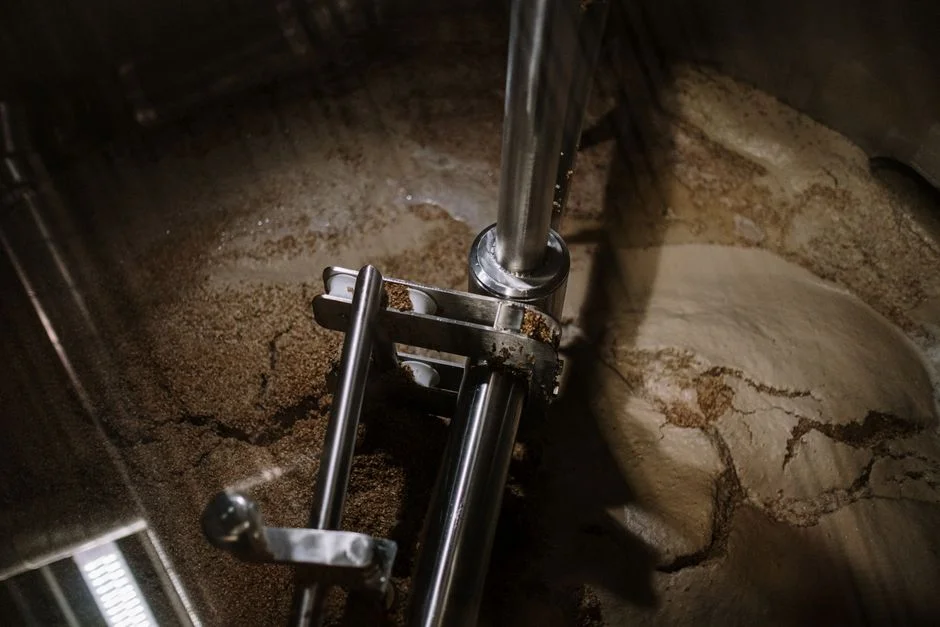
DAF and clarification separate different physical fractions of a wastewater stream: DAF uses microbubbles to lift suitable particles for surface skimming, while clarification uses gravity to remove suspended material that settles. Neither mechanism, by itself, establishes dissolved-metals compliance.
In DAF, compressed air is dissolved into the recycle stream, and the resulting microbubbles attach to suitable particles and carry them to the surface for skimming. This mechanism is useful for oil, grease, FOG, suspended solids, and colloidal material, matching the stated application range of the supplied DAF equipment information. In an inclined-plate or lamella clarifier, plates provide effective settling area within a compact structure. The supplied lamella clarifier specification combines sludge recirculation, flocculation, and inclined-plate separation in one structure.
| Mechanism | Primary separation principle | Wastewater fractions best matched to the mechanism | What remains beyond the unit |
|---|---|---|---|
| Dissolved air flotation | Microbubbles attach to particles and float them to a skimming surface | Oil, grease, FOG, free solids, and suitable colloidal material | Dissolved metals and contaminants not removed by flotation or prior chemistry |
| Lamella clarification | Suspended material settles through gravity separation on inclined plates | Dense, settleable mineral solids after suitable conditioning | Dissolved metals, emulsified oil, and particles outside the effective settling range |
| Combined treatment train | Sequential chemical, separation, and polishing steps | Mixed loads containing oil, colloids, precipitates, and dissolved metals | Final compliance depends on the entire train |
The supplied research contains no directly comparable mining-specific dataset that supports universal DAF-versus-clarifier removal-efficiency figures. Consequently, selection should be based on measured particle behavior, contaminant loading, and required effluent performance. This distinction is especially important for metals wastewater treatment: precipitation may create fine particles that must then be captured, while dissolved metal species may require pH adjustment, biological treatment, adsorption, filtration, or another validated polishing step.
Compare DAF with a clarifier on factory criteria
The strongest DAF-versus-clarifier distinction is the physical character of the load: flotation is favored for floatable material and mixed particle loads, while clarification is favored for denser settleable mineral solids after conditioning. Hydraulic capacity alone does not resolve that choice because a unit can have adequate flow capacity while lacking solids-loading capacity.
The supplied DAF catalog states capacities of 4–300 m³/h across 13 standard models. The supplied lamella clarifier specification states surface loading rates of 20–40 m/h. These figures provide catalog-level screening points, but neither establishes the final size for a Centreville site. The buyer must independently check peak flow, equalization, operating hours, solids loading, and downstream objectives.
| Procurement criterion | DAF | Clarifier | Information required from suppliers |
|---|---|---|---|
| Contaminant emphasis | Oil, grease, FOG, free particles, colloids, and mixed loads | Dense, settleable mineral solids | Representative influent characterization and separation performance under defined conditions |
| Hydraulics | Catalog capacities stated as 4–300 m³/h across 13 standard models | Surface loading rates stated as 20–40 m/h | Independent hydraulic and solids-loading checks |
| Footprint | Depends on selected configuration, recycle arrangement, and equalization | Described as a compact inclined-plate structure | Scaled layout, maintenance access, and utilities envelope |
| Chemical demand | Conditioning chemicals may be needed for floatability | Flocculation may be needed for settling | Projected chemical consumption and sensitivity to wastewater variation |
| Sludge | Surface skimmings plus residual solids | Settled sludge from the hopper | Solids concentration, volume, settleability, odor risk, and dewatering behavior |
| Operations | Air supply, compressor redundancy, recycle-saturator condition, pumps, and skimming | Sludge recirculation, scraper reliability, flocculation, and hopper withdrawal | Control philosophy, service access, critical spares, and staffing demand |
Chemical and sludge consequences deserve equal weight to effluent claims. Ask vendors to quantify conditioning chemicals, recycle demand, solids capture, sludge concentration, skimmings or settled-sludge volume, and industrial sludge dewatering requirements for the actual wastewater. The downstream consequences can include floc carryover into biological systems or filters, variable sludge density, dissolved-air effects, and increased dewatering burden.
Compare sludge dewatering after DAF or clarification against the expected solids properties rather than equipment selection in isolation. Also assess whether upstream solids, such as screenings or metal-rich fragments, could damage pumps, plugging nozzles, or disrupting conditioning. Relevant pretreatment details are available in this mining wastewater pretreatment compliance guide.
Use a wastewater-specific decision framework
The selection should proceed through five wastewater-specific gates: characterize variability, classify the principal load, test conditioning and sludge behavior, define the downstream objective, and compare complete alternatives against permit and lifecycle constraints.
- Characterize the flow range. Sample normal production, storm, washdown, upset, and shutdown conditions. Do not size from an average flow that conceals short peaks or batch discharges.
- Classify the principal contaminant. Determine whether the governing load is floatable oil or FOG, settleable mineral solids, colloids, dissolved metals, or a mixture. DAF gains relative merit when oil and floatable particles are central; clarification gains relative merit when dense settleable solids dominate.
- Test conditioning and solids behavior. Evaluate chemical coagulation, pH adjustment, or precipitation as applicable. Measure the resulting floated or clarified solids concentration, sludge settling behavior, and dewatering characteristics rather than removal efficiency alone.
- Define the downstream objective. Identify biological, filtration, reuse, or discharge requirements. Equipment must protect the next process and satisfy the final permit or reuse specification.
- Compare complete alternatives. Include space, utilities, operating labor, maintenance, sludge handling, controls, and lifecycle constraints—not just acquisition price.
For mixed metals streams, evaluate a hybrid arrangement: source control and screening, equalization, pH or precipitation control, DAF or clarification, downstream polishing, and sludge dewatering. Compare this train against integrated water-purification equipment and, where biological treatment is required, integrated membrane bioreactor treatment.
Supporting pretreatment evidence comes from an ASABE poultry-processing study, Applied Engineering in Agriculture 28(2) (2012): pre-sieving to 106 µm reduced mean COD by 16.6% and mean total solids by 10.8% in that specific wastewater. It is not a mining-performance benchmark; its relevance is the process principle that upstream solids control can change downstream loading and treatment results.
Specify, test, and procure the treatment train
A procurement-ready package must connect the selected unit to the site’s representative influent, selected flow basis, measurable treatment objective, and downstream obligations. A model name without the sizing basis is not a defensible offer.
| RFQ requirement | Minimum information requested | Reason for inclusion |
|---|---|---|
| Performance basis | Representative influent, selected flow basis, measurable effluent or separation objective, and applicable permit or reuse requirement | Prevents comparison of incompatible promises |
| Mass balance | Flow, solids, chemicals, air, recycle, skimmings, sludge, and discharge streams | Tests whether the complete train is technically coherent |
| Testing | Representative or pilot results under relevant wastewater and operating conditions | Addresses uncertain floatability, settleability, and chemical demand |
| Scope | Screening, equalization, pH control, dosing, odor control, utilities, controls, access, and downstream sludge handling | Prevents omitted interfaces from becoming change orders |
| Service | Start-up support, operator training, critical spares, routine service access, and guarantee conditions | Connects equipment performance to operability and ownership cost |
Use pilot testing when wastewater chemistry changes materially, solids float or settle poorly, flow variability is high, or chemical demand is uncertain. The pilot should measure the same solids and effluent objectives used in final design. Require the supplier to state how each operating change affects the performance guarantee and what representative influent qualifies it.
Include automatic chemical dosing for pH and coagulation control and sludge dewatering after DAF or clarification in the RFQ where the selected process requires them. Do not accept an effluent claim unless it is tied to the permit limit, receiving-water model where applicable, and downstream treatment needs.
Frequently Asked Questions
How much does a DAF or clarifier cost for mining wastewater?
The supplied research provides no project-specific price. Request separate pricing for equipment, civil work, equalization, screening, chemical storage and dosing, air and utilities, controls, odor control, sludge handling, installation, commissioning, training, maintenance, and consumables. Also request the operating-cost basis and the assumed wastewater and sludge characteristics. Do not compare quotations that omit different scope items.
What size DAF or clarifier does a Centreville metals factory need?
The supplied DAF catalog spans 4–300 m³/h across 13 standard models, and the lamella clarifier specification states 20–40 m/h surface loading rates. These are screening references, not a site selection. Give suppliers the peak and sustained flow, equalization strategy, contaminant and solids loading, operating hours, and downstream objectives, then require independent hydraulic and solids-loading checks in an industrial dissolved air flotation system or lamella clarifier for mineral solids proposal.
How do I compare DAF and clarifier suppliers?
Ask for site-specific sizing, guarantee conditions, utility requirements, chemical consumption, sludge quantity and dewatering behavior, control philosophy, service scope, training, critical spares, and references for comparable mining or metals wastewater. Require each supplier to explain why its mechanism matches the measured wastewater fractions and what pretreatment would make its performance credible.
Is DAF enough for metals wastewater before discharge?
No blanket conclusion is supportable. DAF can remove floatable and suspended material, but it does not by itself establish dissolved-metals compliance. EPA 430/09-91-022 (September 1991) identifies multiple metals in its monitoring list, so precipitation, pH control, biological treatment, filtration, or other units may be required. Compare DAF versus clarifier selection for fabricated metals wastewater with the site-specific permit and complete treatment train.
Should a mining plant pilot-test DAF or clarification?
Pilot testing is valuable when solids behavior, oil and grease, flow variability, chemical demand, or permit sensitivity is uncertain. Use representative wastewater and measure the same solids and effluent objectives required in the final design. If both mechanisms remain plausible, test them against the same conditioning strategy and include sludge concentration, dewatering behavior, chemical use, and hydraulic stability—not only contaminant removal.