Which Treatment Method Fits a Tulsa Transportation Equipment Factory?
For transportation-equipment factories in Tulsa, choose DAF when wastewater contains emulsified oil, FOG, buoyant paint solids or relatively light machining residues; choose a clarifier when the dominant load is heavy grit, sand, dense metal particles or settled solids. DAF can remove up to 95% FOG and 92–97% TSS under controlled polymer, pH and 4–6 bar saturation, but it requires chemical dosing, pumps and a pressure vessel. A clarifier generally costs less and handles heavy solids more simply. The final choice must also satisfy factory-specific pretreatment, sewer-discharge, residuals and permit conditions—not the 1982 Tulsa municipal limits by default.
Start by separating machining and metalworking wash water, oily runoff, floor washings, coating or paint residues, assembly cleanup and sanitary flows when their loads differ materially. The first process filter is not flow volume; it is the density and attachment behavior of the solids. Emulsified oil, FOG and buoyant material favor DAF. Heavy grit, sand and dense metal shavings favor gravity solids separation.
DAF is therefore usually the stronger shortlist for oil-rich transportation-equipment manufacturing wastewater. A clarifier is usually stronger for dense particulate loads, constrained operating complexity or minimum-capital projects. Neither is automatically the final treatment process: define whether the factory needs sewer pretreatment, controlled discharge, reuse or biological treatment before ordering equipment.
| Factory wastewater condition | Initial equipment shortlist | Reason | Decision still required |
|---|---|---|---|
| Emulsified oil, FOG, buoyant paint solids | DAF | Bubble attachment can recover light oil-associated solids | Chemical demand, float handling and discharge endpoint |
| Heavy grit, sand, dense metal shavings | Conventional or lamella clarifier | Dense solids settle economically | Peak loading, underflow concentration and solids destination |
| Oily runoff mixed with heavy machining solids | Source segregation, solids removal, then DAF | Protects flotation equipment and separates incompatible duties | Whether a clarifier can precede DAF |
| Reuse or biological-treatment project | DAF or clarifier as pretreatment, not final treatment | Downstream requirements remain | Final effluent quality, equalization and polishing |
For preliminary scoping, review an industrial DAF system for oily wastewater and a lamella clarifier for heavy settleable solids. The selection should remain conditional until the factory wastewater profile is established.
Build the Factory Wastewater Profile Before Comparing Equipment
A defensible equipment selection requires representative wastewater data from normal production, batch dumps, washdown, oily runoff, equipment cleaning and the worst credible discharge event. The supplied research provides no universal sampling interval or acceptable factory load, so the plant must define its own sampling program rather than extrapolate from another facility.
Measure flow and peak-to-average ratio, TSS, FOG or oil and grease, particle density, settleability, pH, metals and the presence of emulsions. Identify free oil separately from chemically emulsified oil. That distinction determines whether a clarifier can recover free oil economically or whether DAF bubble attachment and chemical conditioning are required.
Keep grit, sand and metal shavings in a separate characterization stream. HydropureWater’s 2025 article states that heavy grit, sand and metal shavings favor a conventional clarifier with lower capital cost. The same 2025 source identifies solids specific gravity, FOG concentration, peak-to-average flow, available footprint and sludge-handling cost as measurable clarifier-selection criteria.
- Map each source stream and its normal production schedule.
- Sample representative periods, including batch dumps and cleanup operations.
- Characterize oil, solids density, settleability, pH and metals.
- Separate sanitary flows from industrial pretreatment flows.
- Record the required discharge, reuse or biological-treatment endpoint.
| Required input | Why it changes the decision | Evidence to request |
|---|---|---|
| Flow and peak-to-average ratio | Determines equalization and hydraulic loading | Continuous flow record and production-based mass balance |
| TSS and FOG or oil and grease | Indicates treatment duty and chemical demand | Laboratory analyses tied to sample sources |
| Oil character and emulsion state | Separates free-oil recovery from flotation demand | Oil identification and emulsion observations |
| Particle density and settleability | Shows whether gravity separation is practical | Solids-specific-gravity and settling observations |
| pH and metals | Influences conditioning and residuals classification | Stream-specific analytical results |
Protect the downstream process with screening where appropriate. A mechanical bar screen can remove oversized material before a treatment unit, while an automatic chemical dosing system is needed where DAF performance depends on repeatable polymer or coagulant control.
How DAF and Clarifiers Separate Factory Wastewater
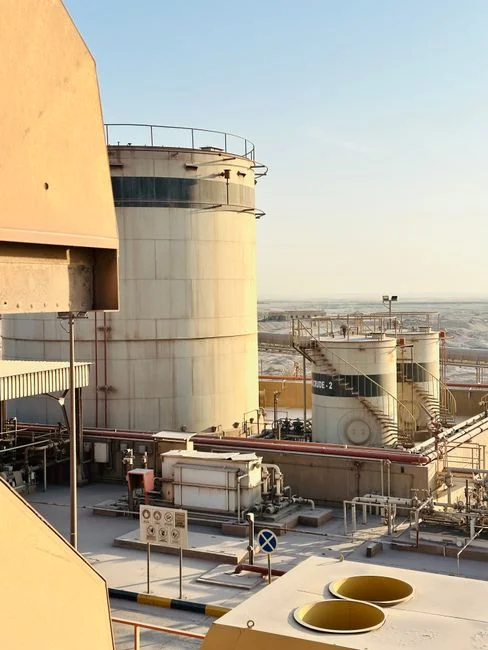
DAF separates wastewater through coagulation or flocculation, air dissolution, bubble-particle attachment, flotation and skimming. In a typical arrangement, clarified effluent recycle of 10–30% is pressurized and saturated with air, then released at atmospheric pressure to form microbubbles that carry buoyant aggregates to the surface, according to HydropureWater’s 2025 article.
A clarifier separates solids by gravity. Conventional and lamella configurations are appropriate when settleable solids dominate and the objective is economical solids capture without the pressure equipment and chemical conditioning required for a typical DAF train. A lamella configuration can also be considered when footprint is constrained, but actual hydraulic and solids loading still require stream-specific verification.
HydropureWater’s 2025 source cites a DAF operating envelope of 4–6 bar saturation, 0.2–0.5 kWh/m³ energy and 0.5–5 mg/L polymer for the industrial packages discussed. These values are initial comparison inputs, not guaranteed demands for a Tulsa factory stream.
For mixed oily and heavy-solids streams, a practical process flow is screening, source segregation or equalization, heavy-solids removal, chemical conditioning, DAF, residuals handling and further biological or polishing treatment where required. The DAF flotation tank is only one component: chemical dosing, air saturation, recycle pumps and sludge handling determine operating reliability. Automatic chemical control must therefore be evaluated with the flotation vessel, not purchased separately from it.
| Design element | DAF train | Clarifier train |
|---|---|---|
| Primary mechanism | Chemical conditioning and bubble attachment | Hydraulic settling |
| Best fit | Oil, FOG, buoyant or emulsified material | Heavy, readily settleable solids |
| Core equipment | Flotation tank, saturation vessel, recycle pump, air supply and dosing | Settling tank, sludge collection and withdrawal |
| Principal operating controls | Polymer dose, pH, saturation pressure, recycle and air supply | Inlet control, scraper operation, sludge withdrawal and level |
| Residual stream | Surface float | Bottom underflow |
Compare Performance, Footprint and Operating Burden
HydropureWater’s 2025 article reports that industrial DAF systems can remove up to 95% FOG and 92–97% TSS when polymer dose, pH and 4–6 bar saturation are controlled. These are controlled-process indications, not guaranteed outcomes for every transportation-equipment stream.
DAF can offer a material footprint advantage. HydropureWater’s 2025 source cites surface loading of 5–15 m/h and says DAF can treat the same flow as a settler in approximately 20–25% of the footprint. That advantage matters in a factory where available area is limited, but it does not eliminate the space required for equalization, chemical dosing, pumping, residuals storage and maintenance access.
DAF also adds operating complexity. It requires pumps, a pressure vessel, compressed air, chemical dosing, controls and operator attention to chemical feed and saturator performance. A clarifier generally offers simpler operation, but it may perform poorly on emulsified oil and light solids and may require a larger footprint. Its dilute underflow can increase hauling cost.
Residuals concentration can change the economics. HydropureWater’s 2025 article states that DAF float commonly reaches 3–5% solids, compared with 1–2% for clarifier underflow, and that this can reduce haul volume by 50–70%. The same source cites DAF energy consumption of 0.2–0.5 kWh/m³ and polymer use of 0.5–5 mg/L while noting that sludge disposal dominates operating cost in the comparison.
| Procurement issue | DAF | Clarifier | Evidence needed from supplier |
|---|---|---|---|
| Oil and light-solids removal | Stronger fit when conditioned | Limited for emulsified or buoyant material | Stream-specific removal data |
| Footprint | Potentially 20–25% of settler area for the same flow, per HydropureWater 2025 | Potentially larger | Certified dimensions and loading basis |
| Residuals concentration | Typically 3–5% float in the cited source | Typically 1–2% underflow in the cited source | Solids percentage and daily wet volume |
| Utilities | Power, compressed air, chemicals | Power and sludge withdrawal | Connected loads and operating range |
| Operational burden | More controls and sensitive chemistry | Simpler mechanical operation | Maintenance plan and spare parts |
| Variable production | Needs equalization and reliable controls | Needs peak-hydraulic verification | Test results at peak flow and worst wastewater condition |
For a transport-equipment plant with changing assembly schedules, compare peak-flow control, equalization, upset response and maintenance access. Do not award equipment by nameplate flow alone.
Evaluate Capital Cost and Lifecycle Economics
HydropureWater’s 2025 article places industrial DAF packages in the 4–300 m³/h range at a broad capital-cost range of $50,000–$500,000, with SS304 versus SS316 construction and automation level affecting price. That is a screening range for packages, not a project estimate.
Installed cost also depends on tanks, foundations, piping, electrical work, controls, equalization and pretreatment scope. Clarifiers can have lower capital cost when the wastewater contains heavy, readily settleable solids, but the supplied research provides no fixed clarifier-price range. Request a stream-specific quotation rather than inserting an unsupported number.
| Cost bucket | DAF evaluation | Clarifier evaluation |
|---|---|---|
| Installed equipment | Package range of $50,000–$500,000 for 4–300 m³/h industrial units, before project-specific installation, per HydropureWater 2025 | Obtain a scoped quotation; no fixed range is supplied |
| Chemical use | Budget against 0.5–5 mg/L polymer cited in 2025, then replace with pilot data | Usually lower for simple gravity separation, subject to treatment objectives |
| Energy and compressed air | Use 0.2–0.5 kWh/m³ as an initial input from HydropureWater 2025 | Request connected power and sludge-pumping duty |
| Operator attention | Include controls, chemistry and saturator maintenance | Include sludge collection, scraping and maintenance |
| Residuals handling | Evaluate 3–5% float and potential 50–70% haul-volume reduction cited in 2025 | Evaluate 1–2% underflow and the resulting hauling exposure |
| Downstream treatment | Include when reuse, biological treatment or polishing is required | Include when reuse, biological treatment or polishing is required |
Use the cited DAF energy and polymer values only as initial budgeting inputs, then replace them with pilot or vendor-guaranteed duty data. Evaluate the residuals endpoint explicitly because the difference between concentrated float and dilute underflow can affect hauling frequency and disposal cost.
If the plant expects future reuse or stringent discharge requirements, include downstream treatment and residuals-disposal costs. Comparing only the clarification skid can produce the wrong award decision. Where residuals require further dewatering, evaluate a filter press for DAF float and clarifier sludge as part of the complete residuals system.
Navigate Tulsa Pretreatment and Residuals Requirements
Industrial treatment selection in Tulsa must follow the regulatory route applicable to the factory, not historical municipal effluent values. The Water Environment Federation’s Industrial Wastewater Management, Treatment, and Disposal manual FD-3, third edition, provides the framework for screening federal pretreatment prohibitions, categorical standards, local pretreatment limits, permitting and residual-disposal requirements.
Do not apply the EPA Tulsa 201 Facilities Plan/EIS municipal values directly to a private factory. The August 1982 document lists Northside interim effluent limitations of 5 mg/L dissolved oxygen, 5 mg/L BOD5, 5 mg/L TSS, 3 mg/L total ammonia and 200 fecal coliform per 100 mL. Those values describe the municipal facility context in that historical planning document; they are not the factory’s current permit.
The Tulsa plan nevertheless identifies the engineering issues that must be resolved: process selection, capacity, effluent quality, sludge management, disposal or reuse and site constraints. Confirm whether the DAF or clarifier will discharge to the sewer or feed another on-site process, then obtain the factory’s current pretreatment or NPDES route from the receiving authority.
Evaluate the float or underflow destination during equipment selection. The supplied 2025 biosolids source notes that 40 CFR Part 503 governs sewage-sludge use and disposal and cites pollutant ceilings including 75 mg/kg for arsenic and 840 mg/kg for lead. Industrial-residual classification and Oklahoma or local requirements still require project-specific review; the cited sewage-sludge rule does not by itself establish the factory’s disposal route.
| Compliance question | Document or confirmation required | Equipment consequence |
|---|---|---|
| Is the discharge indirect to sewer or direct? | Current permit route confirmed with the receiving authority | Different pretreatment and reporting requirements |
| Which categorical or local limits apply? | Current pretreatment permit and applicable local limits | Sets the required treatment endpoint |
| Will the unit feed reuse or biological treatment? | Downstream design basis | DAF or clarifier is pretreatment rather than final treatment |
| Where will residuals go? | Waste-characterization result and disposal-site acceptance | Sets float or underflow handling and dewatering needs |
| Do metals, PFAS or destination restrictions matter? | Current analytical screening and receiving-facility requirements | May change waste classification and disposal options |
Include metals and PFAS screening in the waste-characterization plan where relevant. Do not assert a specific local limit without current permit data. A residual filter press can reduce hauling volume, but it does not determine whether the residual is legally acceptable for the selected destination.
Use a Pilot and Procurement Checklist Before Ordering
A pilot should test the actual mixed wastewater because machining coolant, oily runoff, washdown and cleaning streams can behave differently in combination. A representative pilot or bench study should record TSS, FOG, oil character, particle density, pH, metals and settleability.
Compare gravity settling against microbubble flotation using the same feed. Vary chemical dose and operating conditions rather than accepting a generic removal percentage. The output should show not only clarified-water quality, but also the consistency and volume of the residual generated.
- Run the pilot on representative production and upset conditions.
- Compare gravity settling and flotation with identical feed samples.
- Establish the chemical dose, pH and saturation conditions needed for the result.
- Measure hydraulic and solids loading rather than relying only on removal efficiency.
- Characterize float and underflow for consistency, volume and disposal route.
- Obtain enforceable guarantees tied to the actual wastewater and operating envelope.
- Confirm installation utilities, controls and maintenance access before approval.
| Procurement item | Acceptance evidence to request |
|---|---|
| Performance | Repeatable clarified-water quality on representative wastewater, with stated sampling conditions |
| Sizing | Hydraulic and solids loading at peak flow, plus equalization and upset-response criteria |
| Process inputs | Polymer range, chemical storage, pH control, energy use and compressed-air demand |
| Residuals | Float or underflow solids concentration, daily wet volume and defined destination |
| Equipment | Skid dimensions, materials, controls, available redundancy and utility connections |
| Installation | Foundation, piping, drainage, access, lifting, odor control and electrical requirements |
| Commercial acceptance | Performance guarantee, startup support, operating documentation and maintenance requirements |
Verify utilities, compressed air, access, lifting, drainage, odor control, controls integration, startup support and maintenance access for the Tulsa installation. Do not approve final equipment sizing until peak flows, equalization requirements, sewer limits, residuals destination and the receiving authority’s pretreatment position are documented.
Frequently Asked Questions
What is the budget difference between DAF and a clarifier for a Tulsa factory?
HydropureWater’s 2025 article broadly cites $50,000–$500,000 for industrial DAF packages handling 4–300 m³/h, depending on construction material and automation. This is not an installed project price. Request a comparable quotation covering foundations, piping, electrical work, controls, equalization and pretreatment, then add chemical, energy, maintenance and residuals-disposal costs. No fixed clarifier-price range is supplied in the research, so a responsible estimate requires the same scope of work.
How should a factory size DAF or a clarifier?
Base selection on representative flow and contaminant data, including peak-to-average variation, solids density, FOG, oil character, pH, settleability and the required discharge or reuse endpoint. Ask the supplier to identify the governing hydraulic and solids-loading basis, equalization requirement and worst-case operating condition. A nameplate flow comparison is not an adequate sizing check.
Are the 1982 Tulsa municipal wastewater limits applicable to a private factory?
No. The EPA Tulsa 201 Facilities Plan/EIS, published in August 1982, lists interim Northside municipal values of 5 mg/L dissolved oxygen, 5 mg/L BOD5, 5 mg/L TSS, 3 mg/L total ammonia and 200 fecal coliform per 100 mL. Obtain the factory’s current pretreatment or discharge conditions from the receiving authority. A permit review can also determine whether the project requires a direct-discharge route rather than sewer pretreatment.
How should a Tulsa plant select a DAF or clarifier supplier?
Require stream-specific performance data, enforceable guarantees tied to the actual wastewater, utility and footprint data, chemical and energy assumptions, and a residuals-handling plan. Ask how the supplier will demonstrate performance at peak flow and upset conditions, who controls polymer feed, how saturator failure is addressed, and what startup and maintenance support is included. Also request a delivery schedule tied to approved drawings, permit conditions and site readiness.