Start with the discharge requirement and the waste streams
Chemicals and allied-products or explosives plants near Romney meet sewer pretreatment obligations by characterizing each waste stream separately, establishing permit-specific treatment objectives, removing regulated constituents, and verifying the final effluent before discharge. The supplied evidence identifies pH control, coagulation, flocculation, clarification, filtration, and sludge dewatering as pretreatment functions, but actual discharge limits must come from the receiving sewer authority and the plant’s permit. Equipment selection should follow that requirements review—not precede it.
Obtain the current discharge limits, applicable industrial sewer pretreatment permit, fee structure, monitoring requirements, prohibited-discharge list, and approval process before finalizing a treatment train. Separate process water, equipment or floor washdown, vehicle washdown, contaminated stormwater, laboratory drains, and spent cleaning solutions where applicable. Explosives manufacturing, blending, loading, detonation, and associated wash streams should not be combined into a generic “plant wastewater” category without confirming their chemistry and operational controls.
For each stream, record flow rate, operating schedule, batch or continuous generation, pH, suspended solids, oil and grease, metals, surfactants, and any explosive or energetic residues identified by the plant’s safety and environmental teams. FRED WPU067902 is not a discharge limit: the Federal Reserve Bank of St. Louis identifies it as a monthly producer-price index for chemicals and allied products, specifically explosives and blasting accessories.
A source-by-source matrix converts that information into a procurement and compliance basis:
| Waste stream | Required characterization | Pretreatment function | Equipment or chemistry | Sampling point and permit link |
|---|---|---|---|---|
| Process wastewater | Flow, pH, suspended solids, metals, surfactants, oil and grease | Neutralization, precipitation, coagulation, solids separation | Dosing, DAF or clarifier as justified by testing | Raw, post-treatment, and final discharge; identify applicable permit parameter |
| Equipment and floor washdown | Generation frequency, cleaning chemistry, batch volume | Equalization, pH control, emulsified-oil removal | Equalization and treatment selected by representative sample | Composite or grab method defined in the sewer authorization |
| Vehicle washdown | Oil and grease, suspended solids, detergents | FOG capture and solids removal | DAF or pretreatment and separation | Discharge point linked to monitoring frequency and method |
| Contaminated stormwater | Runoff source, rainfall exposure, pollutants | Source control, equalization, treatment if required | Collection and treatment defined by authority requirements | Representative event samples where required |
| Laboratory and spent-cleaning drains | Unique constituents, incompatibilities, flow | Stream-specific neutralization or separation | Dedicated collection or verified compatible treatment | No uncontrolled commingling before sampling |
The related source-separation approach for industrial discharge compliance illustrates why the permit and the waste-stream matrix should precede equipment selection.
Match each contaminant to a pretreatment function
Each constituent requires a defined treatment function before a treatment train is specified. pH control is foundational where neutralization or precipitation is required, but the acceptable discharge range must be confirmed with the sewer authority. Suspended material, emulsified oil, dissolved metals, surfactants, and energetic residues should not be assumed to respond to one common chemical addition.
ALAR identifies ferric sulfate, Fe₂(SO₄)₃, as a treatment chemical for pH adjustment, coagulation, and precipitation of dissolved heavy metals. Its cited commercial scope includes granular F201 and specialty liquid L-F201 blends, with lower-pH operation and contaminant removal during co-precipitation. That supplier evidence supports application in the design basis; it does not establish the dose for a plant without representative wastewater testing.
Cationic and anionic polymers bridge fine particles into larger flocs. ALAR states that this can improve flow rates and effluent quality, reduce filter-aid consumption, and create operating-cost savings. A buyer should require the associated test conditions, dose range, and performance data before treating these claims as guarantees.
For bentonite-based one-step treatment, ALAR lists applications involving emulsified oils, ink particles, surfactants, phosphates, suspended solids, and dissolved metals. The same source describes a batch-treatment application of up to 10,000 gallons. Whether that treatment fits a continuous plant stream depends on actual flow, batch size, chemistry, and the required endpoint.
| Primary contaminant or objective | Required treatment function | Candidate approach | Evidence still required |
|---|---|---|---|
| Acidity or alkalinity | pH neutralization | Dosing system with controlled acid or base feed | Permit pH range, raw pH variation, and flow |
| Dissolved heavy metals | pH adjustment and precipitation | Ferric sulfate chemistry | Metal species, concentration, pH response, and residual solids |
| Fine suspended solids | Coagulation and flocculation | Cationic or anionic polymer | Particle characteristics, solids loading, and separation test |
| Emulsified oil, ink, surfactants, phosphates, or dissolved metals | Chemical capture or encapsulation before separation | Bentonite-based one-step treatment | Representative batch testing and compatibility with the selected separator |
| Oil, grease, and floatable solids | Physical separation | DAF as the leading candidate | FOG loading, free/emulsified oil split, and effluent targets |
Confirm every formulation through bench or pilot testing using representative samples. ALAR specifically offers laboratory bench testing for individual waste streams, and the supplied evidence emphasizes that industrial wastewater behavior changes with production, cleaning cycles, and raw-material changes. For repeatable feed, an automatic chemical dosing system for pH and coagulation should be evaluated against the proposed chemistry and control requirements.
Build a pretreatment train that can be verified
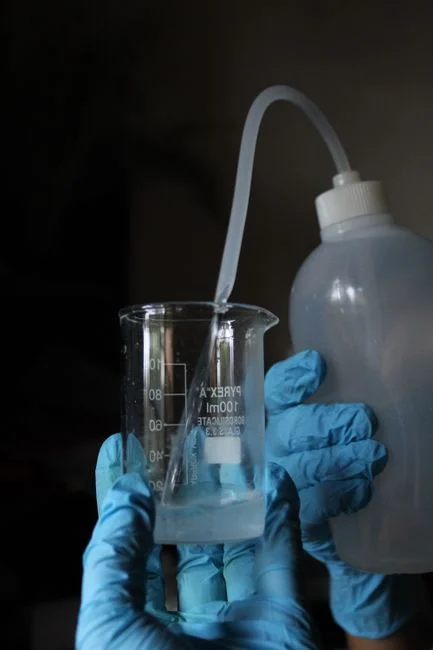
A verifiable pretreatment train preserves the logic from source control to final compliance sampling. Each stage must have a defined contaminant-removal function, an operating control, and a sample point that can identify where performance is failing.
- Collect and equalize. Route streams through appropriate segregation and equalization. This is necessary where batch releases or slug loads could otherwise overwhelm downstream treatment.
- Adjust chemistry. Apply the pH adjustment and treatment chemical selected through representative testing. Automatic dosing must be checked against the waste’s actual variability and the permit’s applicable limits.
- Condition suspended material. Use coagulation and flocculation where the objective is to make suspended material easier to separate. Dose selection should follow solids characterization rather than a generic feed rate.
- Remove floatables or solids. Use dissolved air flotation where suspended solids, FOG, oil and grease, or colloidal matter are central to the treatment objective. An industrial dissolved air flotation system provides a physical-separation option, but the application still depends on the verified waste characteristics.
- Filter and dewater. Use clarification or filtration when solids separation governs the duty, then route generated sludge to a verified dewatering method. A plate-and-frame filter press is an available solids-separation step, but its selection requires sludge-volume, solids-content, and cake-handling information.
- Sample and release. Place final sampling after treatment and immediately before sewer discharge. Retain chemical dosage, operating conditions, laboratory results, bypass events, and sludge-disposal records.
Equipment capacity is not proof of treatment performance. Verify the actual effluent against the applicable permit and sewer limits using the required methods. A missing additive should not be interpreted as proof that no contaminant is present, particularly where a constituent may remain dissolved, emulsified, or attached to fine solids.
Choose between chemical conditioning, DAF, and clarification
The sensible starting point depends on the contaminant and the separation mechanism that must deliver the permit result. Chemical conditioning prepares wastewater for removal; DAF removes floatable material; clarification separates settleable solids. The final choice should emerge from characterization and representative testing.
| Starting approach | Use it when the treatment objective is | Design checks required | Main risks if selected without testing |
|---|---|---|---|
| Chemical dosing | pH correction, precipitation, coagulation, or flocculation | Raw chemistry, dose-response curve, mixing, feed rate, residual handling | Incorrect chemical or dose; poor solids capture; excessive consumption |
| DAF | Removal of floatables, FOG, oil and grease, colloids, and suspended solids | FOG split, solids loading, hydraulic flow, recycle performance, skimming | Emulsified oil or fine solids not recovered; unstable flotation |
| Clarifier | Removal of predominantly settleable or flocculated solids | Settling test, floc properties, solids inventory, sludge withdrawal | Carryover, sludge accumulation, or unsuitable floc structure |
Start with chemical dosing when pH correction, precipitation, coagulation, or flocculation is the principal task. Use an automatic dosing system when repeatable feed is required, but define control logic from the wastewater data. Start with DAF when floatables and FOG make physical separation central. Start with clarification when settleable or flocculated solids dominate and the selected chemistry supports lamella separation. The DAF versus clarifier selection for chemical wastewater provides a related selection framework.
Treat sludge dewatering as part of the purchase. A plate-and-frame filter press can perform solid-liquid separation after sludge generation, but solids production and disposal remain part of the treatment scope. Require each bidder to identify missing inputs and assumptions, and do not accept a guaranteed pH or contaminant limit without the stated waste stream, test method, and operating range.
Turn treatment performance into a compliance record
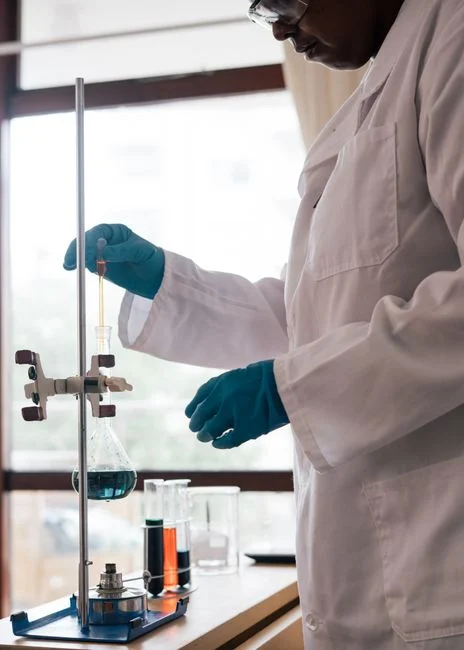
Compliance evidence must connect each laboratory result to a treatment stage and operating condition. Sample points should exist for raw wastewater, post-chemical-conditioning, post-separation, and final discharge. This structure lets the operator determine whether a failed parameter arose from characterization error, chemical control, separation performance, or upstream production changes.
Maintain operating-control records for dose rate, pH, flow, skimming or sludge-removal frequency, filter-aid usage, bypass events, and laboratory results. The industrial sewer pretreatment permit or sewer authorization should define monitoring frequency, sample preservation, analytical methods, reporting, and corrective-action requirements; the treatment vendor cannot substitute for that document.
ALAR’s cited pretreatment chemical approach uses bench testing for each waste stream to select formulation and dose. That work is design evidence, not independent regulatory validation. Keep the original wastewater characterization, test protocol, sample identity, results, proposed chemistry, and engineering interpretation together in the compliance file.
Review the file whenever production, raw materials, cleaning chemicals, product mix, or wastewater chemistry changes. For chemicals and explosives operations, the safety and environmental teams should also determine whether a material change affects energetic-residue characterization or sampling controls. The industrial pretreatment compliance workflow illustrates the broader need to preserve that evidence chain.
Plan procurement, validation, and operating cost
A defensible procurement process compares bidders on the same waste streams, permit requirements, and acceptance basis. Issue each supplier the wastewater characterization, permit package, proposed treatment objectives, operating assumptions, and required deliverables. Require every bid to identify exclusions and missing information rather than relying on a common equipment configuration.
The September 2026 FRED explosives and blasting-accessories Producer Price Index was 353.938, with Index 1982=100 and not seasonally adjusted, according to the Federal Reserve Bank of St. Louis. Use that index only as general cost-planning context; it does not specify treatment-equipment prices or establish a budget for a pretreatment system.
Compare lifecycle inputs rather than purchase price alone: chemical consumption, sludge disposal, filter-aid use, energy, maintenance, controls, sampling, and operator time. Define who develops the wastewater characterization, who performs bench or pilot validation, who supplies startup and training, and who remains responsible for final permit compliance.
Make acceptance conditional on representative-waste testing, startup training, complete operating documentation, and confirmation that the proposed train can meet the receiving sewer authority’s requirements. The chemical-wastewater equipment selection framework can support that technical comparison, but the site’s permit and wastewater data remain controlling.
Frequently Asked Questions
What sewer discharge limits apply to a chemicals or explosives plant near Romney?
The controlling values come from the receiving sewer authority and the site’s industrial sewer pretreatment
Frequently Asked Questions
What sewer discharge limits apply to a chemicals or explosives plant near Romney?
Discharge limits for facilities near Romney are primarily governed by the West Virginia Department of Environmental Protection (WVDEP) and local Publicly Owned Treatment Works (POTW) pretreatment programs. Plants must typically adhere to National Pollutant Discharge Elimination System (NPDES) permits which often restrict Total Suspended Solids (TSS) to under 250 mg/L, Biological Oxygen Demand (BOD) below 250-300 mg/L, and Oil & Grease below 100 mg/L. Specific explosives-related contaminants, such as TNT or RDX, are strictly regulated under EPA categorical pretreatment standards, often requiring concentrations in the low parts-per-billion (ppb) range.
Is DAF or a lamella clarifier the better starting point for chemical-plant wastewater near Romney?
The choice depends on the specific gravity and nature of the contaminants. A Dissolved Air Flotation (DAF) unit is generally superior for chemical plants dealing with emulsified oils, fats, or lightweight suspended solids that have a specific gravity near or less than 1.0. Conversely, a lamella clarifier is the better starting point for inorganic chemical processes where solids are heavy, settleable, and dense, as it utilizes inclined plates to provide a large settling surface area in a small footprint, effectively removing particles with higher specific gravities.
How do you size a wastewater pretreatment system for a batch chemical plant?
Sizing must be based on the maximum daily volume of the largest batch discharge rather than the daily average. Engineers calculate the required equalization tank volume by determining the peak flow rate (gallons per minute) and the duration of the discharge, typically ensuring the tank can hold 1.5 times the maximum batch volume to account for safety margins and surge capacity. The downstream treatment components—such as pumps, filters, and chemical feed systems—are then sized to process this stored volume over a steady, controlled timeframe to prevent hydraulic overloading of the downstream biological treatment system.
What information should I request from a wastewater treatment equipment supplier?
You should request a formal process guarantee that specifies effluent quality targets, a detailed equipment footprint layout, and a comprehensive list of utility requirements including power, compressed air, and chemical dosing rates. Additionally, demand a pilot study report or data from a reference facility treating a similar chemical matrix, as well as a complete bill of materials and a detailed maintenance schedule. It is critical to obtain documentation regarding the materials of construction to ensure compatibility with the specific corrosive or reactive chemicals present in your wastewater stream.
How can a plant reduce chemical and sludge-disposal costs without missing pretreatment limits?
Costs can be significantly reduced by implementing source segregation to prevent clean process water from mixing with high-strength waste streams, thereby reducing the total volume requiring treatment. Utilizing automated real-time monitoring, such as ORP (Oxidation-Reduction Potential) and pH sensors, allows for precise dosing of treatment chemicals, preventing the waste associated with over-treatment. Furthermore, optimizing sludge dewatering processes—such as using filter presses to achieve 30-40% solids content—dramatically lowers the weight and volume of the waste, directly reducing hazardous or industrial waste disposal fees.