What determines MBR versus activated sludge in Dothan
The choice between MBR and conventional activated sludge for a Dothan mining or metals project depends on wastewater chemistry, peak flow, reuse targets, pretreatment needs, available footprint and operating resources. Conventional activated sludge applies biological treatment followed by clarification; an MBR retains the biological reactor and replaces the clarifier with membrane solids separation. The ESWP 2025 conference archive, Conference Archives (2025), supports evaluation of complete treatment trains, including membranes, softening and cross-flow ultrafiltration, rather than standalone products.
Before selecting equipment, characterize flow variability, pH, alkalinity, hardness, suspended and settleable solids, metals, toxicity, salts, temperature and anticipated industrial upsets. The supplied research provides no universal Dothan mine-water values or site-specific regulatory limits, so those values must come from a project-specific sampling program and the applicable discharge or reuse requirements.
Define the destination before choosing the reactor: compliant discharge, on-site process-water recycling, transfer to another process, reuse feed, or preparation for reverse osmosis, ultrafiltration or zero-liquid-discharge treatment. For Dothan, establish whether effluent will remain on site or move to another receiving system. That decision determines the required solids separation and whether additional dissolved-metals or demineralization steps are mandatory. A regional mining and metals MBR comparison is useful for structuring that decision, but it cannot supply missing site data.
How the two treatment trains work
Conventional activated sludge and MBR both use biological organisms to remove biodegradable contaminants; the main architectural difference is how the treatment system retains solids and delivers clarified effluent.
A conventional train normally progresses through screening and equalization, biological treatment, secondary clarification, and any required downstream polishing or disinfection. Sludge is separated in a secondary clarifier, while the biological stage remains a distinct process unit.
An MBR generally progresses through screening and equalization, a biological reactor, membrane separation and any additional treatment needed for dissolved contaminants or reuse. The membrane performs the solids-separation function associated with the clarifier. It does not automatically remove dissolved metals that remain in the permeate; those require biological, chemical, adsorption or other polishing mechanisms where applicable. ESWP paper IWC 25-20, Rethinking MBR Plant Layouts—Membranes Tanks Are Not Simply Replacing Clarifiers (2025), explicitly cautions against treating a membrane tank as a simple drop-in clarifier. Layout, tankage, hydraulic behavior, solids removal and maintenance arrangements must be engineered as a system.
The integrated MBR membrane bioreactor system described in HydropureWater’s 2026 product catalogue combines activated-sludge treatment with submerged PVDF membrane filtration and is marketed for industrial process-water and reuse applications. That equipment description does not replace a project-specific mass balance, biological loading assessment or pilot study. The MBR cost and operating-economics guide provides a useful framework for examining the full treatment train rather than membrane hardware alone.
Mining and metals wastewater treatment comparison
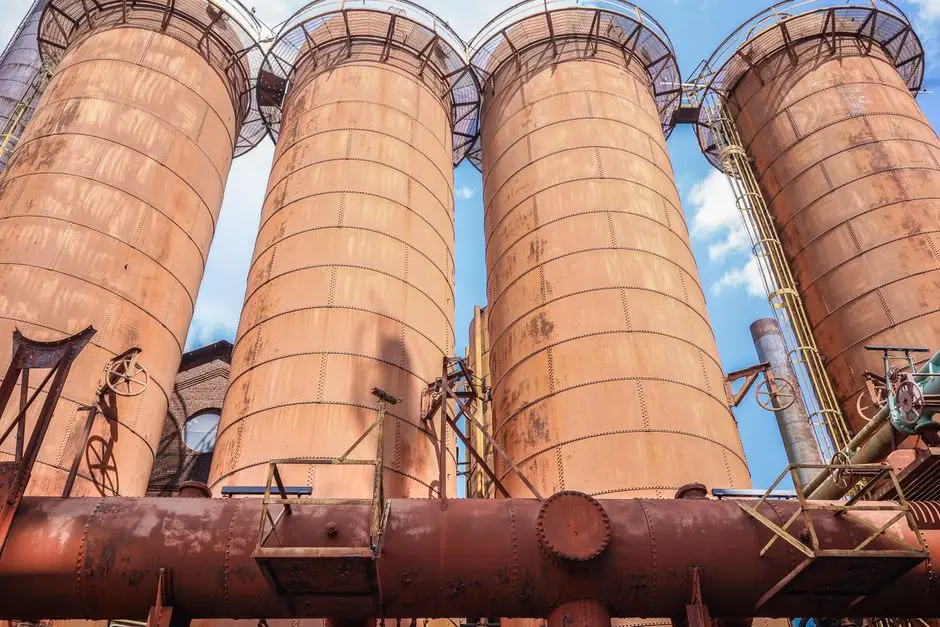
MBR changes the solids-retention and separation architecture of activated-sludge treatment, but it does not replace the need to control metals, scale-forming constituents, toxicity and fouling before the biological stage.
| Decision parameter | Membrane bioreactor | Conventional activated sludge | Procurement basis |
|---|---|---|---|
| Biological process | Activated-sludge biology with membrane solids separation | Activated-sludge biology followed by clarification | Require biological loading, toxicity and inhibition assessment |
| Footprint | HydropureWater’s 2026 integrated MBR catalogue claims 60% less footprint than conventional systems | Includes biological reactor, clarifier, piping and ancillary equipment | Treat 60% as a supplier-specific claim, not a universal guarantee |
| Solids separation | HydropureWater’s 2026 integrated MBR catalogue states filtration below 1 μm | Secondary clarification with a specified settled-solids or turbidity basis | Compare the same solids metric at the same design flow |
| DF-series module data | HydropureWater’s 2026 catalogue states 0.1 μm pore size | Not applicable | Confirm whether the stated pore size applies to the proposed module configuration |
| Listed capacity | Integrated MBR: 10–2,000 m³/day | Not stated in the supplied research | Use actual flow, peak factor and loading data for sizing |
| DF-series capacity | 32–135 m³/day, with 80–225 m² configurations | Not stated in the supplied research | Confirm hydraulic and biological loading under Dothan wastewater conditions |
| Reuse preparation | Can reduce suspended solids delivered to downstream polishing | Provides clarified effluent before any required polishing | Specify the final reuse or RO-feed quality requirement, not only MBR permeate |
| Fouling exposure | Suspended solids, precipitated metals, hardness, scale formers and biological growth require controls | Clarifier sludge blanket and solids washout require management | Obtain pilot results, cleaning philosophy and residual-metal analysis |
The numeric specifications above come from HydropureWater’s 2026 verified product catalogue for the integrated MBR membrane bioreactor system and DF-series flat-sheet MBR modules. They describe those supplier offerings, not universal MBR performance.
For mine-water reuse, membrane solids separation can reduce the solids burden on downstream polishing, but that does not establish compliance with every reuse, ultrafiltration or reverse-osmosis feed specification. Dissolved metals, hardness, silica, salts and other constituents must be addressed separately.
Fouling is the principal process risk to resolve during design. Elevated solids, metals precipitation, hardness, scale-forming compounds and biological growth can increase cleaning and pretreatment demands. The supplied research provides no universal energy consumption or cleaning-frequency comparison for Dothan mining wastewater. Request site-specific pilot results, membrane-fouling analysis, chemical-cleaning assumptions and a defined operating strategy.
Pretreatment and process integration for mine water
A stable biological stage depends on controlling what enters it, while downstream reuse quality depends on what remains soluble after biological treatment.
Sequence screening, equalization, solids removal, pH adjustment and biological treatment according to the influent characterization. There is no defensible universal mine-water recipe because drainage, process discharges, washwater and industrial upsets can produce different contaminant loads within the same operating day.
For metals, pH adjustment and precipitation may be appropriate, but chemicals and equipment should not be selected before jar testing and residual-metals analysis. The test should identify the required chemical dose, resulting pH, sludge generation, residual contaminant levels and impacts on downstream treatment. A biological inhibition test is also needed where toxicity is present.
The ESWP 2025 archive identifies several pretreatment pathways relevant to integrated treatment. Paper IWC 25-17, Industrial Wastewater Treatment with Lime/Soda Ash Softening Coupled with Cross Flow Ultrafiltration as a Pretreatment for Reverse Osmosis (2025), addresses softening and cross-flow ultrafiltration. Paper IWC 25-18, Advancing Industrial Water and Wastewater Treatment with Ultrafiltration Membranes Designed for Reduced Pretreatment (2025), covers ultrafiltration membranes intended to reduce pretreatment requirements. Neither establishes a universal configuration for a Dothan site.
Paper IWC 25-65, Thermodynamic Modeling of Water Softening for Direct Lithium Extraction: Predictive Insights and Process Optimization (2025), shows why process-specific chemistry modeling may be necessary where brine and metals streams affect softening. Evaluate climate, installation constraints and access to operators for the Dothan project, but do not infer biological performance from climate alone. Obtain wastewater-temperature data and assess seasonal changes during pilot testing. Where reuse requires demineralization, evaluate the available ultrafiltration water-treatment system and integrated purification equipment as possible downstream stages, not as substitutes for missing characterization.
Cost, footprint and procurement decision framework
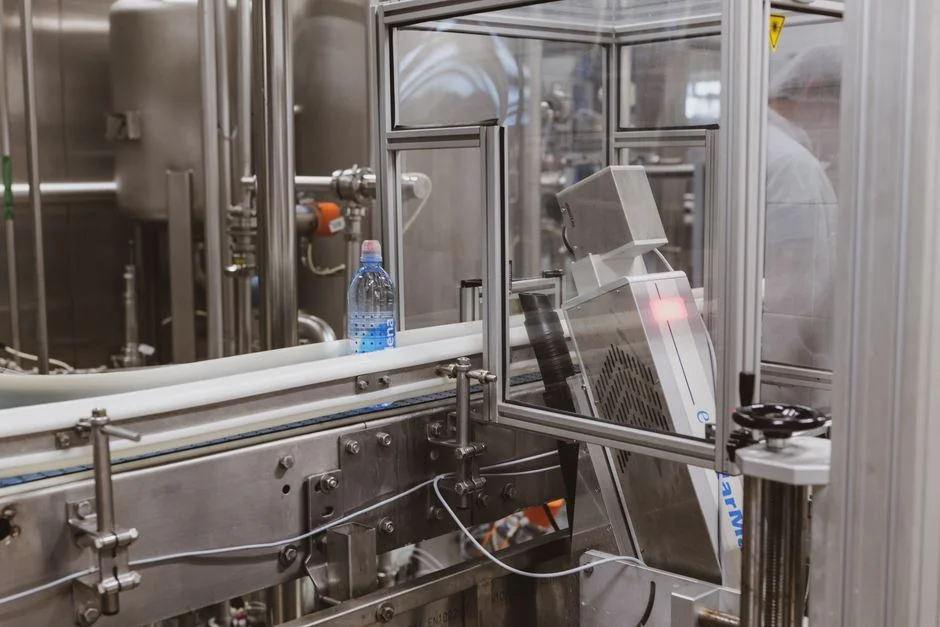
A defensible MBR-versus-CAS comparison must price the complete treatment train and its operating consequences, not membrane modules alone.
Installed cost should include equalization, screening, solids removal, pH control, the biological reactor, aeration, membranes, controls, pretreatment, sludge handling, polishing and building works. Operating cost should include membrane replacement, cleaning, air scour, energy, operator labor and downtime. The supplied research does not provide a validated MBR-versus-CAS price for mining wastewater in Dothan, so any capital or operating estimate must be developed from project inputs and vendor quotations.
| Scenario | Preferred starting point | Reason | Items to verify before award |
|---|---|---|---|
| Conventional infrastructure and straightforward operation dominate | Conventional activated sludge | Separates familiar biological and clarification functions | Clarifier performance, sludge handling, footprint and downstream polishing |
| Limited footprint or high-quality solids separation dominate | MBR | Integrates biological treatment and membrane solids separation | Supplier-specific footprint basis, hydraulic loading, fouling controls and cleaning |
| Mine-water variability or pretreatment needs exceed one process | Staged or hybrid treatment | Allows pretreatment, biological treatment and polishing to be assigned to their proper functions | Integrated mass balance, control logic, upset response and residual management |
Apply catalog claims only within their stated scope. HydropureWater’s 2026 catalogue states that the DF-series modules use 10–20× lower energy than external cross-flow systems, and that the integrated MBR has a 60% smaller footprint than conventional systems. The first is a supplier-specific comparison; the second is a supplier-specific footprint claim. Neither is a universal Dothan mining-water guarantee.
Require each bidder to state design flow, peak flow, water-quality acceptance criteria, membrane material, module configuration, cleaning strategy, controls, utilities, guarantees, installation schedule and exclusions. A low equipment price that omits pretreatment, sludge handling, controls, building works or membrane replacement is not a comparable bid. Use the MBR cost and operating-economics guide to frame that review, and the regional mining and metals MBR comparison to maintain a consistent technology basis.
Recommended Dothan selection workflow
A defensible selection starts with measured wastewater behavior, not a preference for membrane technology.
- Characterize the wastewater. Collect representative data for flow variability, toxicity, metals, pH, alkalinity, hardness, suspended and settleable solids, salts and temperature. Record industrial upsets and seasonal conditions.
- Define the destination and water quality. Establish the discharge, reuse, transfer or downstream-treatment objective, including the receiving system’s actual requirements.
- Test the treatment train. Complete jar and bench testing for precipitation, pH adjustment, biological inhibition and membrane fouling before fixing equipment.
- Balance residuals. Develop a water, sludge, chemical and concentrated-residual mass balance so treatment steps do not transfer contamination from liquid to sludge without a handling plan.
- Issue a common bid basis. Give MBR and conventional activated-sludge vendors the same flow basis, water-quality targets, footprint, utility, control, maintenance and guarantee requirements.
- Verify local compliance. Confirm permit and reuse requirements for the actual Dothan discharge or receiving system. The supplied sources do not establish site-specific permit limits.
Comparisons for mining wastewater treatment in Newburgh and mining wastewater treatment in Ganado can help structure a common request for information, but Dothan wastewater data and receiving requirements must govern the final selection.
Frequently Asked Questions
Is MBR cheaper than conventional activated sludge for Dothan mining wastewater?
Not necessarily. The comparison must include pretreatment, footprint, membranes, aeration, energy, cleaning, labor, sludge handling and downstream treatment. No supplied source provides a validated MBR-versus-CAS price for mining wastewater in Dothan. Request a like-for-like quotation using the same design flow, peak flow, water-quality targets, utilities, controls and operating assumptions.
Which system is better for metals wastewater where compact installation and reuse matter?
MBR is most compelling when footprint and high-quality solids separation are central and the wastewater can be made compatible with biological treatment. It still requires metals-specific controls, residual-metals analysis, fouling management and any necessary polishing. A conventional system may be more practical when conventional infrastructure and simpler operation outweigh those benefits.
Is nominal daily flow enough to size an MBR?
No. Peak flow, variability, membrane loading, pretreatment, recovery, cleaning conditions and downstream polishing must be included. The integrated MBR’s listed 10–2,000 m³/day and the DF-series modules’ listed 32–135 m³/day are catalogue ranges, not Dothan design recommendations. Require the bidder to show how the proposed configuration handles the measured site flow profile.
How should a buyer select and qualify an MBR supplier?
Require evidence covering the complete treatment train, membrane material, module configuration, controls, utilities, cleaning philosophy, sludge handling, performance guarantees and lifecycle assumptions. Also request comparable references and pilot data under comparable water chemistry. Product claims should remain linked to the specific supplier scope they describe.
Does either technology guarantee permit compliance?
No. Neither MBR nor conventional activated sludge guarantees a permit outcome. The selected train must be based on the actual Dothan receiving and discharge requirements and validated against site wastewater. A mining and metals pretreatment compliance guide can support the pretreatment review, but it cannot establish the project’s applicable limits without site-specific permit information.