Start with the solids, not the screw press
A screw press for poultry processing wastewater should be specified as the final dewatering step in a solids-management train, not as a substitute for upstream wastewater treatment. Screening, FOG removal, coagulation or flocculation, solids separation, and sludge conditioning determine the feed reaching the press. A 2026 poultry-plant study validated a 100 m³/h DAF unit and reported 55–65% sludge moisture after ferric chloride treatment. Final sizing must therefore use plant-specific flow, solids concentration, polymer response, cake-discharge requirements, operating hours, and a supplier performance guarantee based on representative pilot or site data.
A screw press is a sludge-dewatering device, not a wastewater-treatment process. If free oil, grease, fibers, feathers, or colloidal solids remain in the feed, conditioning becomes less predictable, solids capture can deteriorate, and the cake can retain excessive water. The rotary mechanical bar screen for solids exclusion should therefore be evaluated as part of the press feed envelope, not treated as an accessory to a press bid.
The U.S. Environmental Protection Agency’s historical poultry-plant study, published in March 1974, reported average raw-wastewater characteristics of 543 mg/L five-day BOD, 831 mg/L suspended solids, and 863 mg/L COD. These are warning values for characterization, not current design defaults. The same study found that processing and cleanup flows differed by only 6% of total flow over its six-week study period. That finding does not eliminate the need for plant-specific records: flow can also change with slaughtering, evisceration, chilling, cutting, refrigeration drains, and plant cleanup.
Request flow records covering normal production, peak production, cleanup, bypasses, and shutdown periods. An instantaneous flow reading cannot establish a defensible feed basis. Characterization should also quantify total and volatile solids, suspended solids, grease and oil, particle size, fiber content, pH, temperature, and the presence of feathers or other screenings.
| Design input | Evidence required | Why it affects the press |
|---|---|---|
| Flow and production pattern | Normal, peak, cleanup, bypass, and shutdown records | Sets hydraulic feed, storage, and operating-hour requirements |
| Solids concentration | Total and volatile solids; suspended solids | Determines dry-solids loading and expected cake output |
| FOG and screenings | Grease and oil, free oil, fibers, feathers, particle size | Identifies feed conditions outside many press supplier limits |
| Process chemistry | pH, temperature, and conditioning response | Influences coagulant and polymer selection |
Build the treatment train upstream of the press
Colloidal protein and oil-bearing poultry solids make upstream solids separation a prerequisite to dependable screw-press operation. The EPA’s March 1974 study identified colloidal protein as a complication in treating poultry-processing wastewater and recommended coagulation and sedimentation for its removal. The 2026 Polymers study, published April 29, 2026, provides current plant-scale evidence for a ferric-chloride and DAF treatment route.
Define the process as a continuous solids-management train:
- Screening and solids exclusion
- Equalization
- Coagulation or flocculation
- DAF or clarification
- Recovered-sludge collection
- Polymer conditioning
- Screw-press dewatering
- Cake handling
- Filtrate return to the head of the works
For this duty, a poultry wastewater DAF system can remove suspended solids, FOG, oil and grease, and colloidal material before the recovered sludge reaches conditioning and dewatering. It does not eliminate the dewatering duty. Oil, grease, and free-water removal changes the amount and character of solids delivered to the press, so DAF or clarifier solids recovery must be included in the press-feed mass balance.
In the 2026 study, ferric chloride at 38% mass fraction produced treated-effluent turbidity below 30 NTU in a 100 m³/h DAF unit. The same study reported consistent sludge moisture of 55–65%. It also reported an oil yield of 360 L/day and moisture below 2% at the tridecanter outlet. That low-moisture result applies to the recovered oil leaving the oil-recovery step; it is not a screw-press cake specification.
Chemical addition should be treated as a controlled process, not a fixed recipe. A PLC-controlled chemical dosing system can be specified against measured feed, target coagulant or polymer dose, mixing response, and required turndown. The feed calculation must use recovered dry solids from the upstream solids-separation unit, not the original wastewater flow or its total-solids concentration.
| Process stage | Primary duty | Information carried forward |
|---|---|---|
| Screening | Remove feathers, fibers, and coarse solids | Screenings quantity and disposal route |
| Equalization | Reduce flow and feed variability | Peak, minimum, and sustained feed rates |
| Coagulation or flocculation | Destabilize colloidal solids and support separation | Chemical type, dose, mixing, and pH response |
| DAF or clarification | Separate suspended solids, FOG, and recovered sludge | Recovered solids flow, concentration, and oil content |
| Conditioning | Prepare sludge for dewatering | Polymer dose, mixing energy, and bench-test response |
| Screw press | Remove water from conditioned sludge | Dry-solids throughput, capture, cake moisture, and filtrate return |
Establish the screw press design basis
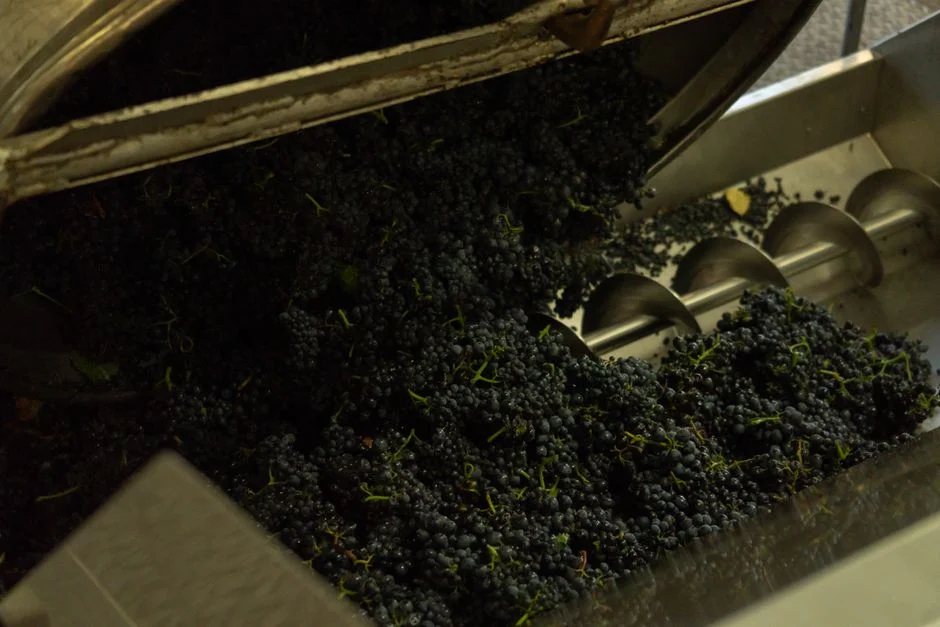
A screw press must be sized from dry-solids loading and operating time, not wastewater volume alone. The central calculation is the mass of solids entering the press multiplied by the required solids-capture basis, with hydraulic feed checked separately for pumping, feed-pump capacity, polymer mixing, and startup conditions. If the recovered-sludge concentration or available operating hours are unknown, the press size is not yet defined.
The EPA’s March 1974 example illustrates the discipline required even for upstream equipment. Its design factors listed influent pumping at 300 gpm and a 70-micron microstrainer with 108 square feet, or 10 m², of screen area. The equipment was tied to defined flow and solids-barrier requirements. The supplied research contains no universal screw-press capacity or cake-dryness guarantee for poultry-processing wastewater; those values must come from site data, representative testing, and a supplier-supported mass balance.
| Parameter | Value or limit required | Source of acceptance |
|---|---|---|
| Feed flow | Normal, peak, and minimum recovered-sludge flow | Site flow records and supplier feed envelope |
| Operating hours | Scheduled and peak-service duration | Plant production and maintenance plan |
| Sludge solids concentration | Total solids, volatile solids, and consistency basis | Representative composite samples |
| Dry-solids production | Mass per operating period | Measured flow multiplied by solids concentration |
| Polymer dose | Product, active basis, dose, and mixing condition | Representative jar or bench testing |
| Feed temperature and pH | Permitted operating range | Site characterization and supplier limits |
| Solids capture | Target and measurement method | Mass balance across the press |
| Cake target | Moisture and handling consistency | Representative performance test |
| Filtrate-return limit | Solids, free oil, and return routing | Filtrate analysis and plant hydraulics |
| Peak factor | Documented basis for peak loading | Production records and supplier duty cycle |
The procurement document should also address odor containment, sanitation access, corrosion resistance, drainage, noise, and safe cake and filtrate routes. These are not secondary mechanical details: they determine whether the installation can be cleaned and operated in a food-processing environment.
Require the supplier to guarantee production rate, solids capture, cake moisture, filtrate quality, and maximum polymer consumption against the submitted design basis. If the guarantee is stated only in hydraulic feed rate, ask the supplier to convert it to dry-solids throughput and show the assumptions behind the conversion.
Choose the dewatering configuration
Screw presses, plate-and-frame presses, belt presses, and thickening equipment should be compared by process fit rather than by one universal performance percentage. The supplied research does not support comparative moisture, capture, or footprint values for these configurations. The procurement comparison must therefore focus on feed variability, operator intervention, continuous versus batch operation, cleaning, cake discharge, integration, and the measurable guarantees each supplier can offer.
A continuous screw press is generally most appropriate where continuous operation, predictable cake discharge, a compact installation, and automation are priorities. Plate-and-frame filtration can suit batch handling, hydraulic pressure, and cake-washing priorities, but its operation, plate handling, washdown, and cake-discharge arrangements must be checked against plant labor and sanitation requirements. Belt pressing introduces tracking, belt alignment, washing, and tension-control issues that must be addressed explicitly if considered.
FKC states that every screw press is custom designed for its application and reports more than 6,000 presses installed worldwide. The relevant engineering conclusion is that configuration is supplier- and project-specific: screw diameter, motor power, machine length, and feed arrangement cannot substitute for a guaranteed duty point. A poultry-plant bid should define the feed basis, production rate, solids capture, cake consistency, polymer range, duty cycle, and cleaning arrangement. If plate-and-frame filtration is retained as an alternative, use the plate-and-frame filter press configuration as a technical comparison basis.
| Selection criterion | Continuous screw press | Plate-and-frame press | Belt press | Thickener |
|---|---|---|---|---|
| Operating mode | Continuous feed and discharge | Batch filling and opening | Continuous filtration and belt discharge | Concentration before downstream dewatering |
| Key integration issue | Feed consistency, torque, cake discharge, and filtrate return | Plate handling, washdown, hydraulic demand, and labor | Belt alignment, washing, tension, and tracking | Solids concentration and downstream capacity |
| Cleaning access | Specify removable or accessible wetted parts | Specify plate and frame access | Specify belt and washing access | Specify screen cleaning and access |
| Commercial outcome | Guaranteed dry-solids rate and capture at defined feed | Guaranteed batch cycle and cake result | Guaranteed belt production and filtrate result | Guaranteed thickening outcome |
Do not select from nominal screw diameter or motor power alone. Ask each supplier to state the guaranteed feed basis, production rate, solids capture, cake consistency, polymer range, duty cycle, and off-spec-feed limits. For a poultry installation, also verify corrosion-resistant wetted parts, food-industry-compatible cleaning access, odor control, and safe cake and filtrate routes.
Condition, commission, and control the installation
Conditioning must be fixed with representative sludge before the polymer program is finalized. Run jar or bench tests on recovered sludge and record polymer product, dose, mixing energy, settleability, filtrate return, and dewatering response. The 2026 Polymers study found no statistically significant effect of polymer type on oil recovery and reported coefficient-of-variation values above 50% during PAC tests. That evidence does not select a press polymer, but it does show why product name alone is an inadequate basis for dosage.
Commission the installation in a controlled sequence:
- Verify sludge routing, valves, flushing, and filtrate-return connections.
- Confirm polymer preparation, concentration, dose control, and mixing.
- Establish feed rate at the approved solids concentration.
- Tune press pressure and rotational speed.
- Run a sustained test at each approved production condition.
Do not judge acceptance from cake appearance alone. Record dry-solids capture, cake moisture, filtrate solids, polymer consumption, torque, feed consistency, washdown requirements, and odor conditions. The 2026 study recommended standardized test durations of at least 72 hours and automated monitoring to reduce variability; that is research guidance for the case study, not a poultry-plant regulatory requirement, but it is a useful commissioning principle.
Set corrective-action thresholds before acceptance testing. Excess polymer use calls for checking dose, product preparation, sludge response, and mixing. Dilute filtrate requires a solids mass balance and checks for carryover, floc breakage, bypasses, and feed dilution. Unstable torque or high cake moisture calls for reviewing feed consistency, conditioning, pressure, and speed. Off-odor conditions require inspection of cake handling, drainage, washdown, ventilation, and containment.
| Commissioning variable | Acceptance evidence | Corrective action |
|---|---|---|
| Polymer consumption | Active product mass per dry-solids mass | Review dose, mixing, and sludge response |
| Dry-solids capture | Feed and filtrate mass balance | Check floc condition, feed rate, and bypasses |
| Cake moisture | Representative composite cake sample | Review conditioning, pressure, and speed |
| Filtrate solids | Sample and flow-proportionate analysis | Check capture, dilution, and filtrate routing |
| Torque | Continuous trend at approved conditions | Review feed consistency and mechanical loading |
| Odor and hygiene | Inspection during sustained operation | Review containment, drainage, washdown, and cake handling |
Build the vendor guarantee and commercial case
A guarantee is defensible only when it identifies the feed conditions and measurement method. The purchase specification should state the accepted feed consistency, production rate, solids capture, cake moisture, polymer consumption, and filtrate quality. It must also state whether production rate means dry-solids throughput or hydraulic throughput, how off-spec feeds are identified, and how the performance test accounts for startup and stabilization.
Recovered oil should not carry the entire investment case. The 2026 poultry study reported a simple payback of 60.7 months, a discounted payback of 64.1 months, and a median NPV of USD 7,925 at a 12% annual discount rate. Its sensitivity analysis found that a 20% decrease in oil price changed NPV to negative USD 21,727. These figures are specific to that study’s project assumptions; they demonstrate why the buyer should separate compliance, disposal reduction, recovered material, and treatment-cost savings.
Request lifecycle costs for polymer, washwater, energy, wearing parts, odor control, cake disposal, and maintenance. Compare alternatives using the same feed basis, production schedule, labor assumptions, and disposal route. Where no quotation is available, require the bidder to state the inputs and calculation method rather than accept an unsupported price.
| Commercial item | Information the bidder must provide | Basis for comparison |
|---|---|---|
| Capital cost | Equipment, installation, controls, access, and utilities | Defined project scope and site assumptions |
| Operating cost | Polymer, washwater, energy, wearing parts, maintenance, and odor control | Approved feed and operating schedule |
| Cake management | Handling, transport, and disposal route | Measured cake production and moisture |
| Performance risk | Off-spec feed, downtime, and remedy conditions | Guaranteed test protocol |
| Business case | Compliance and disposal savings separated from recovered material | Site cost baseline and stated discount rate |
Frequently Asked Questions
Can poultry wastewater be sent directly to a screw press?
No. Direct feed should be excluded unless screening and solids separation precede the press and the conditioned sludge remains within the supplier’s feed limits. Require checks for free oil, grease, fibers, feathers, particle size, solids concentration, and polymer response before acceptance.
How should a screw press be sized for poultry-processing sludge?
Calculate the recovered-sludge dry-solids loading and operating hours from site data, then check hydraulic feed separately. Validate the selected configuration with representative sludge testing and a supplier-supported mass balance. The supplied research provides no universal poultry-wastewater press capacity.
What should a supplier guarantee?
Require guarantees for dry-solids production rate, solids capture, cake moisture, polymer consumption, and filtrate quality against a defined feed basis. Also require the test method, stabilization procedure, off-spec-feed conditions, and remedy for noncompliance.
Is 55–65% sludge moisture a universal target for a poultry screw press?
No. The 2026 Polymers study reported 55–65% moisture for sludge associated with its ferric-chloride and DAF case. It is study-specific and cannot be transferred to another plant without representative testing and a defined feed and conditioning basis.
What reduces screw-press performance in a poultry plant?
Common design and operating risks are variable solids concentration, free oil or grease, excessive fibers, poor conditioning, off-spec polymer feed, inconsistent feed rates, and unsuitable pressure or speed settings. Each should be addressed in the feed envelope, test protocol, and operating controls rather than left to operator adjustment.