Why Airport Wastewater Is a Special Case for Sludge Dewatering
Airport wastewater is a four-stream matrix that does not behave like municipal biosolids, and copying a municipal dewatering spec is the fastest way to under-build an airport dewatering room. The four streams that drive solids loading at a commercial airport are: propylene-glycol and ethylene-glycol aircraft de-icer and pavement anti-icer runoff (Type I and Type IV fluids); oil-water separator skimmings from apron, hangar, and fuel-farm drainage; apron wash and grit residues from sweepers and pressure washing; and terminal sewage blended with catering, lavatory, and ground-support equipment effluent.
Glycol streams deliver high COD/BOD in a low-temperature, highly seasonal pulse that arrives over a few winter months; fuel and FOG streams contribute floatables and emulsified hydrocarbons that disturb floc formation; grit streams add abrasive wear to rotating internals. These are engineering reasons — not procurement preferences — to evaluate the dewatering device against the airport duty profile rather than against a generic POTW biosolids case.
No airport-specific cake-dryness or polymer-dose figures were available in the supplied research. The defensible path to a number is a site-specific jar test and, where sludge volume justifies it, a vendor pilot on a representative airport composite sample. The regulatory frame around this matrix is the airport industrial pretreatment program reviewed by the airport authority and the receiving POTW, the airport's de-icing and stormwater management plan, and any UIC or AST obligations for on-site disposal routes.
How a Screw Press Dewaters Airport Sludge
A screw press dewaters sludge by transporting thickened feed along a slowly rotating auger inside a cylindrical screen, with filtrate passing through the screen openings and the cake compacting under rising back-pressure as it approaches the discharge cone. Polymer-conditioned flocs release water progressively along the shaft; the operating principle is the same as for municipal biosolids, but the upstream chemistry must be matched to the airport feed if the press is to deliver stable cake.
The Schwing Bioset design, as described on the vendor's municipal screw press page, packages the mechanism for unattended service. Wetted components are 304SS; an integrated flocculation tank ensures complete polymer-sludge contact; screen pore diameter decreases over the length of the machine so the unit transitions from thickening to dewatering in one pass; a pneumatic rail actuates a wash ring once per shift without halting dewatering, sharply cutting wash-water demand; a pneumatic-cylinder discharge cone lets operations staff tune back-pressure; the screen cage is split so maintenance is performed in place without pulling the screw; and a sealing lip on the edge of the screw flight cleans the screen interior and enables higher discharge pressure than unsealed designs (Schwing Bioset, schwingbioset.com, accessed 2026).
Each of these features maps to an airport constraint: 304SS resists corrosion from glycol residues, de-icing salts, and fuel traces; enclosed housing supports odor and fugitive-emission control expected at terminal-adjacent sites; the once-per-shift wash ring limits wash-water demand in cold climates; and the split cage reduces mean time to repair on sites where maintenance windows are constrained by flight operations.
Screw Press Parameters That Matter for an Airport Project

An airport specification should require bidders to populate a defined set of parameters so proposals can be scored against the same checklist. The table below lists the parameters a consultant can lift into a spec, with the cells the supplied research did not quantify flagged for vendor or pilot confirmation.
| Parameter | What to require in the bid | Why it matters at an airport |
|---|---|---|
| Wetted-parts material of construction | 304SS minimum; document any higher alloy upgrades offered | Resists corrosion from glycol, chloride-bearing de-icers, and fuel residues |
| Screen pore-size profile | Decreasing pore size from inlet to discharge, with nominal opening values stated | Single-pass thickening-to-dewatering reduces tankage and footprint in basement rooms |
| Discharge back-pressure mechanism | Pneumatic-cylinder cone preferred, with adjustable setpoint range stated | Lets operations tune cake dryness against seasonal feed variability |
| Wash-water consumption | Liters per shift at nameplate feed; confirm with vendor / pilot test | Drives winter water balance and freeze-protection design |
| Drive power and rotational speed | Installed kW and rpm range; VFD or fixed speed | Defines circuit sizing and standby power at terminal-adjacent substations |
| Footprint and dimensions | Overall length × width × height, shipping weight, rigging points | Constrained by basement dewatering rooms and existing structural openings |
| Enclosure rating | Fully enclosed housing, odor-control interface, ventilation coupling | Controls fugitive emissions near passenger terminals |
| Polymer make-down and dosing interface | Coordination point with the dosing skid; signal list and utility requirements | Upstream conditioning determines achievable cake dryness |
| Cake dryness, polymer dose, capture rate | Confirm with vendor / pilot test on airport composite sample | No airport-specific numbers were available in the supplied research |
The screw press is rarely the only unit in an airport dewatering room. Upstream thickening and FOG removal are typically handled by a dissolved air flotation system sized to airport flow (HydropureWater DAF, 4–300 m³/h, 13 standard models per the product page), and batch dewatering is sometimes paired with a plate and frame filter press for predictable sludge windows. Both adjacent units must be specified in the same procurement package so interfaces — feed solids, polymer demand, filtrate return, cake conveyance — are coordinated rather than improvised at commissioning.
Screw Press vs Plate-and-Frame vs Centrifuge for Airport Duty
Three mechanical dewatering technologies are realistic candidates for an airport. The comparison below is structured on airport-specific axes rather than the generic municipal scoring used on most vendor pages.
| Axis | Screw press | Plate-and-frame filter press | Centrifuge |
|---|---|---|---|
| Footprint | Small, skid-mounted; fits basement dewatering rooms | Larger floor area and headroom for plate movement | Small footprint but requires reinforced base and vibration isolation |
| Cold-weather operability | Enclosed housing and freeze-protected wash ring are most tolerant | Exposed cycle; more vulnerable in unheated rooms | Exposed bowl; sensitive to feed temperature and viscosity swings |
| Odor and fugitive emissions | Fully enclosed, good odor control | Typically opens between cycles, weaker containment | Enclosed but ventilated; aerosol risk on open feed ports |
| Variable glycol loading | Forgiving with matched polymer conditioning | Struggles with high organic and oily loads | Forgiving with proper chemistry; sensitive to sand and grit |
| Modularity for retrofit | Skid trains retrofit into existing buildings (Schwing Bioset product page, 2026) | Rigid layout; less suited to retrofit | Rigid; large centrifuges are difficult to retrofit into basements |
| Operation mode | Continuous, unattended | Batch, predictable windows | Continuous, higher energy draw |
The HydropureWater plate and frame filter press (1–500 m² filtration area, manual, hydraulic, and PLC-controlled options) is appropriate where sludge arrives in predictable batches and the airport has the floor area and headroom to support plate movement; it is not the default for continuously variable, seasonally loaded airport streams. The screw press is the better default for that duty profile. FKC's installed base of 6,000+ screw presses and 1,000+ rotary screen thickeners worldwide (fkcscrewpress.com, accessed 2026) is the only verifiable scale benchmark in the supplied research and is a useful reference point for risk-based procurement scoring. Quantitative cake-dryness, polymer-dose, and energy comparisons across the three technologies were not present in the supplied research and must be obtained from vendor bench tests or pilot campaigns on airport composite samples.
Designing the Treatment Train Around the Screw Press
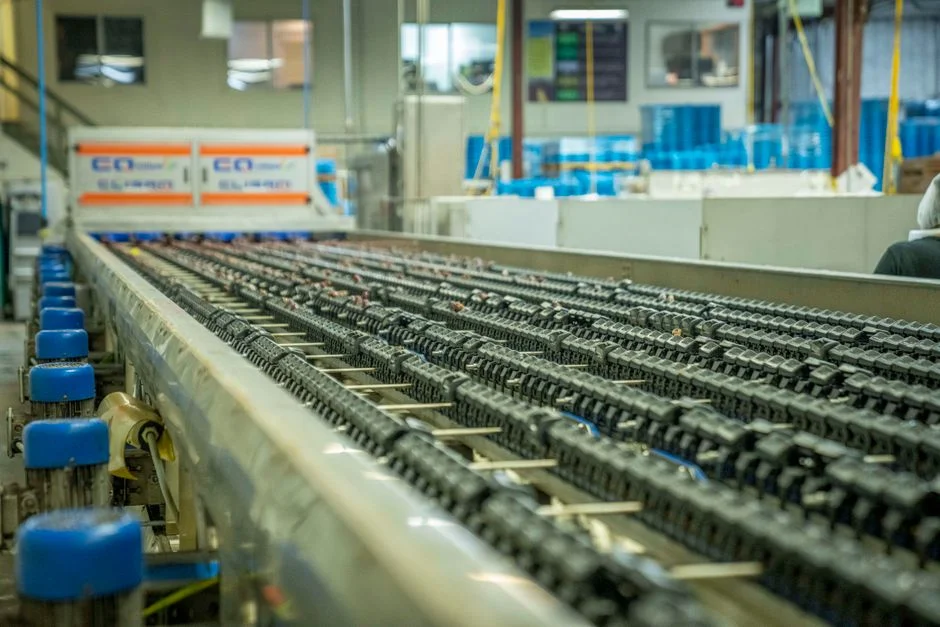
A screw press is only one unit in the train the regulator reviews. The typical airport dewatering train runs: rotary bar screen at the head of the works for grit and rag removal; DAF or lamella clarifier for oil and FOG ahead of biological or sludge processing; equalization and polymer conditioning; screw press for mechanical dewatering; cake conveyance to landfill, incineration, or landside reuse. Each step has a defined interface to the next, and the procurement package should specify those interfaces rather than treat each unit as a standalone purchase.
Headworks screening can be served by a rotary mechanical bar screen sized to peak airport flow. Upstream FOG removal ahead of the press is typically handled by the DAF system already referenced for parameter coordination, with a high-efficiency sedimentation tank as an alternative primary clarifier. Polymer make-down and injection is the most common commissioning failure point on these trains, and the automatic chemical dosing system should be specified as part of the same package so the dose setpoint is controlled from the same SCADA view as the press.
For buyers comparing polymer conditioning options across industries, the polymer dosing system buyer's guide is a useful cross-reference. Regulators reviewing the airport industrial pretreatment program will look at the train as a system; the screw-press selection is defensible only when the upstream and downstream units are coordinated on the same P&ID.
2026 Decision Framework and Sizing Checklist for Airport Buyers
A defensible airport screw-press selection scores vendors against weighted criteria that reflect the airport duty profile rather than a generic municipal scorecard. Use the qualitative matrix below as the starting point for bid evaluation.
| Criterion | Why it carries weight at an airport | What to require from bidders |
|---|---|---|
| Wetted-parts material (304SS minimum) | Glycol, chloride de-icers, and fuel residues drive corrosion | Material certificate and any alloy upgrade offered |
| Footprint and headroom | Basement dewatering rooms with limited structural openings | GA drawing with shipping weight and rigging points |
| Enclosure and odor control | Terminal-adjacent sites with passenger exposure | Enclosure rating, ventilation coupling, odor-control interface |
| Wash-water demand | Winter water balance and freeze-protection design | Liters per shift at nameplate feed; confirm with vendor / pilot test |
| Installed base in comparable service | Mature service network and referenceable sites | Reference list with airport or comparable industrial duty |
| Modularity for retrofit | Skid-mounted trains install in existing buildings | Skid dimensions, utility connections, control interface |
| SCADA integration | Airport SCADA expects defined signal lists and fail-states | Signal list, PLC platform, and fail-state documentation |
| Cake dryness, polymer dose, capture rate | Drives disposal tonnage and polymer OPEX | Bench- or pilot-test report bonded to the specific airport sample |
The sizing inputs the airport buyer must collect before going to bid are: design peak flow (m³/h); seasonal glycol loading profile; dry solids feed rate; polymer type and target dose window; cake disposal route (landfill, incineration, landside reuse); available floor area and headroom; ambient temperature range; and noise and odor constraints imposed by the airport authority. The supplied research does not contain airport-specific cake-dryness or polymer-dose figures, so the specification should require the vendor to provide a bench- or pilot-test report bonded to the airport's own sludge sample. Buyers should also request FKC-style installed-base references and Schwing-style documented design features — 304SS wetted parts, pneumatic discharge cone, split screen cage, once-per-shift wash ring — as line items in the technical evaluation (Schwing Bioset, 2026; FKC, 2026). For cross-industry context, the screw press for brewery wastewater guide, the screw press vs filter press vs centrifuge comparison, and the screw press for dairy wastewater buyer's guide show how the same selection logic is applied to other variable-strength industrial streams.
Frequently Asked Questions
What does a screw press actually do in an airport wastewater treatment plant?
It dewaters the combined sludge produced at the airport — glycol-bearing de-icer solids, oil-water separator skimmings, apron grit, and terminal biosolids — by transporting thickened feed along a rotating auger inside a screen while rising back-pressure compacts the cake against a discharge cone. Leading designs use 304SS wetted components, an integrated flocculation tank, a decreasing-pore screen, a pneumatic-rail wash ring that fires once per shift without halting dewatering, a pneumatic-cylinder discharge cone for tunable back-pressure, and a split screen cage for in-place maintenance (Schwing Bioset product page, 2026).
How does a screw press compare to a plate-and-frame filter press for airport duty?
The screw press is continuous, enclosed, and small-footprint, which fits basement dewatering rooms and variable seasonal glycol loading; the plate-and-frame is a batch press that needs more headroom, opens between cycles, and is harder to retrofit but is appropriate where sludge arrives in predictable windows. The HydropureWater plate and frame filter press (1–500 m², PLC option) is the relevant comparison unit for an airport that already runs batch dewatering. Cake-dryness, polymer-dose, and energy comparisons must be obtained from vendor bench tests or pilot campaigns on airport composite samples, since the supplied research did not quantify these.
What should an airport look for when selecting a 2026 screw press supplier?
Require 304SS wetted parts as a minimum, a decreasing-pore screen profile, a pneumatic discharge cone, a split screen cage, and a once-per-shift wash ring as line items in the technical evaluation. Ask for an installed-base reference list with airport or comparable industrial duty — FKC cites over 6,000 screw presses installed worldwide (fkcscrewpress.com, 2026), and Schwing Bioset documents the design features above on its municipal product page (2026). Treat any vendor that cannot produce a bench- or pilot-test report bonded to the airport's own sludge sample as a non-compliant bidder for this duty.
What lead time and pilot-testing should an airport expect before a screw press is delivered?
Plan for a site-specific jar test on representative airport composite samples as the first gate, followed by a vendor pilot (skid-mounted rental or on-site trial) before the procurement award is released. Final bid documents should require the vendor to bond a cake-dryness and polymer-dose guarantee to that pilot report, and the airport should budget for a winter-season pilot if glycol loading is on the critical path. The supplied research did not include specific lead-time figures, so request a written schedule from each bidder with milestone dates for engineering submittals, FAT, ship, install, and commissioning.