
Why Cairo housing developments need a packaged STP, not a mega-plant
The New Cairo wastewater treatment plant carries an average daily flow of 250,000 m³/day, sized to serve over 1 million residents under a 20-year DBFOT concession with $140 million in private investment and a $482 million PPP contract value (CIDOB, New Cairo WWTP case study, Salvador et al., IESE ST-425-E, 11/2016). That figure serves as a reference benchmark, but it is not what a housing developer in Cairo actually buys. A new residential estate of a few hundred to a few thousand homes generates flows measured in tens to low hundreds of m³/day, and the relevant equipment class is a buried, factory-built packaged sewage treatment plant, not a utility-scale municipal WWTP. Reframing the question at the right scale is the first step in a defensible technology shortlist.
The New Cairo project is also a sizing cautionary tale: the case study notes that "the forecasted urban development for New Cairo did not materialise due to political instability, limiting the sewage water inflows to the WWTP" (CIDOB, Salvador et al., 11/2016). For a phased housing estate, modular packaged units added in parallel as the development is built out are a better fit than one oversized plant, because staged handovers match staged sales and staged occupancy.
A packaged STP is defined as a single skid or buried shell that integrates screening, biological treatment, clarification, and disinfection, runs fully automated, and typically serves residential communities, hotels, hospitals, and rural areas. That is the product category a Cairo EPC or developer will actually procure and install.
How a packaged sewage treatment plant works
The default biological package for a Cairo housing estate is the A/O (anoxic/aerobic) contact-oxidation process, delivered in a buried shell such as the underground A/O packaged sewage treatment plant (WSZ series). Inside one welded steel or FRP tank, raw sewage passes through screening, then an anoxic zone for denitrification, then an aerobic zone filled with biofilm carriers that drive BOD removal and nitrification, followed by sedimentation and a disinfection stage before clarified effluent leaves the unit. The whole train sits below grade with landscaping above, so the plant does not consume developable land.
Engineers evaluate these systems based on operational requirements rather than just economic factors. The WSZ series envelope of 1–80 m³/h covers everything from a small compound up to a mid-sized estate, the unit is fully automated with no dedicated operator, and the same skid can be trailer-mounted for temporary layouts during phased handovers. Pretreatment at the headworks must not be omitted: a rotary mechanical bar screen (GX series) removes rags, plastics, and fibrous debris before the biological zone, protecting biofilm carriers and downstream pumps from fouling.
Where the developer wants near-reuse effluent for irrigation, the upgrade path is the integrated MBR membrane bioreactor wastewater treatment system. MBR combines activated sludge with submerged PVDF membrane filtration to deliver an effluent below 1 μm, with a much smaller footprint than a conventional clarifier-based train, in a capacity range of 10–2,000 m³/day. That is the route that aligns with the New Cairo plant's stated driver of substituting treated wastewater for fresh water in agricultural and urban green-area irrigation (CIDOB, Salvador et al., 11/2016).
Sizing a packaged STP for a Cairo housing development
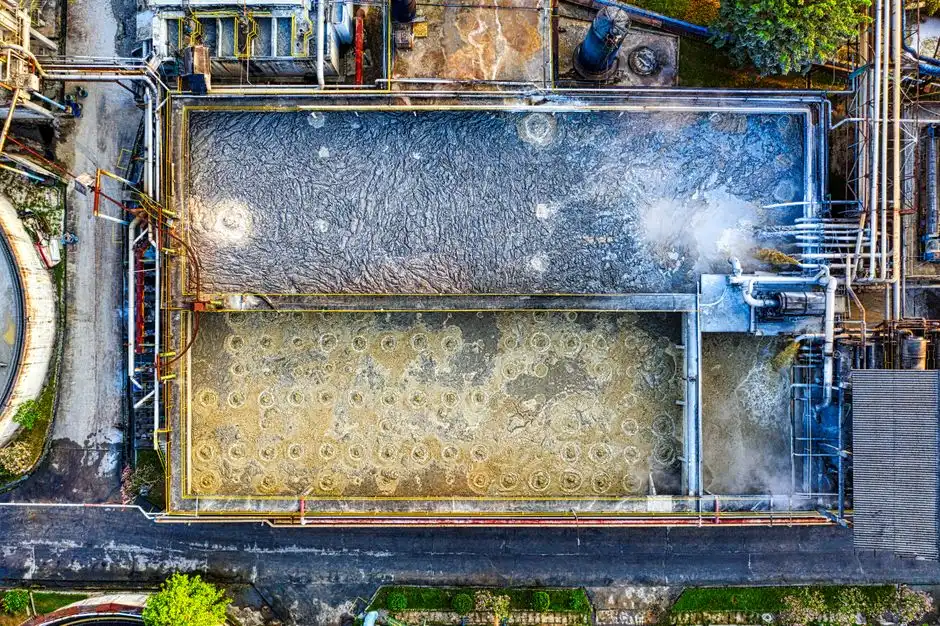
Sizing starts with three inputs the engineer must collect before any supplier can quote a defensible number. The first is design population, calculated as number of homes multiplied by persons per household, with a confirmed occupancy assumption. The second is per-capita sewage flow, a design value that must be confirmed with the local authority because it is a policy input rather than a fixed engineering constant, and the supplied research does not state a numeric figure. The third is influent loadings: BOD, COD, and TSS, normally taken from a standard domestic wastewater profile and adjusted for any commercial or communal flows within the estate.
Cairo's climate materially affects the design. High ambient temperatures accelerate biological kinetics, which can reduce required tankage on paper, but they also raise odor risk, accelerate sludge generation, and stress any membrane stage. Treat these as qualitative design inputs to capture in the specification, not as numbers to be assumed without site-specific advice.
For a housing development at the upper end of the residential community range, the WSZ envelope reaches 80 m³/h, roughly 1,920 m³/day, which is the practical packaged-plant ceiling before the engineer steps to a containerized or multi-skid MBR train such as the integrated MBR wastewater treatment system in the 10–2,000 m³/day range, or an array of DF flat-sheet modules like the DF series PVDF flat sheet MBR membrane module. A modular, parallel layout is recommended so additional packaged units can be brought online as the estate is built out, de-risking the same kind of demand-forecast miss that constrained inflows at the New Cairo plant (CIDOB, Salvador et al., 11/2016).
| Parameter | Input the engineer must provide | Source / confirmation step |
|---|---|---|
| Design population | Homes × persons/household × occupancy factor | Developer sales plan, gated-phase handover schedule |
| Per-capita sewage flow | Design value to confirm with local authority | NUCA / MHUUD design standards for the governorate |
| Influent loadings | BOD, COD, TSS concentrations | Site sampling or domestic wastewater profile |
| Discharge objective | Standard disposal vs. irrigation reuse | NUCA / MHUUD design standards for the housing classification |
| Footprint envelope | Buried below grade vs. above-grade skid | Site plan, soil bearing, landscaping requirement |
Comparing A/O packaged, MBR, and SBR plants for Cairo residential use
Three biological process families cover essentially every realistic scenario for a Cairo housing development. A/O contact-oxidation in a buried shell such as the WSZ series (1–80 m³/h) is the lowest-CAPEX envelope, fully buried, automated, and suitable for standard residential discharge where reuse is not planned. MBR packaged plants such as the integrated MBR system (10–2,000 m³/day) or arrays of the DF series PVDF flat sheet module deliver the smallest footprint for a given flow and produce near-reuse effluent suited to landscape irrigation, the same end use that drove the New Cairo WWTP (CIDOB, Salvador et al., 11/2016). SBR batch plants are flexible under variable loading and useful for phased estates where occupancy ramps unpredictably, but they need a more attentive control system and operator than a continuous-flow A/O.
Footprint per m³/day, target effluent BOD/TSS/TN, energy per m³, operator skill, and whether the unit can be installed below grade are all items the engineer must confirm against the chosen site and the supplier's specific skid. The research does not state numeric values for these dimensions, so they remain supplier-confirmation items rather than assumptions to bake into the spec.
| Process | Typical envelope | Footprint / installation | Best fit in Cairo residential use |
|---|---|---|---|
| A/O contact-oxidation (WSZ) | 1–80 m³/h | Buried below grade, landscaping above | Standard residential discharge, no reuse, minimal operator |
| MBR (integrated system) | 10–2,000 m³/day | Compact above-grade container or skid; smaller footprint than clarifier trains | Near-reuse effluent for landscape irrigation, water-sensitive sites |
| MBR (DF flat-sheet modules) | 32–135 m³/day per module | Modular, scalable in parallel | Phased estates that need to grow flow with build-out |
| SBR (batch) | Project-specific | Above-grade tanks, larger control package | Variable loading, phased occupancy, sites with daily flow swings |
Compliance and authority pathway for packaged STPs in Egypt
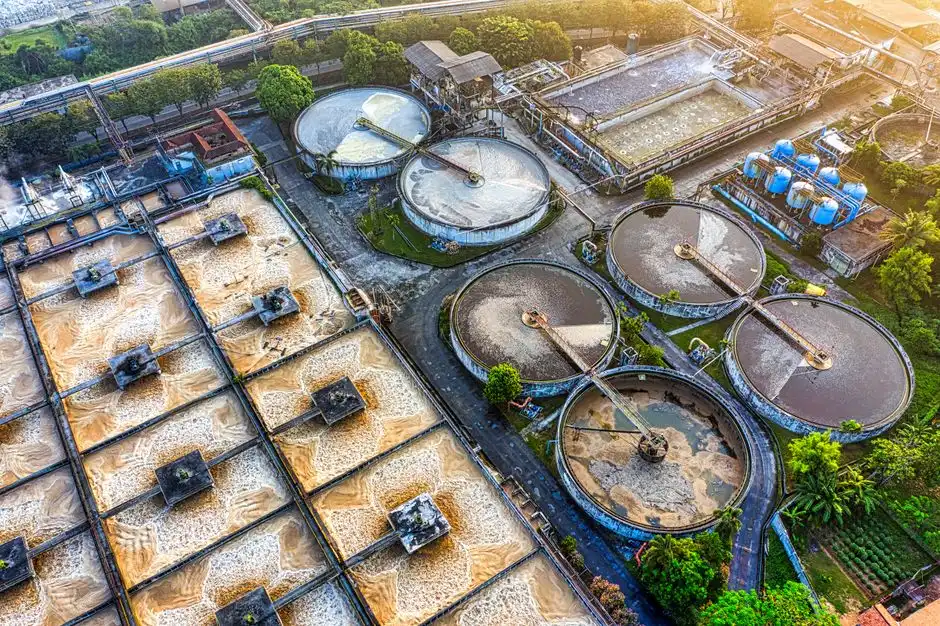
The contracting authority for new urban developments, including housing estates on the desert fringe, is the New Urban Communities Authority (NUCA), which is part of the Ministry of Housing, Utilities and Urban Development (MHUUD) and was the same body that contracted the New Cairo WWTP PPP (CIDOB, Salvador et al., 11/2016). For a packaged STP that is several orders of magnitude smaller, the developer or EPC will still interact with NUCA, or its successor authority, for design approval, commissioning sign-off, and any reuse permit.
The New Cairo case study lists the conditions that made that PPP succeed: participation of external and international advisors during planning, an autonomous Central PPP Unit inside the Ministry of Finance to insulate the project from political turnover, and selection of multinationals with deep WTP construction and operating experience (CIDOB, Salvador et al., 11/2016). Even at the packaged scale, the buyer should expect technical advisors, a transparent bidding process, and a preference for suppliers that can show operational track record in Egypt or comparable arid-climate markets.
Specific Egyptian packaged-plant effluent limits, sampling protocols, and reuse criteria are not stated in the supplied research. The engineer must request the current NUCA / MHUUD design standards for the specific governorate and housing classification before final sizing. See also a related regional reference in this rural sewage treatment in Kuwait 2026: decentralized systems and regulations guide for the kind of compliance framing a Gulf-adjacent authority typically expects.
Decision framework: choosing the right packaged STP for your Cairo site
If the development needs standard residential discharge and minimal operator attention, specify a buried WSZ-type A/O packaged plant such as the underground A/O packaged sewage treatment plant (WSZ series, 1–80 m³/h). If the development targets landscape irrigation reuse or sits in a water-sensitive area, specify an MBR packaged plant from the integrated MBR system range (10–2,000 m³/day) and pair the membrane stage with a UV sterilizer for water treatment for the final disinfection step. If the development is phased with uncertain occupancy ramp, choose modular, parallel-packaged units rather than one oversized plant, applying the New Cairo lesson that "the forecasted urban development for New Cairo did not materialise due to political instability" (CIDOB, Salvador et al., 11/2016). If the site runs high TSS or FOG at the headworks, add a DAF or lamella clarifier upstream of the biological stage.
For a deeper read on underground systems, see how underground sewage treatment systems work (2026 engineering guide), and for containerized MBR sizing methodology in a comparable housing context, see how to size a containerized MBR STP for residential projects (2026 guide). For OPEX framing, see wastewater treatment operating cost breakdown.
Frequently Asked Questions
How is a packaged STP different from a municipal WWTP for a Cairo housing estate?
A packaged STP is a factory-built, single-skid or buried unit integrating screening, biological treatment, clarification, and disinfection, sized to a few m³/day per 100 residents. The New Cairo WWTP is a municipal plant at 250,00
Frequently Asked Questions
What capacity of packaged STP do I need for a 500-home Cairo housing development?
For a typical residential development in Cairo, assuming an average of 4 to 5 residents per household and a per capita water consumption rate of 200 to 250 liters per day, a 500-home community requires a plant capacity of approximately 400 to 625 cubic meters per day (m³/day). It is standard engineering practice to include a 15-20% safety margin for peak flow variations, bringing the design capacity to between 500 and 750 m³/day.
Should I choose an MBR or an A/O packaged plant for a Cairo residential project targeting irrigation reuse?
For projects requiring irrigation reuse, the Membrane Bioreactor (MBR) system is strongly recommended over the Anoxic/Oxic (A/O) process. MBR technology consistently achieves effluent quality compliant with Egyptian Code 501/2015 for unrestricted irrigation, typically producing a turbidity of less than 0.2 NTU and near-zero fecal coliform counts, whereas A/O systems often require additional tertiary filtration and intensive disinfection stages to reach the same safety standards for public landscape reuse.
Which Egyptian authority approves packaged sewage treatment plants for new housing estates?
The primary regulatory body responsible for approving sewage treatment plant designs and operational permits is the Holding Company for Water and Wastewater (HCWW), working in coordination with the Ministry of Housing, Utilities, and Urban Communities. Furthermore, the Egyptian Environmental Affairs Agency (EEAA) must review and approve the Environmental Impact Assessment (EIA) to ensure the discharge or reuse of treated effluent meets national environmental protection standards.
How long does it take to install and commission a buried packaged STP in a Cairo housing project?
The installation and commissioning timeline for a modular buried packaged STP generally ranges from 12 to 18 weeks. This period includes 4 to 6 weeks for civil works (excavation, concrete base slab, and backfilling), 4 to 8 weeks for mechanical and electrical equipment installation, and 2 to 4 weeks for biological seeding, system stabilization, and final performance testing to meet regulatory discharge parameters.
What is the typical operating cost of a packaged sewage treatment plant for a Cairo housing development?
The operational expenditure (OPEX) for a packaged STP in Egypt typically ranges from 2.50 to 4.50 EGP per cubic meter of treated water. These costs are primarily driven by electricity consumption for aeration blowers, periodic sludge removal and disposal fees, chemical supplies for disinfection, and the wages for skilled onsite technical operators required to maintain compliance with Egyptian discharge codes.