
Why a Containerized MBR Fits Toronto Residential and Camp Projects
A containerized membrane bioreactor (MBR) ships from the factory as a tested skid ready for hoisting onto a prepared pad, piping to the building, and energizing. This delivery model suits small residential communities, condo developments, and remote camps in the Greater Toronto Area where on-site construction time must be compressed.
MENA-Water's package plants use a standardized 40-foot ISO container shell with internal stainless steel tanks and factory quality testing to support plug-and-play installation (mena-water.com). The same source reports that more than 1,200 m³/day can be filtered in a single 40-foot ISO container, and offers a U-Version where aeration and buffering take place inside underground water tanks, and an I-Version that is fully integrated for mobile applications or sites that may be relocated. Pure Aqua offers its MBR-C line in 40-foot and 20-foot high-cube containers, providing a size choice that maps to varying design flows (pureaqua.com). Because a containerized MBR typically requires no secondary clarifier and produces effluent suitable for non-potable reuse, it can be specified to support irrigation and toilet flushing where site conditions allow—a configuration that aligns with municipal interest in water reuse and a developer's water-balance narrative for a Toronto site. A containerized MBR system warrants evaluation as a form factor before detailed sizing work begins, and the design criteria in the accompanying MBR design criteria engineering guide apply directly.
Step 1 — Establish the Design Flow for the Toronto Site
The design flow is the primary variable for an RFQ and must be provided by the engineer of record rather than the equipment supplier. Pure Aqua's published MBR-C sizing table is built around an approximate population basis of 50 gpd per capita—a useful starting reference, but not a substitute for Ontario Building Code design flow assumptions or municipal requirements specific to the project (pureaqua.com). Once the equivalent population is fixed, the average daily flow is multiplied by a peaking factor to set the peak hydraulic load on the upstream buffer and the membrane tank; in containerized MBRs, peak flow is handled by upstream equalization rather than by up-sizing the membrane module itself, so the peaking factor drives buffer volume more than membrane area. For camp projects, occupancy is seasonal and may fluctuate significantly, so the designer's max-occupancy and shoulder-season scenarios should be requested separately rather than averaged. Inputs that must come from the engineer of record before a container is selected include daily flow, peak factor, and any minimum hourly flow. The home sewage treatment plant buyer's guide details how these inputs feed the sizing sequence.
Step 2 — Quantify BOD, TSS and FOG Loadings

Biological load determines the aeration tank volume and the mixed-liquor suspended solids (MLSS) target rather than hydraulic sizing alone. Skyview lists FOG (fat, oil, and grease) content and maximum transmembrane pressure (TMP) among the parameters an MBR design must address, indicating that for a camp kitchen or residential waste stream, the FOG load must be characterized and addressed in pretreatment before reaching the membrane (mbrwatertreatment.com). MBR systems operate at much higher MLSS than conventional activated sludge, and MENA-Water highlights "higher biomass concentration" as a core advantage of the MBR configuration (mena-water.com); this high MLSS parameter converts a given BOD load into a required bioreactor volume and aeration demand. For a Toronto residential or camp project, the BOD and TSS per-capita values used for OBC sizing, multiplied by the population count, provide the design load in kg/day that the MBR must treat. The MBR supplier will use these loads to confirm aeration tank volume and MLSS targets, so the engineer of record should issue per-capita and peak load assumptions as part of the design package.
Step 3 — Size the Bioreactor and the Submerged UF Membrane
Aeration tank and membrane tank dimensions are derived from the project's flow and load requirements. Pure Aqua's MBR-C spec uses submerged hollow-fibre UF modules with a 0.04 µm nominal pore size; MENA-Water's equivalent system uses ultrafiltration membranes arranged on a stainless-steel frame, with coarse-bubble aeration keeping the membrane surface clean (pureaqua.com; mena-water.com). Operating temperature is a critical constraint: Pure Aqua lists 68–86°F (20–30°C) as the operating range and 68°F (20°C) as the design temperature (pureaqua.com), which exceeds the temperatures a container will experience in an unprotected Toronto winter. The engineer of record must specify winter operating conditions and decide whether the design relies on heat tracing, enclosure heating, or relocation of the unit to a heated vault. MENA-Water reports that UF reduces virus and bacteria by 99.9999%, and that membranes typically require only 1–2 maintenance clearings per year (mena-water.com). A containerized MBR system built around a flat-sheet MBR module from the DF series can be referenced as a sanity check on module count, but the final number must come from the supplier's flux calculation for the specific feedwater.
| Parameter | Specification (Pure Aqua MBR-C) | Toronto Winter Implication |
|---|---|---|
| Membrane type | Submerged hollow-fibre UF, 0.04 µm nominal pore (pureaqua.com) | Confirm PVDF/TIPS material for cold-water operation |
| Operating temperature | 68–86°F / 20–30°C (pureaqua.com) | GTA winter ambient will fall below range; heat tracing or enclosure heating required |
| Design temperature | 68°F / 20°C (pureaqua.com) | Below this, flux and biology derate; engineer of record must specify winter design point |
| Pre-treatment | Drum screen, 1.5 mm perforation (pureaqua.com) | Reduces FOG/solids load reaching membrane (mbrwatertreatment.com) |
| Air-scour on membrane | Coarse-bubble diffusers on module (pureaqua.com) | Continuous aeration; verify blower capacity at low temperature |
| Maintenance cleaning | 1–2 clearings per year (mena-water.com) | Lower chemical OPEX than conventional UF |
Step 4 — Select the Container and the Skid Layout
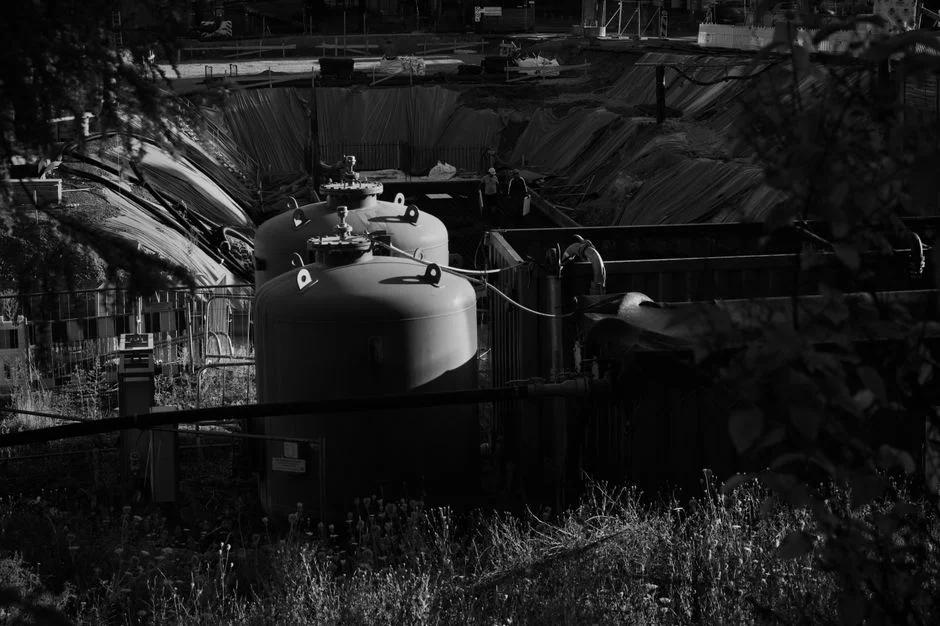
The container form factor is selected once the bioreactor and membrane sizes are fixed. Pure Aqua specifies the MBR-C in 40-foot and 20-foot high-cube containers with insulated walls and enhanced structure; the HC designation provides necessary headroom for membrane maintenance (pureaqua.com). MENA-Water offers a U-Version where aeration and buffering take place inside underground water tanks, and an I-Version that is fully integrated for mobile applications (mena-water.com). The U-Version reduces the above-grade visual impact often required on Toronto infill lots or cottage properties, while the I-Version prioritizes plug-and-play mobility. Container choice should be coordinated with the site civil designer, as crane access, truck approach, and property line proximity affect which version is physically feasible.
| Container Option | Configuration | Best Fit for GTA Project |
|---|---|---|
| 20' HC container (Pure Aqua MBR-C) | Insulated, drum screen + aeration + submerged HF UF; up to ~1,200 m³/day class in a 40' shell (mena-water.com; pureaqua.com) | Smaller residential clusters, low-flow camp shoulder season |
| 40' HC container (Pure Aqua MBR-C) | Same process train in a larger ISO shell; factory-tested for plug-and-play (mena-water.com) | Multi-building condo, larger camp, projects near the upper end of the residential/camp range |
| U-Version (MENA-Water) | Aeration and buffering in underground tanks, container holds the membrane train (mena-water.com) | Sites where above-grade footprint must be minimized |
| I-Version (MENA-Water) | Fully integrated, designed for mobility and re-deployment (mena-water.com) | Construction-phase treatment, leasehold sites, seasonal camps that may be relocated |
Step 5 — Confirm Electrical, Controls, and Toronto Compliance
The final step involves reconciling electrical and control requirements with Toronto standards to ensure successful commissioning. Pure Aqua lists the MBR-C electrical supply as 460V/3Ph/60Hz (pureaqua.com), which is not the standard residential service in Toronto; the spec must either be reconciled with the local utility or a transformer must be added to the scope. Pure Aqua's standard scope includes drum-screen pre-treatment, fine-bubble diffusers in the aeration tank, coarse-bubble diffusers on the membrane module, and a built-in cleaning system; each line should be confirmed as included in the quote (pureaqua.com). Optional add-ons, such as anoxic zones for denitrification, chemical phosphorus removal, or remote monitoring, should be evaluated against the project's reuse goals and the receiving environment (combined versus separate sewer in the City of Toronto) (mbrwatertreatment.com). The approval pathway under the Ontario Building Code and Toronto Water / MECP must be confirmed before purchase, as containerized MBRs may fall under Part 7 (private sewage systems) or Part 8 (sewerage systems) depending on the discharge point. The companion MBR design criteria engineering guide covers the compliance path in more detail.
Frequently Asked Questions
What flow range should a Toronto residential or camp MBR be sized for?
Size the unit based on the engineer of record's daily flow and peaking factor rather than a catalog page. Pure Aqua's reference sizing table uses approximately 50 gpd per capita (pureaqua.com), and MENA-Water reports more than 1,200 m³/day of filtration capacity in a single 40-foot ISO container (mena-water.com); the actual design flow must be based on the OBC design assumptions applied to the project's population.
How do I compare containerized MBR suppliers for a Toronto project?
Compare suppliers based on three factors: whether their standard electrical supply matches local utility service, whether their operating temperature range covers Toronto winter conditions, and whether the U-Version or I-Version layout fits the site (mena-water.com). Request written confirmation of each point as part of the RFQ technical schedule.
Will a containerized MBR meet Ontario Building Code and MECP requirements?
Compliance depends on the discharge point. A containerized MBR serving a small residential community or remote camp typically falls under OBC Part 7 or Part 8 and may require an MECP Environmental Compliance Approval; the engineer of record must confirm the required pathway before ordering equipment, as this dictates the design basis and documentation.
What does a containerized MBR cost and how long does delivery take for a Toronto project?
Budget and lead time should be requested directly from shortlisted suppliers once the design flow, container size, and electrical scope are fixed. Buyers should obtain the OBC/MECP approval pathway and reconciled electrical supply requirements before requesting a quote, as these factors significantly influence both price and delivery schedule.