
How Domestic Sewage Is Treated in Jahra Today
The 2018 evaluation of the Jahra Sewage Plant reports average tertiary-stage removal efficiencies of about 89% for TSS and 66% for BOD, but only around 6% for total phosphorus and 7% for total nitrogen, confirming that the tertiary effluent meets Kuwait's water-quality standards for restricted irrigation (S3, 2018 David Publisher study of the Jahra Sewage Plant, Kuwait). For a developer, consultant, or hotel operator in Jahra governorate, that single set of numbers is the most important fact on the page: conventional tertiary treatment in Kuwait is a strong suspended-solids and carbon process, and a weak nutrient process.
Restricted irrigation in this context covers landscape, park and roadside greenery, not food crops or unrestricted public access, so it sets the reuse ceiling a private or decentralized project must plan around. If the centralized plant only removes about 6% of phosphorus and 7% of nitrogen, any on-site package plant for a residential compound, school, or labor camp in Jahra cannot assume those parameters will be solved by biology alone. Nutrient polishing must be specified as a project decision rather than inherited from municipal practice. A buried package A/O sewage plant or a submerged PVDF MBR system sized to local flow must add chemical precipitation, enhanced biological nutrient removal, or a polishing stage to close that gap before the effluent is reused for irrigation.
What Counts as Domestic Sewage Under Kuwait Practice
Domestic sewage is the sanitary flow from homes, businesses, and institutions that is collected by sanitary sewers and conveyed to a treatment facility, as defined in the US EPA framework for municipal wastewater systems (S4, EPA Municipal Wastewater). State and local authorities have generally not allowed new combined sewers since the first half of the 20th century, a practice Kuwait’s separate-sewer networks have followed (S4, EPA). For a Jahra project, that translates into a clear influent envelope: blackwater from toilets, greywater from showers, kitchens and laundry, and small commercial flows from schools, clinics, mosques and shops all count as domestic sewage when no industrial process discharge is mixed in. Grease from camp kitchens and light FOG from hotel food preparation will push the influent profile toward higher COD and oil, and that shift determines whether a dissolved-air flotation (DAF) pre-step is required in front of the biological stage. Request influent sampling on site for at least one week before final sizing, because a generic domestic profile will under-represent the load a labour-camp kitchen or hotel pantry generates. A rotary mechanical bar screen at the headworks will protect downstream biology regardless of whether DAF is added, as fibrous debris from laundry and kitchen prep is the most common cause of biological-stage fouling in decentralized plants.
The Process Train a Jahra Site Should Specify
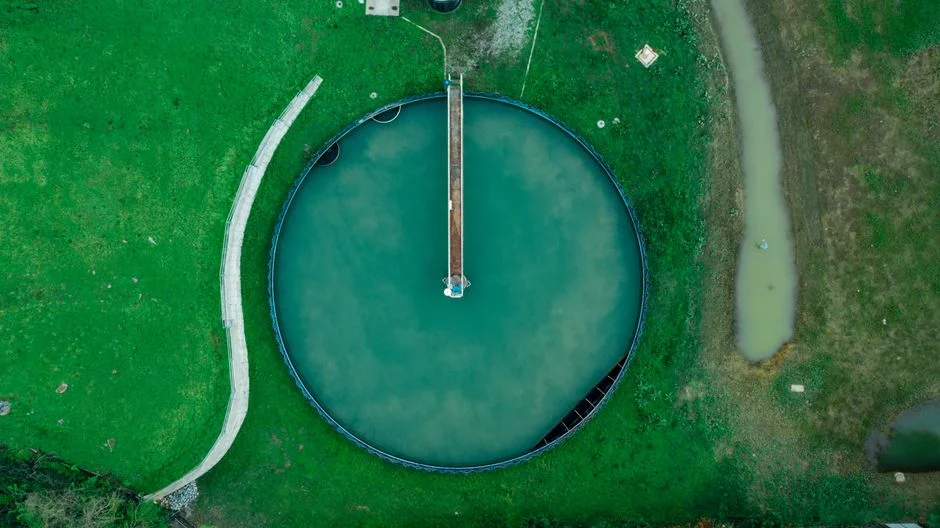
A defensible P&ID for a residential compound, school or hotel in Jahra governorate is a five-step train, in this order. Step 1 is screening: a rotary mechanical bar screen at the headworks removes rags, plastics and fibrous debris before the flow reaches the pumps and biological stage, matching the headworks practice described for wastewater treatment plants (S4, EPA). Step 2 is biological treatment: an anoxic/aerobic (A/O) contact-oxidation train is the reference choice for buried package plants and is the conventional activated-sludge core of any MBR system. Step 3 is clarification or membrane separation: either a settling tank inside a package plant or a submerged PVDF MBR module at less than 1 µm pore size when the site needs near-reuse effluent or has tight footprint constraints. Step 4 is disinfection: a UV disinfection stage is chemical-free and effective against chlorine-resistant organisms, which matters where the end use is landscape irrigation or toilet flushing. Step 5 is polishing for reuse: a multi-media polishing filter ahead of any irrigation network protects emitters from carry-over solids and keeps the effluent inside the suspended-solids envelope of Kuwait's restricted-irrigation guideline (S3, 2018). The order is not optional: skipping the screen shortens membrane life, skipping disinfection fails the reuse standard, and skipping polishing fouls irrigation laterals within a single season.
Package A/O vs MBR: Choosing the Right Envelope
The choice between a buried package A/O plant and an MBR system for a private or decentralized site in Jahra is driven by flow, footprint, and the reuse target rather than technology trends. The WSZ underground integrated sewage treatment plant is rated for 1–80 m³/h and combines A/O biological contact oxidation with sedimentation and disinfection in a single buried package, fully automated with no operator required, and can be installed below grade with landscaping above or mounted on a trailer for mobile deployment (S6, HydropureWater product catalog). The MBR wastewater treatment system integrates activated sludge with submerged PVDF membrane filtration at less than 1 µm and is sized from 10–2,000 m³/day, providing a smaller footprint than conventional activated sludge for the same loading. Pick the WSZ when flows stay within 1–80 m³/h, land is available for burial, and the effluent is for subsurface irrigation or sewer discharge; pick the MBR when the site needs near-reuse water for toilet flushing or landscape reuse, has tight footprint constraints, or requires BOD and TSS levels well below conventional tertiary numbers. The supplied research does not provide flow-weighted removal efficiency for either unit at a Jahra site specifically, so the buyer should request site-specific performance curves and reference plants from the supplier before signing — generic "BOD <20 mg/L" claims are insufficient when centralized Jahra data shows BOD, TSS, TN and TP behave differently (S3, 2018).
| Parameter | WSZ buried package A/O plant | MBR system (submerged PVDF) |
|---|---|---|
| Design flow envelope | 1–80 m³/h | 10–2,000 m³/day |
| Biology | A/O biological contact oxidation with built-in sedimentation | Activated sludge with submerged PVDF membrane separation |
| Membrane pore size | Not applicable (clarifier-based) | <1 µm (submerged PVDF module) |
| Disinfection | Integrated in buried unit | Separate UV or chlorine dioxide stage |
| Footprint | Buried, landscaping or parking above | ~60% smaller than conventional activated sludge for the same load |
| Operation | Fully automated, no operator required (S6) | Automated with membrane maintenance schedule |
| Best fit end use | Subsurface irrigation, sewer discharge, low-maintenance sites | Toilet flushing, landscape reuse, tight-plot developments |
Meeting Kuwait Reuse Standards for Restricted Irrigation
The 2018 Jahra Sewage Plant study confirms that the plant's tertiary effluent meets Kuwait's water-quality standards for restricted irrigation, serving as the reuse ceiling for the centralized reference plant (S3, 2018). Restricted irrigation covers landscape, park and roadside greenery, not food crops or unrestricted public access; the engineer and the owner should confirm the exact end use with the local authority before sizing the disinfection and filtration train. If the project targets anything beyond restricted irrigation — toilet flushing, cooling-tower make-up, food crops — membrane filtration such as ultrafiltration or reverse osmosis and enhanced disinfection must be added. As the limits for these higher tiers are not specified in the supplied research, the buyer must request them from the regulator or consultant. The 6% TP and 7% TN removal reported for the centralized plant (S3, 2018) is the practical anchor for this section: any project sensitive to nutrient load in irrigation water, such as turf and ornamentals, should plan for chemical precipitation or a dedicated biological nutrient-removal stage rather than assume conventional tertiary will suffice. For sites where chlorine residual is acceptable, a chlorine dioxide generator can be specified alongside the UV stage, and a UF system is the natural upgrade path when the reuse target moves above restricted irrigation.
What to Ask a Supplier Before You Buy
Procurement interviews for a Jahra project are the primary stage for catching specification errors, and the list of questions should be data-led. First, request influent characterization support: average and peak daily flow, BOD, COD, TSS, TN, TP, FOG, temperature and salinity; since the supplied research does not provide a Jahra-specific influent profile, the supplier's reference-plant data is a necessary substitute. Second, request removal-efficiency curves at design flow and at peak flow, and ask specifically for TSS, BOD, TN and TP numbers — the centralized Jahra data shows those four parameters behave very differently (S3, 2018), and a generic "BOD <20 mg/L" line is insufficient. Third, request footprint, burial depth, traffic loading, odor control and noise data, especially for WSZ-style buried units sited under parking or landscaping in dense Jahra developments. Fourth, request a compliance statement referencing Kuwait's restricted-irrigation standard, and ask how the proposed train handles the 6%/7% TP/TN removal gap for the intended end use. Fifth, request the operator skill level, automatic backwash frequency, membrane replacement interval and a consumables list, as these define lifecycle cost and operator exposure. Automatic chemical dosing systems and treatment parts like valves and media are the consumables most often missed during the quotation stage. For wider context on rural and decentralized sewage treatment or hotel and resort wastewater treatment in Kuwait, the project-specific procurement checklist should always be cross-referenced against scoping guides before award.
Frequently Asked Questions
How much does a packaged sewage treatment plant for a Jahra compound actually cost?
The supplied research does not provide a quoted price for a packaged domestic sewage plant in Jahra governorate, so a budget number cannot be defended from the available evidence. A buyer should request a priced bill of quantities from at least three suppliers covering the WSZ or MBR unit, the headworks screen, the disinfection stage, the polishing filter, civil works, installation, commissioning and a two-year spares list, and compare those line-by-line before deciding.
What size plant do I need for a 200-room hotel or a 500-person labour camp in Jahra?
The supplied research does not provide a per-bed or per-capita flow figure for Jahra specifically, so the plant size cannot be quoted from a single rule of thumb. The buyer should request the supplier's reference-plant list for hotels and labour camps of comparable size, then size the unit against measured peak wet-weather flow plus a safety factor, since sanitary sewers can receive significant infiltration and inflow during storm events (S4, EPA).
Does a decentralized plant in Jahra have to meet the same reuse standard as the Jahra Sewage Plant?
The 2018 study confirms the centralized Jahra plant's tertiary effluent meets Kuwait's water-quality standards for restricted irrigation (S3, 2018), which is the practical benchmark a private or decentralized project should plan against. Any project targeting a higher reuse tier — toilet flushing, cooling-tower make-up, food crops — must add membrane filtration and enhanced disinfection and confirm the exact limits with the local authority, as those higher tiers are not specified in the supplied research.
How do I choose between a buried package A/O plant and an MBR for a Jahra site?
Pick the WSZ buried package A/O plant when the design flow is within 1–80 m³/h, the plot allows burial, and the effluent is for subsurface irrigation or sewer discharge; pick the MBR when the site needs near-reuse water for toilet flushing or landscape reuse, has tight footprint constraints, or wants BOD and TSS pushed well below conventional tertiary numbers (S6, HydropureWater product catalog). The supplier should provide site-specific removal curves and reference plants, because the supplied research does not include flow-weighted performance for either unit at a Jahra site specifically.