Why Rostov-on-Don Data Centers Need a Localized Blowdown Strategy
Rostov-on-Don sits in a humid-continental climate (Köppen Dfa) with a January average of -3.0 °C (1991–2020 normals), which forces winterization of any side-stream or outdoor RO train (Wikipedia, 2026). The city is the administrative center of Rostov Oblast and the Southern Federal District with 1,142,162 residents (2021 census), so a hyperscale facility is a meaningful new load on the Lower Don basin and on Rostov Vodokanal infrastructure (Wikipedia, 2026).
A 100 MW facility can use up to 2 million liters of water per day (IDE Tech, 2026), and a medium-sized data center can use up to 300,000 gallons per day for cooling (Commercial Water Lab, citing University of Georgia CAES TP-121, June 2026). The largest U.S. hub benchmark is Loudoun County, Virginia at roughly 2.75 million gallons per day in 2023, illustrating the order of magnitude a Rostov hyperscale build can reach (Commercial Water Lab, citing UGA TP-121, 2026). A typical 4-cycle data center loses 25–30% of makeup water to cooling-tower blowdown (Genesis Water Technologies, 2026), so the design must start from the blowdown stream, not the inlet.
Generic U.S. blowdown guidance never references the Don River, Vodokanal Rostov, Rosprirodnadzor permitting, or winterization at -3.0 °C. The Top 3 ranking articles (Genesis, IDE, Commercial Water Lab) are all U.S.-centric and assume liquid discharge to NPDES-permitted streams or POTWs, a regulatory frame that does not translate directly to a Russian site. For a Rostov EPC, the treatment train must instead branch on the intake source (Don surface water, municipal potable from Vodokanal, or reclaimed water) and survive both the freeze season and the variability of Lower Don raw water.
What Is in the Blowdown: CTBD Water-Quality Profile
Cooling-tower blowdown (CTBD) is the controlled purge that prevents dissolved solids, corrosion byproducts, and biological growth from accumulating in a recirculating cooling loop (Genesis Water Technologies, 2026). CTBD TDS typically runs 1,200–6,000 mg/L, about 4–8× higher than the makeup water, depending on cycles of concentration and source water quality (Genesis Water Technologies, 2026). Scaling minerals (calcium, magnesium, silica, alkalinity) and treatment chemicals (biocides, corrosion and scale inhibitors, dispersants) accumulate in the blowdown stream (Genesis Water Technologies, 2026). Suspended solids in CTBD typically range 10–50 mg/L and include corrosion products, biofilm fragments, and airborne particulates that pass basin filtration (Genesis Water Technologies, 2026).
Cooling-tower blowdown from data centers is explicitly identified by EPA (2026) guidance as a wastewater stream that may require permits before discharge (Commercial Water Lab). The receiving environment — Don River, Taganrog Bay, or municipal sewer — must be characterized locally, because recycled water does not eliminate water-quality management; it changes the chemistry challenge (Water Utility Report, 2026). For the engineer, the practical implication is that intake and discharge must be characterized in the same work package: a Don River intake water analysis paired with a Vodokanal discharge-letter request is the only way to size a train that survives Russian permitting review.
| Parameter | Typical CTBD range | Source |
|---|---|---|
| Total dissolved solids (TDS) | 1,200–6,000 mg/L (4–8× makeup) | Genesis Water Technologies, 2026 |
| Hardness (Ca, Mg) and alkalinity | Concentrated vs. makeup; scaling risk on RO | Genesis Water Technologies, 2026 |
| Silica (SiO₂) | Concentrated; limits RO recovery at high cycles | Genesis Water Technologies, 2026; IDE Tech, 2026 |
| Suspended solids | 10–50 mg/L (corrosion products, biofilm, airborne) | Genesis Water Technologies, 2026 |
| Treatment chemicals | Biocides, corrosion/scale inhibitors, dispersants; legacy chromate/phosphate programs worsen reuse | Genesis Water Technologies, 2026 |
| Biological content | Planktonic bacteria, algae, biofilm-forming organisms | Genesis Water Technologies, 2026 |
| Permitting signal | EPA identifies CTBD as a wastewater stream that may require permits before discharge | Commercial Water Lab, citing EPA, 2026 |
Three End-Use Strategies: Reuse, Discharge Compliance, or Zero Liquid Discharge
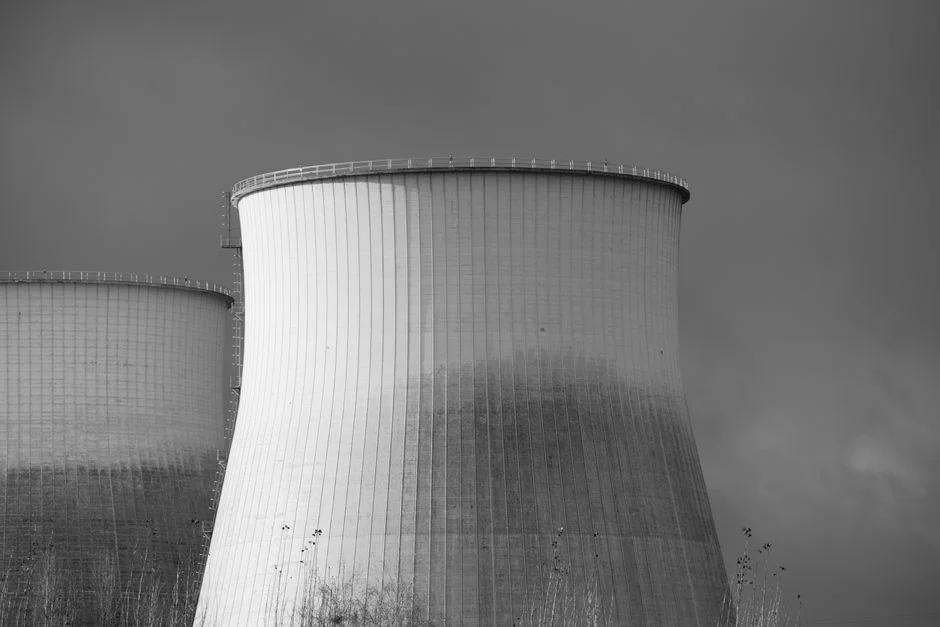
Selection of a CTBD treatment train begins with the end-use objective, not the equipment list. Cooling-tower makeup reuse offers the highest value proposition: treatment must reduce scaling potential, remove suspended solids, and address biological content while staying compatible with the existing water-treatment program, and recovery typically reaches 60–85% (Genesis Water Technologies, 2026). Process water reuse for landscape irrigation or equipment washdown accepts lower recovery but must still meet application-specific reuse standards (Genesis Water Technologies, 2026).
Discharge compliance focuses on meeting municipal or federal permit limits, with economic justification driven by avoided discharge fees rather than water savings; some jurisdictions already cap TDS at below 1,500 mg/L, effectively banning untreated blowdown (Genesis Water Technologies, 2026). Direct discharge fees in water-stressed regions now exceed $5–15 per thousand gallons, making blowdown disposal a significant operating expense even where reuse is technically possible (Genesis Water Technologies, 2026). ZLD eliminates the liquid waste stream entirely; full ZLD achieves 95–99% overall water recovery with solid waste under 1% of original blowdown volume, but capex and opex scale sharply (Genesis Water Technologies, 2026).
For most Rostov-on-Don projects, reuse as cooling-tower makeup is the most defensible starting strategy because it directly cuts Don River or municipal freshwater withdrawal while avoiding sewer-permit variability. In practice the engineer should pick the objective first, then ask whether Vodokanal Rostov will accept the residual brine: if yes, RO + sewer discharge is enough; if no, the train must extend to MVC or partial ZLD. The same blower feed cannot be designed for two different end points.
The 2026 Treatment Train for a Rostov Data Center: Side-Stream Filtration → UF → RO, with Optional MVC
- Step 1 — Side-stream filtration on the recirculating loop. Sized at 1–5% of total circulation flow; reduces suspended solids so the blowdown becomes manageable for downstream membranes. Capex for typical data center installations ranges $50,000–200,000 (Genesis Water Technologies, 2026). A self-cleaning spiral or multi-media filter in this duty drops blowdown TSS and reduces biofouling loading on the downstream RO.
- Step 2 — Ultrafiltration (UF). 0.01–0.1 µm pore size; removes suspended solids, bacteria, viruses, and high-molecular-weight organics; runs at 10–30 psi; tolerates challenging feed water; achieves 90–95% recovery with permeate backwash and chemical cleaning every 1–3 months (Genesis Water Technologies, 2026). A hollow-fiber UF system in this position protects the RO from biofouling and turbidity spikes when the Don River carries spring suspended load.
- Step 3 — Reverse osmosis (RO). Workhorse for salt and hardness reduction; removes 95–99% of dissolved solids and produces 10–50 mg/L permeate suitable for direct cooling-tower makeup. Recovery 50–85% in standard BWRO designs, with capex $250,000–500,000 for a 50,000 GPD system and opex $1.50–3.00 per thousand gallons (Genesis Water Technologies, 2026). The recommended industrial RO system must be paired with a chemistry-aware antiscalant program; standard BWRO plateaus at 75–80% recovery on CTBD because silica, calcium carbonate, and calcium sulfate hit scaling limits, and pushing higher requires a chemistry-aware design such as a fluidized-bed salt precipitation reactor plus dynamic RO cycling (IDE Tech, MAXH₂O architecture, 2026).
- Optional Step 4 — Mechanical vapor recompression (MVC) on the RO concentrate. Achieves 95–98% water recovery, distillate TDS below 10 mg/L, with capital in the $1–3 million band for 10,000–30,000 GPD and 15–25 kWh per 1,000 US gallons of distillate (Genesis Water Technologies, 2026). This is the right step when Vodokanal refuses the RO concentrate or when the operator needs a closed loop on a hyperscale site.
Winter protection is non-negotiable in Rostov: outdoor piping, side-stream filters, and RO housings need enclosure heat tracing because the January average is -3.0 °C (Wikipedia, 1991–2020 normals). The freeze season also drives winter humidification loads, which change the cycles-of-concentration math; the operator should re-tune cycles and antiscalant dose for cold-month operation rather than relying on a summer-only setpoint. Refer to the MVR evaporator OPEX and ROI breakdown for 2026 when sizing the optional Step 4.
| Stage | Function | Key operating range | Reference capex |
|---|---|---|---|
| Side-stream filtration (Step 1) | Reduces suspended solids on recirculating loop | 1–5% of circulation flow; self-cleaning 10–25 µm | $50,000–200,000 (Genesis Water Technologies, 2026) |
| Ultrafiltration (Step 2) | Removes TSS, bacteria, viruses, high-MW organics | 0.01–0.1 µm; 10–30 psi; 90–95% recovery; CIP every 1–3 months | Site-specific (Genesis Water Technologies, 2026) |
| Reverse osmosis (Step 3) | Desalination and hardness removal | 150–400 psi; 50–85% recovery; permeate 10–50 mg/L TDS | $250,000–500,000 for 50,000 GPD; opex $1.50–3.00/kgal (Genesis Water Technologies, 2026) |
| MVC on RO concentrate (Step 4, optional) | High-recovery brine concentration; distillate reuse | 95–98% recovery; distillate <10 mg/L TDS; 15–25 kWh/kgal | $1–3 million for 10,000–30,000 GPD (Genesis Water Technologies, 2026) |
Comparing the Treatment Options for a Rostov Site
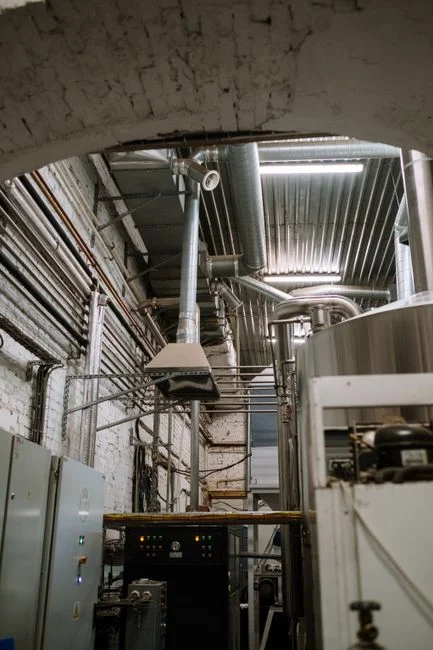
UF alone handles biological and particulate control but does not reduce dissolved solids, so it suits sites that only need to clean up blowdown for sewer discharge under a TSS-based permit (Genesis Water Technologies, 2026). Nanofiltration partially softens the blowdown, lets chlorides pass, runs at 75–150 psi, and reaches 70–85% recovery with permeate TDS at 30–50% of feed — useful when hardness is the discharge limit rather than total TDS (Genesis Water Technologies, 2026). Reverse osmosis delivers 10–50 mg/L permeate and 95–99% dissolved-solids rejection, the broadest answer for cooling-tower makeup reuse (Genesis Water Technologies, 2026). MVC is appropriate only when discharge is effectively banned, brine hauling is uneconomic, or the operator needs a high-recovery (>90%) closed loop on a hyperscale site (Genesis Water Technologies, 2026). The choice of pretreatment chemistry is itself a decision: traditional phosphate and chromate legacy programs create reuse and discharge problems, which is why non-phosphate, low-toxicity tablet-based programs are recommended for blowdown-recovery sites (Genesis Water Technologies, 2026).
For a Rostov project, the procurement question is not "which membrane is best" but "which membrane survives the intake water we actually have." A Don River intake pushes the design toward RO with strong antiscalant and UF pretreatment; a Vodokanal potable intake may allow NF at lower capex; a reclaimed-water intake requires a tighter biological barrier before any membrane. Plan for RO and UF membrane replacements as a recurring spend line, not a one-time purchase.
| Technology | Best-fit objective | Operating pressure | Recovery | Permeate quality |
|---|---|---|---|---|
| UF alone | TSS / biological control for sewer discharge under TSS-based permit | 10–30 psi | 90–95% | Dissolved solids pass; TSS very low |
| Nanofiltration | Partial softening when hardness is the discharge limit | 75–150 psi | 70–85% | Permeate TDS ≈ 30–50% of feed |
| Reverse osmosis | Cooling-tower makeup reuse; broadest answer | 150–400 psi | 50–85% (BWRO); plateaus 75–80% on CTBD | 10–50 mg/L TDS; 95–99% rejection |
| MVC on RO concentrate | Closed-loop / high-recovery when discharge is restricted | Thermal (electric) | 95–98% on concentrate | Distillate <10 mg/L TDS |
CAPEX, OPEX and Compliance Reality Check for Rostov-on-Don
Reference CAPEX bands: side-stream filtration $50,000–200,000; a 50,000 GPD RO train $250,000–500,000; MVC for 10,000–30,000 GPD $1–3 million; full ZLD $3–8 million, all per Genesis Water Technologies (2026). Operating cost reference points: RO opex $1.50–3.00 per thousand gallons; MVC at 15–25 kWh per 1,000 US gallons of distillate; full ZLD opex $5–15 per thousand gallons; direct-discharge fees in water-stressed regions $5–15 per thousand gallons (Genesis Water Technologies, 2026). These are U.S.-anchored reference bands, not local Rostov tariffs; the engineer must swap them for current Vodokanal Rostov water and sewer rates, Rostovenergo electricity tariffs, and any Rosprirodnadzor discharge levy before signing off the budget.
Regulatory framing: in Russia, blowdown disposal paths include surface-water discharge under federal environmental rules, municipal sewer discharge to Vodokanal Rostov, on-site evaporation, or hauling — each with different pretreatment expectations. The research does not provide Rostov-specific numerical permit limits, so the engineer must request them from Vodokanal Rostov and the relevant Rosprirodnadzor regional office before freezing the design. The cheapest water is the water you do not have to treat twice: any reused gallon avoids both the freshwater tariff and the blowdown discharge cost, which is why the reuse math compounds at hyperscale. Roughly two-thirds of data centers built since 2022 are in water-stressed regions, so operators are increasingly required to factor water reuse and discharge-quality management into site selection (Commercial Water Lab, citing Bloomberg via Lincoln Institute, 2026). For a deeper look at the discharge-permit framing, see the data center NPDES and POTW pretreatment compliance guide and the comparable regional guide for a data center in Aba, Nigeria for a non-U.S. site reference. A PLC-controlled chemical dosing skid and a stocked bench of treatment plant spare parts and media should be carried in the OPEX model from day one.
| Cost line | Reference band (U.S.-anchored) | Source |
|---|---|---|
| Side-stream filtration capex | $50,000–200,000 | Genesis Water Technologies, 2026 |
| 50,000 GPD RO capex | $250,000–500,000 | Genesis Water Technologies, 2026 |
| MVC capex (10,000–30,000 GPD) | $1–3 million | Genesis Water Technologies, 2026 |
| Full ZLD capex | $3–8 million | Genesis Water Technologies, 2026 |
| RO opex | $1.50–3.00 per thousand gallons | Genesis Water Technologies, 2026 |
| MVC energy | 15–25 kWh per 1,000 US gallons of distillate | Genesis Water Technologies, 2026 |
| Full ZLD opex | $5–15 per thousand gallons | Genesis Water Technologies, 2026 |
| Direct-discharge fee (water-stressed regions) | $5–15 per thousand gallons | Genesis Water Technologies, 2026 |
Frequently Asked Questions
What size RO system does a 10 MW data center in Rostov-on-Don need?
Frame the answer from the available benchmarks: a 100 MW facility can use up to 2 million liters per day (IDE Tech, 2026), a medium-sized data center up to 300,000 gallons per day (Commercial Water Lab, citing UGA CAES TP-121, June 2026), and the Loudoun County hub about 2.75 million gallons per day in 2023 (Commercial Water Lab, citing UGA TP-121, 2026). A 10 MW site is roughly one-tenth of a 100 MW hyperscale, but the cooling-tower blowdown fraction of 25–30% at 4 cycles (Genesis Water Technologies, 2026) still drives the RO size. The engineer must collect four inputs before sizing: IT load, PUE, cycles of concentration, and intake source (Don surface, Vodokanal potable, or reclaimed). A vendor cannot quote a credible RO train without those.
Which products in the HydropureWater catalog map to the recommended CTBD treatment train?
The recommended train maps to five product groups: a multi-media filter for side-stream suspended-solids reduction (Step 1), a hollow-fiber UF system for RO pretreatment and biological barrier (Step 2), an industrial RO system as the desalination workhorse (Step 3), a PLC-controlled chemical dosing skid for antiscalant and biocide control, and stocked RO and UF membrane replacements plus treatment plant spare parts and media as recurring OPEX lines. Suppliers should be evaluated on documented CTBD reference plants, not only on catalog flow rates.
Can a data center in Rostov-on-Don legally discharge cooling-tower blowdown to the municipal sewer, and what pretreatment does Vodokanal typically require?
The research does not provide Rostov-specific numerical permit limits, so this question must be answered by direct engagement with Vodokanal Rostov and the relevant Rosprirodnadzor regional office. The engineer should request the local sewer-discharge limits for TDS, TSS, metals, biocide residuals, pH, and temperature, plus any categorical standards that apply to data center cooling-tower blowdown. The U.S. reference frame is the EPA position that CTBD is a wastewater stream that may require permits before discharge (Commercial Water Lab, citing EPA, 2026), but the binding numbers in Russia come from Vodokanal and federal environmental rules, not from U.S. guidance. See the data center NPDES and POTW pretreatment compliance guide for the U.S. analogue and a useful question template.
How often does an RO membrane need cleaning on CTBD duty, and what is realistic membrane life?
On CTBD duty, expect chemical cleaning every 1–3 months and recovery tuning as the main lever to extend interval (Genesis Water Technologies, 2026). Membrane life is a function of feed chemistry, antiscalant program, and recovery; the research does not provide a numeric membrane-life range, so the engineer should request membrane-replacement frequency as a separate quote line from the RO vendor rather than assume it. The non-phosphate, low-toxicity tablet-based pretreatment program recommended for blowdown-recovery sites is specifically designed to reduce membrane fouling and discharge-permit conflicts (Genesis Water Technologies, 2026).
At what water and discharge price does CTBD reuse pay back in Rostov-on-Don?
The U.S.-anchored payback math uses the $5–15 per thousand gallons direct-discharge fee band and the $1.50–3.00 per thousand gallons RO opex band (Genesis Water Technologies, 2026). When the avoided discharge fee per reused gallon exceeds the RO opex per reused gallon, the project is cash-positive before any freshwater savings are counted; add the avoided freshwater tariff and the payback shortens. The research does not provide Rostov-specific water or discharge tariffs, so the engineer must substitute current Vodokanal Rostov water rates, Rostovenergo electricity tariffs, and any Rosprirodnadzor discharge levy before signing off the ROI. Treat the U.S. reference bands as a sanity check, not a final number.