Which Sewer Authority and Federal Rule Apply to a Fairland Discharger
Fairland, Maryland, sits inside the Washington Suburban Sanitary Commission (WSSC) service area, making WSSC the local control authority for any sewer discharge rather than the Maryland Department of the Environment. WSSC runs an Industrial Discharge Permit program that operates under the EPA's National Pretreatment Program at 40 CFR Part 403, the federal framework that sets baseline obligations for every Significant Industrial User (SIU) in the U.S. (Oxmaint, 2025-09). A food or beverage plant that meets the SIU thresholds must obtain an industrial pretreatment permit from WSSC, comply with the local limits WSSC sets for BOD, TSS, FOG, pH, and temperature, conduct self-monitoring, and submit periodic compliance reports. When local limits are missed, the control authority assesses surcharges, and repeat violations can trigger permit suspension, which is why pretreatment is treated as production-continuity infrastructure rather than optional treatment.
What Food and Beverage Wastewater Looks Like Before the Sewer
Food and beverage wastewater is among the highest-strength industrial effluent any sector produces, with the contaminant mix varying sharply based on the specific process (Oxmaint, 2025-09). Meat and poultry plants discharge streams rich in fats, oils, and grease (FOG) that coat pipe walls and smother biological treatment if they reach an aeration basin intact (ALAR Corp, 2025-11). Beverage and confectionery lines release sugars and starches that are highly biodegradable and can drive BOD up quickly enough to crash a POTW's biological stage. Dairy and protein-rich waste adds foaming and odor risk while pushing BOD even higher. Clean-in-place cycles dump detergents, caustics, and disinfectants that swing pH in both directions, destabilizing nitrification and biological phosphorus removal. Packaging, prep, and bottling lines contribute pulp, seeds, grains, and fibrous debris that register as suspended solids. The result is a stream that swings in flow, pH, BOD, and FOG within a single shift, necessitating more than conventional primary clarification alone (ALAR Corp, 2025-11).
| Process Area | Dominant Contaminants | Why It Complicates Pretreatment |
|---|---|---|
| Meat and poultry | Fats, oils, grease, blood, protein | FOG coats media and clogs aeration; high BOD load (ALAR Corp, 2025-11) |
| Beverage and confectionery | Sugars, starches, color | Rapidly biodegradable; drives BOD spikes (ALAR Corp, 2025-11) |
| Dairy and protein processing | Lactose, casein, whey | Foaming, odor, elevated BOD in biological stage (ALAR Corp, 2025-11) |
| CIP and sanitation | Caustic, acid, quat, peroxide | pH swings upset nitrification and biological P removal (ALAR Corp, 2025-11) |
| Packaging, prep, bottling | Pulp, seeds, grain, fiber | Adds TSS load ahead of DAF and biological stages (ALAR Corp, 2025-11) |
A Pretreatment Unit-Process Train That Meets Local Limits
A reliable F&B pretreatment train sequences unit operations so each stage removes what the next stage cannot tolerate. Headworks screening is the first line of defense: a rotary mechanical bar screen for headworks screening protects pumps, valves, and downstream biological process equipment from rags, plastics, and fibrous debris (ALAR Corp, 2025-11). Flow then enters an equalization tank, which dampens both hydraulic surges and concentration spikes so that downstream chemical and biological stages see a stable influent—the Oxmaint pretreatment checklist flags unstable influent as a primary compliance risk (Oxmaint, 2025-09).
From equalization, the stream moves to a DAF system for FOG and suspended solids removal, which is the workhorse for food and beverage plants: micro-bubbles attach to FOG droplets and fine solids, float them to the surface, and an automatic skimmer removes the layer before it reaches the biological stage. A PLC-controlled coagulant, flocculant and pH dosing skid sits ahead of or after the DAF, injecting chemistry under closed-loop control so the stream entering biological treatment stays within the required range. Polishing is then handled biologically with an MBR polishing for BOD and nutrient reduction system, which combines MBBR/IFAS or membrane bioreactor biology with sub-1-micron membrane filtration, delivering near-reuse-quality effluent in a smaller footprint than conventional activated sludge. Finally, the wasted biosolids and DAF float are sent to a plate and frame filter press for sludge dewatering to cut solids volume before disposal—a driver the ALAR Corp article identifies as a direct cost lever for any food plant (ALAR Corp, 2025-11).
Local Limits and the Parameters the Permit Will Check
For an SIU, the federal framework at 40 CFR Part 403 sets the obligation, but the numeric limits exist within the WSSC industrial discharge permit. The Oxmaint pretreatment reference lists the parameters that most F&B permits track: BOD, TSS, FOG, pH, and temperature, with nutrients—specifically phosphorus and nitrogen—increasingly part of the conversation under EPA's 2024 proposed updates to the meat and poultry effluent guidelines (Oxmaint, 2025-09). The control authority sets the actual values case by case; therefore, the correct step is to pull the current WSSC permit or local limit letter rather than rely on national defaults. When BOD, TSS, FOG, pH, or nutrient excursions occur, the control authority expects an exceedance report; missing limits without a documented response converts a routine surcharge into a permit-action conversation (Oxmaint, 2025-09).
| Parameter | What the Permit Typically Tracks | What Triggers Action |
|---|---|---|
| BOD | 5-day biochemical oxygen demand, mg/L | Surcharge on exceedance; permit action on repeat (Oxmaint, 2025-09) |
| TSS | Total suspended solids, mg/L | Surcharge on exceedance (Oxmaint, 2025-09) |
| FOG | Fats, oils, and grease, mg/L | Surcharge; FOG-caused upsets in POTW biology (Oxmaint, 2025-09) |
| pH | Continuous, typically 5.0–10.0 range cited as standard SIU requirement | Excursion; damage to downstream biology (Oxmaint, 2025-09) |
| Temperature | Discharge temperature | Excursion above permit ceiling (Oxmaint, 2025-09) |
| Nutrients (P, N) | Total phosphorus, total nitrogen, mg/L | Tightening under EPA 2024 proposed meat/poultry updates (Oxmaint, 2025-09) |
Keeping the Permit: Sampling, Calibration and Records
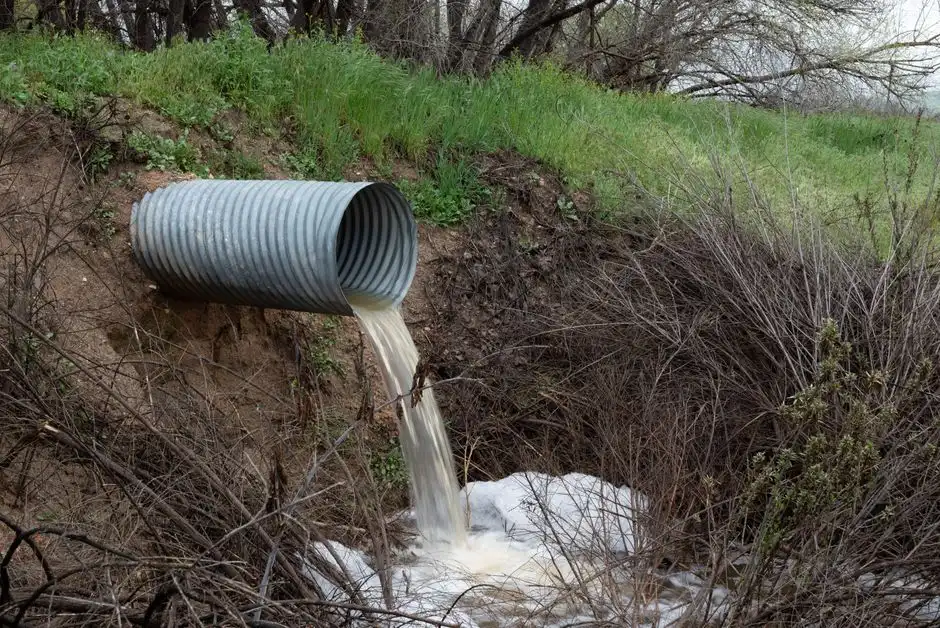
SIU status under 40 CFR Part 403 requires self-monitoring, sampling, and periodic compliance reports submitted to the control authority, and the records behind those reports are what an inspector actually reads (Oxmaint, 2025-09). Composite samplers, pH probes, and flow meters each require scheduled calibration and a documented chain of custody so a result can be defended if it triggers an exceedance. Maintenance of DAF skimmers, equalization tanks, and the PLC-controlled coagulant, flocculant and pH dosing skid should be tracked as work orders with dates and results rather than run-to-failure. When an exceedance happens, the regulator looks for a documented root cause and corrective action; without that record, surcharges are assessed with no supporting response on file (Oxmaint, 2025-09). The plants that pass inspections cleanly are those whose calibration logs, sample chains of custody, and work orders are searchable by asset, date, and parameter before the inspector asks.
Frequently Asked Questions
Does a food or beverage plant in Fairland, MD need a WSSC permit or a state permit to discharge to the sewer?
Fairland is in WSSC's service area, so the local control authority is WSSC, not the Maryland Department of the Environment. Any plant classified as a Significant Industrial User under 40 CFR Part 403 needs a WSSC Industrial Discharge Permit and must follow the local limits WSSC sets, which typically include BOD, TSS, FOG, pH, and temperature (Oxmaint, 2025-09).
What does "Significant Industrial User" status mean for a Fairland food plant?
SIU status is the federal category under 40 CFR Part 403 that triggers the full pretreatment obligation: an industrial discharge permit, local-limit compliance, self-monitoring, sampling, and periodic compliance reports submitted to WSSC. A plant meets the SIU threshold based on discharge volume, process type, and pollutant loading, and the classification is set by the control authority.
Is it cheaper to haul wastewater off-site or install on-site pretreatment near Fairland?
Hauling untreated wastewater off-site is a significant ongoing expense, which makes on-site treatment a direct way to reduce disposal costs and minimize sludge volume (ALAR Corp, 2025-11). The comparison is plant-specific: buyers should request a per-pound hauling quote, a per-gallon treated-discharge cost estimate from a qualified integrator, and a sludge-disposal line item, then compare the three on an annual basis.
How do you size and select a DAF for a Fairland F&B plant?
Sizing starts with measured flow and load data, not nameplate production: peak and average flow in gpm, FOG and TSS concentrations, and temperature. A reputable supplier should provide a written basis-of-design showing hydraulic residence time, air-to-solids ratio, and float-handling capacity, along with references for similar food-stream profiles.