Why a Samara Data Center Needs a Dedicated Wastewater and Blowdown Plan
A data center in Samara typically needs a treatment train sized to cool cooling tower blowdown that represents 20–40% of intake water, plus domestic and equipment-room wastewater. At 4 cycles of concentration a Samara hall on hard Volga makeup loses roughly 25% of makeup as blowdown, with TDS 1,200–6,000 mg/L, elevated calcium, magnesium, silica and alkalinity, suspended solids of 10–50 mg/L, and residual treatment chemicals. Cold winters require basin freeze protection and a biocide strategy that works at low temperature. The most defensible 2026 train combines right-sized side-stream filtration at 1–5% of circulation flow, an ultrafiltration or reverse osmosis step sized for 50–85% blowdown recovery, and clarified, disinfected sanitary effluent discharge, with RO→MVC only where Samara Oblast water-body rules make zero liquid discharge attractive.
Conventional cooling towers discharge 20–40% of intake as blowdown, water that has already been paid for and treated to makeup standards (Genesis Water Technologies). At 4 cycles of concentration the blowdown ratio is 25% of makeup volume, calculated as 1/(CoC−1), and that number becomes the design baseline for every Samara hall (Genesis Water Technologies). Samara Oblast's industrial policy treats environmental and occupational health as a strategic priority, elevating the audit value of a documented water plan (PANORAMA Publishing House, 2021). Sub-zero winter ambient temperatures, routinely below −20 °C from December through February, change biocide efficacy and demand basin freeze protection — design constraints that the rest of this guide returns to repeatedly.
What Flows Off-Site: Blowdown Chemistry and Sanitary Wastewater
Blowdown is not just concentrated makeup water. Total dissolved solids typically run 1,200–6,000 mg/L, or 4–8× the Volga or municipal makeup, depending on cycles of concentration and source quality (Genesis Water Technologies). Scaling minerals — calcium, magnesium, silica and alkalinity — concentrate proportionally and set the recovery ceiling for any downstream membrane (Genesis Water Technologies). Suspended solids from corrosion products, biofilm fragments and airborne dust accumulate despite basin filtration, typically 10–50 mg/L (Genesis Water Technologies).
Residual treatment chemicals — biocides, corrosion and scale inhibitors, dispersants — concentrate in blowdown and govern compatibility with membrane reuse and with Russian discharge limits (Genesis Water Technologies). A 10 MW hall on evaporative cooling at 4 CoC may intake around 15 million gallons monthly, of which roughly 3.75 million gallons is recoverable blowdown (Genesis Water Technologies). The compliance-relevant streams leaving a Samara site therefore split into two: cooling-tower blowdown with high TDS and chemical residuals, and sanitary plus equipment-room wastewater with BOD, TSS, oil and microbiological loading. Both must be characterized before the train is sized.
Cold-Climate Operation: How Samara's Winter Rewrites the Design Basis
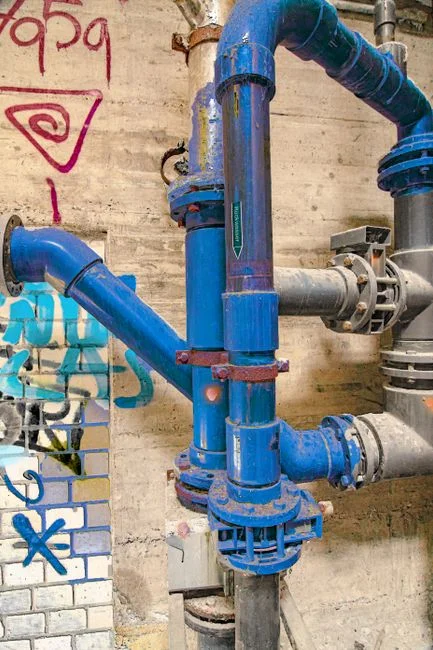
Designs copied from Arizona or Singapore manuals fail in Samara. Below roughly 5 °C, oxidative biocide kinetics slow and microbiologically influenced corrosion risk shifts; tablet-based non-oxidizing programs and biocide rotation become more reliable than continuous chlorine or bromine feed (Genesis Water Technologies). Outdoor cooling-tower basins, chemical day tanks and dosing pumps need heat tracing, enclosures or indoor placement to keep pumps in spec and to prevent ice damage to basin walls and distribution piping.
RO and UF skids installed in unheated mechanical rooms see rising feed-water viscosity and modest changes in salt rejection at low temperature; sizing should include a winter ambient envelope, not just a summer nameplate case. Snowmelt and spring infiltration can shift Volga-sourced makeup TOC for several weeks, increasing biofouling potential on UF and RO membranes and justifying seasonal clean-in-place capacity. Treat −25 °C ambient and 5 °C feed as two separate design points, not as a single averaged condition.
Treatment Train Options for Samara Halls
Four trains cover almost every Samara scenario, from a small colocation hall on cheap municipal makeup to a hyperscale site under a near-ZLD permit. The decision is driven by water stress, discharge permit stringency and available CapEx, not by technology fashion (Genesis Water Technologies).
| Train | Process configuration | Key operating envelope | Indicative cost band | Best fit in Samara |
|---|---|---|---|---|
| A — Side-stream only | Self-cleaning spiral filters, 1–5% of circulation flow, 10–25 µm cut | Reduces blowdown TSS, enables modest CoC gains | $50,000–$200,000 CAPEX | Small colo halls on cheap municipal makeup, no reuse target |
| B — Side-stream + UF | UF at 0.01–0.1 µm, 10–30 psi, 90–95% recovery | Removes TSS, bacteria, high-MW organics | CAPEX above Train A; low OPEX | Blowdown reuse for non-critical services or polishing |
| C — Side-stream + RO (or NF) | RO 50–85% recovery, permeate 10–50 mg/L TDS; NF for partial softening | Workhorse for 5–15 MW halls; permeate returns as cooling-tower makeup | $250,000–$500,000 for 50,000 GPD; OPEX $1.50–$3.00/kgal | Most Samara halls seeking meaningful water savings |
| D — RO + MVC (± crystallizer) | RO concentrate fed to MVC at 95–98% recovery; crystallizer for full ZLD | Distillate TDS <10 mg/L; 95–99% overall recovery | $1–3M for 10,000–30,000 GPD MVC; ZLD $3–8M, OPEX $5–$15/kgal | Sites with effectively closed or very expensive discharge permits |
Train A delivers self-cleaning spiral filtration at 1–5% of circulation flow with 10–25 µm cut and $50,000–$200,000 CAPEX for typical data centers (Genesis Water Technologies). Train B adds UF at 0.01–0.1 µm, 10–30 psi and 90–95% recovery, removing suspended solids, bacteria and high-MW organics; it is the right step when blowdown will be reused for non-critical services or polishing (Genesis Water Technologies). Train C is the workhorse: 50–85% RO recovery with permeate at 10–50 mg/L TDS, $250,000–$500,000 for a 50,000 GPD system and $1.50–$3.00 per thousand gallons OPEX (Genesis Water Technologies). Train D pushes overall recovery to 95–99% with distillate TDS below 10 mg/L, costing $1–3M for 10,000–30,000 GPD and reserved for sites where discharge permits are effectively closed (Genesis Water Technologies). Full ZLD combinations add a crystallizer at $3–8M CAPEX and $5–$15 per thousand gallons OPEX, economic only under strict discharge prohibition (Genesis Water Technologies).
Comparing the Trains for a Samara 5–15 MW Data Hall
Recovery rises sharply from Train A to Train D: side-stream only improves blowdown quality, UF adds reuse for non-critical services, RO enables makeup reuse, and MVC or ZLD approaches a closed loop (Genesis Water Technologies). CAPEX scales roughly 10× from a $50,000–$200,000 side-stream package to a $3–8M ZLD system, so right-sizing to facility scale and operational capability is essential (Genesis Water Technologies). OPEX per thousand gallons is lowest for side-stream filtration and climbs through UF, RO and ZLD as energy and chemical intensity rise (Genesis Water Technologies). The same source notes that hyperscale treatment technology applied to a 5 MW colocation hall ends up 3–4× more expensive per gallon, with operational complexity that exceeds available staff.
| Decision criterion | Train A | Train B | Train C | Train D |
|---|---|---|---|---|
| Overall water recovery | Marginal (lower blowdown volume via higher sustainable CoC) | 15–25% of blowdown reusable for non-critical services | 50–85% of blowdown as cooling-tower makeup | 95–99% with crystallizer; near-closed loop |
| CAPEX band | $50,000–$200,000 | Mid (above Train A) | $250,000–$500,000 (50,000 GPD) | $1–3M MVC; $3–8M ZLD |
| OPEX ($/kgal) | Very low (solids disposal, maintenance) | Low | $1.50–$3.00 | $5–$15 (ZLD) |
| Operational complexity | Low — plant staff can run it | Low–moderate | Moderate — membranes, antiscalant, CIP | High — dedicated operators, thermal energy |
| Samara fit | Small colo, cheap makeup, no reuse mandate | Site targets non-critical reuse or polishing | Default 5–15 MW choice with reuse target | Closed permit or extremely high discharge cost |
For most Samara halls Train C delivers the best balance: meaningful water savings, manageable operations, and a defensible discharge stream if the site is not under a ZLD order. Train A is defensible only when both makeup water and discharge capacity are inexpensive; Train D is reserved for sites where the permit envelope effectively bans liquid discharge.
Sanitary and Equipment-Room Wastewater: The Stream That Gets Forgotten
Office, cafeteria and rest-room flows from a data hall typically need BOD, TSS and microbiological reduction before discharge; packaged biological plants or MBR units are the common fit, and an integrated MBR for sanitary and equipment-room wastewater delivers near-reuse-quality effluent in a small footprint. Disinfection is a separate compliance gate — an on-site ClO₂ generator for effluent disinfection provides reliable microbial control without the regulated by-products associated with free chlorine.
Floor and equipment wash-down water can carry oil, silt and metalworking fluid residues; a DAF unit for oil and suspended-solids removal placed ahead of the biological step protects downstream membranes and biological units from hydraulic and organic shock. In Samara, where the sanitary stream is small but auditable, keeping it on a dedicated, metered treatment loop is the simplest way to satisfy both municipal sewer limits and any on-site reuse targets for toilet flushing or landscape irrigation.
Right-Sizing HydropureWater Equipment for a Samara Hall
Use a multi-media filter for side-stream cooling-water polishing with 10–25 µm cut as the first step, protecting downstream membranes and reducing blowdown suspended solids. For Trains B and C, a hollow-fiber UF system with 0.03 micron PVDF membranes with automatic backwash and air scour is the workhorse pretreatment ahead of RO. For Train C, an industrial RO unit sized for 50–85% blowdown recovery delivers permeate suitable for cooling-tower makeup, with PLC control and minimal chemical demand.
Add a PLC-controlled chemical dosing skid for antiscalant and biocide so the program is auditable under Samara Oblast reporting. For sanitary and wash-down streams, an integrated MBR plus ClO₂ disinfection provides near-reuse-quality effluent with a small footprint, as described in the previous section. Two further references are useful for cross-checking scope: the Matola data center blowdown guide for a hot-climate, water-scarce contrast and the Kuala Lumpur semiconductor and data hall wastewater guide for high-purity reuse patterns.
Site-Readiness Checklist Before You Buy
Engineering documentation has to be defensible at a Russian audit. Pull at least 12 months of makeup water analyses from the Samara utility or Volga intake, including hardness, silica, alkalinity, chloride, conductivity and TOC; seasonal swings, especially spring TOC, are normal. Confirm the discharge route — municipal sewer, surface water or on-site infiltration — and identify the local Samara Oblast TDS, BOD and biocide limits that apply to that route. Quantify blowdown by direct measurement, not by formula: actual blowdown often runs 15–30% above theoretical, and the gap is usually leak paths, once-through cooling bypasses and emergency dumps (Genesis Water Technologies).
Lock in the winter design ambient temperature and decide which skids will be indoor, heated or weather-protected; this drives enclosure and heat-tracing scope. Set a target reuse rate and a payback horizon so the train selection (A through D) is defensible in a CapEx review.
| Item | What to gather | Why it matters for Samara |
|---|---|---|
| Makeup water analysis | 12 months of hardness, silica, alkalinity, chloride, conductivity, TOC | Drives CoC limit, antiscalant selection, RO recovery ceiling |
| Discharge route and limits | Confirmed sewer/surface/infiltration permit and TDS/BOD/biocide caps | Sets whether Train C suffices or Train D / ZLD is required |
| Measured blowdown | Volume, conductivity, TSS, residual chemicals | Field data usually 15–30% above theoretical (Genesis Water Technologies) |
| Winter design ambient | Locked minimum outdoor and mechanical-room temperature | Determines enclosure, heat-tracing and biocide program |
| Reuse target and payback | % blowdown reused, simple payback years | Defends train choice to finance and Samara Oblast reviewers |
Frequently Asked Questions
What blowdown treatment does a 5–15 MW Samara data center need as a baseline?
A Samara hall of that size typically needs side-stream filtration at 1–5% of circulation flow plus an RO step sized for 50–85% blowdown recovery, with permeate returned as cooling-tower makeup (Genesis Water Technologies). Sanitary and equipment-room wastewater should run through a packaged MBR and ClO₂ disinfection loop before discharge. Train selection is driven by the Samara Oblast permit envelope, not by the available roof area.
How much does a Samara cooling-blowdown treatment train cost in 2026?
Indicative CAPEX for the workhorse Train C sits at $250,000–$500,000 for a 50,000 GPD RO system, with OPEX of $1.50–$3.00 per thousand gallons (Genesis Water Technologies). Side-stream-only Train A is $50,000–$200,000, while RO + MVC Train D is $1–3M and full ZLD $3–8M with $5–$15/kgal OPEX (Genesis Water Technologies). Because the cost bands in the research are global and not Samara-specific, request a vendor quotation that includes Volga-sourced feed analysis, winter ambient and Russian certification scope before fixing the budget.
Which supplier or system integrator should we shortlist for a Samara data hall?
Shortlist vendors who can deliver a documented cold-climate reference list, a winter ambient design point in their P&ID, and Russian-language operations documentation. Ask each bidder for a feed-water compatibility memo against your measured Volga makeup, the UF/RO membrane replacement schedule priced for Samara logistics, and a list of chemicals that comply with local biocide and discharge rules. Independent reference projects in cold climates matter more than headline recovery rates.
What compliance risk should we flag before we commit to a train in Samara Oblast?
The main risk is mismatch between the design discharge quality and the actual Samara Oblast water-body or sewer limits for TDS, BOD, biocide residuals and temperature. A train that meets global blowdown guidelines can still fail a regional audit if antiscalant, corrosion inhibitor or biocide chemistry is not on the locally approved list. Lock the discharge route and its specific limits in writing, and require the vendor to map every chemical in the dosing program to that list before purchase.