Why Nizwa's Sewage Profile Is Different from Coastal Oman
Nizwa sits inland in Ad Dakhiliyah Governorate, a semi-arid interior basin where high evaporation and a mineralized water table concentrate dissolved solids long before wastewater reaches a treatment plant. The Oman domestic-sludge characterization study (2013, sampling year 2010) recorded mean electrical conductivity of 933 µS/cm in return activated sludge (RAS), 702 µS/cm in waste activated sludge (WAS), and 404 µS/cm in primary sludge — values that reflect the salinity and hardness footprint of Omani household supply water and that any new Nizwa plant must absorb in its screening, thickening, and corrosion allowances.
Domestic sewage in Oman comprises water consumed by a person, including body waste, toilet flushing, washing, laundry, food preparation, and kitchen-utensil cleaning — the exact load profile a Nizwa housing scheme, school, or hotel development will generate. Nizwa Sewage Treatment Plant itself has been the subject of academic treatment-process research; the flying jet plasma torch study (2018) collected wastewater from different parts of Nizwa STP, confirming biological treatment as the operational baseline and signaling that the existing plant can be retrofitted with advanced polishing steps. At a national scale, more than 350 wastewater treatment plants operate across Oman, and the 2013 survey found that roughly 96% of 37 visited STPs run as extended-aeration activated-sludge processes — so operators, spare parts, and reference designs inside the Sultanate are aligned to that baseline.
Oman Domestic STP Characterization: Numbers Every Nizwa Spec Needs
The 2013 characterization study (sampling year 2010) is the most cited domestic-sludge dataset for Oman and remains the defensible anchor for a Nizwa influent basis. The survey covered 37 STPs (15 main, 22 small), with monthly grab samples taken over one year at six domestic plants: Rusayl (RSL.D), Darsait (DST), and Ansab in Muscat, Sohar in North Al-Batina, Salalah STP (SLL.STP), and Salalah Lagoon (SLL.LGN) in Dhofar. All tests followed the Standard Method for the Examination of Water and Wastewater; anions and cations were determined on dry weight, and pH/EC were measured after ultrasonication and filtration.
RAS pH across the six plants ranged from 6.08 to 7.8, with WAS pH spanning a wider envelope at DST than at Ansab. Mean electrical conductivity was 933 µS/cm for RAS, 702 µS/cm for WAS, and 404 µS/cm for primary sludge, with high standard deviations across all plants — a seasonal-swing flag the new design must buffer. Volatile content (the proxy for organic loading on the sludge line) averaged 68% in RAS, 65% in WAS, and 71% in primary sludge, with observed ranges of 49.5–84.3% (RAS) and 32.2–83% (WAS) — strong justification for a robust aerobic digester or dedicated sludge holding tank rather than direct dewatering.
The anion profile drives the biological design choices. Phosphate is described as "very high in all domestic STPs," with the widest RAS range recorded at SLL.STP (26–33,861 mg/kg) and the highest WAS value of 32,745 mg/kg at RSL.D. Chloride peaked at 35,910 mg/kg in RAS at RSL.D, sulfate spanned 832–37,998 mg/kg in RAS and 550–48,649 mg/kg in WAS, fluoride was the lowest anion at roughly 11–12 mg/kg, and nitrite/nitrate stayed low except at Sohar.D. Because phosphorus inhibits alkaline phosphatase activity in aerobic activated sludge, a Nizwa plant targeting agricultural reuse should plan for biological phosphorus removal or chemical P polishing rather than relying on secondary clarification alone.
| Parameter | RAS | WAS | Primary sludge | Source / notes |
|---|---|---|---|---|
| Mean pH range | 6.08–7.8 | Wide at DST; narrow at Ansab | 6.5 (SLL.STP) | 2013 Oman study, samples 2010 |
| Mean EC (µS/cm) | 933 | 702 | 404 | 2013 Oman study; high STD indicates seasonal swing |
| Volatile content (%) | 49.5–84.3 (mean 68) | 32.2–83 (mean 65) | mean 71 | 2013 Oman study |
| Phosphate (mg/kg) | 26–33,861 at SLL.STP | up to 32,745 at RSL.D | Very high overall | 2013 Oman study |
| Chloride (mg/kg) | up to 35,910 at RSL.D | narrower than RAS | — | 2013 Oman study |
| Sulfate (mg/kg) | 832–37,998 | 550–48,649 | — | 2013 Oman study |
| Fluoride (mg/kg) | ~12 (mean) | ~11 (mean) | — | 2013 Oman study |
Process Options for a New Nizwa Domestic Plant: Pond, A/O Package, or MBR
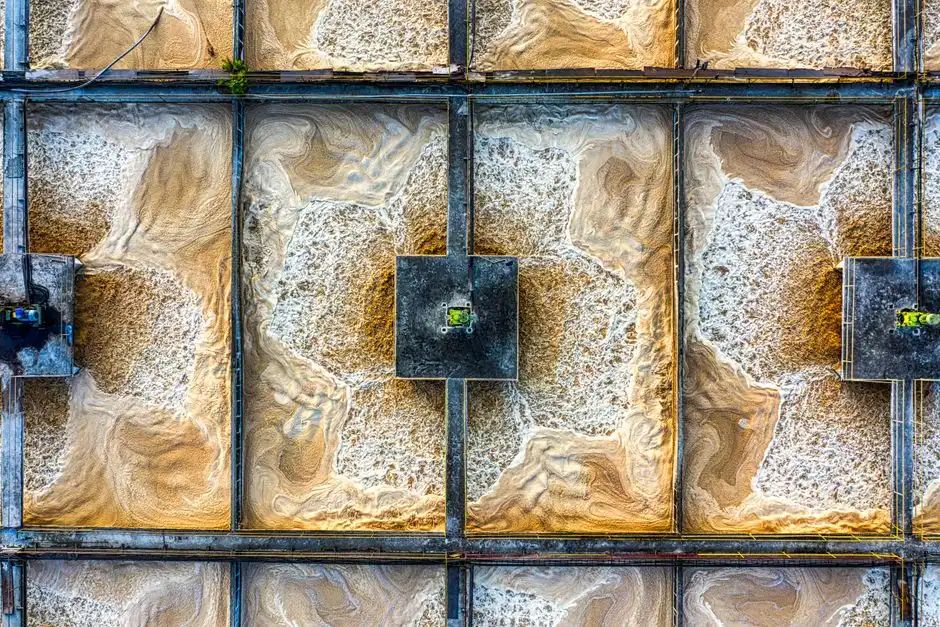
Three realistic trains cover almost every Nizwa domestic case from a single hotel up to a small municipality. Stabilization ponds match the ~4% of Omani STPs that the 2013 survey classified as pond-based; they have the lowest CAPEX and energy demand, require the most land, and produce no biological sludge on monthly or annual intervals — which simplifies handling but removes the sludge stream that a composting or land-application reuse pathway needs. A/O packaged units, like the underground A/O package sewage treatment plant (WSZ-class), combine anoxic/aerobic contact oxidation with sedimentation and disinfection in a single buried unit, run fully automated with no operator required, and cover the 1–80 m³/h band that fits residential communities, hotels, hospitals, and rural Nizwa valleys. MBR (membrane bioreactor) trains add submerged PVDF membrane filtration after activated sludge, deliver near-reuse effluent with sub-micron solids capture, and shrink the footprint to roughly 60% of a conventional plant of the same capacity — the MBR membrane bioreactor system typically fits the 10–2,000 m³/day band, which is the right envelope for district-scale or mixed-use developments and for any project that must hit Treated Sewage Effluent (TSE) targets for irrigation. These options provide a clear hierarchy for site-specific requirements.
Decision rule: pick ponds when land is cheap and reuse is not a goal; pick an A/O package for the 1–80 m³/h community, hospital, or hotel band where burial and low operator presence matter; pick MBR when footprint is constrained or reuse-grade effluent is required. All three must be specified against the Omani reality that surplus sludge treatment can be up to 60% of total plant OPEX, so the choice of aerobic digester, drying bed area, or filter press is decided alongside the process train. Buyers comparing packaged sewage treatment plant sizing for housing developments or following a generic domestic sewage treatment buyer and engineering guide will recognize the same capacity bands — 1–80 m³/h for A/O packages, 10–2,000 m³/day for MBR — as the starting envelope for Nizwa.
| Process train | Capacity band | Footprint | Operator presence | Reuse potential | Best fit in Nizwa |
|---|---|---|---|---|---|
| Stabilization pond | Site-specific, land-intensive | Large | Low | Limited (no sludge stream) | Where land is cheap and reuse is not a goal |
| A/O package (WSZ-class) | 1–80 m³/h | Compact, buried | None (fully automated) | Discharge to sewer/landscape with disinfection | Housing, hotels, hospitals, rural valleys |
| MBR | 10–2,000 m³/day | ~60% of conventional | Skilled, light attendance | TSE-grade for irrigation | District-scale, mixed-use, reuse-driven projects |
Sludge Handling — the OPEX Line Item That Sinks Nizwa Projects
Specifying a clean secondary process and then under-sizing the sludge line is the single most common failure in Omani STP design. The 2013 survey of 37 Omani STPs found that roughly 60% of visited plants treat sludge in drying beds, and many of those beds were run without proper planning — too much sludge added at once, or sludge left so long that weeds took hold. Around 8% of covered STPs used a filter press; the remainder had no sludge treatment and periodically sent sludge to landfill, which the study flags as a secondary-pollution risk that is increasingly constrained in the Sultanate.
Two design consequences follow. First, new Nizwa builds should plan mechanical dewatering from day one — a plate and frame filter press sized to the digester output — rather than rely on drying beds as the sole dewatering step. Second, the reuse pathway is real but conditional. The 2013 study noted that none of the sludge samples analyzed in 2001 met international land-application limits at that time, though some met Omani Regulations, and that metals content can be reduced by composting with non-hazardous domestic waste — which is the chain used in Muscat, where dried sludge is transported to Al-Ansab STP and then hauled by Oman Fertilizer Company to Al-Khabourah for composting. The survey found roughly 69% of sludge was still being dispatched to discarding sites, so any Nizwa plant targeting diversion from landfill must secure a guaranteed offtake before commissioning.
Specification Checklist Before You Order a Nizwa Package Plant
Hand this list to any supplier to surface the real design differences in a week.
- Capacity band — 1–80 m³/h for an A/O package (community, hotel, hospital); 10–2,000 m³/day for an MBR (district or mixed-use development).
- Influent design basis — BOD, COD, TSS, TN, TP anchored to the 2013 Oman characterization study's high-phosphate, high-chloride envelope, not generic Gulf figures.
- Sludge line sizing — drying bed area, plate-and-frame filter press capacity, or aerobic digester volume, because the 2013 study records sludge treatment as up to 60% of total plant OPEX.
- Automation and mounting — PLC with no on-site operator; buried vs skid-mounted; standby blower and membrane-cleaning CIP if MBR.
- Reuse target — discharge to sewer, surface water, or Treated Sewage Effluent for landscape irrigation, and reference the Omani or GCC standard the proposal is sized against.
- Spare parts and consumables — request a bill of materials for membrane modules, valves, diffusers, and filter media with lead times into the Sultanate.
Frequently Asked Questions
What is the right process train for a 1–80 m³/h Nizwa community or hotel?
An anoxic/aerobic packaged unit such as the WSZ-class underground plant is the standard fit for the 1–80 m³/h band used by housing schemes, hotels, and hospitals in the Ad Dakhiliyah interior. The 2013 Oman STP survey found roughly 96% of 37 visited domestic plants running extended-aeration activated sludge, so an A/O package keeps the new build aligned with in-country operator skills and reference designs. Buyers should ask the supplier to size the biological reactor against the Omani characterization study's high-phosphate envelope rather than generic Gulf influent figures.
How should sludge be handled to keep OPEX under control?
Frequently Asked Questions
What is the best treatment process for a new domestic sewage plant in Nizwa — pond, A/O package, or MBR?
For modern domestic projects in Nizwa, the Membrane Bioreactor (MBR) is the preferred technology over traditional pond or Anoxic/Oxic (A/O) package systems. MBR systems operate at high mixed liquor suspended solids (MLSS) concentrations, typically ranging from 8,000 to 12,000 mg/L, allowing for a significantly smaller footprint and superior effluent quality suitable for unrestricted reuse.
While pond systems require vast land areas and are prone to odor issues in arid climates, and A/O systems often fail to meet stringent turbidity standards, MBR technology consistently achieves BOD5 levels below 5 mg/L and turbidity under 0.2 NTU, which is essential for compliance with Omani reuse standards.
How much does a packaged sewage treatment plant for a Nizwa housing or hotel project cost in 2026?
In 2026, the capital expenditure (CAPEX) for a modular packaged STP in Oman ranges from 400 to 700 OMR per cubic meter of daily capacity, depending on the level of automation and the quality of stainless steel or epoxy-coated carbon steel materials used. For a mid-sized hotel or residential complex requiring a capacity of 100 m³/day, total installation costs generally fall between 40,000 and 70,000 OMR.
These figures exclude site preparation, civil works for equalization tanks, and connection to the municipal grid. Projects requiring advanced tertiary treatment stages for high-end landscaping or hotel aesthetic water features will trend toward the higher end of this cost spectrum.
Can the treated effluent from a Nizwa domestic STP be reused for landscape irrigation under Omani rules?
Yes, treated effluent can be reused for landscape irrigation provided the facility adheres to the Omani standards for treated sewage effluent (TSE) quality. The Ministry of Environment and Climate Affairs mandates that for unrestricted irrigation, the effluent must meet a fecal coliform limit of less than 200 CFU/100ml and a residual chlorine concentration of at least 0.5 mg/L after a 30-minute contact time.
Facilities must ensure that the treatment process includes effective disinfection, such as UV irradiation or chlorination, to meet these biological standards. Regular monitoring and reporting to the local authorities in Al Dakhiliyah Governorate are required to maintain the necessary operational permits for TSE discharge.
How should sludge from a Nizwa domestic STP be handled, and what OPEX share does it typically represent?
Sludge management involves mechanical dewatering using filter presses or screw presses to achieve a dry solids content of 20% to 25%, followed by transport to authorized municipal sludge drying beds or certified landfills. In the hot climate of Nizwa, aerobic digestion is common, though it must be managed carefully to minimize odors and prevent vector breeding.
Sludge handling and disposal typically account for 15% to 25% of the total operational expenditure (OPEX). This cost is driven primarily by the frequency of vacuum tanker services and the tipping fees charged by the regional waste management authorities for final disposal.
What influent and effluent data should I request from a Nizwa STP supplier before placing an order?
You must request a comprehensive design basis document that specifies the influent load, including Chemical Oxygen Demand (COD) ranging from 400 to 600 mg/L, Biochemical Oxygen Demand (BOD5) of 250 to 350 mg/L, and Total Suspended Solids (TSS) of 200 to 300 mg/L. It is critical to confirm these numbers match the specific hydraulic and organic loading expected from your facility's occupancy patterns.
Regarding effluent, require a guarantee that the system will meet the Omani Category A or B standards depending on your intended reuse application. Request detailed performance curves showing the expected permeate quality, energy consumption per cubic meter (target 0.8 to 1.5 kWh/m³), and the guaranteed lifespan of the membrane modules or biological media under local ambient temperatures exceeding 45°C.