What 'Domestic Sewage Treatment' Means in Salalah in 2026
Domestic sewage in Salalah is the wastewater stream generated by homes, residential compounds, hotels, hospitals, and small commercial premises—the sanitary flow that a separate sewer system delivers to a treatment facility, as defined by the US EPA (epa.gov, Municipal Wastewater). For 2026, designing treatment for this stream in the Dhofar Governorate means sizing for a coastal city influenced by seasonal khareef humidity and salt-laden air, both of which shape equipment enclosure, ventilation, and buried-tank corrosion protection. Treatment trains for this duty follow a four-stage structure of preliminary screening, primary sedimentation, biological treatment, and disinfection, consistent with the unit-process sequence implied in the EPA's municipal wastewater overview (epa.gov, Municipal Wastewater). This article is scoped to that domestic/sanitary duty at small-community flow, not industrial effluent, and it links the process choice to equipment verified in the HydropureWater catalog.
Influent Characteristics and Why They Matter for Design
Residential and community-scale sites in Salalah fall under the EPA's "sanitary sewer" category, which is installed to collect wastewater only and is not intended to carry widespread stormwater runoff (epa.gov, Municipal Wastewater). That classification matters because a true sanitary stream matches the load profile that packaged biological plants are designed for, while any stormwater entering the collection system distorts the load. Four design parameters drive sizing of a domestic plant: average daily flow (m³/day), peak factor over that average, BOD/COD load per capita, and total suspended solids. These parameters must be obtained from site flow records, water-consumption data, or local authority guidance before equipment selection. The EPA also documents that sanitary sewers with cracks, faulty seals, or improper connections can receive large volumes of infiltration and inflow (I/I) during wet weather, causing peak flows and operational stress at the receiving treatment plant (epa.gov, Municipal Wastewater)—a relevant risk for Dhofar sites still fed by older septic networks. Confirming that the upstream sewer is truly separate, and quantifying any I/I contribution, is a prerequisite to defensible sizing.
Process Options: A/O Package Plant vs MBR for Salalah
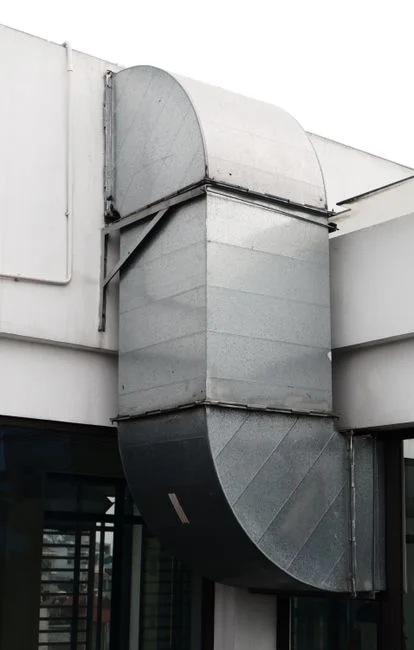
Two equipment archetypes are practical for the 1–80 m³/h community scale relevant to Salalah residential compounds, hotels, and hospitals. The WSZ underground A/O package sewage treatment plant combines anoxic/aerobic biological contact oxidation with sedimentation and disinfection in a single buried package unit, runs fully automated with no operator required, and can be installed below grade with landscaping above or mounted on a trailer for mobile deployment (HydropureWater WSZ catalog entry). The integrated MBR membrane bioreactor system integrates activated sludge with submerged PVDF membrane filtration, delivers sub-micron solids capture for near-reuse effluent, occupies roughly 60% of the footprint of a conventional activated-sludge train, and scales from 10 to 2,000 m³/day (HydropureWater MBR catalog entry). The choice reduces to three questions: is reuse water required, is the plot footprint tight or expansive, and is buried installation acceptable? Where reuse is the goal, an MBR can be paired with a downstream UF polishing stage, such as the HydropureWater UF system, which accepts up to 300 ppm feed turbidity and operates at 0.03 micron (HydropureWater UF catalog entry).
| Parameter | WSZ underground A/O package | MBR membrane bioreactor |
|---|---|---|
| Flow range | 1–80 m³/h | 10–2,000 m³/day |
| Core biological step | Anoxic/aerobic contact oxidation | Activated sludge + submerged PVDF membrane |
| Solids separation | Sedimentation | Membrane filtration at <1 μm |
| Typical effluent class | Discharge-quality; suitable for irrigation where permitted | Near-reuse quality; suitable for toilet flushing, landscape irrigation |
| Footprint vs conventional | Compact, fully buried | ~60% smaller than conventional activated sludge (HydropureWater MBR catalog entry) |
| Installation | Below grade, or trailer-mounted mobile | Above-grade skid/container, or below-grade with vented access |
| Operator requirement | Fully automated, no operator required | PLC-controlled, periodic membrane maintenance |
| Best-fit duty | Residential community, hotel, hospital, rural area | Municipal sewage, water reuse, tight above-grade footprint |
Equipment Selection Parameters for Dhofar Sites
A defensible specification translates the process decision into numeric parameters that the buyer can request in writing. The WSZ platform covers 1–80 m³/h and is rated for residential communities, hotels, hospitals, factories, and rural areas (HydropureWater WSZ catalog entry). The MBR platform covers 10–2,000 m³/day, and the modular DF series PVDF flat sheet MBR module extends that envelope with 0.1 μm flat-sheet membranes, integrated aeration boxes, and unit areas of 80–225 m² producing 32–135 m³/day per module (HydropureWater MBR module catalog entry). Buried or skid-mounted enclosures protect equipment from coastal salt air and khareef humidity, and the WSZ specifically allows below-grade installation with landscaping above. Disinfection downstream of either train is typically chemical-free; the pipeline UV sterilizer is one in-line option for pathogen kill at reuse quality. The selection table below is written to be lifted into a project specification.
| Selection parameter | What to specify | WSZ value | MBR value |
|---|---|---|---|
| Design flow | m³/h or m³/day | 1–80 m³/h | 10–2,000 m³/day |
| Filtration cut | μm rating | Biological + sedimentation | <1 μm submerged PVDF (DF module: 0.1 μm) |
| Module area / capacity | m² per module, m³/day per module | Single packaged unit | DF series: 80–225 m², 32–135 m³/day per module |
| Automation | Operator hours/day | Fully automated, no operator required | PLC-controlled |
| Installation | Buried / skid / trailer | Buried with landscaping, or trailer-mounted | Skid/container, above or below grade |
| Climate adaptation | Enclosure rating, corrosion protection | Buried, salt-air shielded | Sealed skid, vented enclosure |
Pretreatment and Disinfection: What Sits Before and After the Bioreactor
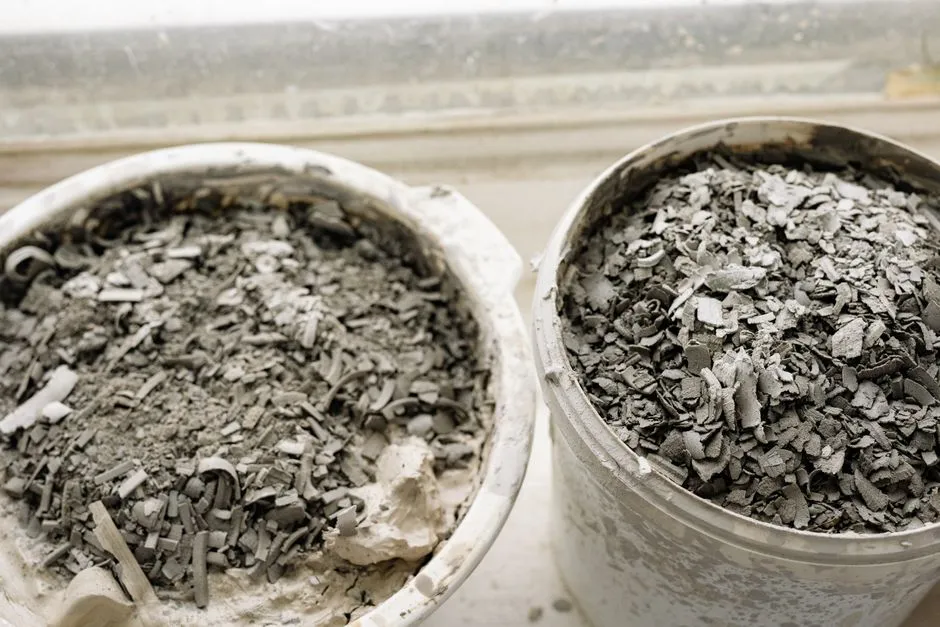
A complete Salalah train needs headworks protection, optional pre-clarification, and a final disinfection step matched to the effluent class. Proper pretreatment ensures long-term operational reliability for biological systems. A rotary mechanical bar screen such as the GX series removes rags, plastics, and fibrous debris before biological treatment, which protects downstream pumps and membranes from fouling and mechanical damage (HydropureWater GX screen catalog entry). For sites with high or variable TSS, a lamella clarifier (high-efficiency sedimentation tank) combines flocculation with inclined-plate separation at surface loading rates of 20–40 m/h and is supplied as a packaged unit (HydropureWater lamella catalog entry). Disinfection downstream of the bioreactor is typically handled by a pipeline UV-C sterilizer for chemical-free, by-product-free pathogen kill (HydropureWater UV catalog entry); chlorine dioxide is an alternative where a residual disinfectant is required in the reuse network (HydropureWater ClO₂ catalog entry). Finally, wasted biosolids from either train are dewatered on a plate and frame filter press, with filtration areas available from 1 m² up to 500 m² to match sludge volume (HydropureWater filter press catalog entry).
2026 Decision Framework for Salalah Projects
The selection rule is straightforward. If the design flow is at or below 80 m³/h, no reuse-grade effluent is required, and a buried installation is preferred for plot or aesthetic reasons, select the WSZ underground A/O package plant (HydropureWater WSZ catalog entry). If the design flow is between 10 and 2,000 m³/day, reuse-quality effluent is a project requirement, or the above-grade footprint is constrained, select the MBR system and, where module-level energy efficiency matters, specify the DF series flat sheet MBR module (HydropureWater MBR and MBR module catalog entries). On the regulatory side, any Salalah installation must align with Oman's current municipal wastewater discharge framework, which the US EPA confirms establishes discharge limits and conditions for municipal wastewater treatment facilities (epa.gov, Municipal Wastewater); the engineer should map the chosen effluent class to the Omani authority's current limits before purchase. Open items to close before issuing a purchase order are listed below; each must be answered with site-specific data, not assumed defaults.
| Decision input | Why it matters | How to obtain it |
|---|---|---|
| Peak flow factor | Determines hydraulic sizing and equalization | Site flow logging; review for I/I if fed by older sanitary sewer (epa.gov, Municipal Wastewater) |
| BOD/COD load (kg/day) | Sets aeration tank volume and MLSS | Water-consumption data × per-capita load factor; or influent sampling |
| Effluent class | Drives A/O vs MBR selection | Review current Omani discharge and reuse rules; cross-check with project specification |
| Reuse target | Irrigation, toilet flushing, or discharge-only | Client brief; confirm with local authority |
| Plot dimensions | Buried vs above-grade layout | Site survey and setback review |
| Grid reliability | Aeration and control continuity | Utility outage records; specify backup if intermittent |
Frequently Asked Questions
What size packaged sewage treatment plant does a Salalah residential compound need?
Size the plant to the average daily sanitary flow in m³/day, then add a peak factor. For community-scale domestic duty, the WSZ underground A/O package platform covers 1–80 m³/h and the MBR platform covers 10–2,000 m³/day (HydropureWater WSZ and MBR catalog entries). The first input to lock down is a defensible average flow plus peak factor from the developer's water-demand data; no flow number should be assumed without it.
What is the indicative budget for a packaged domestic sewage treatment plant in Salalah?
Budget depends on flow, effluent class, and enclosure type. The buyer should request a written quote that itemizes the biological train, the membrane modules (if MBR), headworks, disinfection, and sludge handling, and that states the supply scope, shipping terms to Salalah, and lead time.
How does a packaged A/O plant differ from an MBR for procurement evaluation?
The WSZ underground A/O package combines anoxic/aerobic contact oxidation with sedimentation and disinfection in a single buried unit, is fully automated with no operator required, and is sized in m³/h (HydropureWater WSZ catalog entry). The integrated MBR uses submerged PVDF membranes at <1 μm to deliver near-reuse effluent, is typically PLC-controlled, and is sized in m³/day (HydropureWater MBR catalog entry). Procurement should evaluate effluent class, footprint, buried versus above-grade installation, and operator hours against project requirements.
What supplier and compliance checks should a Dhofar buyer complete before ordering?
Confirm that the supplier can provide verified flow and module-area data (for example, the DF series rating of 80–225 m² producing 32–135 m³/day per module per the HydropureWater MBR module catalog entry), and that the offered equipment maps to Oman's current municipal wastewater discharge framework (epa.gov, Municipal Wastewater). Also confirm lead time to Salalah, on-site commissioning scope, and whether a remote-monitoring option is available for sites with limited on-site staff.