Why Detergent Wastewater Breaks a Standard Filter Press
Detergent effluent is not a generic industrial slurry, and a standard filter press will show that within the first few cycles. The stream is alkaline, often pH 10–13, and carries residual anionic and non-ionic surfactants, sodium silicates, phosphonates, zeolite builders, and entrained air from mixing and bottle-filling operations. Each of these resists the conditions a recessed-chamber press needs to form a coherent cake.
Surfactants are the dominant problem. By design they stabilise emulsified water and lower surface tension, so residual moisture stays locked inside the cake long after the bulk filtrate has left the chamber. Operators see long cycle times and "wet" cakes that slump on discharge. Foaming in the feed manifold drives the chamber to its fill pressure before the cake has built up, which shows up in the logbook as a press that "will not fill."
Alkaline chemistry then attacks the materials of construction. Standard polypropylene plates tolerate pH 1–13 over narrow temperature windows, but silicate scaling and high-temperature wash cycles shorten cloth life and stain plate faces. The right cloth fibre and plate finish have to be specified against the plant's actual wash-water pH and temperature, not assumed. If a press has been running wet cakes for hours, the diagnosis almost always starts upstream in the chemistry, not in the press itself. A dissolved air flotation system ahead of the press is the most common first move because it strips entrained air and floatable surfactant before the slurry ever reaches the chamber.
How a Plate and Frame Filter Press Dewaters Surfactant-Laden Sludge
A plate and frame filter press is a batch pressure filter. Slurry is pumped into the cavity between a stack of plates, each lined with a filter cloth, until the chamber is full. Solids deposit on the cloth as a growing cake; filtrate passes through the cloth and exits via drainage ports in each plate (ChemREADY filter-press reference). Once the chambers are full, the feed pump stops, a squeeze or blow-through phase drops residual moisture, the plates open, and the cake drops out.
Plate geometry is the first design lever. Recessed-chamber plates form the cake volume from the plate recess itself and rely on feed pressure alone. Membrane plates carry an elastomeric diaphragm on the back of the plate face; after the feed phase, the diaphragm is pressurised at 21–30 bar to squeeze additional water out of the cake (ChemREADY). For detergent cake, which resists air-drying and holds bound water inside the surfactant micelles, that mechanical squeeze is the difference between a 35% DS cake and a 45% DS cake.
Operating pressure sets the second lever. A 7–15 bar feed-pressure cycle is adequate for a clean inorganic sludge, but a surfactant-bearing feed needs the full 21–30 bar envelope to reach a target dryness in a reasonable cycle time (ChemREADY). High-pressure systems from manufacturers such as Matec are routinely quoted for difficult chemical and mining slurries and translate directly to detergent effluent.
There is one published bench-scale baseline that buyers should know about. The BRIN plate-frame study used cotton cloth and drill cloth on a CaCO3-simulated sludge at 1–4% w/w feed, and reported a solute efficiency of 56.00% on cotton cloth at 4% w/w feed. It is not a detergent study, but it is the cleanest published reference point for a plate-frame cloth comparison at low feed solids, and it is the right benchmark to quote when justifying a cotton-versus-synthetic cloth pilot on the actual plant feed.
Plate Type, Cloth Fibre and Pressing Pressure: The 2026 Decision Matrix
The 2026 specification for a detergent line is a function of three variables: surfactant load, silicate scaling risk, and target cake dryness. Each variable maps to a plate-type and cloth-fibre choice that can be defended in a procurement meeting.
Recessed-chamber plates are the correct default for a standard anionic-surfactant sludge at moderate feed solids. Membrane plates become mandatory when the feed carries high surfactant or fine silicate load, or when the cake has to leave the press at more than 35–40% DS for downstream incineration or co-processing. A high-pressure 21–30 bar system is paired with the membrane option because the squeeze phase is what delivers the incremental dryness on a difficult cake (ChemREADY).
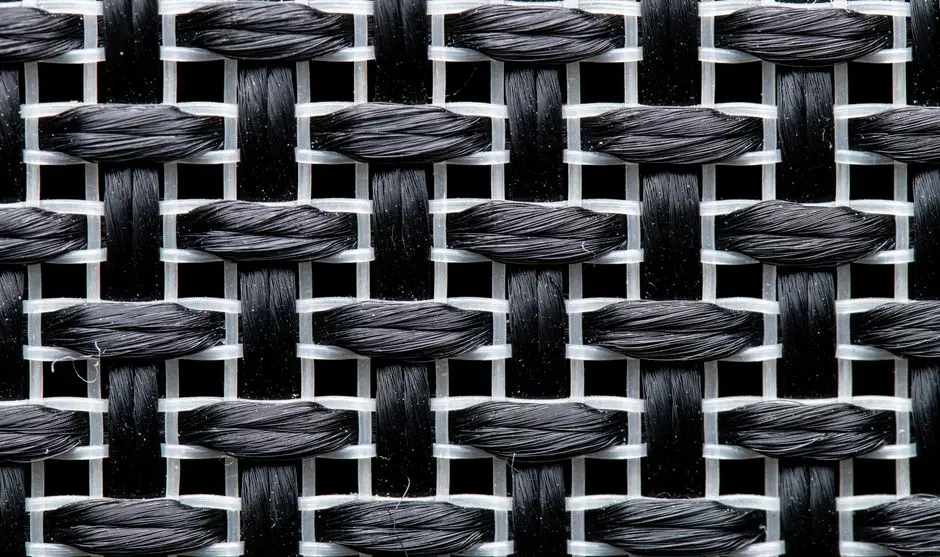
Cloth fibre follows the same logic. The BRIN plate-frame study found that cotton cloth delivered higher solute efficiency than drill cloth at 4% w/w feed, with 56.00% solids removal on cotton. Cotton is rarely the final choice on a detergent plant because it swells and degrades in alkaline wash water, but it is a useful pilot baseline. Polypropylene cloth is the chemical-resistant default for alkaline detergent effluent and must be specified after a wash-water pH and temperature check, not assumed. Polyester sits between the two on chemical resistance and is often chosen where pH swings are moderate.
Filtration area is then sized from dry-solids load, not from flow. A plate and frame filter press with a 1–500 m² filtration-area envelope lets the engineer scale from a small packaged unit on a pilot line to a fully automatic PLC-controlled press on a 50 m³/d effluent train, as published in the verified HydropureWater product catalog. Procurement should be asked to size from daily kg-DS, cycle time, and cake thickness targets, not from inlet flow alone.
| Decision Driver | Plate Type | Cloth Fibre | Pressing Pressure | Typical Use on Detergent Lines |
|---|---|---|---|---|
| Standard anionic sludge, 30–35% target DS | Recessed chamber | Polypropylene | 7–15 bar feed | General-purpose dewatering, packaged lines |
| High surfactant or silicate load, 40–45% target DS | Membrane (squeeze) plate | Polypropylene or polyester | 21–30 bar squeeze (ChemREADY) | Tough surfactant effluent, fine silicates |
| Bench/pilot baseline, neutral pH feed | Recessed chamber | Cotton (56.00% efficiency at 4% w/w feed, BRIN) | 7–15 bar feed | Pilot cloth comparison only |
| Variable pH, moderate surfactant | Recessed chamber | Polyester | 7–15 bar feed | Mid-range detergent effluent, pH swings |
For a deeper equipment comparison on a different but related effluent, the filter press for distillery wastewater engineering guide covers high-temperature and high-COD variations of the same specification logic.
Pretreatment Train: Getting Detergent Feed Into the 50–60% Solids Window
A plate and frame press performs best on slurries at 50–60% feed solids (ChemREADY). Detergent wastewater typically arrives at 5–10% solids straight from the Equalisation Tank of the detergent effluent treatment plant, and at that concentration the press runs long, wet cycles and produces a thin, hard-to-handle cake. The press is only half of the answer; what sits in front of it determines whether the press earns its name.
A lamella clarifier is the workhorse pre-thickener. Inclined plates multiply the effective settling area inside a small footprint, and a polyaluminium chloride plus anionic-polymer dose agglomerates fine surfactant-stabilised solids into a settleable floc. The underflow leaves the clarifier at 3–6% solids, which still looks dilute until it is paired with the press — but the volume reduction and the consistency of the feed make the press cycle predictable rather than chaotic.
A dissolved air flotation (DAF) unit is the right choice where the feed is foaming, where entrained air is breaking the clarifier, or where the surfactant package is heavily non-ionic. DAF strips floatable surfactant and fine solids into a floated sludge that feeds the press at higher solids than the clarifier underflow, and it also drops the chemical-oxygen demand load on the press cake. The DAF float is then pumped to the press as a thickened, air-free feed.
When the clarifier and filter press are combined as a single train, the system can recover up to 95% of process water for reuse (ChemREADY). That figure is the line item that justifies the pretreatment CAPEX to plant management: it converts a waste stream into a closed-loop water asset. The coagulant and flocculant program itself is part of the press specification; an automatic coagulant and flocculant dosing skid with PAC plus anionic polymer at controlled dose rates is what stops the cake re-dispersing on the cloth. A lamella clarifier in front of the press is the most common configuration in 2026 builds for new detergent lines.
Sizing Workflow: From Daily Detergent Output to Press Capacity

The defensible sizing method converts the plant's production data into a press spec without any hidden assumptions. It is the same workflow an experienced engineer would write on a whiteboard, and it is the version procurement should be asked to repeat back.
Step 1. Gather the inputs that nobody can assume: daily wastewater flow in m³/d, influent TSS or COD, target cake dryness, target cycle time, and operating hours per day. All five have to come from the plant's own mass balance; the supplier should not be guessing any of them.
Step 2. Convert the load. Translate the measured COD or TSS into a daily dry-solids mass in kg-DS/d. This is the only number that scales with press capacity, not flow.
Step 3. Set the cake dryness target. Detergent sludge after a membrane press with a 21–30 bar squeeze typically lands in the 35–45% DS range; recessed-chamber presses on the same feed land at 28–35% DS. The target drives the cake mass calculation and the cake volume per cycle.
Step 4. Select the filtration area. Divide the dry-cake mass per cycle by the cake density and the target cake thickness to get cake volume per cycle; divide that into cycles per hour set by the press geometry and the chosen feed pressure. The published 1–500 m² plate and frame filter press range is wide enough to cover anything from a 5 m³/d pilot line to a 200 m³/d mainline. A 21–30 bar system is selected where surfactant or silicate loading is high (ChemREADY).
Step 5. Verify before CAPEX. A jar test on the actual plant sludge at the proposed polymer dose, followed by a 1–2 week on-site pilot on a small plate-frame unit, is the only way to confirm the cake dryness, cycle time, and cloth life before the order is placed.
| Step | Input or Output | Unit | Source |
|---|---|---|---|
| 1. Gather inputs | Daily flow, TSS, target DS, cycle time, hours/d | m³/d, mg/L, %, min, h/d | Plant mass balance |
| 2. Convert load | Daily dry solids | kg-DS/d | Calculated |
| 3. Set cake target | Cake dryness target | % DS | End-of-line disposal spec |
| 4. Select area | Filtration area | m² | Plate-frame catalog 1–500 m² |
| 5. Verify | Jar test + on-site pilot | 1–2 weeks | Site pilot |
The pretreatment and chemistry inputs around this workflow are covered in the flocculant dosing unit engineering guide for 2026, which addresses jar-test-to-dose calibration in more detail.
Buyer Checklist: Specifying a Filter Press for a Detergent Plant in 2026
The technical content above only pays off if it lands in a procurement-ready checklist. The following five items convert a generic RFQ into a defensible 2026 specification.
Confirm the supplier publishes a verifiable plate and frame filter press range. The supplier's catalog should quote a filtration-area envelope — the HydropureWater range of 1–500 m² with manual, hydraulic, and PLC-automatic options is one example of a documented envelope. If a vendor cannot quote the area range and the cloth-change procedure in writing, walk away.
Demand documented material certificates for plates and cloths against the specific pH, temperature, and surfactant package of the plant. Polypropylene plates and cloths are the chemical-resistant default for alkaline detergent effluent, but they are not universal; the certificate should name the pH range, the maximum continuous temperature, and the surfactant class the system has been tested against.
Require an operating-cost comparison versus a belt press or centrifuge, not just CAPEX. Modern filter presses can run at roughly one-sixth the operating cost of belt presses or centrifuges (ChemREADY), which is a meaningful number when sized against a five-year OPEX horizon for a 50 m³/d detergent line.
Insist on a written commissioning protocol that covers cloth break-in, cake-release verification, and the first three cycles' filtrate quality. The protocol should also define who owns the chemical-program tuning during commissioning, because surfactant-loaded sludge is the most common reason a brand-new press fails its first month.
Frequently Asked Questions
What budget should a detergent plant plan for a plate and frame filter press in 2026?
The published research does not quote a 2026 price for a detergent-duty plate and frame filter press. The buyer should request a written quote tied to a defined dry-solids load (kg-DS/d), a defined cake dryness target, and a defined cloth-and-plate material certificate; vendors that quote against flow alone without those three inputs are pricing on the wrong basis. OPEX comparisons should be requested against a belt press and a centrifuge at the same site.
How do I size a filter press for a 50 m³/d detergent effluent stream?
Request the plant's influent TSS in mg/L and a target cake dryness in % DS from the EHS or production team. The sizing workflow in this article converts those two numbers, plus a target cycle time, into a filtration area in m² within the 1–500 m² plate and frame filter press envelope. Confirm the resulting spec with a 1–2 week on-site pilot on the actual sludge before committing CAPEX.
Why does a filter press on detergent wastewater produce wet cakes even at high pressure?
Surfactants stabilise emulsified water inside the cake, so residual moisture stays above what a neutral inorganic slurry would deliver at the same pressure. The fix is upstream of the press, not inside it: tune the coagulant and flocculant program to the surfactant package, and pre-thicken to the 50–60% feed-solids window with a lamella clarifier or DAF unit. A 21–30 bar membrane squeeze then delivers the incremental dryness that a 7–15 bar feed cycle cannot.
What supplier documents should I require before placing a 2026 order?
Ask for a verifiable plate-and-frame product catalog with a stated filtration-area range, material certificates for plates and cloths against the plant's specific pH, temperature, and surfactant package, an operating-cost comparison against a belt press and a centrifuge, and a written commissioning protocol covering cloth break-in, cake-release verification, and the first three cycles' filtrate quality. A supplier that cannot provide all four is not yet ready to be specified.