Why a Nouakchott data center cannot copy a temperate-country water design
Nouakchott sits in a hyper-arid coastal-Sahel climate, with very high pan-evaporation along the Atlantic littoral and almost no surface freshwater within a practical pipeline radius. The municipal supply is fed from the Senegal River trunk line and the Aftout Essahli aquifer; both are finite, and both are rationed in dry years, so a hyperscale campus cannot be designed around an unconstrained potable tap.
Cooling is the dominant on-site water consumer, and IDE reports that a 100 MW facility can use up to about 2 million liters of water per day (IDE, 2026). That order of magnitude, set against a rationed municipal supply, is what makes the treatment train a permitting and ESG question rather than a plumbing one. The operational question is therefore not "do we treat blowdown?" but "how much can we reuse, and what is the smallest possible liquid discharge consistent with the permit?" IDE's 2026 framing of the sector is blunt: hyperscale operators are already siting in water-stressed regions, and reuse plus ZLD are moving from optional add-ons to baseline requirements for long-term viability (IDE, 2026).
Blowdown quantity and quality in a Saharan evaporative cooling system
Genesis Water Tech's blowdown rule is the cleanest way to size the stream: at 4 cycles of concentration, a cooling tower loses roughly 25–30% of makeup water to blowdown, so a facility using 10 million gallons monthly is sending 2.5–3 million gallons per month to blowdown (genesiswatertech.com). The quality envelope, also from Genesis Water Tech, is what sets the treatment train: TDS 1,200–6,000 mg/L, typically 4–8× makeup; scaling minerals including calcium, magnesium, silica, and alkalinity; treatment-chemical residues from biocides, corrosion inhibitors, scale inhibitors, and dispersants; suspended solids 10–50 mg/L; and biological content from planktonic bacteria, algae, and biofilm fragments (genesiswatertech.com). For a Nouakchott site fed from brackish municipal or tanker-delivered makeup, expect TDS to skew toward the high end of that band, and expect silica scaling to set the RO recovery limit — IDE confirms that conventional BWRO typically plateaus near 75–80% recovery on cooling-tower blowdown (ide-tech.com). The permeate that returns to the cooling tower must hit TDS 500–1,500 mg/L, hardness below 200–400 mg/L as CaCO₃, suspended solids below 10–25 mg/L, bacterial counts below 10,000 CFU/mL, pH 6.5–8.5, and alkalinity 50–200 mg/L as CaCO₃ (genesiswatertech.com). The operational problem is straightforward: every kilogram of salt left in the blowdown is a kilogram the site must either precipitate, landfill, or send down the sewer under permit.
| Parameter | Cooling-tower blowdown envelope | Source |
|---|---|---|
| TDS | 1,200–6,000 mg/L (4–8× makeup) | Genesis Water Tech |
| Hardness (target permeate) | <200–400 mg/L as CaCO₃ | Genesis Water Tech |
| Suspended solids (blowdown) | 10–50 mg/L | Genesis Water Tech |
| Suspended solids (target permeate) | <10–25 mg/L | Genesis Water Tech |
| Silica / scaling minerals | Calcium, magnesium, silica, alkalinity | Genesis Water Tech |
| Biological content (target permeate) | <10,000 CFU/mL | Genesis Water Tech |
| pH (target permeate) | 6.5–8.5 | Genesis Water Tech |
| Alkalinity (target permeate) | 50–200 mg/L as CaCO₃ | Genesis Water Tech |
| Conventional BWRO recovery ceiling | ~75–80% | IDE |
Treatment-train architecture for a Nouakchott data center
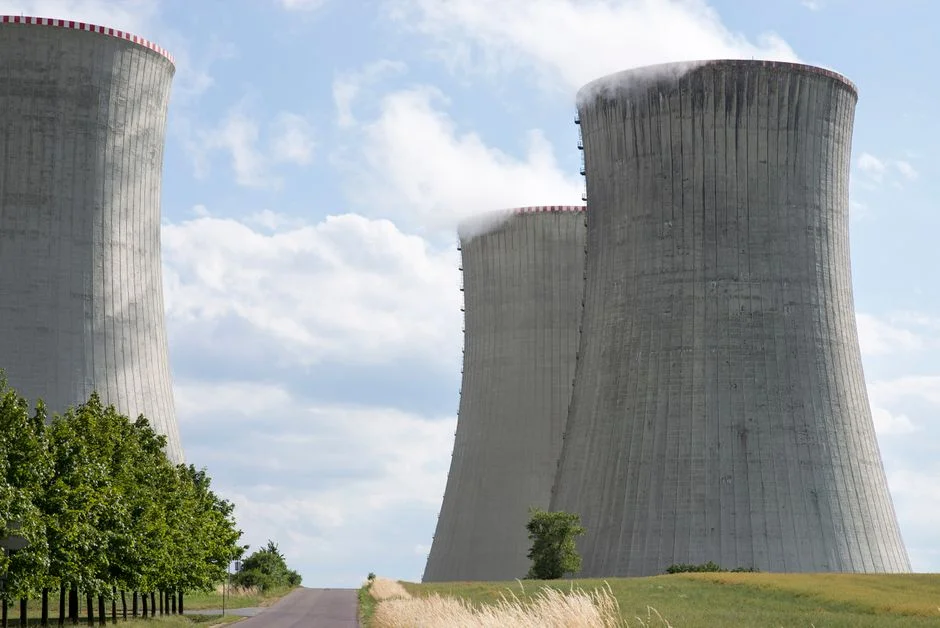
Side-stream self-cleaning spiral or sand filtration is the right starting point on the recirculating loop. Genesis Water Tech's casework shows 10–25 µm filtration, automatic solids purging through a mechanical scraper, and a 1–5% slipstream sized against total circulation flow — enough to lift blowdown quality to a level that downstream membranes can swallow without excessive fouling (genesiswatertech.com). The next unit operation is a hollow-fiber UF pretreatment skid, typically 0.01–0.1 µm PVDF, running at 90–95% recovery, 10–30 psi, with permeate backwash and chemical cleaning every 1–3 months (genesiswatertech.com). UF tolerates the variable feed turbidity that a Mauritanian site will see between municipal-supply days and brackish-tanker days. Brackish-water RO sits behind the UF as the workhorse, sized for about 70% local recovery with antiscalant injection and pH control; the design constraint is the 75–80% recovery ceiling IDE flags for conventional BWRO on blowdown (ide-tech.com), not the membrane itself. Where the project needs to push past 85% recovery, IDE's MAXH₂O-style architecture is the reference: a controlled-precipitation fluidized bed pulls silica, calcium carbonate, and calcium sulfate out of the RO concentrate as compact pellets, leaving a near-pure NaCl brine that a single RO stage can concentrate much further (ide-tech.com). The train closes with polishing and disinfection — a chemical-free UV steriliser plus, where biofilm control demands it, a chlorine dioxide generator — to keep bacterial counts below 10,000 CFU/mL in the recycled permeate and protect the cooling loop when permeate blends with fresh makeup (genesiswatertech.com).
Three scenarios for a Mauritanian site: reuse, discharge, and ZLD
Scenario A — UF + RO reuse. RO permeate returns to the cooling tower as high-quality makeup, and the concentrate is either further concentrated or sent to a lined solar pond sized to local pan-evaporation. Genesis Water Tech puts reuse recovery at 60–85% and a 50,000 GPD blowdown RO skid at roughly $250,000–500,000 installed, with operating cost of $1.50–3.00 per 1,000 gallons including energy, chemicals, membrane replacement, and maintenance (genesiswatertech.com). These are US benchmarks that an EPC will need to re-price against Mauritanian freight, power, and labour before tendering. Scenario B — Discharge compliance with polish. UF + RO + selective ion exchange or NF drops TDS below local sewer limits. This scenario is only relevant where the Nouakchott or Nouadhibou sewer has hydraulic capacity and the operator accepts ongoing discharge fees. Genesis Water Tech pegs direct discharge fees in water-stressed regions at $5–15 per 1,000 gallons, with some jurisdictions capping TDS below 1,500 mg/L (genesiswatertech.com). Scenario C — ZLD with solar/MVC polish. RO concentrate feeds a mechanical vapor compression unit producing 95–98% recovery and distillate below 10 mg/L TDS (genesiswatertech.com); the residual brine either goes to lined solar evaporation ponds or to a crystallizer. Genesis Water Tech's cost envelope: $1–3 million CAPEX for a 10,000–30,000 GPD MVC train, full ZLD CAPEX $3–8 million, OPEX $5–15 per 1,000 gallons (genesiswatertech.com). The decision rule is not aesthetic: if freshwater cost or permit risk is the binding constraint, choose reuse; if sewer capacity is reliable and discharge fees are tolerable, choose Scenario B; if the site is a flagship hyperscale campus or is being marketed as water-positive, choose ZLD. The Mauritanian overlay is honest — freight, power cost, and skilled-labour availability inflate US CAPEX benchmarks and push the optimum toward simpler trains with fewer imported skids. Engineers sizing an industrial RO system for Scenario A or B should also work through the RO design-criteria engineering guide before locking the recovery setpoint.
| Scenario | Core train | Indicative CAPEX (US benchmark) | Indicative OPEX | Best fit |
|---|---|---|---|---|
| A — UF + RO reuse | UF pretreatment → BWRO → UV / ClO₂ polish; concentrate to solar pond or further RO | ~$250,000–500,000 for 50,000 GPD RO skid (Genesis Water Tech) | $1.50–3.00 per 1,000 gal (Genesis Water Tech) | Sites where freshwater cost or permit risk is binding; default for Nouakchott |
| B — Discharge compliance with polish | UF → RO → NF or ion exchange to meet sewer TDS cap | Skid CAPEX on top of Scenario A; confirm via vendor quote | $5–15 per 1,000 gal discharge fees in water-stressed regions (Genesis Water Tech); some jurisdictions cap TDS < 1,500 mg/L | Sites with reliable sewer capacity and tolerable discharge fees |
| C — ZLD with solar/MVC polish | RO → MVC (95–98% recovery) → crystallizer or lined solar ponds | $1–3 M for 10,000–30,000 GPD MVC; $3–8 M full ZLD (Genesis Water Tech) | $5–15 per 1,000 gal (Genesis Water Tech) | Flagship hyperscale campuses, water-positive marketing, sites with no discharge option |
Integrating blowdown treatment with the rest of the site water balance
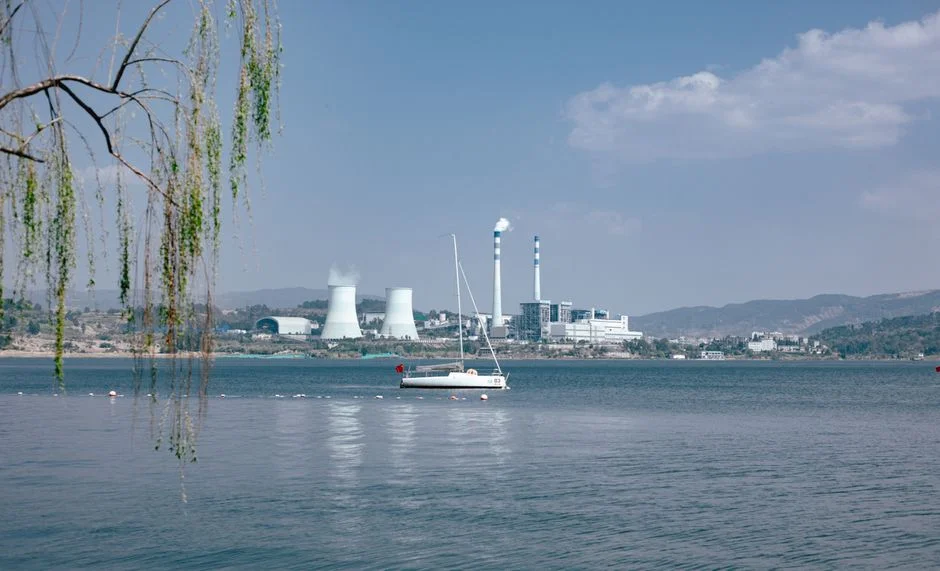
Map every stream on the same mass balance before tendering: municipal potable, trucked-in bulk, humidification, generator cooling, chiller makeup, fire-water test water, and sanitary, then show how blowdown-reuse RO permeate offsets each one in turn. The on-site precedent is a Texas hyperscale facility that processed 2.5 million gallons of blowdown per month and cut municipal draw by about 35% while eliminating discharge fees (genesiswatertech.com). For Saharan sites, a closed-loop cooling variant deserves serious evaluation: NACo and industry sources describe closed-loop systems as using a limited amount of non-potable water and reserving potable supply for plumbing fixtures (naco.org), which fits a Nouakchott water budget far better than an open evaporative loop. The water balance must also cover the small brine or filter-cake stream a ZLD site will still produce — that stream has to be characterised for TDS, metals, and biocide residues before it leaves the gate, and the discharge-permit framing Genesis Water Tech applies to on-site treatment applies just as cleanly to brine handling (genesiswatertech.com). A site-wide balance is also the document that Mauritanian regulators and ESG auditors will judge the project against, so the mass balance, not the skid list, is the real deliverable. The nearby African hyperscale site in Matola is a useful comparator for how a coastal African permit regime handles the same mass balance under less hyper-arid conditions.
Frequently Asked Questions
What total cost of ownership should we plan for a 50,000 GPD blowdown RO skid in Mauritania?
Plan around the US benchmark first: Genesis Water Tech quotes a 50,000 GPD blowdown RO skid at roughly $250,000–500,000 installed with operating cost of $1.50–3.00 per 1,000 gallons (genesiswatertech.com). Request a local re-quote that layers in Nouakchott-bound freight, import duties, power tariff, and the cost of a Mauritanian operator before signing.
How do we choose between a reuse, discharge-compliance, and ZLD scenario?
Use the binding constraint as the tiebreaker: if freshwater cost or permit risk dominates, pick reuse (Scenario A); if sewer capacity is reliable and discharge fees are tolerable, pick discharge compliance (Scenario B); if the site is a flagship hyperscale campus or is being marketed as water-positive, pick ZLD (Scenario C). Confirm the local sewer TDS cap and discharge-fee schedule before locking the choice (genesiswatertech.com).
What recovery ceiling should we design the RO around?
Design the conventional BWRO stage at about 70% local recovery, not at the membrane's nominal maximum, because IDE documents a 75–80% recovery ceiling on cooling-tower blowdown for conventional BWRO (ide-tech.com). If the project needs to push past 85% overall recovery, budget for a controlled-precipitation fluidized bed ahead of a second RO pass, on the IDE MAXH₂O reference architecture (ide-tech.com).
What supplier and compliance evidence should we request before signing a treatment-train PO?
Request a source-water characterisation with TDS, hardness, silica, and biocide residue, a permit pre-check with the local authority on sewer discharge limits, a pilot run on the actual blowdown stream to confirm recovery, and reference lists for at least two operating data-center sites in water-stressed regions. Cross-check the ZLD economics against the electronics-wastewater ZLD blueprint and the RO design-criteria engineering guide before you commit.
Related Equipment
- hollow-fiber UF pretreatment skid — specifications, capacity range, and technical data
- industrial RO system — specifications, capacity range, and technical data
- chemical-free UV steriliser — specifications, capacity range, and technical data