Why Bakery Wastewater Is Harder to Dewater Than Municipal Sludge
Bakery effluent differs significantly from generic industrial sludge due to high biochemical oxygen demand from sugars and starches, fats/oils/grease (FOG) from butter and shortening, and suspended flour fines and yeast cells that behave as colloids. These colloids often defeat presses sized for municipal sludge, as flour particles and short-chain sugars blind the cloth weave and starve the cake-release step of the cycle.
A plate-frame filter press with cotton filter cloth reached 56.00% solids removal efficiency at 4% w/w feed solids in a study of activated-sludge dewatering (BRIN/JTL, 2024); cotton outperformed drill cloth in the same test series. The same cloth-selection logic applies to bakery sludge, where fine flour and yeast particles dominate the solids profile. Recessed-plate filter presses can produce the highest cake solids concentration of any mechanical dewatering equipment, according to US EPA Fact Sheet 832-F-00-058 (September 2000) — but only if upstream FOG and colloidal load are controlled. Without a dissolved air flotation (DAF) system or lamella clarifier ahead of the press, bakery FOG coats the cloth, shortens cycle time, and forces premature media replacement.
How a Filter Press Dewatering Cycle Works on Bakery Sludge
Filter presses pump conditioned slurry into chambers where solids are captured on filter media and compressed into filter cakes while clarified liquid (filtrate) passes through (Ecologix Systems, FP Series description). Understanding the mechanical phases of the cycle is essential for accurate equipment selection.
A feed pump typically rated to 100 psi drives slurry into the plate pack. Once chambers fill, the hydraulic ram clamps the plate stack; a JWI 800N32-49-25SYLS uses a 6-inch bore × 24-inch stroke hydraulic cylinder at 4,100 psi clamping pressure (Aaron Equipment, s/n F05045, built 2017). Filtration continues under feed pressure until flow drops below an operator-set endpoint. The press then enters air-blow drying before plates shift and cake drops into a handling tray or conveyor.
Plate-frame presses are batch units, so the plant must match cycle time to sludge generation rate. A mismatch between cycle time and the bakery's actual kg TSS/day is the common cause of hydraulic overload, unprocessed sludge pooling on the floor, or a press that runs half-empty and never pays back. The same logic appears in our filter press engineering guide for distillery wastewater, where batch sizing drives the entire equipment decision.
Matching Plate Count and Filtration Area to Bakery Sludge Load
Industrial presses span a wide size envelope, and bakery plants need to match that envelope to their measured sludge load. The table below pulls three reference units from Aaron Equipment's catalog to anchor the comparison.
| Reference unit | Plate size / count | Filtration area | Cake volume | Pressure rating | Notes |
|---|---|---|---|---|---|
| Avery 470LS/12/32 (recessed) | 470 mm × 12 chambers | 42 ft² | 2 ft³ | 100 psi squeeze | Compact pilot / low-throughput unit |
| SINO XMZ50/870 (hydraulic) | 870 mm × 38 polypropylene plates | 50 m² | 748 L | 0.6 MPa operating | 4110 × 1400 × 1230 mm; ~3,456 kg; year 2020 |
| JWI 1450 mm (recessed, 108 plates) | ~57" × 57" × 2.5" thick | ~3,784 ft² | ~194 ft³ | 100 psi frame rating | Heavy-duty industrial unit |
Plate material selection impacts durability, as polypropylene plates resist the FOG and acidic cleaners used in CIP washdown better than cast iron or rubber-gasketed plates. Confirm with the supplier that gaskets and plate bodies are rated for peroxyacetic acid and nitric acid if those are part of the bakery's sanitation program. For a bakery producing 200–500 kg TSS/day after DAF, a 30–50 m² filtration area press is the typical starting point — confirm exact sizing with the supplier using measured feed solids %, target cake dryness %, and available shift hours per day. A baseline specification for the equipment class is a plate and frame filter press for sludge dewatering with polypropylene plates and a hydraulic closure rated for at least 100 psi feed.
Filter Cloth Selection for Bakery Effluent
Cloth selection determines whether bakery filter-press installations succeed or fail within the first month. The BRIN/JTL plate-frame filter press study (2024) compared cotton cloth and drill cloth at 1–4% w/w CaCO3 feed; cotton cloth delivered higher solids removal efficiency, reaching 56.00% at 4% w/w feed. The same cloth-selection logic applies to bakery sludge dominated by fine flour, yeast, and short-chain sugars, where a tight weave outperforms needle-felt for cake release.
For bakery service, mono/multifilament polypropylene cloths in a tight weave give better cake release than needle-felt, but they require a polymer conditioning step ahead of the press so the cake releases cleanly rather than smearing. Worn cloth raises filtrate suspended solids, increases cycle time, and forces more frequent cake discharge — supplier evaluations should include cloth life in cycles and unit replacement cost. Gasket and cloth material must be compatible with CIP chemicals (caustic, nitric acid, peroxyacetic acid) used in bakery sanitation; request chemical-resistance data sheets before specifying. A filter cloth and replacement media supply contract with documented lead time and inventory depth is worth negotiating in the same PO as the press.
Pretreatment Train: DAF, Lamella, and Polymer Dosing Ahead of the Press
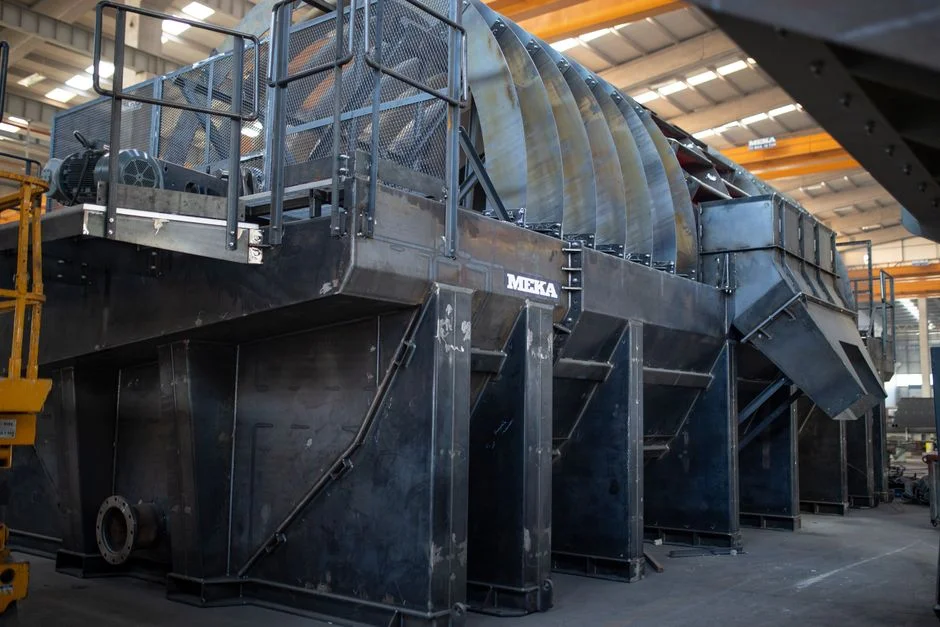
The filter press is the final unit in a chain, and its performance is dictated by upstream efficiency. A dissolved air flotation (DAF) system removes suspended solids, FOG, and colloidal matter from industrial wastewater; micro-bubble DAF units are proven in food processing applications. Lamella clarifiers act as a low-footprint primary step and can reduce chemical consumption versus conventional settling, useful where a bakery's biological step is small or overloaded.
Polymer conditioning ahead of the press is the primary variable that sets cycle time. A properly tuned polymer dose ahead of the press is the difference between a 30-minute cycle and a 90-minute cycle. Specify an automatic chemical dosing system with PLC-controlled injection of coagulants, flocculants, and pH adjusters, with flow-paced control. Bakery effluent temperatures from hot oven condensate and CIP discharge shift polymer activity; if influent temperature is variable, request a heated day tank in the dosing skid. A high-efficiency sedimentation tank between DAF and the press can protect the cloth from any float carryover that escapes the DAF.
Operating Modes: Manual, Hydraulic, and PLC-Automatic Presses
Plate and frame filter presses are offered in manual, hydraulic, and fully automatic PLC-controlled operation, with filtration areas from 1 m² to 500 m² (HydropureWater plate and frame filter press catalog spec). Selecting the correct operating mode ensures the system aligns with facility labor availability.
A hydraulic press such as the JWI 800N32-49-25SYLS uses a 6" × 24" hydraulic cylinder and an air-powered hydraulic pump requiring up to 80 scfm at 100 psi, with a 4.5-gallon (17.0 L) reservoir (Aaron Equipment, s/n F05045, built 2017). Automatic PLC-controlled presses integrate feed pump, cycle endpoint detection, plate shifting, and cake discharge — they are appropriate when a bakery has limited on-site operators or runs 24/7 production. For a single-shift bakery, a manual or semi-automatic press is typically the cost-effective choice; confirm cycle time and operator labor per cycle in writing before purchase. A baseline specification is a plate and frame filter press for sludge dewatering with semi-automatic plate shifting.
2026 Buyer Decision Framework for Bakery Filter Presses
Run the same baseline request with every shortlisted supplier so the quotes are directly comparable. The table below is the minimum data set procurement should pin down before asking for a price.
| Data point to request | Why it matters for bakery service |
|---|---|
| Feed solids % range the press is sized for | Sets filtration area; bakery sludge after DAF is typically 2–4% |
| Target cake dryness % | Drives hauling/rendering cost; recessed-plate presses aim higher than belt presses |
| Guaranteed cycle time, minutes | Drives plate count vs. TSS load; the single biggest operating-cost lever |
| Cloth material, weave, and rated life in cycles | Sets annual media cost and CIP compatibility |
| Plate material and chemical resistance | Must tolerate bakery CIP chemicals (caustic, nitric, peroxyacetic acid) |
| Hydraulic pressure rating and feed pump pressure | Reference: 100 psi feed, 4,100 psi clamp on JWI 800N32-49-25SYLS |
| Footprint and weight | Sets civil/structural scope; SINO XMZ50/870 at ~3,456 kg is a useful mid-range anchor |
| Lead time, commissioning, and operator training | Without these in writing, quotes are not comparable |
Validate that the proposed cloth and plate materials are chemically compatible with the bakery's CIP chemicals and effluent temperature range — request chemical-resistance data sheets. Ask for a guaranteed cycle time and cloth life in cycles, not just nameplate capacity; these two numbers drive the 5-year operating cost more than the CAPEX difference. Confirm lead time, on-site commissioning, and operator training scope in the same proposal so quotes are comparable. The same evaluation structure is used in our industrial water filter maintenance services buyer's guide and the filter press selection guide for beverage wastewater.
Frequently Asked Questions
How do I size plate count and filtration area for a specific bakery TSS load?
Start from the measured kg TSS/day reaching the press after DAF, the feed solids %, the target cake dryness %, and the available shift hours per day. Confirm these four numbers with the supplier; the supplier uses them to back-calculate plate count and filtration area. The reference units in the table above (Avery 470LS at 42 ft², SINO XMZ50/870 at 50 m², JWI 1450 mm at ~3,784 ft²) bracket the size envelope, and the SINO XMZ50/870 footprint (~3,456 kg, 4110 × 1400 × 1230 mm) is a useful mid-range civil anchor.
Which filter cloth works best for bakery sludge?
A plate-frame filter press with cotton filter cloth achieved 56.00% solids removal efficiency at 4% w/w feed in a BRIN/JTL study (2024), outperforming drill cloth. For bakery service, mono/multifilament polypropylene in a tight weave is a common industrial choice, paired with polymer conditioning ahead of the press. Confirm cloth and gasket compatibility with your CIP chemicals (caustic, nitric, peroxyacetic acid) and request chemical-resistance data sheets before specifying.
What DAF and polymer setup should feed the press?
Use a DAF or lamella clarifier to remove FOG, colloids, and suspended solids before the press; without that step, bakery FOG blinds the cloth and shortens cycles. A flow-paced