Why Hong Kong Island Data Centers Cannot Treat Blowdown the Inland Way
The inland / arid-climate playbook for cooling tower blowdown (CTBD) — large evaporation ponds, deep-well injection of RO concentrate, cheap solar basins — does not translate to a Hong Kong Island site. The island is dense, coastal and built-out: make-up water is typically Dongjiang-imported freshwater or municipal supply from the Water Supplies Department (WSD), and the heat-rejection medium is often seawater via once-through or CHP loops, so chloride and bromide loadings in the recirculating water are elevated from day one.
There is no land available for evaporation ponds, so any zero liquid discharge (ZLD) design has to be packaged, vertical and quiet enough to sit next to a hyperscaler. Discharge is to the Harbour Area or to a harbour-side foul-water catchment, regulated by the Hong Kong EPD under a discharge licence and the Technical Memorandum on Standards for Effluents Discharged into Drainage and Sewerage Systems, which covers TDS, temperature rise, residual chlorine and metals. NC State hydrologist Matthias Sprenger's framing in the America's Data Center Boom Puts New Pressure on Local Water Resources briefing (2026-09) is directly relevant: a hyperscale data centre is an "inflexible" industrial water user, because operators cannot throttle make-up water during a drought or a supply notice the way residential users can. The economic logic for on-site reuse therefore mirrors the logic that Stillwell & Webber (2014), as cited in the Open Engineering Inc. LCA preprint, used to project up to ~300 MGD of freshwater offset at Texas power plants through reclaimed-wastewater substitution. On Hong Kong Island, where Dongjiang allocation is politically constrained and harbour discharge is tightly licensed, the same order of magnitude of freshwater offset is what justifies a CTBD-reuse investment in 2026.
What the Blowdown and Wastewater Streams Actually Look Like
CTBD is the dominant wastewater stream by volume on a Hong Kong Island site. At 4 cycles of concentration, blowdown is roughly 25–30% of total cooling-tower make-up water, per Genesis Water Tech's Advanced Blowdown Treatment Technologies review. The typical chemistry band that any UF/RO designer needs to size against is TDS 1,200–6,000 mg/L, suspended solids 10–50 mg/L, and accumulated biocides, corrosion inhibitors and scale inhibitors in proportion to the cycles of concentration. Sparingly soluble salts — silica, calcium carbonate and calcium sulfate — set the scaling ceiling and are the reason conventional brackish-water RO (BWRO) plateaus at 75–80% recovery on this water (per IDE Tech, 2026). On a coastal site the chloride and bromide loadings also run higher than the inland baseline because of marine humid air and seawater ingress into the make-up, which sharpens the corrosion and biofouling risk on RO membranes. Other on-site streams that should be integrated into one treatment train rather than treated separately are humidification bleed-off, chiller side-stream filtrate, RO reject from make-up polishing, and once-through seawater heat-exchanger blowdown (high in chloride, low in organics). The Ceres finding cited in the NCSU 2026-09 briefing — 3.4 trillion gallons of water withdrawals to power U.S. data centres in seven states in 2024, with 66% of the underlying electricity from plants in medium-high to extremely high water-stress areas — is a parallel risk to a Hong Kong site fed from Dongjiang and should be in the design basis narrative.
| Parameter | Typical CTBD range (4 COC) | Design implication for Hong Kong Island |
|---|---|---|
| TDS | 1,200–6,000 mg/L | Pushes BWRO to upper end of 150–400 psi operating pressure |
| Suspended solids | 10–50 mg/L | Side-stream filtration required before UF |
| Silica, CaCO3, CaSO4 | Scaling ceiling reached at 75–80% recovery | Antiscalant and/or high-recovery architecture beyond 80% |
| Biocides, corrosion/scale inhibitors | Accumulate with cycles of concentration | RO permeate returns as make-up; tablet-based chemistry reduces accumulation |
| Chloride / bromide | Elevated vs. inland baseline due to marine air and seawater ingress | 316L / higher-grade metallurgy on concentrate-handling piping |
Pretreatment Train: Side-Stream Filtration and UF in Front of RO
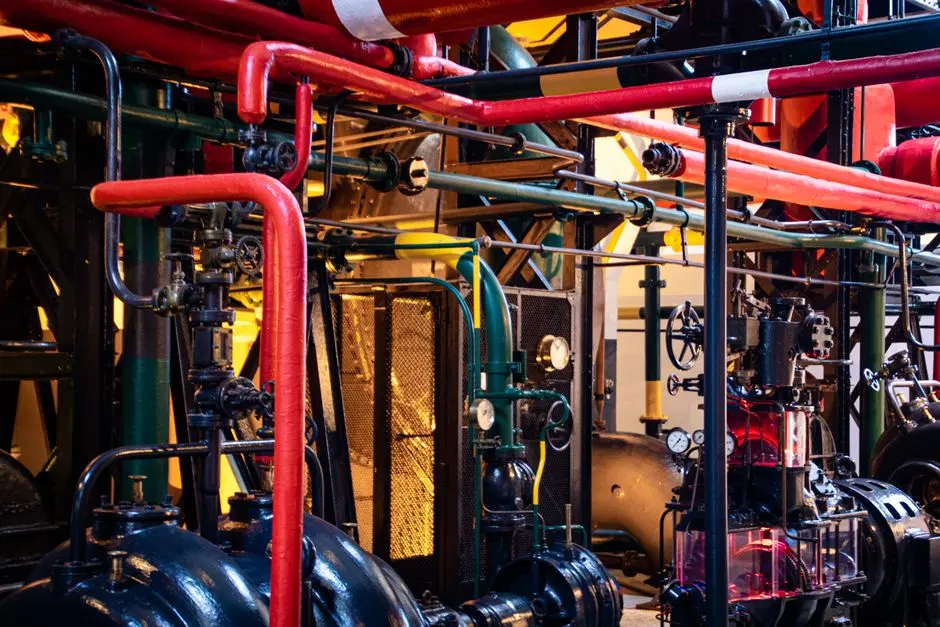
Skipping side-stream filtration and UF is the single most common cause of under-performing CTBD RO plants, and on a Hong Kong Island site the consequence is compounded by chloride-tolerant biofilm carried in marine humid air. The defensible pretreatment is a self-cleaning 10–25 µm spiral side-stream screen installed at 1–5% of circulation flow, which drops suspended solids in the blowdown to UF-friendly levels (per Genesis Water Tech). Downstream, a hollow-fibre UF system at 0.01–0.1 µm pore size removes bacteria, colloids and biofilm fragments while passing dissolved salts; UF runs at 10–30 psi with 90–95% recovery and a chemical cleaning interval of roughly 1–3 months. The RO feed-water target is Silt Density Index (SDI) below 15, preferably below 5, which is what dictates the UF sizing margin. A multi-media side-stream filter ahead of the spiral screen is worth specifying for sites with construction-phase dust or monsoon-driven airborne solids, which is a realistic concern for elevated Hong Kong Island sites exposed to south-easterlies. Without this pretreatment chain, Genesis Water Tech reports that RO recovery realistically falls back toward 50% and chemical-cleaning frequency doubles, which on a hyperscale site materially shifts the OPEX case against reuse. UF also acts as a biocide-strike buffer before RO, so that chloride-tolerant biofilm does not foul the RO membranes within the first quarter of operation.
The Core RO Step: Brackish-Water RO on Hong Kong Island Blowdown
BWRO is the workhorse of CTBD reuse. Permeate at 10–50 mg/L TDS with 95–99% dissolved-solids rejection is suitable for direct return as cooling-tower make-up, per Genesis Water Tech. Operating pressure is 150–400 psi depending on feed TDS; on Hong Kong Island the upper end is more likely because chloride and sulphate loadings run high. Conventional BWRO is capped at 75–80% recovery on this water by silica, CaCO3 and CaSO4 scaling risk, and antiscalants can extend but not eliminate the ceiling (per IDE Tech, 2026). A 50,000 GPD BWRO on blowdown has an installed cost band of US$250,000–500,000 and OPEX of US$1.50–3.00 per 1,000 gallons treated, per Genesis Water Tech, which is the figure to put in front of procurement. In Hong Kong's climate the rejected concentrate volume — and its disposal route — is the real constraint: concentrate has to be able to go to foul sewer under the EPD discharge licence or to a vendor for off-site treatment, both of which carry a per-volume cost. For hyperscale AI campuses at roughly 2 million L/day of water demand per 100 MW (per IDE Tech), even a single 80%-recovery RO train offsets a meaningful fraction of fresh make-up, which is the line to take into the EPD pre-consultation. The industrial brackish RO system and the RO and UF membrane elements on the supply side are specified on this basis; the underlying design logic is laid out in more detail in the 2026 RO membrane system design guide.
| Operating parameter | Conventional BWRO on Hong Kong Island CTBD | Source |
|---|---|---|
| Recovery | 75–80% (scaling ceiling) | IDE Tech, 2026 |
| Permeate TDS | 10–50 mg/L | Genesis Water Tech |
| Dissolved-solids rejection | 95–99% | Genesis Water Tech |
| Operating pressure | 150–400 psi (upper end on marine-humid sites) | Genesis Water Tech |
| Installed cost (50,000 GPD train) | US$250,000–500,000 | Genesis Water Tech |
| OPEX | US$1.50–3.00 per 1,000 gallons treated | Genesis Water Tech |
| Site water demand | Up to ~2 million L/day per 100 MW | IDE Tech, 2026 |
Beyond 80% Recovery: High-Recovery RO, MVC and Partial ZLD for Hong Kong
When the EPD licence or the foul-sewer acceptance fee makes the BWRO concentrate stream uneconomic, the next step is high-recovery RO or mechanical vapour compression (MVC). IDE Tech's MAXH₂O architecture, described in the company's 2026 CTBD brief, combines RO with a fluidised-bed reactor in which silica, CaCO3 and CaSO4 are precipitated onto seed pellets under controlled chemistry; the residual brine becomes NaCl-dominant and can be recirculated in a closed loop, so the case-study plant runs at roughly 95% recovery with permeate silica at about 1 mg/L. MVC sits downstream of the RO concentrate and achieves 95–98% recovery of that concentrate at 15–25 kWh per 1,000 US gallons of distillate, producing distillate below 10 mg/L TDS (per Genesis Water Tech). Full ZLD is technically possible on a data-centre scale but expensive: CAPEX US$3–8M and OPEX US$5–15 per 1,000 gallons treated (per Genesis Water Tech). On Hong Kong Island, footprint and noise constraints usually push designers toward partial ZLD — targeting 80–90% volume reduction of the blowdown stream with a smaller RO+MVC train, and sending the remaining brine either off-site for treatment or under a special EPD permit. The decision rule is straightforward: if the EPD discharge licence caps effluent TDS below 1,500 mg/L (a level some jurisdictions have adopted per Genesis Water Tech), bias the design toward high-recovery RO or MVC; if the licence is relaxed and a foul-sewer connection is in place, stop at conventional BWRO and pay the discharge fee. For a comparable southern-hemisphere benchmark, the Melbourne data center blowdown 2026 guide walks through a similar high-recovery vs. partial-ZLD trade-off in a different coastal regulatory setting. Electrodeionisation polishing downstream of RO is a useful option for sites targeting very low conductivity make-up; the relevant EDI system is specified against the permeate quality from the BWRO step.
| Option | Recovery from blowdown | Footprint / noise on Hong Kong Island | Indicative cost band |
|---|---|---|---|
| Conventional BWRO (75–80%) | 75–80% | Compact, quiet, packaged | US$250k–500k installed for 50,000 GPD train; OPEX US$1.50–3.00 / 1,000 gal |
| High-recovery RO (closed-loop, IDE-style) | ~95% | Vertical packaged skid; seed-pellet handling | Higher CAPEX than conventional BWRO; permeate silica ~1 mg/L |
| BWRO + MVC partial ZLD | 80–90% volume reduction overall | Vertical MVC skid; noise abatement needed | MVC CAPEX US$1–3M for 10,000–30,000 GPD; 15–25 kWh / 1,000 gal distillate |
| Full ZLD (RO + MVC + crystalliser) | 95–99% | Largest; crystalliser solid handling | CAPEX US$3–8M; OPEX US$5–15 / 1,000 gal |
Discharge, Reuse and Compliance: The Hong Kong EPD Picture
Direct discharge fees in water-stressed regions can exceed US$5–15 per 1,000 gallons (per Genesis Water Tech), and comparable sewer-acceptance fees apply on Hong Kong Island where the receiving catchment is the Harbour Area. Hong Kong's Technical Memorandum on Standards for Effluents Discharged into Drainage and Sewerage Systems caps conventional pollutants, temperature rise and certain metals, and a CTBD-only stream usually meets these limits after UF + BWRO — but the EPD discharge licence still specifies flow, monitoring frequency and sampling points, and these are non-trivial to lock in before mechanical completion. Sprenger's 2026-09 briefing flags thermal pollution and elevated salinity as documented harms from open-loop cooling discharge; both are reduced by reusing blowdown as make-up rather than discharging it to the harbour. The defensible 2026 operating pattern on Hong Kong Island is to maximise RO permeate as cooling-tower make-up, send RO reject to MVC (if installed) or to foul sewer, and avoid any routine discharge of warm, biocide-laden blowdown to stormwater. On the disclosure side, CDP, IFRS S2 water metrics and hyperscale tenant ESG audits increasingly require a water-stewardship narrative; a closed-loop blowdown story is now defensible in tender responses. For a wider process-water framing, the 2026 industrial water management framework sets out how the CTBD reuse case fits into a site-wide water balance.
Frequently Asked Questions
What does a 50,000 GPD CTBD RO system cost, and what is the per-MW water demand on a Hong Kong Island site?
Per Genesis Water Tech, a 50,000 GPD RO train treating blowdown has an installed cost band of US$250,000–500,000 and OPEX of US$1.50–3.00 per 1,000 gallons treated, including energy, chemicals, membrane replacement and maintenance. Per IDE Tech (2026), a 100 MW hyperscale facility can demand up to ~2 million litres of water per day. The CAPEX band above is the figure to put in front of procurement for a single skid; total site CAPEX scales with the number of trains and with whether MVC or high-recovery RO is added. Request site-specific feed-water analysis and a guaranteed permeate flow from shortlisted vendors before locking the budget.
What is the recovery ceiling on a conventional BWRO, and how high can it go with high-recovery RO or MVC?
Conventional BWRO on cooling-tower blowdown plateaus at 75–80% recovery because silica, CaCO3 and CaSO4 reach scaling thresholds (per IDE Tech, 2026). High-recovery RO architectures such as IDE's MAXH₂O have been demonstrated at approximately 95% recovery, with permeate silica at about 1 mg/L. MVC downstream of RO achieves 95–98% recovery of the concentrate at 15–25 kWh per 1,000 US gallons of distillate (per Genesis Water Tech). In practice a Hong Kong Island site should be designed for 75–80% on the base case and only escalate to high-recovery RO or MVC once the EPD TDS limit and the foul-sewer acceptance fee are confirmed in writing.
Which Hong Kong EPD documents govern discharge of treated CTBD, and what TDS limits should the design respect?
Discharge to the Harbour Area or to a harbour-side foul sewer is regulated by the Hong Kong EPD under a discharge licence issued under the Technical Memorandum on Standards for Effluents Discharged into Drainage and Sewerage Systems, which covers conventional pollutants, temperature rise, residual chlorine and metals. Some jurisdictions have implemented effluent TDS limits below 1,500 mg/L, which effectively prohibits discharge of untreated concentrated blowdown (per Genesis Water Tech). Buyers should request the actual draft discharge licence parameters from the EPD pre-consultation before sizing the RO and any MVC train, and should not rely on generic effluent TDS ranges as a proxy for Hong Kong's site-specific position.
How should a hyperscale operator shortlist a CTBD treatment supplier for a Hong Kong Island site?
Ask each vendor for: (1) at least one operating reference on a coastal, marine-air site with comparable chloride and bromide loadings; (2) documented experience supporting an EPD discharge licence application, including flow monitoring and sampling protocols; (3) confirmation of RO membrane logistics and lead time into Hong Kong, because the city's membrane supply chain is thin and replacement-element lead time materially affects uptime planning; and (4) a written recovery and OPEX guarantee tied to the supplied feed-water analysis, not a generic range. A vendor that can produce all four is the one to take to the EPD pre-consultation meeting.