
What a Filter Press for Brewery Wastewater Actually Does
A filter press for brewery wastewater is a plate-and-frame or belt press that dewaters the biological or chemically conditioned sludge produced downstream of brewery effluent treatment — not the mash filter press used upstream of the kettle to separate wort from grain. Brewery activated sludge behaves like other organic biological sludges; in plate-frame tests on simulated activated sludge at 1–4% w/w CaCO3, a plate-frame filter press with cotton filter cloth achieved 56.00% solids removal at 4% w/w feed concentration, outperforming the same rig with drill cloth (BRIN, 2020s). Belt press manufacturers such as the DWY-type S-belt design explicitly list brewery biochemical sludge and brewing sludge among the materials their machines are designed to dewater (Zenodo vendor datasheet, 2026).
The "mash filter press" pages that dominate the SERP describe the brewhouse unit — filling, filtration, membrane squeeze, draining, and grain discharge — that pushes wort through a micron-rated cloth to the kettle or whirlpool (Met-Chem; Micropure). That cycle is upstream of fermentation and has nothing to do with the wastewater train. A brewery wastewater filter press sits at the back end, after screening, equalization, and biological treatment, and handles waste activated sludge, surplus biological solids, or DAF float. For 2026 sizing, brewers should match press type to feed solids, polymer conditioning dose, target cake dryness, and downstream disposal route, with upstream DAF and biology treated as fixed inputs rather than design variables. Read more in the DAF system sizing for beverage wastewater guide.
Brewery Sludge Characteristics That Drive Press Selection
Brewery effluent contains sugars, ethanol residues, spent grain fines, cleaning chemicals from caustic and acid CIP, plus yeast and biological solids; the sludge fraction reaching the press varies with how the upstream biology is operated (BRIN, 2020s). Spent-grain and trub streams from the brewhouse are commonly removed by screens or DAF before the press; if they reach the press, expect higher fiber loading and a need for a coarser cloth and longer squeeze time.
Biological (activated) sludge from brewery wastewater behaves like other organic sludges. In plate-frame tests on simulated activated sludge at 1–4% w/w CaCO3, solids removal and cake behaviour were sensitive to feed concentration and to cloth choice, with cotton filter cloth reaching 56.00% solute removal at 4% w/w (BRIN ejournal, 2020s). Distillery and bioethanol spent wash sludge is related but darker, hotter, and higher in dissolved organics; do not assume the same press settings transfer 1:1 — see the related distillery wastewater engineering guide for upstream differences.
Before talking to a vendor, a brewer should have the following inputs ready: feed dry solids (DS%) measured at the press feed tank, hourly flow in m3/h or daily flow in m3/day, pH and temperature of the feed, the result of a polymer jar test (optimum dose and type), and the target cake dryness set by the disposal route (landfill tonnage gate, renderer specification, or on-site composting threshold). Any press quotation requires these specific numbers to avoid guesswork.
Plate-and-Frame vs Belt Filter Press: Choosing the Brewery Configuration
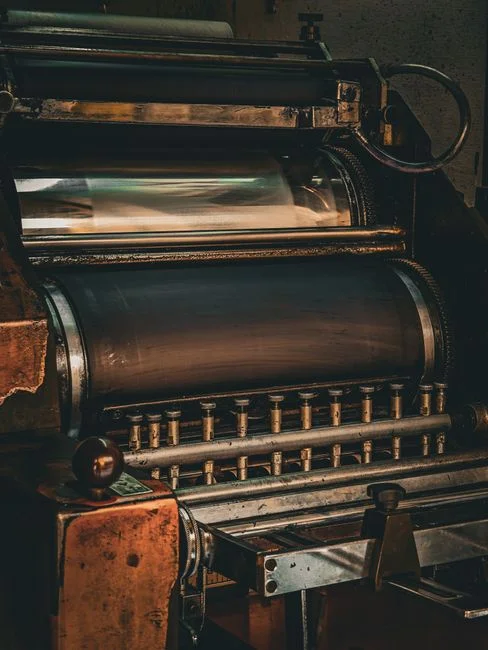
Plate-and-frame filter presses deliver the driest cake in this class and run in batch; they are typically used at smaller breweries, batch brewers, or sites where cake disposal cost dominates. The HydropureWater plate and frame filter press range covers 1 m2 to 500 m2 of filtration area in manual, hydraulic, or fully automatic PLC configurations. Cloth choice is the lever a buyer actually controls; in the published BRIN data, cotton filter cloth achieved 56.00% solids removal at 4% w/w CaCO3, outperforming drill cloth in the same rig (BRIN ejournal, 2020s).
Belt filter presses are continuous and lower capex per m3/h. The DWY-type S-belt press vendor scope statement explicitly lists "brewing sludge," "brewery biochemical sludge," "distillers grains sludge," "food sludge," and "starch sludge" as designed applications, alongside printing, electroplating, mining, and municipal sludges (Zenodo, 2026). Belt presses expose more filter belt area and use gravity plus shear dewatering zones; they tolerate more fibrous sludge but typically produce wetter cake than a well-run plate-frame press.
The choice between these systems depends on operational constraints and throughput needs. High cake disposal cost or small batch flow suggests a plate-and-frame press, whereas large continuous flow with fibrous feed and a focus on throughput suggests a belt press. Brewers evaluating throughput per square metre should also see the screw press vs belt filter press comparison for the third option in this class.
| Parameter | Plate-and-Frame Filter Press | Belt Filter Press (DWY-type) |
|---|---|---|
| Operation mode | Batch, fill → squeeze → discharge | Continuous, gravity + shear zones |
| Typical feed DS% | 1–4% w/w range tested (BRIN) | Same range, with polymer conditioning |
| Solids removal (published data) | 56.00% at 4% w/w CaCO3, cotton cloth (BRIN, 2020s) | Vendor lists brewery biochemical sludge in scope (Zenodo, 2026) |
| Cloth / belt choice | Cotton outperformed drill cloth in same rig (BRIN) | Belt material selected to processed sludge (Zenodo) |
| Cake dryness potential | Drier cake, longer cycle | Wetter cake, higher throughput |
| Best-fit brewery case | Small to mid batch flow, disposal cost-driven | Large continuous flow, fibrous feed |
Sizing, Polymer Conditioning, and Cycle Parameters for Brewery Sludge
Belt-press and plate-frame sizing both start from feed DS% and hourly flow. For plate-frame, the batch cycle time — fill, membrane squeeze, discharge — is the main driver of capacity in m3/h. For belt presses, hydraulic loading per metre of belt width and belt speed set throughput. The DWY datasheet describes a material conditioning system "designed according to materials and dewatering requirements" intended to "achieve good flocculation effect, less flocculant dosage and lower operating costs" (Zenodo, 2026) — equivalent, in brewery terms, to jar-testing a polyacrylamide (PAM) dose and locking it into the PLC.
Polymer conditioning is the primary OPEX lever. A properly jar-tested dose reduces fines blinding of the cloth or belt, improves cake release, and directly affects achievable cake dryness; an under-dosed or over-dosed feed will pin cake moisture regardless of press choice. Cloth specification matters on the plate-frame side: in the BRIN study on simulated activated sludge at 1–4% w/w CaCO3, cotton filter cloth reached 56.00% solids removal at 4% w/w, while drill cloth underperformed in the same rig (BRIN ejournal, 2020s).
The membrane squeeze / compression stage extends dewatering time but reduces final cake moisture. Met-Chem and Micropure describe this stage on the wort side — water or air pumped behind a membrane bladder to compress the cake — and the same mechanism applies to the sludge side of a plate-frame press (Met-Chem; Micropure). Buyers should request squeeze pressure (bar) and squeeze dwell time (minutes) in any plate-frame quote, not just plate count and area.
| Parameter to specify in 2026 PO | What to request from the vendor |
|---|---|
| Feed DS% range | Confirm acceptable range; pilot at 1–4% w/w bracket (BRIN test scope) |
| Target cake dryness | Set by disposal route — landfill, renderer, or compost threshold |
| Polymer dose order of magnitude | Run jar test; specify PAM type and active dose, not just "polymer skid" |
| Cloth / belt specification | Material, weave, micron rating; cotton outperformed drill (BRIN, 2020s) |
| Cycle time (plate-frame) | Fill, squeeze, discharge — request each step in minutes |
| Squeeze pressure and dwell | Bar and minutes; same mechanism as wort side (Met-Chem; Micropure) |
| Dosing integration | Pair with an automatic polymer dosing skid sized to peak flow |
Integrating the Press With Upstream Brewery Effluent Treatment
A typical 2026 brewery effluent train runs rotary bar screen → equalization → DAF → biological treatment (aerobic SBR, MBBR, or MBR) → sludge thickening → filter press → cake to disposal or rendering, with filtrate returned to the head of the works. DAF upstream of the press is common because it reduces the load on biology and improves the sludge feed to the press; a dissolved air flotation system for brewery effluent is usually the right pairing for suspended solids, FOG, and colloidal matter.
An MBR step upstream of the press can produce a finer, more stabilized surplus sludge that dewaters differently than conventional activated sludge, with smaller floc size and higher solids capture. Pilot or jar test before committing to a press model in that case. Filtrate from the press is typically recycled to the head of the works; check that polymer choice and cake handling do not introduce a new compliance risk, and confirm that any anti-foam or conditioner is on the site's discharge permit. For an upstream MBR comparison, see the MBR solution for beverage wastewater guide.
2026 Cost Sanity Check: New vs Used Brewery Filter Press
The current US used-market snapshot provides a quantitative anchor for budgeting. A major equipment aggregator lists 133 used industrial filter presses in the United States with USD 16,334,600.21 total listed value, asking prices from USD 2,374.99 to USD 175,000.00, average USD 44,417.36, and median USD 18,074.50 (Equipt, current scrape). The most active brands are JWI, PERRIN, and SIEMENS, with regional concentration in New Jersey, Ohio, and Illinois.
These figures represent general industrial listings, not brewery-specific performance or pricing, and should be treated as a budget envelope rather than a performance guarantee. New brewery-duty plate-and-frame presses are specified to filtration area (1–500 m2) and automation level (manual, hydraulic, PLC) rather than to a single list price, so a sized quote is the only accurate source for capex. The primary lifetime-cost drivers are polymer consumption, cloth or belt replacement, wash water, and cake disposal — request OPEX line items separately from equipment purchase price, and benchmark them against your jar-test results before signing.
Frequently Asked Questions
What feed solids range should a brewery use to size a filter press in 2026?
Size the press against measured feed DS% at the press feed tank, not against influent BOD or COD. The only quantitative anchor in the published plate-frame data covers 1–4% w/w CaCO3 simulated activated sludge, with cotton filter cloth reaching 56.00% solids removal at 4% w/w (BRIN ejournal, 2020s). For a brewery, request a 1–4% w/w operating window in the RFQ, and pilot outside that range before committing.
Plate-and-frame or belt press — which is the right call for a mid-sized brewery?
Match the architecture to flow and disposal economics. Plate-and-frame produces drier cake and is usually the better choice when landfill or renderer tipping fees are high and flow is batchy. Belt presses are continuous and lower capex per m3/h; the DWY-type S-belt vendor scope statement explicitly covers "brewing sludge" and "brewery biochemical sludge" (Zenodo, 2026), making it a viable
Frequently Asked Questions
What is the difference between a mash filter press and a filter press for brewery wastewater?
A mash filter press is a process-critical vessel designed for food-grade liquid-solid separation, typically operating at high pressures (up to 15-20 bar) to extract wort from spent grains while maintaining strict sanitary standards. These units are constructed from stainless steel or food-grade polymers and prioritize extract yield and clarity.
Conversely, a brewery wastewater filter press is a waste-treatment utility designed for sludge volume reduction. It operates at lower pressures (typically 7-10 bar) and focuses on dewatering biological solids or diatomaceous earth. Construction materials prioritize chemical resistance to cleaning agents and polymers rather than food safety, and the system is engineered to handle variable suspended solids concentrations.
What cake dryness can a plate-and-frame filter press achieve on brewery activated sludge?
For brewery activated sludge, a plate-and-frame filter press typically achieves a cake solids content ranging from 20% to 35%. The final dryness is highly dependent on the sludge's volatile suspended solids (VSS) ratio and the specific conditioning applied.
If the waste stream includes a significant portion of primary solids or diatomaceous earth, cake dryness can reach the higher end of the 30-40% range. Achieving these levels usually requires a cycle time of 2 to 4 hours and a feed pressure maintained at a minimum of 100 psi.
Is a belt filter press or a plate-and-frame filter press better for a small craft brewery?
For a small craft brewery, a plate-and-frame filter press is generally superior due to its smaller physical footprint, lower maintenance requirements, and ability to produce a drier, more easily handled cake. Belt filter presses require more continuous oversight, higher water consumption for belt washing, and more complex mechanical components that are often overkill for low-volume daily sludge production.
Plate-and-frame systems are batch-operated, allowing the brewery to dewater sludge once or twice per week without the constant operational attention needed for continuous belt systems. This batch capability aligns better with the fluctuating waste volumes typical of craft brewing schedules.
How much does a filter press for brewery wastewater cost in 2026, new versus used?
In 2026, a new industrial-grade plate-and-frame filter press sized for a mid-sized craft brewery typically ranges from $45,000 to $95,000, depending on automation levels, plate count, and hydraulic power unit specifications. This pricing includes the press frame, plates, and control panel but often excludes ancillary equipment like sludge pumps and polymer dosing skids.
Used or refurbished units can be acquired for $15,000 to $40,000. However, buyers must budget an additional 20-30% of the purchase price for potential cloth replacement, hydraulic seal maintenance, and control system retrofits to meet modern safety and operational standards.
What polymer dose and cloth type should I specify for brewery sludge dewatering?
For brewery biological sludge, a high-molecular-weight cationic polymer (emulsion or powder) is standard, with typical dosing rates ranging from 5 to 15 pounds of active polymer per ton of dry solids. Jar testing is essential, as the specific charge density required varies significantly based on the brewery's yeast content and effluent pH.
For filter cloths, a multifilament polypropylene fabric with a medium air permeability (typically 10-30 cfm) is recommended. This specification provides a balance between high filtrate clarity and effective cake release, preventing the "blinding" of the cloth that often occurs with the fine biological particles found in brewery wastewater.