Why Grand Rapids Food and Beverage Plants Need On-Site Pretreatment in 2026
The City of Grand Rapids Water Resource Recovery Facility (WRRF) treats 40 million gallons of wastewater per day and discharges treated effluent to the Grand River, according to the City of Grand Rapids Environmental Services page. Federal EPA pretreatment standards establish the baseline for discharges to publicly owned treatment works; however, local sewer districts typically impose limits stricter than the federal floor, so a Grand Rapids plant cannot rely on federal minima alone.
The WRRF operates an industrial pretreatment program that the City describes as a state leader in PFAS evaluation, with monthly wastewater sampling and active collaboration with identified sources (City of Grand Rapids Environmental Services). For dairy, meat, brewery, and bottling operations, the compliance bar is set by the WRRF's own program priorities, not by a generic national rule. A food and beverage plant that skips on-site pretreatment risks surcharge, permit violation, and enforcement action that can halt production.
Michigan EGLE and the WRRF expect industrial users in the service area to operate treatment systems that protect the collection system and the receiving plant from BOD, TSS, pH, and FOG shocks. The WRRF reports no combined sewer overflows and zero gallons of untreated sewage entering the river, which raises the bar for what counts as acceptable industrial discharge. Plants in the Grand Rapids service area must defend their discharge characterization with monitoring data. For engineers sizing a new line or upgrading an existing pretreatment train, the practical question is which unit operations best match the WRRF's expectations and the plant's own wastewater profile. Plants that anchor their design choices in the WRRF program and Michigan EGLE context, rather than generic food-and-beverage marketing, will pass permit renewal cleanly. The following sections outline the engineering requirements for these systems.
The Four Pollutants That Drive Food and Bev Permit Violations
BOD and COD are the headline parameters on every food and beverage discharge permit. Dairy and brewery waste can run 10–20× higher than domestic sewage, which is beyond typical POTW design loadings and will trigger surcharges or violations if discharged untreated. A facility that assumes its local authority will accept "domestic-strength" effluent misreads the permit. The operator must size pretreatment against the worst expected BOD, not the average shift, because peak flows during washdowns and CIP cycles define the surcharge risk. Beverage and confectionery waste is high in sugars and starches that raise BOD and promote rapid bacterial growth, which the receiving plant's biology must absorb.
TSS accumulates in sewer lines and biological reactors; federal pretreatment exists because industrial-strength discharge can overwhelm municipal processes and damage infrastructure. Screening, dissolved air flotation, and clarification each pull a different fraction of these solids, and an engineer should think of TSS control as a layered defense. pH swings come from acid cleaners, fruit acids, and caustic CIP chemicals; sewer systems cap pH because extremes damage pipes, kill treatment biology, and can release toxic gases. FOG from meat, dairy, and confectionery operations can clog pipes and interfere with biological treatment unless removed at the head of the train. These four parameters define the envelope that every West Michigan food and beverage plant must hit, and the engineered response is the staged process train described below.
A Typical 2026 Pretreatment Process Train for West Michigan Plants
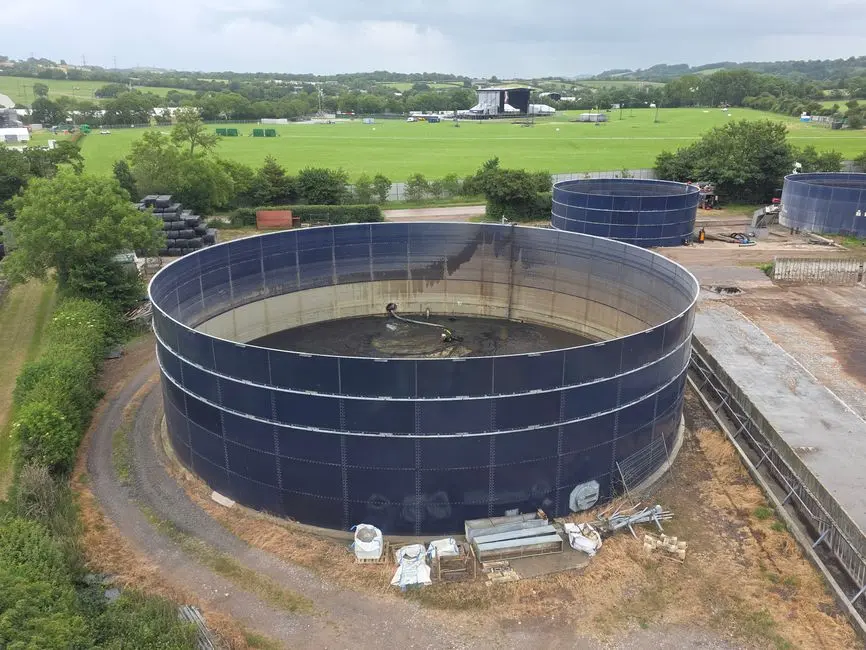
A workable 2026 train for a dairy, brewery, meat, or bottling plant near Grand Rapids sequences unit operations from coarse screening through sludge dewatering, with chemistry and biology sized to bring BOD, TSS, pH, and FOG into the WRRF envelope.
- Step 1 — Mechanical bar screening. A rotary mechanical bar screen for headworks protection removes rags, plastics, and fibrous debris before they reach pumps or biological reactors.
- Step 2 — Flow equalization and pH adjustment. Equalization basins blend flows and moderate pH, which is critical for plants with strong acid or alkaline batches that cannot be safely neutralized in real time. PLC-controlled chemical dosing for pH and coagulation closes the loop on the equalization basin.
- Step 3 — Dissolved air flotation. A dissolved air flotation system for FOG and suspended solids strips fats, oils, fine suspended solids, and colloidal matter before they hit biology.
- Step 4 — Biological treatment. MBBR or IFAS modules reduce BOD and nutrient loading from high-strength streams, bringing the effluent within range for discharge to the WRRF.
- Step 5 — Sludge dewatering. A plate and frame filter press for sludge volume reduction cuts hauling cost and protects downstream infrastructure.
| Step | Unit Operation | Primary Pollutant Targeted | Driver Source |
|---|---|---|---|
| 1 | Rotary mechanical bar screen | Rags, plastics, fibrous debris | Equipment duty case |
| 2 | Equalization basin + chemical dosing | Flow variability, pH swings | Crystal Clean |
| 3 | Dissolved air flotation (DAF) | FOG, fine suspended solids | Alar |
| 4 | MBBR / IFAS biological treatment | BOD, COD, nutrients | Alar |
| 5 | Plate and frame filter press | Sludge volume for hauling | Alar |
The train is modular: a small dairy might run steps 1, 2, 3, and 5 and rely on the WRRF for biology, while a brewery discharging high-strength spent liquor will need step 4 in full. The following sections address the selection criteria for these specific components.
WRRF-Specific Considerations: PFAS, Reporting and Plant Permits
The WRRF is running a PFAS pollutant reduction plan approved by the Michigan Department of Environmental Quality and works collaboratively with identified sources, per the City of Grand Rapids Environmental Services page. Wastewater sampling at the WRRF takes place on a monthly basis, which sets the tempo for any source-monitoring a Grand Rapids plant must support. PFAS reductions are a long-term program, and because the WRRF's industrial pretreatment program is a state leader in PFAS evaluation, food and beverage plants in the service area should expect PFAS-related questions on permit renewal.
The WRRF reports no combined sewer overflows and zero gallons of untreated sewage entering the river, which raises the bar for acceptable industrial discharge. For an engineer writing a permit narrative, the practical implication is to expect a source-control discussion during renewal and to keep influent PFAS characterization data on file. The 2026 DAF engineering guide for beverage wastewater covers the front-end chemistry that determines how much PFAS-bound solids carry through to the biology, which is directly relevant to the WRRF's source-reduction questions.
Choosing the Right Unit Operations: DAF, Clarifier, or MBBR
Dissolved air flotation is the default choice for FOG and fine suspended solids because micro-bubble flotation separates contaminants that gravity clarifiers handle slowly. The Alar food and beverage wastewater page frames flotation as the unit operation that removes the fats, oils, and fine solids common to food and beverage waste and eases the load on biological treatment. For high-strength BOD and COD streams such as dairy whey or brewery spent liquor, MBBR or IFAS modules are typically added downstream of DAF to bring loading down to POTW-acceptable ranges. An MBR membrane bioreactor for high-strength streams is an alternative for plants that need a tighter effluent envelope, particularly where the receiving POTW has constrained capacity for BOD variability.
Equalization and pH adjustment sit ahead of biology because pH extremes damage infrastructure and disrupt treatment biology in the receiving POTW. A high-efficiency sedimentation tank can be paired with DAF to capture settleable solids that bypass flotation, but for food and beverage matrices with high FOG and colloidal fractions, DAF remains the workhorse. Sludge dewatering selection should follow biological treatment sizing, as residual sludge volume drives long-term hauling OPEX and must be addressed at the design stage. The following table summarizes these operational choices.
| Unit Operation | Best-Fit Duty | Food/Bev Pollutants Removed | Selection Driver |
|---|---|---|---|
| Dissolved air flotation (DAF) | FOG, fine suspended solids, colloidal matter | FOG, TSS, partial BOD | Alar — flotation removes fats, oils, and fine solids |
| Gravity clarifier / sedimentation tank | Settleable solids with low FOG | TSS, partial BOD | Alar — clarifiers for suspended solids, slower on FOG |
| MBBR / IFAS biological | High-strength BOD and COD downstream of DAF | BOD, COD, nutrients | Alar — biological systems reduce BOD and nutrient loads |
| MBR membrane bioreactor | Tight effluent envelope for constrained POTW capacity | BOD, COD, TSS to reuse quality | Engineering judgment when WRRF capacity is constrained |
The decision rule of thumb: if FOG and fine suspended solids dominate, start with DAF; if BOD and COD remain the limiting factor after flotation, add MBBR/IFAS; if the WRRF capacity is constrained or the plant is approaching reuse-quality limits, escalate to MBR. Equalization and pH control precede every option, and sludge dewatering follows.
Supplier Selection Checklist for 2026
Before issuing an RFQ, a Grand Rapids food and beverage buyer should run each candidate supplier through four checks. Confirm the supplier's experience with food and beverage waste specifically, as industry expertise matters and a generalist may miss sanitation-cycle interactions. Verify that equipment is factory-tested, skid-mounted, and pre-wired for fast installation, which shortens the shutdown window for an existing plant. Ask for pilot testing or on-site wastewater characterization before specifying capacities to validate performance against actual influent variability. Confirm the supplier can support the documentation chain (manifests, service records, treatment verification) that Grand Rapids area plants will need for WRRF and EGLE audits.
Buyers who want a broader shortlist can reference the 2026 buyer's guide to industrial wastewater management solutions providers for evaluation criteria beyond equipment specifications.
Frequently Asked Questions
What does the City of Grand Rapids WRRF actually require from food and beverage plants in 2026?
The WRRF runs an industrial pretreatment program described as a state leader in PFAS evaluation, performs wastewater sampling on a monthly basis, and works collaboratively with identified sources on long-term PFAS reduction, per the City of Grand Rapids Environmental Services page. Federal EPA pretreatment standards set the baseline, but the WRRF layers on stricter local BOD, TSS, pH, and FOG limits, so the practical requirement is to operate an on-site train that can defend its discharge data during monthly sampling cycles and permit renewal.
How much does a 2026 food and beverage pretreatment system cost in the Grand Rapids area?
Quotation and installed-price ranges depend on flow rate (gpd), influent BOD/COD (mg/L), FOG load (lb/day), and the target effluent envelope. Dairy and brewery waste can run 10–20× higher in BOD than domestic sewage, which directly drives tank sizing, biology volume, and sludge handling capacity — the three line items that swing total installed cost. Ask each vendor for a budgetary proposal that itemizes screening, equalization, DAF, biological stage, and sludge dewatering separately, then compare on a per-gallon-treated basis.
How do I choose between DAF, a clarifier, and MBBR for a brewery or dairy in West Michigan?
Dissolved air flotation is the default for FOG and fine suspended solids in food and beverage waste, while MBBR or IFAS modules are added downstream to bring BOD and COD into POTW-acceptable ranges, per Alar. A gravity clarifier handles settleable solids with low FOG but is slower on fats, oils, and colloidal matter. For most brewery and dairy waste near Grand Rapids, the practical answer is DAF upstream of MBBR, with MBR considered only if the WRRF capacity is constrained or the plant is targeting reuse-quality effluent.
What should I look for when selecting a supplier for a 2026 food and beverage pretreatment project?
Industry expertise matters because a generalist may miss sanitation-cycle interactions, so confirm the supplier has documented food and beverage installations. Ask for pilot testing or on-site wastewater characterization before specifying capacities, and verify that equipment is factory-tested and skid-mounted for fast installation. Finally, confirm the supplier can support the documentation chain (manifests, service records, treatment verification) that the WRRF and Michigan EGLE will expect during audits.