Why São Paulo housing developments need packaged sewage treatment plants
While 95.6% of São Paulo state households are connected to the water supply network, only 79% are connected to the sewerage network, and of that 79% only 62% is treated (World Bank, "Unleashing wastewater's potential in Brazil"). The same source places the wider Latin America and Caribbean region at just 30–40% of collected wastewater actually receiving treatment, so São Paulo's coverage gap is severe. In the Metropolitan Region of São Paulo (MRSP), uncontrolled urban growth, irregular settlements, and untreated wastewater discharge continue to degrade the water reservoirs that supply the metropolitan area (World Bank).
The Guarapiranga basin illustrates the practical impact: SABESP collects and treats roughly 70% of the wastewater produced inside the basin, which supplies water to a quarter of the MRSP's population, while many informal settlements remain unserved and continue to contaminate the reservoir (World Bank). Where centralized trunk extensions have not yet reached, or where the existing sewer cannot accept additional load, a packaged sewage treatment plant becomes the engineering alternative. The World Bank–supported SABESP program, for example, will connect 3,500 families in Itapecerica da Serra via a transfer pipeline to a treatment plant in a separate basin, and the Embu project will serve 3,400 families through 4.7 km of main trunk pipeline, leaving large surrounding areas to be served by on-site systems until the centralized grid catches up (World Bank). For a developer, that timing gap is precisely the window in which a packaged STP is the only defensible option.
The three packaged STP architectures a São Paulo developer will be quoted
Three product families dominate quotations for residential developers in 2026, each mapping to a different site constraint, footprint budget, and effluent target.
The first family is a buried A/O package sewage treatment plant built around anoxic/aerobic contact oxidation, sedimentation, and disinfection in a single factory-built unit that is lowered into an excavation and backfilled. This architecture suits residential clusters, hotels, hospitals, and rural areas where the unit can run unattended below grade. The second is a conventional packaged activated sludge system: a rectangular steel package containing an aeration tank, clarifier, and chlorinator, with a smaller unit cost but a larger above-grade footprint and a periodic sludge-wasting requirement. The third is a containerized MBR packaged sewage treatment plant, which combines an activated-sludge bioreactor with submerged PVDF membrane modules in an ISO-container or skid frame, cutting the footprint to roughly 60% of a conventional system and producing a low-turbidity effluent suitable for reuse.
The choice between them depends on available land and reuse goals. A horizontal subdivision with available open ground typically gets the buried A/O unit because installation is the cheapest line item. A mid- or high-rise condominium on a tight plot with no green space for a buried unit usually moves to a packaged activated sludge or MBR skid. A development that has a contractual or marketing requirement to reuse treated effluent for landscape irrigation or toilet flushing is almost always steered toward MBR, because the sub-1 μm effluent quality removes the need for a separate tertiary polishing stage.
| Architecture | Typical unit form | Indicative capacity range | Best-fit residential scenario |
|---|---|---|---|
| Buried A/O (e.g. WSZ series) | Single buried steel tank, factory-integrated | 1–80 m³/h | Horizontal subdivisions, low-to-mid-rise clusters, sites with land for excavation |
| Conventional packaged activated sludge | Above-grade rectangular steel package, clarifier + chlorinator | Project-dependent, scales with tank count | Mid-rise condominiums with available surface area and a willing operator |
| Containerized MBR | ISO container or skid with submerged PVDF membranes | 10–2,000 m³/day | High-rise or reuse-driven schemes on tight plots |
Sizing a packaged STP for a Brazilian housing development
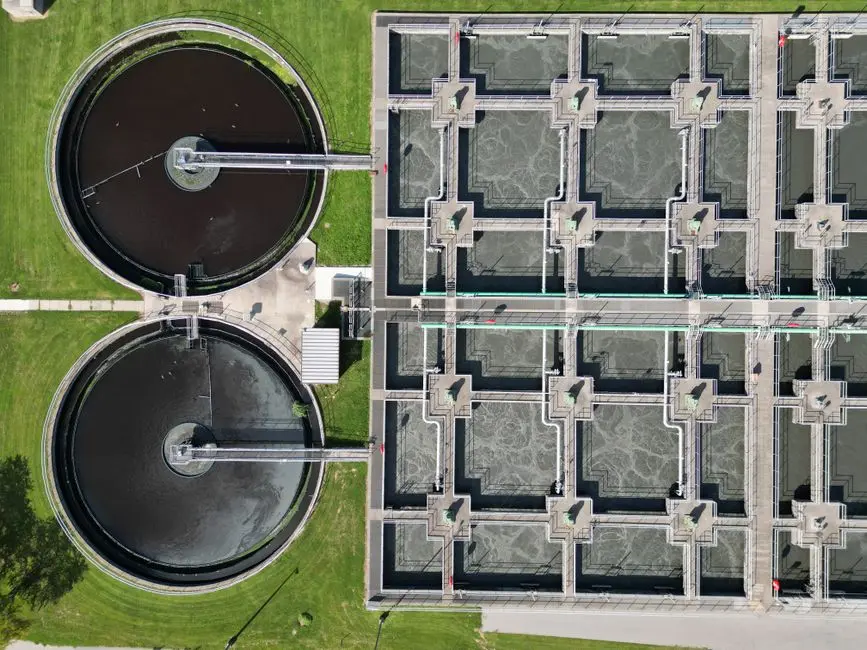
The local per-dwelling flow factor serves as the numeric foundation for any defensible sizing and must come from SABESP or the local municipality rather than a generic international table. The developer or consulting engineer should request three inputs: the average per-capita water consumption adopted by the local utility for the municipality, the design occupancy rate per dwelling (which differs sharply between a 1-bedroom apartment in vertical condominium housing and a 4-bedroom horizontal subdivision lot), and the return-to-sewer factor that converts consumed water into sewage flow. Brazilian utilities commonly apply a daily peaking factor in the 1.2–1.5 range for residential catchments and an additional hourly peaking factor for the biological stage, but the precise values applied to a given licensing case must be confirmed with the project hydraulic engineer against the local concessionaire's criteria. The supplied research does not contain a Brazilian residential design-flow figure in litres per inhabitant per day, so this section focuses on the input list and the following qualitative mapping.
Once the average dry-weather flow is established, the peaking factors convert it into the design flow used to select the package. That design flow then maps to a product line: the buried A/O WSZ series covers 1–80 m³/h, which generally handles small horizontal subdivisions up to mid-rise clusters, while the containerized MBR line covering 10–2,000 m³/day addresses medium and large developments. A useful typology-to-package map is therefore: small horizontal subdivision → buried A/O; mid-rise condominium → packaged activated sludge or A/O; high-rise or any reuse-driven scheme → MBR.
| Housing typology | Key sizing input to confirm | Recommended package architecture |
|---|---|---|
| Horizontal subdivision, 50–400 lots | Per-lot occupancy and return-to-sewer factor from the municipality | Buried A/O package |
| Mid-rise condominium, 200–800 dwellings | Per-dwelling occupancy, peak factor from the hydraulic engineer | Packaged activated sludge or A/O |
| High-rise or reuse-driven scheme, 800+ dwellings | Reuse target (irrigation, toilet flushing) and daily peaking factor | Containerized MBR |
For MBR designs specifically, the membrane selection step is tied to the package choice; a PVDF flat sheet MBR membrane module with individually replaceable elements is a common configuration and is documented separately in the sizing methodology used for containerized MBR STPs.
Comparison matrix: A/O package vs packaged activated sludge vs containerized MBR
The three families are best compared by the dimensions that drive a developer's specification: footprint, effluent quality, automation, mobility, and lifecycle considerations. Footprint is the most concrete differentiator. A containerized MBR system is documented at roughly 60% of the footprint of a conventional activated sludge system of equal capacity, which is often the deciding factor on tight condominium plots. A buried A/O unit, by contrast, takes no surface footprint at all once it is backfilled and landscaped, but it requires excavation, dewatering during install, and access for crane lifting during the single placement event.
Effluent quality separates the architectures into reuse-ready and not-yet-reuse-ready. MBR's sub-micron barrier produces a low-turbidity effluent that can feed landscape irrigation or toilet flushing with disinfection alone, while A/O and conventional activated sludge effluents typically need a downstream tertiary polishing stage before they meet reuse criteria. Automation is also a differentiator: the WSZ A/O package is fully automated with no on-site operator requirement, while a conventional activated sludge package generally needs periodic manual checks of sludge interface, return activated sludge rates, and chlorinator residuals. The MBR adds membrane integrity monitoring and cleaning cycles to that list, usually handled by the same PLC. For the MBR, energy is a qualitative operating-cost driver dominated by membrane aeration and recirculation pumps, but the supplied research does not contain a kWh/m³ figure, so any quotation on operating cost should be requested from the manufacturer against the specific design flow and influent load.
| Dimension | Buried A/O package | Packaged activated sludge | Containerized MBR |
|---|---|---|---|
| Footprint | Below grade; no surface area after backfill | Above grade; largest of the three | Roughly 60% of a conventional system of equal capacity |
| Effluent quality for reuse | Needs tertiary polishing | Needs tertiary polishing | Sub-1 μm effluent, reuse-ready with disinfection |
| Operator requirement | Fully automated, no operator | Daily sludge interface and chlorinator checks | PLC-managed; membrane integrity and CIP cycles |
| Installation form | Buried on site, permanent | Skid or packaged unit, permanent | ISO container or skid, crane-liftable onto plinth |
| Headworks integration | Site-built or separate | Site-built or separate | Often paired with a headworks bar screen for packaged STP protection |
Compliance, discharge destination, and reuse in São Paulo state
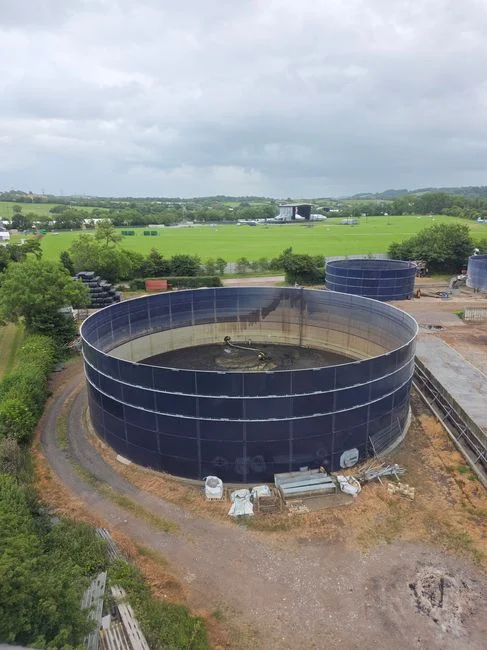
Technology selection requires a discharge-destination decision. The Guarapiranga basin case is the clearest local example: the Embu Mirim River alone delivers about 41% of the nutrient load currently released into the reservoir, and the World Bank is designing a performance-based contract to engage the private sector in removing those nutrients (World Bank). For any development upstream of that basin, an A/O package that does not specifically target nitrogen and phosphorus will struggle to satisfy the tighter receiving-water expectations that CETESB and the basin authority are likely to apply. MBR, with its higher mixed liquor suspended solids and complete solids retention, is the more defensible choice when the receiving water is nutrient-sensitive.
At the regulatory level, CONAMA Resolution 430/2011 sets the federal effluent conditions and standards in Brazil, and CETESB Decree 8468/1976 (with subsequent updates) sets the São Paulo state limits. The developer must confirm the current applicable standard and the local CETESB office's expectations for the specific discharge point. If the development plans to reuse treated effluent for landscape irrigation, the package must include a disinfection stage sized to the reuse target. UV disinfection for treated sewage effluent is effective against chlorine-resistant organisms such as Cryptosporidium and Giardia, which is relevant for irrigation of publicly accessible green space. Discharge to a public sewer should follow SABESP's admissibility criteria for non-domestic loadings; even for purely residential flows, a sampling port and flow meter on the outlet are typical requirements and should be priced into the civil works.
Procurement checklist for a packaged STP in São Paulo
The technical comparison above answers the "what" question, while this checklist addresses how to buy the system without inheriting avoidable operational problems. The first item is a Factory Acceptance Test (FAT) at the manufacturer's site, witnessed in person or recorded on video, covering hydraulic integrity of the packaged unit, control panel functional checks, and alarm logic verification. The second is containerization or skid-mounting for any MBR scope, so the unit arrives on a flatbed and can be lifted by crane onto a prepared civil plinth without dismantling, which compresses the on-site critical path to a single lift event. The third is a defined spares package: membrane elements for MBR (or at least one spare cassette), aerator diaphragms, UV lamps, dosing pump spares, and a full set of gaskets. The fourth is local after-sales, and the only defensible check is to confirm the supplier has a service engineer based in or near São Paulo state and to request a stated response time for warranty calls, since the supplied research does not contain a published SLA value. The fifth is a Portuguese-language documentation pack: as-built drawings, P&ID, electrical schematics, PLC program backup, and the O&M manual. Sludge handling from any of the three architectures is typically paired with a plate-and-frame filter press for dewatering the wasted activated sludge, which should be scoped at the same time as the biological package so that the dewatering line does not become a late procurement risk. For a more general treatment of factory-built units, the modular sewage treatment system working principle article covers the same architecture family in non-geographic terms.
Frequently Asked Questions
What packaged STP capacity do I need for a 500-
Frequently Asked Questions
What size packaged STP do I need for a 500-unit housing development in São Paulo?
For a 500-unit development, assuming an average of 3.5 residents per unit and a per capita water consumption of 150 liters per day, you require a plant with a capacity of approximately 262.5 cubic meters per day. It is standard practice to include a 20% safety margin for peak flow variations, resulting in a design capacity of 315 cubic meters per day to ensure compliance with NBR 7229 and NBR 13969 standards.
Is a buried A/O package or a containerized MBR better for a São Paulo condominium?
In dense urban areas like São Paulo, containerized Membrane Bioreactor (MBR) systems are generally superior due to their compact footprint and high-quality effluent, which allows for direct reuse. While buried Anaerobic/Oxic (A/O) systems have lower operational costs and simpler maintenance, they require significantly larger land areas for settling tanks and may struggle to meet the stringent odor control requirements necessary for proximity to residential towers.
How long does it take to deliver and install a packaged sewage treatment plant in São Paulo?
The typical timeline from procurement to operational startup ranges between 12 and 18 weeks. Manufacturing of the modular units usually takes 8 to 10 weeks, while site preparation, civil works for the foundation, and hydraulic/electrical integration take an additional 4 to 8 weeks, depending on local soil conditions and connection complexities at the specific São Paulo site.
What effluent quality must a packaged STP in São Paulo discharge to a sensitive basin like the Guarapiranga?
Discharges into the Guarapiranga basin are strictly regulated by CETESB under Resolution SMA 025/2012 and CONAMA 430/2011. You must achieve a minimum 90% removal of Biochemical Oxygen Demand (BOD) and meet strict nutrient limits, typically requiring total nitrogen levels below 10 mg/L and total phosphorus below 1 mg/L to prevent eutrophication in the reservoir.
Can treated sewage from a packaged plant be reused for landscape irrigation in São Paulo housing developments?
Yes, treated sewage can be reused for landscape irrigation provided the system includes tertiary treatment, such as UV disinfection or chlorination, to meet the NBR 13969 Class 3 or 4 standards. The water must be free of pathogenic organisms and have a low turbidity level to ensure safety for residents, and the irrigation system must be clearly labeled with non-potable water signage to prevent cross-contamination with the municipal potable supply.