What "pretreatment" actually means for a Broussard ag-chem plant
Pretreatment, as the EPA defines it, is the set of pollutant discharge limits and procedural requirements that apply to an industrial user sending wastewater to a publicly owned treatment works rather than straight to a surface water, and the program runs on three layers that the agency, the state, and the local control authority can all enforce (EPA pretreatment-standards applicability page, 2025). For a Broussard ag-chem plant, that means 40 CFR Part 403's general and specific prohibitions sit underneath the Pesticide Chemicals categorical standards in 40 CFR Part 455, and any stricter numeric, narrative, or best-management-practice limit the receiving POTW sets sits on top. Where the layers overlap, the control authority — defined in 40 CFR 403.3(f) as the POTW with an approved pretreatment program, or the approval authority where one is not approved — picks the most stringent and applies it (EPA, 2025).
The standards can be written as numeric effluent limits, narrative prohibitions, or best management practices, and the discharger has no discretion on which layer governs: the control authority does the applicability determination and tells the plant what it must meet (EPA pretreatment-standards applicability page, 2025). A pesticide formulator that ships any process wastewater down a sewer — even via a small industrial park outfall — is an indirect discharger and an industrial user under 40 CFR 403.3(j), so the three-layer framework is not optional (EPA, 2025). EPA's PFAS Strategic Roadmap also asks pretreatment programs to add source control and BMPs for industrial PFAS contributors, so even where numeric PFAS limits are not yet codified the source-control bar is rising on agricultural chemicals manufacturers that handle fluorinated surfactants or processing aids.
Which federal categorical standards apply to pesticide manufacturers and formulators
The right federal category for an ag-chem plant in the Broussard corridor is 40 CFR Part 455, the Pesticide Chemicals point source category, which carries PSES for existing indirect dischargers and PSNS for new sources (EPA 1993 Economic Impact Analysis, nepis.epa.gov/Exe/ZyPURL.cgi?Dockey=20002WBL.TXT). EPA divided the category into two subcategories: Subcategory A, the Organic Pesticide Chemicals Manufacturing subcategory that anchors the proposed rule, and Subcategory B, the Metallo-Organic Pesticide Chemicals Manufacturing subcategory (EPA 1993 EIA). Establishments that primarily manufacture or formulate agricultural chemicals not elsewhere classified, including the formulation and preparation of pesticides, fall under SIC 2879, while establishments that manufacture pesticides and other organic agricultural chemicals that are pesticide active ingredients fall under SIC 2869, and both codes sit inside the Pesticide Chemicals category per the 1993 EIA.
The 1993 EIA still functions as the cost-of-compliance reference for Part 455 rulemakings: for indirect discharging organic pesticide manufacturers, total capital costs of compliance with the modeled Zero Discharge Option were estimated at $1.1 million and annualized costs at $518.8 million (EPA 1993 EIA). The same analysis projected a $179.6 million drop in PAI foreign trade as a result of Zero Discharge Option compliance for indirect discharging organic pesticide manufacturers (EPA 1993 EIA). The reason those figures matter in 2026 is that for some PAIs the modeled compliance option drove discharge to zero, which means today's PSES benchmark is conservative for certain pollutants and must be checked against current local limits, not treated as a federal ceiling (EPA 1993 EIA). Operators specifying equipment should not assume that meeting the federal PSES ceiling automatically satisfies a Lafayette–Broussard control authority; the local allocation letter is the binding document.
How the Lafayette–Broussard control authority layer changes the math

Federal pages stop at the categorical layer, and that is the gap that bites Broussard plants. In the Lafayette Parish industrial corridor, the relevant control authority is the receiving POTW's pretreatment program — most often Lafayette Utilities System or another LADEQ-approved POTW serving the specific industrial park the plant sits in — and the discharger must request, not assume, which standards the authority is applying to its IU permit (EPA pretreatment-standards applicability page, 2025). The control authority is the entity that performs the applicability determination under 40 CFR 403.3(f) and applies the most stringent of the three layers, so the plant's first move is to identify the authority in writing and ask for the documents that prove which numeric, narrative, and BMP requirements actually bind (EPA, 2025).
The documents to pull from the control authority before any equipment is sized are the POTW's approved pretreatment program submission, the current sewer-use ordinance, the industrial user's allocation letter, any local limits derived for the plant's discharge, and the most recent self-monitoring and SIU designation letter issued under 40 CFR 403.8(f)(6) (EPA pretreatment-standards applicability page, 2025). SIU status under 40 CFR 403.3(v) is triggered by any of three triggers: discharging an average of 25,000 gpd or more of process wastewater, contributing a process wastestream that makes up 5 percent or more of the average dry-weather hydraulic or organic capacity of the POTW, or being designated by the POTW on a reasonable-potential basis, so a small Broussard formulator can still be an SIU (EPA, 2025). PFAS in biosolids is the second pressure that does not show up in 40 CFR Part 455: most responding states do not yet have formal pretreatment standards for PFAS, but EPA's PFAS Strategic Roadmap calls on pretreatment programs to require source control and best management practices, and state pretreatment programs are already targeting industrial sources of PFAS rather than domestic ones (ECOS, 2022 PFAS in Biosolids review). For a plant that ships sludge to a Lafayette Parish POTW, that roadmap is what is driving BMP language into the next allocation letter.
Process equipment train that reliably meets 2026 pretreatment limits
The unit-operation train below is the sequence a Broussard ag-chem plant can specify, procure, and verify against POTW sampling, with each anchor matched to the categorical or local parameter class it has to deliver. Headworks protection comes first: a continuous-duty rotary bar screen for ag-chem headworks sized to handle the rags, labels, and drum fragments that come off batching and packaging lines, with downstream flow routed to equalization. Equalization with pH and temperature trim is non-negotiable because categorical and local limits are almost always expressed as 24-hour composites, and a destabilized upstream feed defeats the rest of the train; a PLC-controlled pH and coagulant dosing skid handles the trim automatically.
From equalization, the workhorse for oil, grease, suspended solids, and colloidal pesticide actives in a formulating effluent is dissolved air flotation; a micro-bubble DAF for oil, grease, and colloidal pesticide actives removes the bulk of the O&G and colloidal load before any biological step, and the floated sludge goes to a plate and frame filter press for DAF and biological sludge so the POTW does not see excessive TSS in hauled waste. For higher-load active-ingredient streams, a biological or advanced oxidation step follows DAF, with mixed-liquor suspended solids controlled to keep sludge yield manageable. Where the control authority's local limit is tighter than typical secondary clarification can deliver, the polish slot is a submerged PVDF MBR for tight TSS and turbidity local limits or a UF system with 0.1–0.03 micron PVDF membranes for a chemical-free barrier. The loop closes with disinfection: a chemical-free UV polish ahead of the sewer avoids chlorine residual byproducts that could push the discharger back into a violation, with a chlorine dioxide generator as the on-site residual option where downstream reuse or pathogen control requires it.
Parameter table: what the equipment train has to deliver
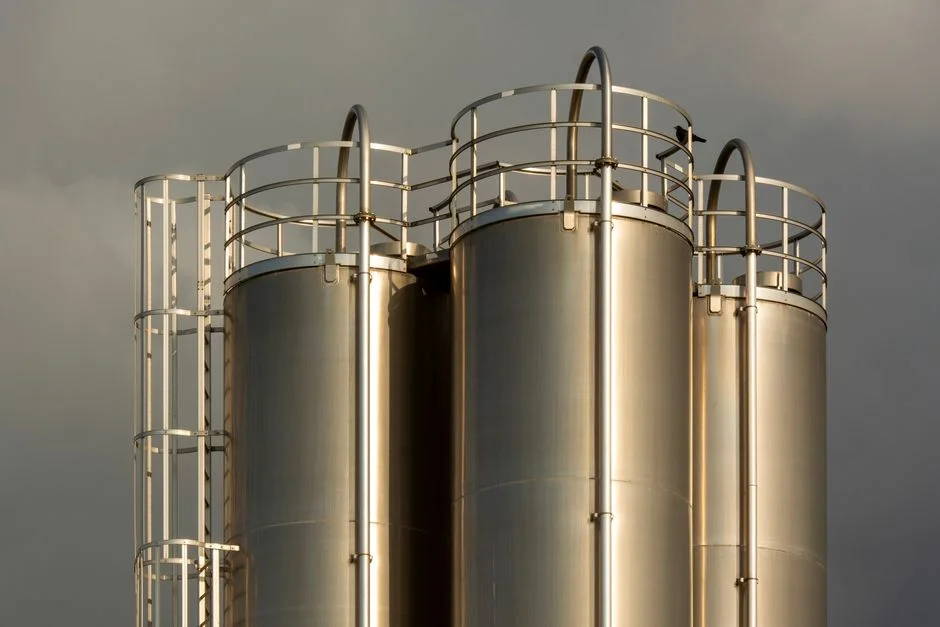
Numeric local limits are not reproduced in this table because the control authority sets them and they must be obtained in writing from the receiving POTW (EPA pretreatment-standards applicability page, 2025). What the table does is map each unit operation to the parameter class it controls and the sampling event the POTW will compare it against, so a plant engineer can eyeball the train before pulling a quote.
| Unit operation | Parameter class addressed | Sampling event the POTW compares against |
|---|---|---|
| Rotary bar screen | Gross solids, rags, drum fragments | Visual and headworks inspection |
| Equalization basin | Flow and pH stabilization | Continuous pH and flow logging |
| DAF | Oil and grease, suspended solids, colloidal actives | Daily composite O&G and TSS |
| Biological or advanced oxidation | COD and BOD reduction | Weekly composite COD and BOD |
| MBR or UF polish | TSS and turbidity polish | 24-hour composite TSS and turbidity |
| Plate and frame filter press | Cake solids for off-site disposal | Quarterly sludge manifest |
| UV or ClO2 disinfection | Residual pathogen control | Weekly microbiological where applicable |
Monitoring, self-reporting, and source control checklist
- Confirm SIU status in writing and obtain the local limit allocation from the control authority before any equipment is resized; the allocation letter is the document that drives the design basis (40 CFR 403.8(f)(6), per EPA, 2025).
- Maintain the categorical baseline monitoring required under 40 CFR Part 455 for the Pesticide Chemicals subcategory that covers the plant, and stack any additional POTW-required parameters on top of the federal suite (EPA 1993 EIA).
- Add BMPs for chemical storage, drum and container washout, and production-changeover wash waters; these are the operations the EPA PFAS Strategic Roadmap targets through pretreatment source control (ECOS, 2022).
- Schedule an annual walk-through of the sewer-use ordinance with operations, maintenance, and procurement in the same room, because the cheapest compliance wins in ag-chem pretreatment come from housekeeping changes, not new equipment.
Frequently Asked Questions
What capital cost range should a Broussard ag-chem plant expect for a Part 455 compliant train in 2026?
Capital cost is site-specific and the EPA 1993 EIA modeled subcategory-wide compliance costs for indirect discharging organic pesticide manufacturers against a Zero Discharge Option, not the local-limit case a Broussard plant faces today, so a buyer must request a written equipment quote against the allocation letter, not a generic range. The 1993 EIA's $1.1 million total capital and $518.8 million annualized cost for the modeled Zero Discharge Option are subcategory-wide and cannot be divided down to a single Broussard plant (EPA 1993 EIA). What the buyer should request from any vendor is a line-item quote against the local limits, the categorical baseline monitoring list, and the expected flow, with a clear split between headworks, primary separation, biological or advanced oxidation, membrane polish, and sludge dewatering.
What should be verified in writing with the control authority before any equipment order is released?
Before any purchase order is cut, the discharger needs the POTW's approved pretreatment program submission, the current sewer-use ordinance, the IU's allocation letter, the derived local limits, and the most recent SIU designation letter issued under 40 CFR 403.8(f)(6) (EPA pretreatment-standards applicability page, 2025). The control authority under 40 CFR 403.3(f) is the entity that determines which of the three layers applies and applies the most stringent, so those documents are the only basis on which a vendor can size equipment responsibly (EPA, 2025). Verbal confirmation from a plant operator is not a design basis.
Is a small Broussard formulator automatically excluded from SIU status?
No. SIU status under 40 CFR 403.3(v) is triggered by any of three independent tests, and the third — designation by the POTW on a reasonable-potential basis — is a discretionary call that can pull a small formulator into SIU compliance even when flow is below the 25,000 gpd threshold (EPA pretreatment-standards applicability page, 2025). The POTW also looks at whether the IU contributes 5 percent or more of the average dry-weather hydraulic or organic capacity of the treatment plant, so a small plant on a small industrial park POTW can cross that line easily (EPA, 2025). The right move is to ask the control authority in writing, not to assume size alone controls.
Where does PFAS source control fit if there is no numeric PFAS limit yet?
PFAS shows up in the allocation letter as a BMP and source-control requirement, not a numeric effluent limit, because most states do not yet have formal pretreatment standards for PFAS (ECOS, 2022 PFAS in Biosolids review). EPA's PFAS Strategic Roadmap calls on pretreatment programs to require source control and best management practices to protect wastewater treatment plant discharges and biosolids applications, and state pretreatment programs are already targeting industrial sources of PFAS rather than domestic ones (ECOS, 2022). For a Broussard ag-chem plant that means documenting chemical storage, drum washout, and changeover wash-water practices on paper, even before a PFAS number is written into the permit.