Why a packaged STP is the default for housing in La Paz
For a housing development in La Paz, Bolivia in 2026, a packaged sewage treatment plant must do what the city itself does not yet do: treat domestic sewage to a level safe for the river basin and any downstream irrigation reuse. Bolivia treats only 27% of its wastewater nationally and 39% in cities over 10,000 residents, and La Paz, with nearly 800,000 inhabitants, had no municipal treatment plant at last reporting, with raw sewage entering the Choqueyapu and La Paz rivers (World Bank, citing WSP 2016).
Polluted La Paz River water is reused for irrigation with no restrictions, so the on-site treatment target at a housing development is not just compliance on paper but a direct public-health intervention. The Ministry of Environment and Water (MMAyA) began a National Strategy for Wastewater Management and Reuse in 2017, but housing developments are typically peri-urban and not in the immediate pipeline of that strategy, so a packaged unit is the only practical path in 2026.
For a developer or consultant, the procurement question therefore reduces to: which factory-built mechanical-biological unit, sized to a known population, can be installed on a constrained peri-urban lot, operated without a dedicated plant manager, and still meet the coliform and nutrient constraints that the central plant strategy will eventually enforce. The rest of this article answers that question in the order a specification engineer would write it: define the unit, choose the process, list the sizing inputs, lock disinfection and sludge handling, and close with a procurement checklist.
What 'packaged sewage treatment plant' means for a residential community
A packaged sewage treatment plant is a factory-built, skid- or tank-based unit delivered with biological, separation, and disinfection stages pre-assembled, requiring only inlet/outlet piping and a power connection on site. For housing in La Paz, the relevant families are buried A/O contact-oxidation package plants, of the WSZ class, and containerized MBR systems. Both are mechanical-biological units; the difference is the separation step (gravity settling versus submerged membranes) and the resulting effluent quality.
It is important to separate packaged mechanical-biological units from constructed wetlands. The Lund University study of the AGUATUYA pilot HSF wetland in Cochabamba (Cordesius and Hedstrom, 2009) is a useful reference because it reports real Bolivian operating data, but it is not a 'packaged' plant in the equipment-procurement sense: it is a civil work built on site, with no factory-assembled process train. The same study is the basis for the warning that anchors this article: the HSF effluent did not meet coliform requirements for unrestricted reuse, and no nitrogen removal was observed. That finding rules out a wetland as the sole treatment stage for any housing project that must control pathogens or nutrients, and it forces the packaged unit to carry disinfection and nitrification, not just BOD removal. The same engineering logic that applies to packaged STP sizing for housing developments in other dense peri-urban settings applies in La Paz.
Process selection: A/O package plant, MBR, or hybrid with constructed wetland
For housing in La Paz, the realistic choice is between two packaged configurations and one hybrid, and the deciding factors are reuse endpoint, footprint, and operator availability. None of the three should be specified without an explicit answer to the coliform-compliance question, which the Cochabamba data frames for us.
The A/O contact-oxidation package plant, in the WSZ class, is fully buried, requires no dedicated operator, and is suited to flows in the 1–80 m³/h range. Its strengths are low CAPEX, no above-grade visual impact, and tolerance for the long idle periods typical of housing developments outside peak hours. Its limitation is effluent quality: a conventional clarifier cannot reliably meet near-reuse limits for suspended solids or coliforms, so a downstream disinfection stage is mandatory.
The containerized MBR system uses a submerged membrane module, such as a DF-series flat-sheet, to replace the clarifier. The membrane barrier delivers sub-micron solids capture, which simultaneously drops TSS, BOD, and coliforms ahead of disinfection and shrinks the required footprint. It is suited to 10–2,000 m³/day projects where the developer wants to reuse effluent for toilet flushing, restricted irrigation, or green-space watering. The containerized MBR sizing methodology described for comparable high-density housing applies here with the altitude caveat noted in the next section.
The hybrid option uses a packaged biological stage as the main reactor and a downstream reed bed or HSF wetland as a polishing step for green-space irrigation. The Lund University study of the AGUATUYA wetland is the relevant Bolivian reference: it reported 80–97% BOD reduction, 80–90% COD reduction, ~90% fecal coliform reduction, and no observed nitrogen removal because the bed was largely anaerobic. A hybrid therefore can be specified only when the developer accepts that total nitrogen is not controlled, and only with chemical-free or low-chemical disinfection ahead of any reuse.
| Configuration | Capacity band | Footprint / burial | Reuse endpoint | Operator requirement |
|---|---|---|---|---|
| WSZ A/O contact oxidation | 1–80 m³/h | Fully buried; landscape on top | Green-space irrigation only after disinfection | No dedicated operator; periodic inspection |
| Containerized MBR | 10–2,000 m³/day | Container above grade or partially buried; small footprint | Toilet-flush reuse or restricted irrigation with disinfection | Periodic membrane cleaning and aeration checks |
| Hybrid: package STP + HSF wetland | Project-specific | Package plus wetland area | Restricted irrigation; no nitrogen control | Wetland maintenance plus package service |
Sizing inputs you must collect before specifying a packaged STP
A packaged STP specification is only as good as the input data set. The supplier will ask for the same list whether the unit is A/O or MBR, and the engineer who walks in with these numbers already filled in will get a defensible quote and avoid the most common over- and under-sizing errors.
| Input | What to provide | Why it matters |
|---|---|---|
| Design population and per-capita flow | Persons served; L/person/day; peaking factor for morning/evening pulses | Sets hydraulic and organic load |
| Influent concentrations | BOD₅, COD, TSS, TKN/ammonia, total phosphorus | Sets biological stage volume and nutrient-removal target |
| Temperature | Minimum wastewater temperature at La Paz/El Alto altitude | Nitrification rate and biological kinetics |
| Altitude | Site elevation (La Paz basin ≈ 3,600 m above sea level; El Alto higher) | Aeration blower sizing and oxygen-transfer efficiency |
| Effluent target | Confirm against the current MMAyA/VAPSB and NB 688 family of norms in 2026 | Defines reuse class and disinfection sizing |
Altitude derating is the input most often missed. At La Paz's elevation, the reduced air density lowers the standard oxygen transfer rate of diffused aeration systems, so the blower kW and diffuser layout specified at sea level will not deliver the same actual oxygen mass at site. The supplied research does not give a generic derating factor for this elevation, so the engineer should request the supplier's altitude derating curve and the corrected standard oxygen transfer rate before the blower is fixed in the design. The same caution applies to MBR systems, where membrane aeration is a large share of total energy use and the same derating logic holds.
The effluent target should be confirmed in writing with VAPSB or the relevant municipal authority before any design limits are frozen. The research supplied for this article does not state the numeric 2026 limits, so the article deliberately does not quote values; the engineer should treat the limit confirmation as a mandatory step rather than an assumption.
Disinfection and sludge handling inside the package
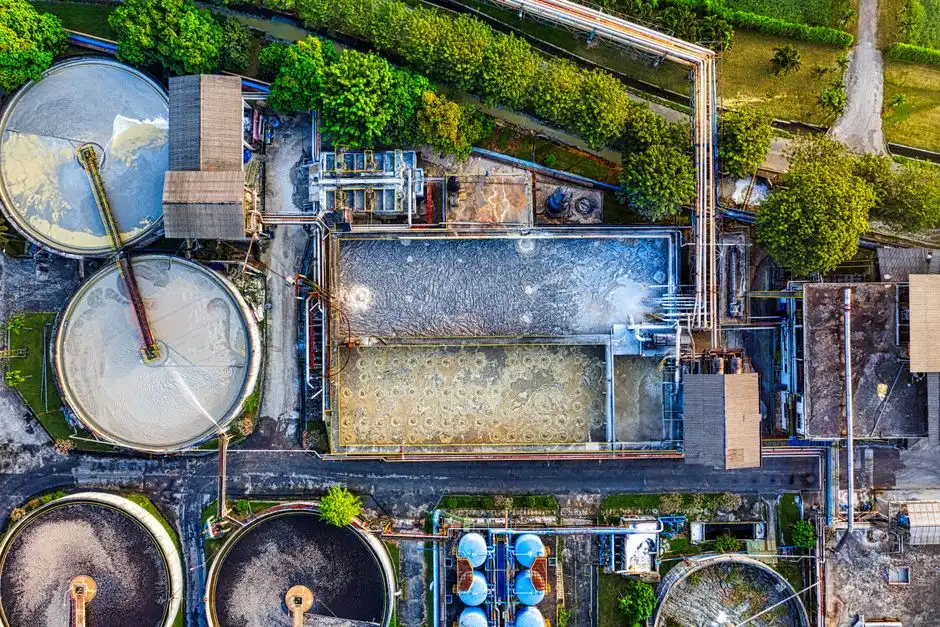
Two failure modes routinely trip up packaged STPs in housing projects: pathogens in the discharge and uncontrolled sludge buildup. Both must be designed in, not added on later. A cross-sectional study of peri-urban and rural communities in the La Paz River Basin (Journal of Water and Health, 2026) detected 16 of 21 tested enteric pathogens in mothers and children, with WASH conditions as the main explanatory variable; that finding makes disinfection non-optional in this basin. The World Bank blog reinforces the same point by noting that polluted La Paz River water is reused for irrigation with no restrictions, so any housing effluent that reaches a watercourse or a reuse line is a direct exposure pathway.
The disinfection stage inside the package should be specified as chemical-free or low-chemical to keep operator handling to a minimum. A pipeline UV sterilizer for the disinfection stage is the usual choice for the WSZ and MBR packages because it has no residual and a small footprint; on-site chlorine dioxide is the alternative when a residual is required for the reuse line. Whichever is chosen, the unit must be sized to peak flow, not average daily flow, because morning and evening pulses drive the worst-case coliform load.
Sludge handling is the second non-optional item. A plate and frame filter press for sludge dewatering is the standard step for housing projects of this size; a screw press is the smaller-footprint alternative. Either way, the developer must plan the biosolids end point: storage on site, documented hauling, and an authorized receiving facility, because the World Bank post identifies unregulated reuse as a current risk that the new strategy is meant to address. A GX series rotary mechanical bar screen at the headworks protects the biological stage and the dewatering press from rags and grit, which are common in residential collections.
Comparison matrix: which packaged STP class fits which housing profile
The table below is the section procurement will print out. It maps the three realistic configurations against the four variables that decide a housing award: capacity band, footprint and burial, reuse-endpoint suitability, and operator requirement. Use it as the final filter once the developer has fixed the population, the lot size, and the intended reuse.
| Configuration | Typical capacity | Footprint / burial | Reuse suitability | Operator requirement |
|---|---|---|---|---|
| WSZ underground A/O package | 1–80 m³/h | Fully buried; landscaped on top | Green-space irrigation only after disinfection | No dedicated operator; periodic inspection |
| Containerized MBR | 10–2,000 m³/day | Above grade or partially buried; 60% smaller than CAS | Toilet-flush reuse or restricted irrigation with disinfection | Periodic membrane cleaning and aeration service |
| Constructed wetland (Cochabamba data, context only) | Project-specific | Large land area; civil works | Coliforms do not meet unrestricted reuse; no TN removal | Wetland maintenance; not a packaged unit |
The WSZ underground A/O package sewage treatment plant is the right default for a La Paz housing project that needs to keep the lot free of above-grade equipment, has no reuse mandate beyond green-space irrigation, and cannot fund a dedicated operator. The containerized MBR system is the right choice when the developer wants reuse-grade effluent, has a smaller lot, and accepts the higher CAPEX and the membrane-service obligation. A wetland as the sole stage is ruled out by the Cochabamba evidence on coliforms and nitrogen.
Compliance and procurement checklist for La Paz housing in 2026
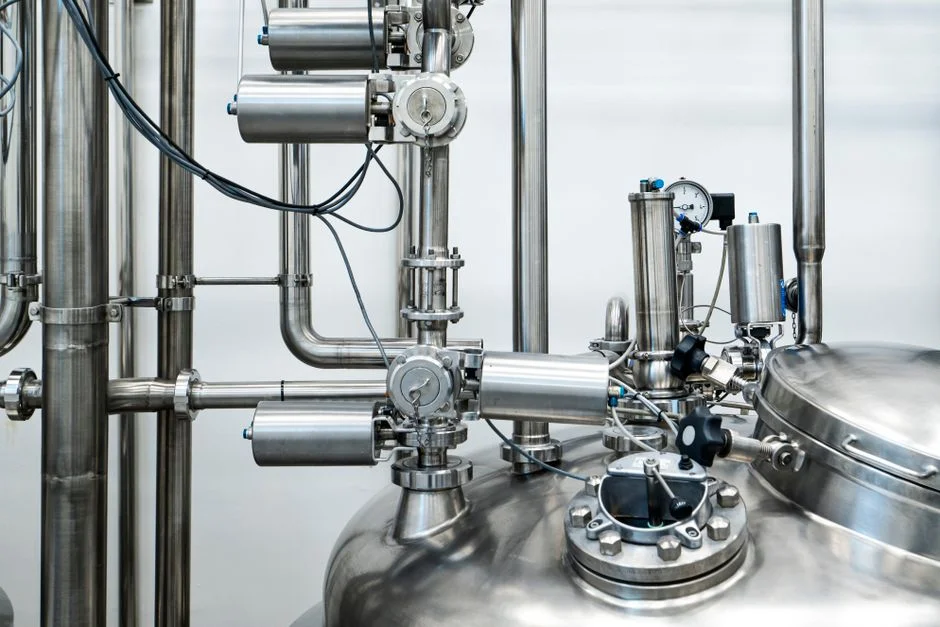
The technical recommendation above becomes useful only when it is converted into a procurement action list. The checklist below also names the gaps the supplied research could not fill, so the engineer knows which questions to take to the named Bolivian authority rather than assume the article has answered them.
| Step | Action | Owner |
|---|---|---|
| 1. Confirm effluent limits | Request the current applicable 2026 limit values from VAPSB/MMAyA and the NB 688 family before fixing the design | Consulting engineer |
| 2. Confirm central-plant hookup plan | Ask EPSAS or the municipality whether the project is on a future central WWTP route and design the package STP with a reuse-or-decommission path | Developer / consultant |
| 3. Request altitude-derating data | Ask the supplier for the blower kW, SOTE correction, and membrane aeration figures at the site elevation (La Paz basin ≈ 3,600 m) | Supplier / engineer |
| 4. Specify disinfection to peak flow | Size UV or chlorine dioxide to peak wet-weather flow, not average flow | Engineer |
| 5. Plan the biosolids end point | Specify a plate and frame filter press for sludge dewatering, storage volume, and a documented hauling contract to an authorized facility | Developer / operator |
| 6. Protect the headworks | Include a rotary mechanical bar screen ahead of the biological stage | Engineer |
Two items are intentionally left as confirmations rather than assumed values. First, the 2026 numeric effluent limits: the supplied research does not state them, so the engineer should request them in writing from VAPSB or MMAyA and treat the design as preliminary until that document is in hand. Second, the altitude derating factor: the research does not give a generic value, so the supplier's derating curve is the only defensible input. The compliance walkthrough for a related residential context is given in the domestic sewage process design reference for comparison.
Frequently Asked Questions
What size packaged STP do I need for a 500-home housing development in La Paz?
Size the unit from design population, per-capita flow, and peaking factor, then confirm the influent concentrations with sampling or with local data. The supplier will not give a defensible quote without those numbers, and the altitude derating must be applied to the aeration system for the site elevation. Request the supplier's SOTE-corrected blower and diffuser layout before the blower is fixed in the design.
What budget range should I plan for a packaged STP for a peri-urban housing project in La Paz?
The supplied research does not provide a price for packaged units in Bolivia, so the budget must be built from supplier quotations rather than an assumed range. Ask each shortlisted supplier for a budget price that separates the biological stage, the disinfection stage, the sludge dewatering press, and the headworks screen, so the developer can compare like with like and identify the largest cost drivers.
How do I choose between an A/O package plant and an MBR for a housing project in La Paz?
Choose A/O (WSZ class) when the lot must stay free of above-grade equipment, no reuse is planned beyond green-space irrigation, and no dedicated operator can be funded. Choose MBR when the developer wants reuse-grade effluent for toilet flushing or restricted irrigation, accepts higher CAPEX, and can fund periodic membrane service. The Cochabamba wetland data rules out a wetland-only design where coliforms or total nitrogen are in scope.
What compliance and supplier-selection risks should I flag before awarding the contract?
Two risks dominate. First, the 2026 effluent limits must be confirmed in writing with VAPSB or MMAyA because the supplied research does not state the numeric values; designing to assumed limits is a common cause of retrofit cost. Second, the supplier's altitude-derating evidence and the biosolids end-point plan should be requested as award conditions, because the World Bank post identifies unregulated reuse as a current risk that the housing project should not perpetuate.
Related Equipment
- DF-series submerged MBR flat-sheet module — specifications, capacity range, and technical data