Why Jefferson City EV and Auto Plants Are Asking the DAF-vs-Clarifier Question in 2026
Jefferson City, Missouri hosts a cluster of EV component, battery, stamping and tier-1 auto parts plants whose combined wastewater streams are unusually difficult to characterize. One line produces floatable paint overspray, the next pushes emulsified machining coolant, and a third generates a settled metal-hydroxide slurry from phosphate or nickel rinse-water precipitation. Plants rarely get to treat those streams separately, so a single primary clarifier has to handle floatables, emulsions, light machining fines, and heavy precipitated floc in the same basin. The same decision is being made at every neighboring facility as 2026 capex budgets close, which is why a Jefferson City engineer needs a stream-by-stream answer rather than a generic DAF explainer. For plants whose blended effluent is dominated by oils, paint, and light floc, a related EV/auto DAF-vs-clarifier guide for Georgetown walks through the same logic for a comparable Midwestern EV cluster.
Conventional gravity clarifiers and lamella plate settlers work by density-driven settling, so they underperform on light, oily, paint-bound solids that do not sink. DAF systems pressurize a recycle stream, saturate it with air, and release that pressure inside the flotation cell so 30–50 micron microbubbles nucleate, attach to flocculated particles, and lift them to the surface (Clearwater Industries, 2026-04). This mechanical match to low-specific-gravity solids is why DAF dominates primary pretreatment in most 2026 Jefferson City auto-plant retrofits. Clarifiers still win where the influent is genuinely settleable, such as precipitated metal sludges, but those streams are the exception in a paint-and-coolant-heavy auto shop, not the rule.
How DAF and Clarifiers Actually Remove Solids — and Why It Matters for Auto Wastewater
A DAF clarifier is a flotation device, not a settling device. Clean recycle water is pressurized with air in a saturation tank; when that saturated stream enters the open flotation cell, the pressure drop nucleates a cloud of 30–50 micron bubbles that attach to oil droplets, paint particles, and chemically flocculated solids. The bubble-particle agglomerate is buoyant, rises to the surface, and a paddle skimmer sweeps the float layer into a collection trough while clarified effluent exits below the sludge blanket (Clearwater Industries, 2026-04; SigmaDAF USA, 2026-04). Most DAF cells also include a bottom sediment compartment, so the unit tolerates a fraction of settleable solids without losing performance, which matters in an auto plant where stream composition drifts throughout a shift.
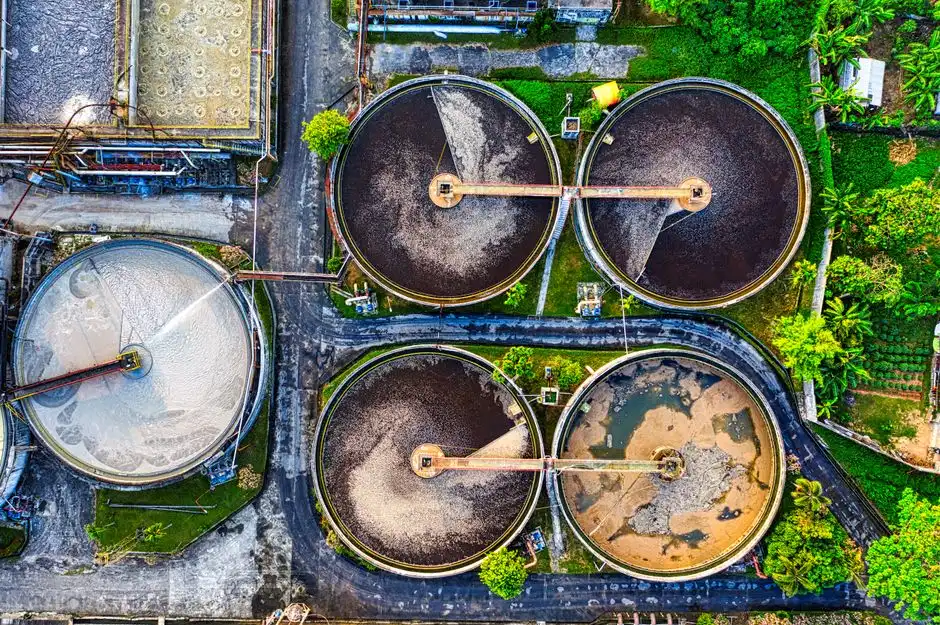
A conventional or lamella clarifier is a settling device. Solids are given residence time in a quiescent basin so gravity can pull them to the bottom, and inclined plate packs in a lamella design multiply the effective settling area to shorten the footprint. A DAF system for auto and EV wastewater is therefore mechanically the right tool for floatable, low-specific-gravity solids, while a lamella clarifier is mechanically the right tool for dense, settleable floc. This is why a properly run DAF holds retention on the order of 3 minutes for high-rate designs such as the Spracell-type units cited in the Clari-DAF literature, while a clarifier needs a much longer basin to deliver equivalent solids removal; that retention-time gap is the engineering reason a DAF plant is so much smaller than a clarifier plant at the same flow.
Both technologies depend on upstream coagulation and flocculation chemistry. The floc must be sized and strengthened so a swarm of microbubbles can attach without breaking it apart, which is why a coagulant and flocculant dosing skid with proper mix energy and contact time is treated as part of the DAF package, not an accessory (Clearwater Industries, 2026-04; SigmaDAF USA, 2026-04). A clarifier is more forgiving on floc strength but more sensitive to short-circuiting and density inversions, making a lamella design preferred when the stream is genuinely settleable.
DAF vs Clarifier: Head-to-Head Comparison for Auto/EV Wastewater
The table below summarizes the trade-offs a Jefferson City buyer should walk into a vendor meeting already understanding. The numbers come from the cited process data; the unit conventions differ because DAF and lamella clarifiers report loading in different ways, signaling that they are not equivalent ratings.
| Parameter | DAF clarifier | Lamella / conventional clarifier |
|---|---|---|
| Separation mechanism | Microbubble flotation (30–50 µm bubbles attach to floc) | Gravity settling, with inclined plates in lamella designs |
| Footprint vs conventional sedimentation | Up to 82.7% smaller (Clari-DAF, STEAM 2019) | Lamella is more compact than conventional; still larger than DAF for the same flow |
| Surface loading rate | Up to 20 gpm/ft² (50 m/hr) (Clari-DAF, STEAM 2019) | 20–40 m/h (HydropureWater High-Efficiency Sedimentation Tank spec) |
| Hydraulic retention | About 3 minutes for high-rate designs (Clari-DAF, STEAM 2019) | Longer residence time to allow settling |
| Sludge solids from unit | 2–5% (Clari-DAF, STEAM 2019); 2–3% in Spracell-type case data | Below 0.5% in conventional sedimentation (Clari-DAF, STEAM 2019) |
| Best-fit waste stream | Oils/greases, paint overspray, light machining fines, battery coating fines | Metal-hydroxide sludges from phosphate, nickel, zinc precipitation |
Two numbers in that table drive most of the capex conversation. The 82.7% footprint reduction relative to conventional sedimentation (Clari-DAF, STEAM 2019) translates directly into smaller building additions and lower civil cost on a brownfield Jefferson City site where floor space is already allocated. The 2–5% sludge solids from a DAF, compared with under 0.5% from a conventional clarifier (Clari-DAF, STEAM 2019), reduces the volumetric load on whatever dewatering step sits downstream — typically a sludge dewatering filter press — and that reduction feeds straight into polymer dose, press cycle time, and cake-haul cost.
The loading-rate column is easy to misread because the units are different. DAF at 20 gpm/ft² (50 m/hr) and a lamella clarifier at 20–40 m/h reflect different separation physics and influent assumptions. A buyer should treat the table as a directional comparison, then ask each vendor to size against the same influent characterization, footprint envelope, and discharge limit.
Matching the Technology to the Waste Stream in a Jefferson City Plant
The clearest way to choose is to stop thinking about the blended effluent and look at each unit process on its own. Paint booth wastewater — whether waterborne or overspray — is floatable, sticky, and low-density; clarifiers clog with floating paint, and DAF is the standard primary step in 2026 retrofits for that stream. Phosphate, nickel, and zinc rinse water downstream of a precipitation tank produces a heavy metal-hydroxide floc that settles readily, and a lamella clarifier for metal-hydroxide rinse sludges is typically chosen because DAF would over-aerate the floc and disrupt the sludge blanket.
Machining and grinding coolant rejects carry emulsified oils and light fines that a clarifier alone will not break; DAF after a chemical demulsification or break step is the usual configuration, with the DAF float capturing the released oil and the underflow handling the broken emulsion solids. EV battery cell rinses and black-mass handling fines sit between the two cases: a mixed floatable-and-settleable stream where DAF serves as the primary clarifier, with a polishing clarifier only if residual TSS still breaches the downstream target. In real Jefferson City plants most of these streams are blended upstream of primary treatment, which is why DAF dominates the primary step in 2026 — it tolerates the blended stream's worst-case spikes far better than a clarifier does.
The same logic carries over to neighboring sectors. A DAF vs clarifier guide for petroleum bulk plants reaches the same conclusion, and a 2026 pretreatment compliance playbook for transportation equipment plants shows the same DAF-first pattern in regions facing comparable NPDES pressure.
2026 Compliance, Sizing and Cost-Direction Considerations in Jefferson City
Jefferson City auto plants discharging to the municipal POTW in 2026 are typically working against O&G, TSS, and metals limits tight enough that a properly designed DAF is sized to meet them directly, while a clarifier in the same role usually needs a polishing step such as a sand filter or a moving-bed biofilm reactor to land the same numbers. The 82.7% footprint advantage cited for Clari-DAF (STEAM 2019) is often the difference between fitting the primary step inside an existing building envelope and triggering a structural expansion. Higher DAF sludge solids (2–5% per Clari-DAF, STEAM 2019) reduce the hydraulic and polymer load on the downstream sludge dewatering filter press, which is usually the next capex line item after the primary clarifier.
Before requesting quotes, a Jefferson City plant should pin down the design inputs that drive both technology choice and equipment sizing: design flow in m³/h, peak factor, influent O&G/TSS/metals characterization, available footprint envelope, available headroom, sludge-handling target, and discharge limits. Without that pack, a vendor cannot defend a DAF or lamella recommendation with anything more than a budgetary range. These inputs also let a buyer compare two competing DAF vendors on equal terms, as differences between them usually show up in air-saturation efficiency, skimmer design, and sludge consistency at the same flow and loading rate.
On cost direction, the consistent pattern in the cited data is that DAF carries a higher unit equipment cost than a lamella clarifier at the same flow, but a lower total installed cost once the smaller building footprint, shorter retention basin, and higher sludge solids are priced in. A buyer who only compares the equipment line item will reach the wrong answer; a buyer who prices footprint, civil, and downstream dewatering together will usually see the DAF total installed cost at or below the clarifier total for an auto-shop influent.
Frequently Asked Questions
What is the biggest reason a Jefferson City EV/auto plant should pick a DAF over a clarifier in 2026?
The dominant waste streams in an auto or EV plant — paint overspray, oils and greases, light machining fines, and battery electrode coating fines — are low-specific-gravity and floatable, not settleable. DAF uses 30–50 micron microbubbles to lift those particles to the surface (Clearwater Industries, 2026-04; SigmaDAF USA, 2026-04) and, per the Clari-DAF paper (STEAM 2019), achieves up to 82.7% footprint reduction and 2–5% sludge solids compared with under 0.5% for conventional sedimentation. A clarifier only wins where the influent is genuinely settleable, such as precipitated metal sludges.
How much budget should a Jefferson City plant set aside for a DAF system in 2026?
There is no defensible price range in the cited research; equipment cost varies with flow rate, material of construction (304SS vs 316SS vs polypropylene), sludge-handling target, and whether the skid is a standard Compact DAF or a custom multi-skid build (SigmaDAF USA, 2026-04). A buyer should request quotes only after assembling the design-input pack from the previous section, then ask
Frequently Asked Questions
Should a Jefferson City EV or auto parts factory choose a DAF or a clarifier in 2026?
The choice depends on the specific contaminants in your wastewater stream. For EV battery production and auto parts manufacturing, Dissolved Air Flotation (DAF) is generally superior for removing emulsified oils, greases, and low-density suspended solids common in machining coolants and lubricants. If your process wastewater contains high concentrations of heavy metals or dense inorganic particulates, a conventional gravity clarifier or lamella settler is often more effective at achieving the sedimentation required to meet local Jefferson City municipal pretreatment standards.
How much smaller is a DAF system compared to a conventional clarifier for the same flow?
A DAF system typically requires 50% to 75% less physical footprint than a conventional circular gravity clarifier designed for the same hydraulic loading rate. Because DAF units utilize micro-bubbles to float particles to the surface rather than relying on gravity to settle them, they can operate at hydraulic loading rates of 2 to 4 gallons per minute per square foot (gpm/ft²), compared to the 0.5 to 1.0 gpm/ft² typical of conventional settling tanks.
When does a lamella clarifier outperform a DAF in automotive wastewater treatment?
A lamella clarifier outperforms a DAF when the wastewater stream has a high concentration of settleable solids with a specific gravity significantly greater than water (SG > 1.2), such as metal fines, grinding swarf, or sand. DAF systems struggle with high-density solids that do not respond well to air-bubble attachment. Additionally, if the wastewater does not contain significant amounts of FOG (fats, oils, and grease), the added operational complexity and power consumption of a DAF air-saturation system provide no technical advantage over the passive gravity separation of a lamella plate pack.
What design information do I need to size a DAF for an auto plant in Jefferson City?
To properly size a DAF, you must provide the peak hourly flow rate (gpm), the concentration of total suspended solids (TSS) in mg/L, the oil and grease content, and the specific gravity of the contaminants. Furthermore, you must conduct jar testing to determine the optimal coagulant and flocculant dosages, as these chemicals directly impact the air-to-solids ratio required for efficient floatation. Local temperature variations in Jefferson City should also be accounted for, as water viscosity affects the rise velocity of the bubbles.
What sludge-solids percentage can a DAF achieve compared to a gravity clarifier?
A DAF system can typically produce a float sludge with a solids concentration ranging from 3% to 5%, whereas a conventional gravity clarifier usually produces underflow sludge at 0.5% to 2% solids. The inherent thickening action of the rising air bubbles in a DAF unit results in a significantly drier sludge, which reduces the volume of waste requiring transport and lowers the operational costs associated with mechanical sludge dewatering equipment like filter presses or centrifuges.