Why Confectionery Wastewater Demands Dissolved Air Flotation
Candy, chocolate, and caramel lines discharge fats, oils and grease (FOG), cocoa and milk solids, and emulsified shortening that have densities at or below water — they float, they do not settle, which is precisely why dissolved air flotation has become the default primary treatment across the broader food and beverage sector (Ecologix, S1; Hixson, S5). Confectionery effluent is harder than the average food plant stream because soluble sugars drive biochemical oxygen demand (BOD) into a range that no clarifier can address without chemical conditioning, and because the same line swings from hot kettle discharge to cold clean-in-place (CIP) rinse within a single shift (Hixson, S5).
That temperature swing — combined with sugar-driven stickiness and caramelization fouling on tank walls — rules out gravity clarification and forces an upstream coagulant, flocculant, and pH-adjust program to make particles buoyant enough for bubble attachment (Hixson, S5; Clearwater, S4). DAF outperforms sedimentation of equivalent surface area on these streams and produces a thicker float blanket that dewateres more cheaply downstream in a plate-and-frame filter press (Hixson, S5; Clearwater, S4).
The practical consequence for a 2026 spec is that a candy or chocolate plant cannot copy a municipal or dairy DAF datasheet. Sugar solubility, cocoa-solids carryover, and the batch-versus-continuous flow pattern of confectionery lines push both the hydraulic and the air-to-solids envelopes off the generic industrial curve, and the system has to be engineered around treatability data from the actual stream (Hixson, S5).
How a DAF System Treats Confectionery Effluent Step by Step
DAF systems process confectionery effluent through a series of physical and chemical conditioning stages designed to maximize particle buoyancy.
- Pre-screening. A rotary mechanical bar screen or hydrocyclone removes wrapper lint, cocoa nibs, and sugar crystals upstream so they never reach the saturator or mix tanks (Kemco, S2).
- pH adjustment. Acid or caustic is dosed to the target band; pH control is automated with an in-tank sensor and metering pumps because discharge-pH excursions carry fine and permit risk (Kemco, S2).
- Coagulation and flocculation. Coagulant and polymer flocculant are injected through an automatic chemical dosing skid, mixed either in flocculation tubes (15–45 s flash mix) or in impeller-agitated mix tanks for longer contact time. Jar testing on the actual confectionery stream confirms the dose and the contact sequence (Kemco, S2; Clearwater, S4).
- Saturator pressurization. A recirculation pump takes clarified effluent, pressurizes it to 4–6 bar (58–87 psi), and dissolves compressed air into it in a retention tank or packed column — a direct application of Henry's Law (Hixson, S5).
- Microbubble release and flotation. Pressure-reducing valves or nozzles discharge the saturated stream into the flotation tank; dissolved air nucleates as 30–50 µm bubbles (typical 10–100 µm range), attaches to flocculated FOG, cocoa, and sugar-protein colloids, and lifts them to the surface (Hixson, S5; Clearwater, S4).
- Skimming. A chain-and-flight or spiral-screw skimmer (food-grade stainless preferred in confectionery service) sweeps the float blanket into a collection trough (Hixson, S5; Clearwater, S4).
- Clarified effluent and float handling. Clarified water exits below the float for downstream biological polishing or reuse; float sludge is pumped to a plate-and-frame filter press for dewatering before disposal (Kemco, S2).
Key Design Parameters for a Confectionery-Grade DAF
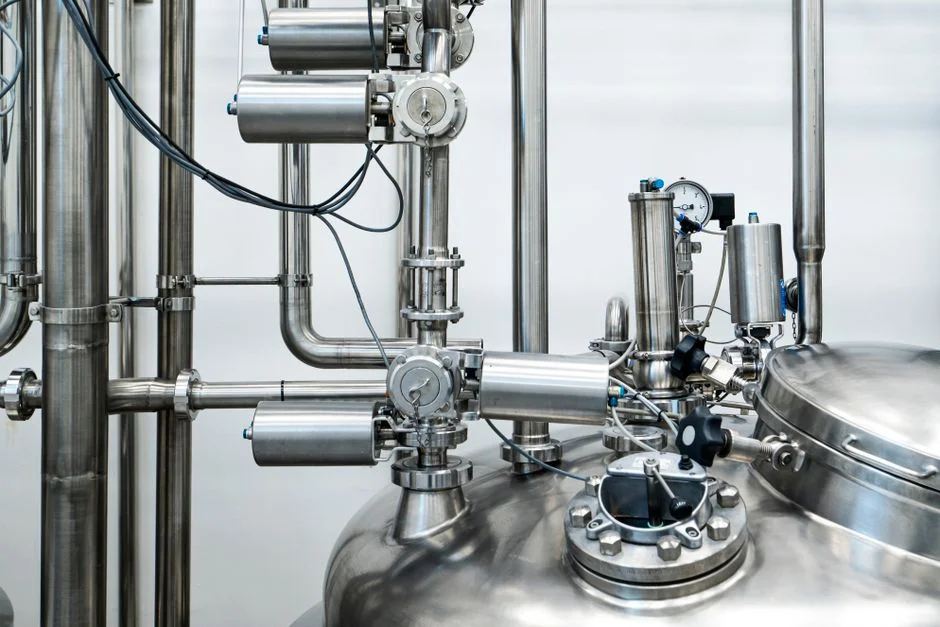
Design starts with a complete wastewater characterization — flow, TSS, FOG, BOD/COD, pH, and temperature — followed by bench-scale jar testing, because textbook air-to-solids values do not transfer to a sugar-laden, high-temperature stream (Hixson, S5). These parameters separate a defensible bid from a generic one.
| Parameter | Engineering target / range | Confectionery-specific note |
|---|---|---|
| Hydraulic surface loading rate | Design flow ÷ tank plan area (gpm/ft² or m/h) | Peak flow governs; average-flow sizing leaves no margin for batch CIP surge (Hixson, S5) |
| Recycle ratio | 15–50% of influent for standard industrial DAF | Add recycle flow to total hydraulic load; high-rate lamella configurations may adjust (Hixson, S5) |
| Air-to-solids (A/S) ratio | 0.005–0.200 lb air/lb solids across published industrial applications | Must be confirmed by jar testing on actual confectionery effluent (Hixson, S5) |
| Saturator pressure | 4–6 bar (58–87 psi) | Must hold setpoint across hot kettle to cold CIP temperature swings (Hixson, S5) |
| Microbubble size | 10–100 µm range, 30–50 µm design average | Smaller, more uniform bubbles improve adhesion on sticky FOG (Hixson, S5; Clearwater, S4) |
| Material of construction | 304 or 316L stainless for food-grade / high-FOG service | Coated carbon steel acceptable only for non-corrosive streams (Hixson, S5) |
| Skimmer type | Spiral-screw common in food-grade service | Chain-and-flight for continuous high-volume; vacuum for drier float (Hixson, S5) |
| Tank geometry | Cross-flow, high-rate (lamella), or compact circular | High-rate DAF reduces footprint where floor space is constrained (Hixson, S5) |
Removal Targets and Pretreatment Compliance
Total suspended solids (TSS) removal falls in the 92–97% range across published food and beverage DAF deployments, with proportional FOG capture and a meaningful fraction of BOD removed with the float (HydropureWater DAF product data, S6; Clearwater, S4). DAF is a primary, physical-chemical step — undersizing it forces extra TSS and FOG onto the downstream biological stage (MBBR or activated sludge), raises OPEX, and increases the risk of a permit exceedance (Hixson, S5).
| Effluent objective | Role of the DAF stage | What the buyer must confirm |
|---|---|---|
| Municipal sewer discharge (US) | Meets BOD, TSS, and pH pretreatment limits at the sewer discharge point | Applicable category under 40 CFR Part 405 (sugar processing) and any local sewer-use ordinance limits |
| Biological polishing | Protects MBBR / activated sludge from FOG and TSS overload | Target FOG and TSS to the biological stage based on jar test data (Hixson, S5) |
| Water reuse (RO / UF feed) | Removes the bulk of FOG, TSS, and colloidal load ahead of membranes | Reuse-quality envelope must be defined after DAF so flotation is sized to that envelope (HydropureWater UF/RO product data) |
Sugar processing facilities are regulated under 40 CFR Part 405, and DAF is the conventional compliance technology for meeting BOD, TSS, and pH pretreatment limits at the discharge point. A buyer should confirm the specific subcategory applicable to the plant and align the DAF removal targets with both the federal limit and any local sewer-use ordinance.
Choosing a DAF Supplier in 2026: Engineering Criteria That Matter
A 2026 procurement decision on a HydropureWater DAF system — or any qualified vendor — should be made on engineering evidence, not on price per square meter of tank. The matrix below is the checklist to bring into vendor evaluation meetings.
| Selection criterion | What to require from the vendor | Why it matters for a confectionery plant |
|---|---|---|
| Wastewater characterization and jar testing | On-site sampling plus bench-scale treatability study before final design (Hixson, S5) | Sugar, cocoa, and shortening streams do not match textbook A/S values; jar testing is mandatory (Hixson, S5) |
| Saturator and microbubble package | 4–6 bar pressure rating; 30–50 µm average bubble size guarantee; documented turndown for CIP surge (Hixson, S5; Clearwater, S4) | Hot-to-cold swing and batch surges are normal; saturator must hold setpoint across the full range (Hixson, S5) |
| Material of construction | 304 / 316L stainless documented for food-grade and high-FOG service (Hixson, S5) | Coated carbon steel is acceptable only for less aggressive service and adds maintenance burden (Hixson, S5) |
| Skid integration and controls | Pre-assembled turnkey skid with PLC, sensors, chemical dosing, and skimmer controls (Clearwater, S4) | Reduces installation risk for plants with limited on-site engineering staff (Clearwater, S4) |
| Capacity envelope | Coherent model range covering 4–300 m³/h so future expansion does not require a full redesign (HydropureWater DAF product data, S6) | Confectionery capacity additions are common; staying within one vendor's envelope protects CAPEX continuity (HydropureWater, S6) |
| Lifecycle-cost transparency | Annual chemical OPEX line item; chemical OPEX for a mid-sized food plant DAF can run $50,000–$150,000 per year (Hixson, S5) | OPEX belongs in the CAPEX conversation from day one — not as an afterthought (Hixson, S5) |
For cross-referencing lifecycle economics, the DAF operating cost OPEX breakdown and the best DAF unit engineering decision framework lay out the OPEX categories a buyer should expect. The DAF system for beverage wastewater and DAF system for distillery wastewater guides are useful for sanity-checking saturator and skimmer selection against comparable F&B installations.
Frequently Asked Questions
What is the realistic cost range for a confectionery-grade DAF system in 2026?
Total project cost varies significantly with system capacity, materials of construction, wastewater loading, and project scope; publicly available price ranges rarely account for the site variables that most affect final cost (Hixson, S5). A defensible 2026 budget request must be built from a site-specific engineering evaluation, not a catalog price. Chemical OPEX for a mid-sized food plant DAF can run $50,000–$150,000 per year (Hixson, S5). The actionable buyer check is to require every bidder to submit both CAPEX and a year-one OPEX line item — chemical dose, polymer consumption, saturated-water recirculation energy, and sludge hauling — before price comparison.
Which DAF suppliers should a confectionery plant evaluate, and how do I compare them?
Compare vendors on engineering criteria: documented wastewater characterization and bench-scale jar testing, a saturator rated for 4–6 bar with a 30–50 µm bubble guarantee, 304 / 316L stainless construction for food-grade and high-FOG service, and a coherent model range so a future capacity expansion does not require a full redesign (Hixson, S5; Clearwater, S4; HydropureWater, S6). Ask each vendor for a reference installation on a comparable F&B stream and
Frequently Asked Questions
What is the right DAF system for a confectionery wastewater treatment plant?
The optimal DAF system for confectionery facilities is a circular or rectangular unit equipped with integrated flocculation tanks and high-shear dissolved air saturation systems. Because candy wastewater contains high concentrations of emulsified sugars, oils, and fats, a system utilizing micro-bubble technology (bubble sizes between 10-50 microns) is essential to maximize particle attachment and buoyancy.
Systems featuring automated chemical dosing stations for coagulants like ferric chloride and flocculants like anionic polymers are standard. For facilities handling high-viscosity chocolate waste, a DAF system with a robust sludge scraping mechanism and a conical bottom for heavy solid removal is required to prevent sedimentation and organic buildup.
How much does a DAF system for a candy or chocolate factory cost in 2026?
In 2026, a fully commissioned industrial DAF system for a confectionery plant typically ranges from $150,000 to $650,000, depending on hydraulic capacity and automation level. This estimate covers the DAF unit, air saturation pumps, chemical dosing skids, and basic control panels, but excludes civil works, piping, and secondary sludge dewatering equipment.
Operating expenditures (OPEX) should be budgeted at approximately $0.80 to $1.50 per cubic meter of treated water. This accounts for polymer consumption, electricity for saturation pumps, and the disposal of high-BOD sludge, which is significantly more expensive than standard municipal sewage due to the high organic load typical of sugar-based production.
How do you size a DAF for a confectionery plant with batch CIP surges?
Sizing for Clean-in-Place (CIP) surges requires a dual-approach: integrating a large equalization (EQ) tank and applying a conservative surface overflow rate (SOR). The EQ tank must be sized to hold at least 1.5 times the maximum volume of a single CIP discharge cycle to dampen pH and temperature spikes that would otherwise destabilize the DAF flocculation process.
Engineers typically size the DAF unit based on the peak hourly flow rate rather than the average daily flow. A loading rate of 3 to 6 m³/m²/h is generally recommended for confectionery applications. This ensures the hydraulic retention time (HRT) remains sufficient to allow for the complete separation of sugars and fats, even when incoming concentrations reach 5,000–10,000 mg/L of BOD during peak discharge periods.
What removal rates can a DAF achieve for FOG, TSS, and BOD in a candy plant?
When optimized with correct chemical conditioning, a DAF system can achieve removal rates of 90-98% for Fats, Oils, and Grease (FOG) and 85-95% for Total Suspended Solids (TSS). These high removal rates are critical for meeting municipal discharge surcharges or protecting downstream biological treatment stages.
Biological Oxygen Demand (BOD) removal is typically in the range of 50-70% for confectionery waste. Because much of the sugar content in candy wastewater is dissolved, the DAF primarily removes the particulate and emulsified organic fraction. Achieving higher BOD removal requires subsequent biological treatment (such as an MBR or UASB reactor) to address the remaining soluble sugar load.
How do I select a DAF supplier for a sugar-confectionery facility — what engineering criteria matter most?
Selection should be based on the supplier's ability to provide a pilot-scale study specifically using your plant's effluent, as sugar-laden wastewater is prone to rapid acidification and fermentation. Evaluate suppliers based on their expertise in materials of construction; 316L stainless steel is mandatory for wetted parts to resist the corrosive nature of acidic CIP cleaners and high-sugar environments.
Key technical criteria include the availability of automated PLC integration with your plant’s existing SCADA system, the efficiency of the air saturation system (targeting a 5-8% air-to-solids ratio), and the supplier's track record in managing high-viscosity sludge. Ensure the supplier provides documented performance data on similar high-BOD, high-TSS confectionery projects rather than generic food-grade experience.