The Three-Layer Compliance Stack for Chemical Plants Near Dolton
Chemical plants near Dolton, Illinois, meet pretreatment limits by satisfying three nested compliance layers before any wastewater reaches the sanitary sewer. First, they apply the EPA categorical pretreatment standards at 40 CFR Chapter I, Subchapter N, Parts 405-471, which set pollutant-specific discharge limits for chemical-manufacturing categories. Second, they comply with the receiving POTW's site-specific local limits, developed under 40 CFR Part 403.5(c) to prevent pass-through (40 CFR 403.3(p)) and interference (40 CFR 403.3(k)) at the publicly owned treatment works. Third, they meet State of Illinois pretreatment standards codified in 35 Ill. Adm. Code and the conditions of their individual wastewater discharge permit. Compliance is verified at an approved monitoring manhole on the building sewer, where Daily Maximum Limits are calculated as the arithmetic average of all measurements taken that day for concentration-based limits.
The federal layer is the floor. EPA's pretreatment program at 40 CFR Part 403 sets the rules for any source of indirect discharge, and Parts 405-471 layer categorical pollutant limits on top for specific chemical industries. The POTW layer is the wall around that floor. According to EPA's pretreatment standards guidance, local limits are "site-specific and can be numeric or narrative effluent discharge limits, including BMPs," and the agency "can enforce local limits that are developed and approved in accordance with 40 CFR Part 403.5(c) as pretreatment standards." When a POTW such as the Metropolitan Water Reclamation District of Greater Chicago (MWRDGC) writes a local limit into an industrial user's discharge permit, EPA can step in if the user violates it.
The state layer is the ceiling that often tightens the room. Illinois pretreatment rules, codified in 35 Ill. Adm. Code, and the Illinois EPA's oversight add reporting, notification, and procedural duties on top of the federal framework. A chemical plant that treats only to the categorical ceiling will still fail if its building-sewer effluent exceeds the MWRDGC local limit, and a plant that hits the local limit can still fail an Illinois-side audit. Treating these as three independent checklists is the single most common root cause of pretreatment noncompliance. Plants must execute these layers in a specific order, as detailed in the broader 2026 industrial effluent discharge guidelines framework.
Classify Your Discharge: IU, SIU, CIU, NSRU and Why It Changes Everything
An Industrial User (IU) is defined in 40 CFR 403.3(j) as a source of indirect discharge. A Categorical Industrial User (CIU) is an IU subject to categorical pretreatment standards in 40 CFR Chapter I, Subchapter N, Parts 405-471, which includes nearly every chemical-manufacturing facility discharging process wastewater to a sanitary sewer. Classification drives monitoring manhole requirements, BMR submission, self-monitoring frequency, and the permit conditions the POTW will write. Getting the classification wrong at the front end is the most expensive mistake a chemical plant can make, as it leads to incorrect sampling locations and invalid compliance demonstrations.
Significant Industrial User (SIU) status is triggered when process wastewater makes up 5% or more of the WWTP's average dry weather hydraulic or organic capacity, or when other criteria in 40 CFR 403 apply, including categorical compliance history. Non-Significant Regulated User (NSRU) and Non-Significant Categorical Industrial User (NSCIU) classifications carry reduced monitoring and reporting duties. Under the MWRDGC's sewer-use ordinance model, "if the User is classified as an SIU or an NSRU, the User shall install a monitoring manhole or sampling chamber for use as the Local Limits regulatory sampling location along the Building Sewer." CIUs must install an analogous structure for the categorically regulated discharge.
Once the classification is set, the daily compliance calculation is fixed. Per the Itasca sewer-use ordinance language that mirrors MWRDGC's framework, "if Daily Maximum Limits are expressed in terms of a concentration, the daily Pollutant Discharge is the arithmetic average of the Pollutant concentration derived from all measurements taken that day. Where Daily Maximum Limits are expressed in units of mass, the daily Pollutant Discharge is the total mass Discharged over the course of a calendar day." A grab sample that is in spec does not protect the plant if the arithmetic average across the day is not. The summary table below maps each user class to its primary obligations.
| User Class | Definition Basis | Monitoring Manhole Required? | Key Reporting Trigger |
|---|---|---|---|
| IU | Any source of indirect discharge, 40 CFR 403.3(j) | If discharging separate building-sewer line | Permit application, change notifications |
| CIU | Subject to 40 CFR Parts 405-471 categorical standards | Yes, for categorically regulated discharge | Baseline Monitoring Report (BMR) |
| SIU | ≥5% of WWTP hydraulic/organic capacity or 40 CFR 403 criteria | Yes, as Local Limits sampling location | Self-monitoring on permit schedule, SNC tracking |
| NSRU / NSCIU | Non-Significant per Coordinator determination | Yes, if designated by Coordinator | Reduced self-monitoring cadence |
Build the Site-Specific Compliance Picture Before You Buy Equipment
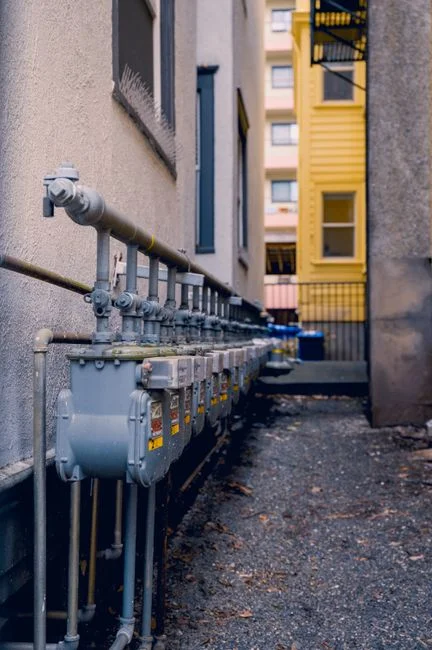
The right equipment train cannot be selected until the compliance picture is complete. The data the POTW and IEPA will demand must be in hand first, because every pollutant not characterized in the application becomes a permit limit the plant cannot prove it can meet. Begin with a process-by-process wastewater inventory that documents flow rates, pH, temperature, and the pollutant categories that map to the applicable 40 CFR Parts 405-471 categorical tables. Then submit a Baseline Monitoring Report (BMR) for any CIU and a permit application describing water usage, wastewater characteristics, processes, and points of discharge to the building sewer.
Identify pollutants of concern and calculate maximum allowable loadings using EPA's local-limits development guidance before the POTW sets the plant's permit limits. The EPA pretreatment program page states the guidance "includes how to calculate maximum allowable loadings, collect and analyze data, design and implement local limits, determine pollutants of concern, and perform annual reviews and periodic reevaluations of local limits." Running that calculation internally gives a chemical plant leverage in permit negotiations and exposes the gap between raw wastewater and the discharge permit before the equipment is purchased.
Document slug control and spill prevention explicitly. The MWRDGC-style sewer-use ordinance defines a slug as "any non-routine or episodic Discharge of liquid waste, including but not limited to an accidental spill or a non-customary Batch Discharge, at a flow rate or containing a Pollutant concentration that could cause a violation of the Prohibited Discharge Standards in Section 51.302." A slug event can violate Section 51.302 Prohibited Discharge Standards even if average daily limits are met, and the response posture is treated as part of the permit. Confirm sampling methods in writing: mg/L is the standard reporting unit, with results tied to the Method Detection Limit (MDL) and Practical Quantification Limit (PQL) so that "Detected Not Quantifiable" or "Not Detected" findings survive an inspector's review.
Choosing a Pretreatment Equipment Train That Actually Hits Local Limits
Selection logic follows the compliance picture, not the reverse. Equalization is the first unit operation for any chemical plant: it dampens slug loads, stabilizes pH, and prevents a single batch from violating the daily-maximum arithmetic-average rule. Without adequate equalization, downstream chemistry cannot be controlled because influent concentration is moving too fast for any feedback loop to hold a setpoint. The EQ basin also serves as the slug-control workhorse that the permit requires.
After equalization, pH adjustment and chemical precipitation target metals and inorganics commonly regulated under 40 CFR Parts 405-471 categorical tables. Treat these before any biological or membrane step, because metals precipitation requires precise pH windows and residual metals will foul membranes and disrupt activated sludge at the POTW. The automatic chemical dosing system must deliver PLC-controlled injection of coagulants, flocculants, and pH adjusters, because under- or over-dosing will show up at the regulatory monitoring manhole and in the daily arithmetic average.
Following chemistry, a dissolved air flotation system removes suspended solids, oil and grease, and colloidal matter that would otherwise pass through to the POTW and cause interference under 40 CFR 403.3(k). Filtration, ultrafiltration, or activated-carbon polishers are added only when residual pollutants threaten the POTW's local limits for that specific industrial user. The effluent at the building-sewer monitoring manhole is the legal compliance point, so the train must be designed so that the most stringent of federal categorical, local-limit, and permit-condition thresholds is met there. A useful cross-reference is the DAF vs clarifier decision guide for chemical wastewater, which helps justify DAF selection when the influent is emulsified or low-density.
| Unit Operation | Target Pollutants / Function | Position in Train | Compliance Driver |
|---|---|---|---|
| Equalization basin | Flow, pH, load swings | First | Daily-maximum arithmetic-average rule; slug control |
| pH adjustment / chemical precipitation | Metals, inorganics from 40 CFR Parts 405-471 | Second | Categorical standards and local limits |
| Dissolved Air Flotation | Suspended solids, oil & grease, colloids | Third | Interference prevention at 40 CFR 403.3(k) |
| Filtration / UF / activated carbon | Residual regulated organics, trace metals | Polishing | Site-specific local limits for that IU |
Sampling, Reporting, and the 2026 Compliance Calendar
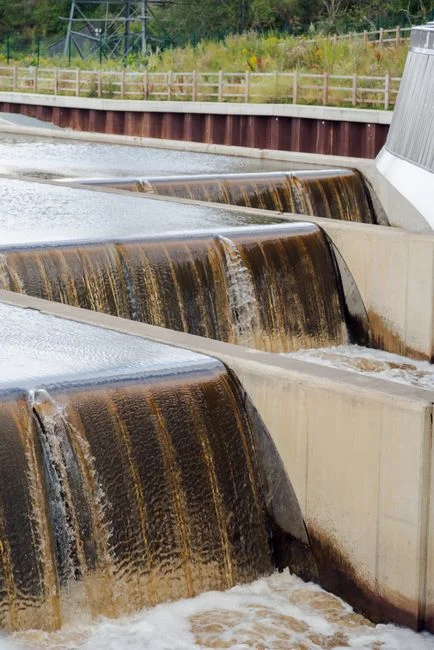
Self-monitoring frequency is set by the discharge permit and the user's SIU/CIU status; results are reported on the schedule the POTW pretreatment coordinator requires. Significant Noncompliance (SNC) must be tracked and reported because it is a published status and can trigger escalated enforcement under 40 CFR 403. Hazardous Waste Notification under RCRA may apply to certain chemical-plant waste streams regardless of the discharge concentration, and an IU cannot rely on dilution to bring a listed waste under a threshold. All users must meet the most stringent applicable requirements at all times, with no averaging, blending, or dilution in lieu of treatment. Local limits are subject to annual review and periodic reevaluation by the POTW, so a treatment train sized for today's permit may need adjustment in 12-24 months. The operational rhythm of self-monitoring, BMR updates, and SNC tracking is covered in the environmental compliance reference for wastewater plants and applies symmetrically to chemical plants near Dolton.
Frequently Asked Questions
What CAPEX range should a chemical plant near Dolton budget for a pretreatment system that meets MWRDGC local limits?
CAPEX depends on flow, pollutant load, and the local-limit values in the user's individual discharge permit. The actionable check is to request a written categorical and local-limit applicability memo from the pretreatment coordinator before any equipment is specified, then scope the train against that memo rather than a generic flow rate. Plants that skip the memo typically pay twice, once for under-sized chemistry and again for retrofit.
How do I evaluate a pretreatment equipment supplier for a 2026 installation?
Confirm the supplier will size the unit operations against a written local-limit and 40 CFR Parts 405-471 categorical applicability memo, not a generic flow figure. Ask for references on chemical-plant installations in EPA Region 5 with verifiable building-sewer monitoring manhole data, and for documentation that the PLC control logic records the grab samples used in the daily arithmetic-average calculation. A supplier that cannot explain how its equipment will demonstrate compliance at the regulatory sampling location is the wrong supplier.
What is the difference between pass-through and interference, and which one matters more for a chemical plant?
Pass-through under 40 CFR 403.3(p) is a discharge that exits the POTW into waters of the United States in quantities or concentrations that cause a violation of the POTW's NPDES permit. Interference under 40 CFR 403.3(k) inhibits or disrupts the POTW, its treatment processes or operations, or its sludge processes. Both matter,