
Why Panama City Pulp and Paper Mills Face a Two-Layer Pretreatment Regime
A paper mill discharging to a Bay County, Florida POTW is regulated by the EPA's categorical rule and the local sewer-pretreatment program. The federal layer is 40 CFR Part 430 — the Pulp, Paper and Paperboard Effluent Guidelines — which EPA first promulgated in 1974 and 1977, amended in 1982 and 1986, and substantially revised with a major toxic-pollutant amendment in 1998 (epa.gov). That rule is incorporated into NPDES permits for direct dischargers and into permits or other control mechanisms for indirect dischargers, which is the language EPA uses to direct mills to the local pretreatment program (epa.gov).
The local layer is 40 CFR Part 403, the General Pretreatment Regulations. Under 40 CFR Part 403, the POTW sets local sewer-use limits, issues discharge permits, runs a self-monitoring program, and carries enforcement authority ranging from surcharges to permit revocation. Local limits are commonly tighter than the categorical rule for parameters that affect the municipal plant — pH, sulfides, oil and grease, zinc, phenolics — because the POTW is protecting its own biomass and sludge quality. The 1978 EPA National Enforcement Investigations Center (NEIC) evaluation of the Port St. Joe, Florida WWTP is the documented local example: it reviewed NPDES compliance, self-monitoring, and laboratory procedures at a plant receiving wastewaters from St. Joe Paper Company and Sylvachem (tall oil), and explicitly referenced the proposed discharge of International Paper Company's Panama City mill to the Bay County WWTP in Panama City, Florida (nepis.epa.gov). This historical record serves as the geographic anchor for this article.
The 40 CFR Part 430 Subcategory Map for a Panama City Mill
Identifying the applicable 40 CFR Part 430 subcategory is required to determine which regulated pollutants and limits apply to a specific mill (epa.gov). EPA's rule text names the following subcategories:
| Subcategory letter | Description (per 40 CFR Part 430) |
|---|---|
| A — Dissolving Kraft | Dissolving pulp at kraft mills. |
| B — Bleached Papergrade Kraft and Soda | Market pulp at bleached kraft mills; paperboard, coarse paper, and tissue at bleached kraft mills; pulp and fine papers at bleached kraft mills; pulp and paper at soda mills. |
| C — Unbleached Kraft | Pulp and paper at unbleached kraft mills, including linerboard or bag paper, the unbleached kraft–neutral sulfite semi-chemical (cross-recovery) process, and combined unbleached kraft and semi-chemical mills. |
| D — Dissolving Sulfite | Pulp at dissolving sulfite mills (nitration, viscose, cellophane, acetate grades); calcium, magnesium, or sodium-based pulps; ammonium-based pulps; specialty grade pulps. |
| E — Papergrade Sulfite | Pulp and paper at papergrade sulfite mills using blow-pit pulp washing, and pulp and paper at papergrade sulfite mills using vacuum or pressure drum washing. |
| F — Semi-Chemical | Pulp and paper at semi-chemical mills using an ammonia base or a sodium base. |
| G — Mechanical (Groundwood / Chemi-Mechanical / Thermo-Mechanical) | Groundwood chemi-mechanical mills; groundwood thermo-mechanical mills; groundwood mills producing pulp and coarse paper, molded pulp products, and newsprint; groundwood mills producing pulp and fine paper. |
| H — Non-Wood Chemical Pulp | Pulp and paper at non-wood chemical pulp mills. |
| I — Deink | Pulp and paper at deink mills, including fine papers, tissue papers, and newsprint. |
| J — Wastepaper (Paperboard / Tissue / Molded / Builders' Paper) | Paperboard from wastepaper (noncorrugating or corrugating medium); tissue from wastepaper without deinking; molded products from wastepaper; builders' paper and roofing felt from wastepaper. |
| K — Fine and Lightweight Papers from Purchased Pulp | Fine papers and lightweight papers at non-integrated mills (wood or cotton fiber furnish); lightweight electrical papers at non-integrated mills. |
| L — Tissue, Filter, Non-Woven, and Paperboard from Purchased Pulp | Tissue, filter and non-woven papers, and paperboard at non-integrated mills. |
Two practical notes apply to the Panama City area. First, the regulated pollutant list varies by subcategory, so a kraft mill and a recycled-fiber tissue mill on the same sewer work to different categorical parameter sets (epa.gov). Second, auxiliary streams matter. The 1978 NEIC study at Port St. Joe sampled both St. Joe Paper Company wastewater and Sylvachem Company (tall-oil processing) wastewater to the same municipal plant, and at the Bay County system it sampled International Paper Company primary clarifier effluent and Arizona Chemical Company (tall oil) untreated wastewater (nepis.epa.gov). When a paper mill co-discharges with a tall-oil or chemicals stream, the auxiliary flow can pull additional parameters — for example, sulfides and extractives-related organics — into the local limit set. Categorical compliance is the federal floor; the Bay County sewer-use ordinance and the mill's POTW discharge permit are the binding day-to-day ceiling.
Typical Treatment Train Used to Meet Pretreatment Limits in Paper Mills
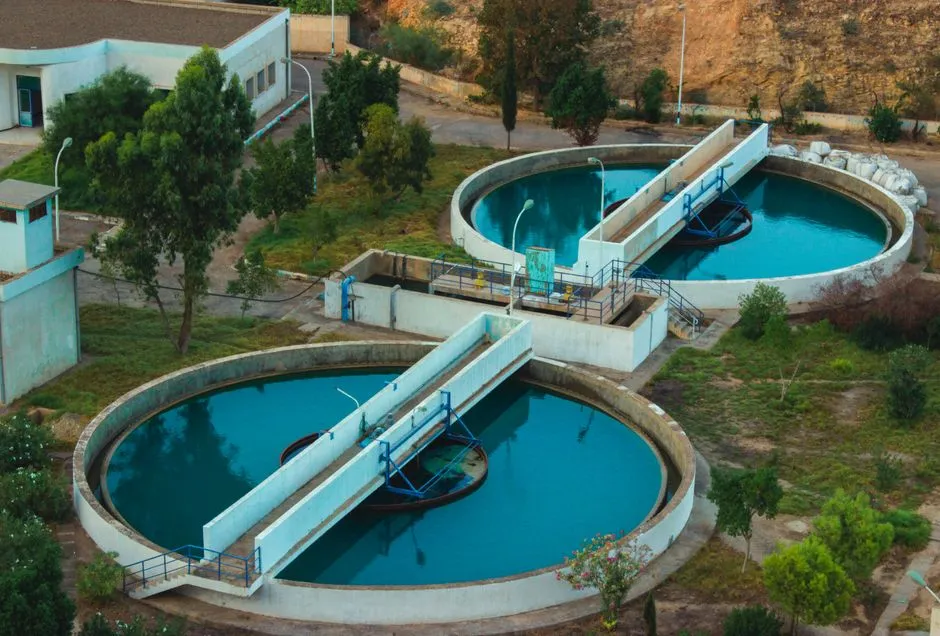
The conventional system in the pulp and paper (P&P) industry is primary clarification followed by activated sludge, which serves as the workhorse secondary treatment step (bioresources.cnr.ncsu.edu). The P&P industry treats both process water and wastewater, and primary clarification plus activated sludge is the conventional baseline used to limit BOD, COD, toxicity, solids, and color.
Two equipment choices sit upstream of biological treatment and are critical for keeping load off the activated-sludge basin:
- Dissolved air flotation (DAF) and filtration save-alls, which are upstream process changes that reduce the pollutant load and the volume of effluent reaching end-of-pipe treatment (bioresources.cnr.ncsu.edu).
- Kidney-loop / process-water purification operations, which treat water so it can be reused inside the mill and avoid sending dissolved solids to the sewer.
For higher removal — needed when chemical pulping generates a refractory COD fraction — supplementary options include anaerobic biological stages, advanced oxidation processes, bioreactors, and membrane filtration technologies such as MBR (bioresources.cnr.ncsu.edu). A practical Florida benchmark is the 1978 NEIC study of the Port St. Joe WWTP, where a well-operated aerated lagoon with about 12.6 days of detention, treating combined sewage, paper-mill, and tall-oil waste, reduced BOD and TSS by about 87% and fecal-coliform bacteria by approximately 97% (nepis.epa.gov). This provides the order of magnitude a mill should expect from a properly operated combined train in this region.
The chemical program matches the importance of unit operations. Coagulants, flocculants, filter aids, and optimized microbial cultures are strategic additions that lift removal performance inside the train (bioresources.cnr.ncsu.edu). An industrial DAF system for pulp and paper mills at the front end, a PLC-controlled coagulant and flocculant dosing system on the clarifier, and an MBR membrane bioreactor for the polishing step are the typical equipment trio used to chase the categorical and local limits simultaneously. Secondary treatment alone is often insufficient because chemical pulping generates more than 40% poorly biodegradable organics within the total organic load, meaning a non-degradable COD fraction remains that requires chemical or physical polishing (bioresources.cnr.ncsu.edu).
| Train position | Unit operation | Function in the train |
|---|---|---|
| Upstream / process water | Filtration save-alls, kidney loops | Reuse process water; cut volume and dissolved load sent to end-of-pipe (bioresources.cnr.ncsu.edu). |
| Primary | Dissolved air flotation (DAF) and/or primary clarification | Suspended-solids and fiber removal; protects downstream biology (bioresources.cnr.ncsu.edu). |
| Biological | Activated sludge (conventional); anaerobic stage as supplement | Biodegradable BOD/COD reduction; can be paired with nutrient removal (bioresources.cnr.ncsu.edu). |
| Polishing / advanced | Chemical coagulation, advanced oxidation, MBR / membrane filtration | Target refractory COD, color, toxicity; the step that lets a mill meet tight local limits (bioresources.cnr.ncsu.edu). |
The 2026 industrial effluent discharge guidelines overview provides a wider view of the rule stack framing this train.
How the Local Bay County POTW Pretreatment Program Stacks on Top
Categorical compliance is necessary but not sufficient for discharge. Under 40 CFR Part 403, the Bay County POTW sets local limits, issues the mill's discharge permit, runs the self-monitoring program, and carries enforcement tools including surcharges and permit revocation. The 1978 NEIC evaluation of the Port St. Joe WWTP was structured around these functions — NPDES compliance, self-monitoring procedures, and laboratory quality — because these are the elements the local program is judged on (nepis.epa.gov). The same study noted the background the mill's effluent enters: at the Bay County system in 1978, city sewage was characterized by a pH range of 6.0 to 8.3, a temperature of 13 to 18 °C, an average BOD of 102 mg/L, and an average TSS of 196 mg/L (nepis.epa.gov). When a paper mill pushes high-strength, warm, fibrous wastewater into that envelope, the POTW's aeration demand, clarifier loading, and chlorination dose all move.
Mill engineers should note that the categorical rule is the federal floor, while local limits are usually stricter for parameters like pH, sulfides, oil and grease, ammonia, phenolics, zinc, and temperature. This article does not quote current Bay County local limits because they must be pulled directly from the Bay County sewer-use ordinance and the mill-specific POTW discharge permit, which act as the binding day-to-day ceiling.
A Practical Compliance Checklist Before Sewer Discharge
- Identify the 40 CFR Part 430 subcategory. Match the mill's process — bleached kraft, unbleached kraft, sulfite, semi-chemical, mechanical, deink, wastepaper, non-wood, fine/tissue from purchased pulp — to the subcategory list, because the regulated pollutant set changes with the subcategory (epa.gov).
- Pull the local Bay County POTW discharge permit and the local sewer-use ordinance. The mill needs the actual numerical values for parameters the categorical rule does not fully cover (pH, sulfides, zinc, phenolics, ammonia, oil and grease). These must be obtained directly from the POTW.
- Confirm the treatment train is sized for the more restrictive of the two limit sets. Use the 87% BOD/TSS removal figure from the Port St. Joe aerated-lagoon evaluation as a Florida reference point for what combined paper-mill and sewage treatment can deliver, and design to exceed it (nepis.epa.gov).
- Implement self-monitoring that mirrors the POTW's sample list. The 1978 NEIC audit focused on self-monitoring and laboratory procedure quality because that is what the compliance evaluation turns on (nepis.epa.gov). The mill's internal sampling must produce data the POTW will accept.
- Pull load off the front of the train with DAF and save-alls. Upstream process changes — DAF, filtration save-alls, kidney loops — reduce the pollutant load and the effluent volume reaching end-of-pipe biological treatment (bioresources.cnr.ncsu.edu).
The 2026 industrial effluent discharge guidelines overview provides additional context for these requirements.
Frequently Asked Questions
What categorical standard applies to a paper mill discharging to a Bay County POTW?
The standard depends on the mill's subcategory under 40 CFR Part 430 — bleached papergrade kraft, unbleached kraft, dissolving sulfite, papergrade sulfite,
Frequently Asked Questions
What federal rule sets effluent limits for a paper mill discharging to a Panama City-area POTW?
Pulp and paper mills discharging to a Publicly Owned Treatment Works (POTW) are regulated under the Clean Water Act via the General Pretreatment Regulations found in 40 CFR Part 403. These regulations require indirect dischargers to comply with Categorical Pretreatment Standards established under 40 CFR Part 430, which sets specific effluent limitations based on the mill's production processes and raw material inputs.
How do Bay County POTW local sewer limits interact with 40 CFR Part 430 categorical limits?
While 40 CFR Part 430 provides national technology-based standards for specific pollutants like AOX, BOD5, and TSS, the Bay County POTW applies local limits to protect its biological treatment processes and sludge quality. Per 40 CFR 403.5, the mill must comply with the more stringent of the two; if the local ordinance sets a lower concentration limit for a pollutant than the federal categorical standard, the mill must meet the local requirement to avoid interference or pass-through at the municipal facility.
Which 40 CFR Part 430 subcategory covers a recycled-fiber or tissue mill in Bay County, Florida?
Recycled-fiber or tissue mills are typically classified under Subpart G (Tissue, Filter, Non-Woven, and Paperboard from Recycled Wastepaper) or Subpart J (Secondary Fiber Non-Deink). These subcategories define the specific mass-based pollutant load allowable per ton of product, focusing on parameters such as BOD5, TSS, and pH, which must be strictly monitored to maintain compliance with federal NPDES-delegated pretreatment programs.
What treatment train does a pulp and paper plant typically need to meet BOD, TSS, and toxicity limits before sewer discharge?
To meet typical pretreatment requirements, mills utilize a multi-stage treatment train beginning with primary clarification to remove bulk solids (TSS). This is followed by chemical coagulation and flocculation, often using Dissolved Air Flotation (DAF) to manage colloidal solids and fats, oils, and grease (FOG). To address soluble BOD and toxicity, plants often employ biological treatment, such as an Activated Sludge process or a Membrane Bioreactor (MBR), followed by pH neutralization and final flow equalization before discharge to the sewer system.
How should a paper mill in Panama City, US select and size a DAF system or MBR system for the pretreatment train, and what supplier questions should they ask in 2026?
Selection should be based on pilot-scale testing that accounts for seasonal variations in influent organic loading and hydraulic flow rates specific to the mill's production cycles. For 2026 installations, mills should prioritize systems with automated sensors for real-time compliance monitoring. Key questions for suppliers include: What is the proven flux rate for this specific wastewater matrix, what is the expected chemical oxygen demand (COD) removal efficiency at 2026 regulatory thresholds, and what is the documented energy consumption per 1,000 gallons of treated effluent?