Who Regulates Sewer Discharge for Transportation Equipment Plants Near Lafayette
The Industrial Pretreatment Program that governs sewer discharges from transportation equipment plants in the Lafayette, Louisiana area is administered locally by the Lafayette Utilities System (LUS) Environmental Compliance Division, acting on behalf of the Lafayette City-Parish Consolidated Government (LUS Industrial Pretreatment page, accessed 2025). Federal authority flows from the EPA National Pretreatment Rules at 40 CFR Part 403, and state authority sits with the Louisiana Department of Environmental Quality (LDEQ), which first approved the local pretreatment program in 1984 and modified it in 1993 and 2004 (LUS Industrial Pretreatment page, accessed 2025).
The combined program is codified locally in Lafayette City-Parish Ordinance No. O-037-2004, Chapter 94, Article VI, Division 6 (Sewers and Sewage Disposal) (Municode, accessed 2025). The trigger for requiring a POTW Pretreatment Program is the 5 MGD design flow threshold: LUS states that the EPA rule applies to "any POTW with a total design flow greater than 5 million gallons per day (MGD) and receiving from Industrial Users pollutants subject to Pre-treatment Standards" (LUS Industrial Pretreatment page, accessed 2025).
Lafayette's four municipal wastewater treatment plants (POTWs) together have a combined total design flow of 18.5 MGD, which is the basis for requiring a formal POTW Pretreatment Program under 40 CFR Part 403 (LUS Industrial Pretreatment page, accessed 2025). Because the design flow is more than three times the 5 MGD threshold, the program is mandatory rather than optional, and any industrial user discharging non-domestic wastewater into the LUS collection system falls under it. For a plant engineer, the practical consequence is that pretreatment compliance is enforced by a single local program office — not by EPA or LDEQ directly for routine discharge monitoring — and that the controlling documents are local even though the legal chain starts at the federal rules.
The direct contact for permit questions, pre-application meetings, and surcharge calculations is Kiera Frey, Environmental Compliance Supervisor, at [email protected] or 337-291-5968 (LUS Wastewater Discharge Permits page, accessed 2025; LUS Industrial Pretreatment page, accessed 2025). For internal compliance memos, an engineer should cite the chain as: 40 CFR Part 403 → LDEQ-approved local program (1984, modified 1993, 2004) → Lafayette City-Parish Ordinance No. O-037-2004, Chapter 94, Article VI, Division 6 → LUS Environmental Compliance Division.
Two Compliance Paths: Industrial Waste Permit or BMP Qualification
LUS offers two compliance paths for industrial users, and the choice between them reshapes the entire monitoring and reporting burden (LUS Wastewater Discharge Permits page, accessed 2025). Path 1 is the full Industrial Waste Permit: every Lafayette Parish industrial user that discharges non-domestic wastewater into the LUS sewer system must complete an application and obtain an Industrial Waste Permit before discharging (LUS Wastewater Discharge Permits page, accessed 2025). Path 2 is the Best Management Practice (BMP) program, which LUS makes available to vehicle wash racks, oilfield wash racks, and hospitals that meet certain qualifications; the qualification criteria are listed in the documents referenced on the LUS Wastewater Discharge Permits page (LUS Wastewater Discharge Permits page, accessed 2025). For a transportation equipment plant, BMP eligibility is most plausible for the vehicle and parts wash rack stream, not for the machining, paint, or boiler blowdown streams.
The surcharge mechanism is the financial driver behind why on-site treatment typically gets specified. Any industrial user discharging above domestic strength is liable for Extra Strength Sewage Charges calculated under LUS rules (LUS Wastewater Discharge Permits page, accessed 2025). Because those charges are calculated from monitored pollutant strength and flow, the cost of not treating — or of treating only to a rough pass — is paid back to LUS over time. On-site treatment that reduces oil and grease, suspended solids, and metals translates directly into lower surcharges, which is the economic justification for installing a treatment train even when a permit alone would technically allow discharge.
| Decision factor | Industrial Waste Permit (Path 1) | BMP Program (Path 2) |
|---|---|---|
| Typical applicant | All non-domestic industrial users discharging to LUS sewer | Vehicle wash racks, oilfield wash racks, hospitals meeting stated qualifications |
| Application | Formal Industrial Waste Permit application required before discharge | Qualification against BMP criteria listed in LUS reference documents |
| Monitoring burden | Permit-defined sampling, reporting, and renewal | BMP-defined practices and inspections in lieu of numeric effluent limits |
| Financial exposure | Extra Strength Sewage Charges if discharge exceeds domestic strength | Same surcharge mechanism applies if strength is above domestic |
| Best fit at a transportation equipment plant | Machining, paint, parts cleaning, boiler blowdown | Vehicle exterior wash rack if stream is dominated by routine vehicle wash |
For a mixed facility, the engineer should expect a hybrid: a BMP qualification for the wash rack portion and a full Industrial Waste Permit for the process streams, with the wastewater collection system segregated to keep the two streams separate.
Wastewater Streams Generated at a Transportation Equipment Plant
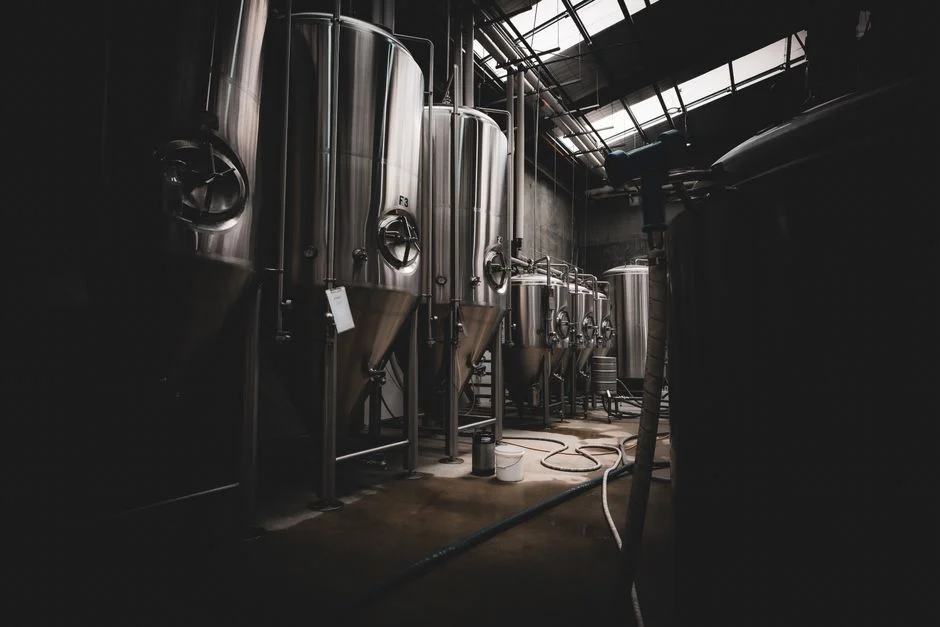
A transportation equipment plant — whether it builds truck bodies, trailers, buses, or rail equipment — typically produces several non-domestic streams that must be inventoried before any treatment train is designed (LUS Wastewater Discharge Permits page, accessed 2025). The vehicle and parts wash water stream contains suspended solids, petroleum hydrocarbons, surfactants from detergents, and road film; it is the most likely candidate for vehicle wash rack BMP eligibility, provided the stream is dominated by routine exterior washing rather than process waste (LUS Wastewater Discharge Permits page, accessed 2025). Machining and metalworking streams carry cutting fluid emulsions, tramp oils, metal fines, and elevated pH from alkaline cleaners. Paint shop and overspray wash water contains paint solids, solvents, and pH excursions from the alkaline or acidic pretreatment wash stages. Boiler blowdown and cooling tower bleed are generally low-volume but can be high in total dissolved solids, may carry scale inhibitors, and sometimes contain biocides.
Floor wash and storm water from contact areas carry oils, greases, and grit; per LDEQ and LUS practice these are typically segregated from the sanitary sewer rather than discharged to it. Sanitary wastewater from restrooms, kitchens, and break rooms is domestic and generally outside the Industrial Waste Permit scope, though FOG (fats, oils, and grease) from food service still has separate rules per LUS (LUS Industrial Pretreatment page, accessed 2025). The table below summarises the dominant pollutant loadings in each stream so the engineer can audit which streams exist on site.
| Stream | Source area | Dominant pollutants | Compliance path likely to apply |
|---|---|---|---|
| Vehicle and parts wash water | Wash rack, parts washer | Suspended solids, petroleum hydrocarbons, surfactants, road film | BMP qualification if dominated by routine vehicle wash (LUS Wastewater Discharge Permits page, accessed 2025) |
| Machining and metalworking | Machine shop, fabrication | Cutting fluid emulsions, tramp oils, metal fines, high pH from alkaline cleaners | Industrial Waste Permit |
| Paint shop and overspray wash | Paint booth, pretreatment wash | Paint solids, solvents, pH excursions | Industrial Waste Permit |
| Boiler blowdown and cooling tower bleed | Utility room | High TDS, scale inhibitors, possible biocides | Industrial Waste Permit; low volume, often batch-discharged |
| Floor wash and storm water contact areas | Service bays, loading areas | Oils, greases, grit | Typically segregated from sanitary sewer; LUS/LDEQ practice |
| Sanitary and food service | Restrooms, break room, cafeteria | Domestic strength BOD; FOG from kitchens | Domestic; FOG has separate LUS rules (LUS Industrial Pretreatment page, accessed 2025) |
Specific numeric local effluent limits for these streams in Lafayette are not enumerated in the publicly available LUS summary pages; the engineer must request site-specific limits and surcharge methodology directly from LUS Environmental Compliance before finalising the treatment train (LUS Industrial Pretreatment page, accessed 2025; LUS Wastewater Discharge Permits page, accessed 2025).
Building a Treatment Train That Passes LUS Pretreatment Limits
The treatment train that best fits a transportation equipment plant combines physical separation, chemical conditioning, optional biological polishing, and sludge dewatering, in that order. The first stage should be a gravity oil-water separator sized for the free-oil load from wash water and floor drainage, followed by a DAF system for oil and grease removal to capture emulsified oils, colloidal matter, and floated suspended solids. A rotary mechanical bar screen at headworks protects the DAF and any downstream biological stage from rags, lint from wash-rack mitts, and fibrous debris that would otherwise foul equipment.
Equalisation and pH adjustment come next. An equalisation tank with a PLC-controlled chemical dosing skid for coagulant, flocculant, and pH adjuster smooths out batch dumps from the paint shop and the machine shop, which is critical because machining streams tend to run alkaline and paint pretreatment stages can swing either way. Where loadings warrant biological polishing — typically when BOD or COD from paint or machining streams is high — a membrane bioreactor for industrial pretreatment delivers sub-micron filtration in a compact footprint suitable for space-constrained industrial sites. For a single wash-rack stream that qualifies for the BMP program, biological treatment is usually unnecessary; the BMP path is the lighter compliance route and physical-chemical treatment alone is typically sufficient (LUS Wastewater Discharge Permits page, accessed 2025).
Sludge handling is the line item most often under-specified. A plate and frame filter press dewatered DAF float and any biological sludge to a cake suitable for off-site disposal, which reduces haulage cost and improves operator handling. Final polishing and disinfection, if residual microbial limits apply, can be addressed with a UV steriliser for chemical-free disinfection, with a chlorine dioxide generator as an alternative where higher log-reduction is required.
Two qualifications apply to this train. First, the unit operations above are mapped to the pollutant families typically present in transportation equipment manufacturing — emulsified oils, suspended solids, pH swings, paint solids, metal fines — and to the unit operations used in industrial and municipal pre-treatment applications. Second, specific numeric local limits (oil and grease, TSS, metals, pH range) and the surcharge calculation parameters must be confirmed with LUS because the publicly available LUS pages do not enumerate them for this industry category (LUS Industrial Pretreatment page, accessed 2025; LUS Wastewater Discharge Permits page, accessed 2025). A useful peer reference for design context is the filter press design for industrial wastewater guide, which covers sludge-handling design decisions that apply to DAF float as well. For broader regulatory context, the 2026 industrial effluent discharge guidelines lay out the federal rule structure, and the EV/auto plant pretreatment compliance guide provides a parallel transportation-equipment example for an Alabama POTW.
Pre-Application Checklist for Lafayette Industrial Users
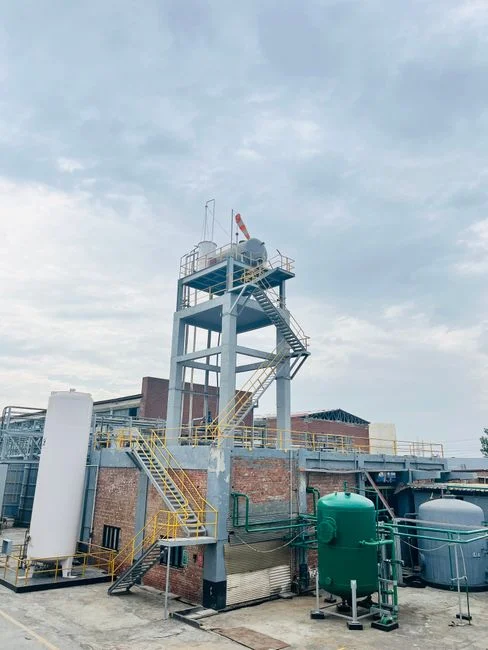
The following checklist can be handed to procurement or to an environmental consultant before contacting LUS, and mirrors the information LUS Environmental Compliance will request during a pre-application meeting (LUS Wastewater Discharge Permits page, accessed 2025; LUS Industrial Pretreatment page, accessed 2025).
- Map every non-domestic discharge point on site and tag each one with the stream it produces (wash, machining, paint, blowdown, floor wash, sanitary).
- Compile 12 months of water-use data so flow projections can be compared against the 5 MGD EPA threshold for the POTW Pretreatment Program requirement and against the LUS Extra Strength Sewage Charge methodology (LUS Industrial Pretreatment page, accessed 2025; LUS Wastewater Discharge Permits page, accessed 2025).
- Test representative samples of each stream for oil and grease, total suspended solids, pH, metals, and any categorical 40 CFR Part 405–471 standards applicable to the plant's SIC code.
- Determine whether the dominant stream is a vehicle wash rack eligible for the BMP program, or whether a full Industrial Waste Permit application is required, before selecting a treatment train (LUS Wastewater Discharge Permits page, accessed 2025).
- Request a pre-application meeting with Kiera Frey, Environmental Compliance Supervisor, at [email protected] or 337-291-5968 to confirm sampling locations, frequencies, and surcharge methodology before submitting the formal application (LUS Wastewater Discharge Permits page, accessed 2025; LUS Industrial Pretreatment page, accessed 2025).
Frequently Asked Questions
What does it cost to install on-site pretreatment at a transportation equipment plant near Lafayette?
The LUS pages do not publish equipment or installation costs; instead, the financial driver is the Extra Strength Sewage Charges that any industrial user discharging above domestic strength must pay, with the surcharge calculated under LUS rules (LUS Wastewater Discharge Permits page, accessed 2025). A buyer should request a written surcharge calculation methodology from LUS Environmental Compliance and request itemised quotations from at least two treatment-train suppliers, with each quotation priced against the same influent characterisation and the same discharge limits.
How do we choose a treatment system supplier for Lafayette sewer discharge compliance?
Select a supplier who can provide unit operations that address each pollutant family present on site — emulsified oils, suspended solids, pH swings, paint solids, metal fines — and who will warrant performance against the LUS-confirmed discharge limits. Ask each bidder to identify the specific unit operation in their train that addresses each stream in the wastewater inventory, and require a reference list of installed systems at transportation equipment or comparable metal-finishing sites. Confirm that the supplier's scope includes the plate and frame filter press for sludge dewatering so haulage volumes are controlled.
Does a vehicle wash rack at a truck body or trailer plant qualify for the LUS BMP program?
BMP programs are available to vehicle wash racks, oilfield wash racks, and hospitals that meet certain qualifications, with the qualification criteria listed in the documents referenced on the LUS Wastewater Discharge Permits page (LUS Wastewater Discharge Permits page, accessed 2025). Eligibility for a transportation equipment plant depends on whether the discharge stream is dominated by routine vehicle exterior wash water rather than process waste from machining, painting, or parts cleaning. Submit the stream inventory from the pre-application checklist to LUS Environmental Compliance for a written eligibility determination before designing the treatment train.
What is the difference between an Industrial Waste Permit and the BMP path for a transportation equipment plant?
The Industrial Waste Permit is the full compliance path: every Lafayette Parish industrial user discharging non-domestic wastewater into the LUS sewer must complete an application and obtain an Industrial Waste Permit before discharging (LUS Wastewater Discharge Permits page, accessed 2025). The BMP path replaces numeric effluent limits and permit-defined monitoring with BMP-defined practices for qualifying vehicle wash racks, oilfield wash racks, and hospitals (LUS Wastewater Discharge Permits page, accessed 2025). Most transportation equipment plants will run a hybrid: a BMP qualification for the wash rack stream and an Industrial Waste Permit for the machining, paint, and utility streams, with segregated plumbing to keep the two paths separate.