Why Batam Forces a Different Water Strategy for Every Data Center in 2026
Batam's freshwater supply is not a question of efficiency; it is a question of politics. In October 2026, about 300 residents of Sambau and Bakau Serip blockaded the access road into Nongsa Digital Park after taps in the surrounding neighborhoods had run dry for between three and six months, and a BP Batam official defused the immediate standoff by dispatching six tanker trucks that, three days later, had restored supply to only about 53% of Sambau households (BBC, 2026; startup-fortune, 2026).
Following earlier protests in August and September 2026, authorities instructed data center developers to build their own desalination plants rather than draw from the island's six rainwater-fed reservoirs, and locals remain concerned that they will end up competing with servers for water (BBC, 2026). The forward demand is not abstract: nine data centers planned or under construction in Nongsa Digital Park will need roughly 29 million liters of water per day and about 285 MW of power once fully built, and Batam-wide data-center power demand is forecast to cross 1,100 MW by 2030 — enough, by BP Batam's official estimate, to power nearly a million homes (BBC, 2026; startup-fortune, 2026, citing Katadata and Earth Journalism Network). Combined with one additional large facility nearby, that load equates to roughly 8.4% of Batam's entire water supply, all of it consumed by server cooling systems, in a city that cannot yet guarantee piped water to the neighborhood next door (startup-fortune, 2026). The engineering consequence is direct: because freshwater is politically and hydrologically closed, every cubic meter of cooling make-up, humidification feed and potable demand must be generated on site from seawater, and every cubic meter of blowdown and brine must be handled on site as well.
The Three Wastewater Streams a Batam Data Center Actually Has to Treat
Designing one big plant for the wrong problem is the single most common Batam pitfall. A hyperscale or AI-factory campus produces three distinct streams that differ in flow, chemistry, and the regulation that governs them, and underestimating any one of them collapses the mass balance. Stream 1 is domestic sewage from offices, kitchens, dormitories and visitors — relatively low flow, but high BOD, and benchmarked against PermenLHK No. 86/2016 for domestic wastewater quality in Indonesia; the same standard is the one Everant Journals used to validate a tiered filtration and photocatalytic ozonation reactor on Tanjung Uma housing in Batam, reporting a 92% effectiveness reduction in the regulated parameters (Everant Journals, 2023). Stream 2 is cooling-tower blowdown: high flow, TDS at 4–8 times the make-up concentration (1,200–6,000 mg/L) depending on cycles, with accumulated biocides, corrosion and scale inhibitors, suspended solids at 10–50 mg/L, and biological content that has to be addressed in any recovery system (Genesis Water Tech, 2026). Stream 3 is the seawater RO reject from the now-mandatory on-site desalination plant: a small-volume, very high-TDS brine, typically well above seawater TDS because the recovery has already been pushed, that cannot be sent to municipal sewer or surface water without bespoke consent. The flow-scale rule of thumb matters at the planning desk: a 50 MW facility can use as much water as roughly 2,200 US households per day, according to Malaysia's central bank as cited by the BBC, 2026, so a 360 MW AI-factory typology in the DayOne–Nvidia–Firmus class needs blowdown and brine handling in the same order of magnitude as a small town.
| Stream | Source on campus | Typical flow scale | Key chemistry | Governing standard |
|---|---|---|---|---|
| Domestic sewage | Offices, kitchens, dormitories, visitors | Driven by headcount, not IT load | High BOD, fecal coliform | PermenLHK No. 86/2016 (used in the 2023 Everant Journals Batam study) |
| Cooling-tower blowdown | Evaporative cooling loop | ~25–30% of make-up at 4× CoC (Genesis Water Tech, 2026) | TDS 1,200–6,000 mg/L; TSS 10–50 mg/L; biocides, scale/corrosion inhibitors (Genesis Water Tech, 2026) | BP Batam free-zone discharge practice; municipal consent |
| Seawater RO reject | Mandatory on-site desalination plant | 35–50% of seawater RO feed | High-TDS brine above seawater baseline; scaling-prone | PP No. 22/2021 on water resources; BP Batam free-zone rules (BBC, 2026) |
Cooling Blowdown Chemistry: How Many Cycles of Concentration Can a Nongsa Tower Actually Run?
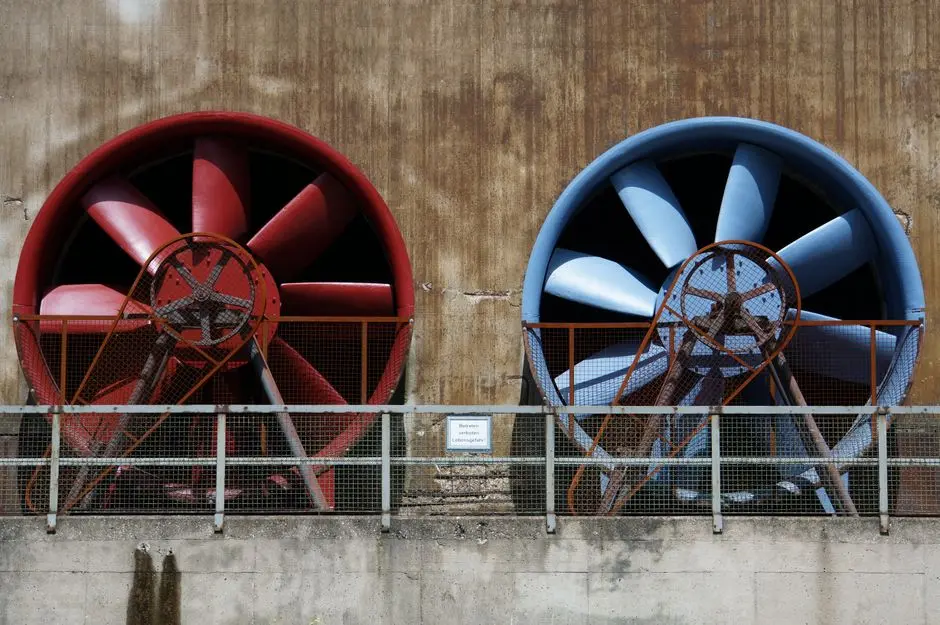
Cycles of concentration is the single decision that fixes both freshwater demand and the size of every downstream unit. At 4 cycles of concentration, a typical data center cooling tower loses about 25–30% of its make-up water to blowdown; for a facility using 10 million gallons per month, that is 2.5–3 million gallons discharged or wasted (Genesis Water Tech, 2026). As cycles are pushed higher, blowdown volume falls but water quality worsens: TDS scales linearly with cycles through the 1,200–6,000 mg/L range, and the scaling risk is dominated by calcium, magnesium, silica and alkalinity rather than unusual contaminants (Genesis Water Tech, 2026). In Batam the limiting ions are not calcium hardness but silica and chloride, and biological control has to be designed for warm, brackish make-up water rather than freshwater — a qualitative judgment for which the supplied research gives no numeric value. Pushing cycles from 4 to 6–7 cuts blowdown volume by roughly 30–45% but multiplies the recovered-water treatment train, so the enabling step is a side-stream multimedia filter and a non-phosphate tablet-based cooling-water program, not blowdown RO alone (Genesis Water Tech, 2026). On a Nongsa site the HydropureWater multi-media filter is sized to 1–5% of circulation flow to keep blowdown TSS low enough for downstream RO, and it removes 10–25 µm particulates continuously (Genesis Water Tech, 2026).
| Parameter | At 4× CoC | At 6–7× CoC (target with side-stream filtration) | Source |
|---|---|---|---|
| Blowdown as % of make-up | ~25–30% | Cut by ~30–45% vs. 4× baseline (qualitative proportion) | Genesis Water Tech, 2026 |
| Blowdown TDS | 1,200 mg/L band | Approaching 6,000 mg/L ceiling | Genesis Water Tech, 2026 |
| Blowdown TSS | 10–50 mg/L | Reduced by effective side-stream filtration | Genesis Water Tech, 2026 |
| Dominant scaling ions | Calcium, magnesium, alkalinity | Silica and chloride become the limiters in Batam feed | Genesis Water Tech, 2026; site-specific judgment |
The 2026 Treatment Train That Fits a Batam Hyperscale Site
Walk the line in the order it will appear on the P&ID. The headworks start with a rotary mechanical bar screen ahead of the seawater intake, removing rags, macro-plastic and debris common in coastal intakes; the exact aperture is a project-specific choice and no numeric value is supplied in the research. From there, the make-up train passes through a HydropureWater hollow-fiber UF system as RO pretreatment, designed to handle up to ~300 ppm turbidity with automatic backwash and air scour — the right pre-filter ahead of a high-pressure seawater RO pump train. Permeate from the HydropureWater industrial RO system splits into cooling-tower make-up, humidification feed and the small potable stream for staff; this is the make-up that, post-protest, must not come from the Duriangkang or Nongsa reservoirs (BBC, 2026; startup-fortune, 2026). On the cooling loop itself, a HydropureWater multi-media filter handles 1–5% of circulation flow and removes 10–25 µm particulates continuously, which is the step that allows cycles to be pushed to 6–7 without fouling the downstream RO (Genesis Water Tech, 2026). The blowdown itself is then sent to a blowdown-recovery RO skid sized for 50–85% recovery, 95–99% dissolved-solids rejection, with permeate at 10–50 mg/L TDS returned to the cooling tower; a HydropureWater automatic chemical dosing skid feeds antiscalant under PLC control to keep silica and sulfate scaling under control in high-recovery operation (Genesis Water Tech, 2026). Domestic sewage is handled by a HydropureWater MBR system sized to headcount not IT load, with UV or chlorine dioxide polishing for toilet-flush and landscape reuse. The brine from the seawater RO is the residual problem: where on-site liquid discharge is politically infeasible, the RO concentrate is sent to a partial mechanical vapor compression (MVC) step (95–98% recovery, distillate TDS <10 mg/L, CAPEX $1–3M at 10,000–30,000 GPD per Genesis Water Tech, 2026) or hauled off as a controlled waste, and only escalates to full ZLD where the discharge risk is unacceptable.
Reuse vs. Compliant Discharge vs. ZLD: Decision Matrix for a 50 MW vs. a 360 MW Batam Site
Cooling-tower make-up reuse via blowdown RO is the highest-value path: 60–85% overall blowdown recovery, with 50–85% achieved within the RO step itself, CAPEX $250,000–$500,000 per 50,000 GPD RO skid installed, and OPEX $1.50–$3.00 per 1,000 gallons treated including energy, antiscalant, membrane replacement and routine maintenance (Genesis Water Tech, 2026). Discharge compliance is the second path: in water-stressed regions discharge fees are already $5–$15 per 1,000 gallons and some jurisdictions cap effluent TDS below 1,500 mg/L, which effectively prohibits discharge of untreated concentrated blowdown (Genesis Water Tech, 2026). On Batam, where a single protest can shut an access road, the practical floor is effectively zero liquid discharge to surface water. Full ZLD is the third path: 95–99% overall water recovery, CAPEX $3–8M, OPEX $5–$15 per 1,000 gallons, with solid salt cake less than 1% of the original blowdown volume (Genesis Water Tech, 2026) — economically justified only when alternative water is unavailable or politically impossible. For 2026 Nongsa typologies the decision rule is straightforward: a 50 MW colocation site typically pairs blowdown RO with partial MVC, the so-called "ZLD-lite" combination that delivers 85–95% combined recovery; a 360 MW AI factory in the DayOne–Firmus class should default to full ZLD on the cooling loop to remove all public-discharge risk (Genesis Water Tech, 2026; BBC, 2026).
| Option | Best fit on Batam | CAPEX band | OPEX band | Recovery | Public-discharge risk | Source |
|---|---|---|---|---|---|---|
| Blowdown RO reuse | Any site; lowest-risk first step | $250k–$500k per 50,000 GPD skid installed | $1.50–$3.00 per 1,000 gal | 50–85% (RO step) | Reduced, concentrate still produced | Genesis Water Tech, 2026 |
| Discharge compliance | Rarely defensible in Nongsa | Project-specific | Discharge fees $5–$15 per 1,000 gal in water-stressed regions | N/A | Politically fragile; effluent TDS <1,500 mg/L cap in some jurisdictions | Genesis Water Tech, 2026 |
| Partial MVC ("ZLD-lite") | 50 MW colocation | $1–3M at 10,000–30,000 GPD | 15–25 kWh per 1,000 gal distillate | 85–95% combined | Low | Genesis Water Tech, 2026 |
| Full ZLD (RO + MVC + crystallizer) | 360 MW AI factory | $3–8M | $5–$15 per 1,000 gal | 95–99% | Near-zero; solid salt cake <1% of original blowdown | Genesis Water Tech, 2026 |
Blowdown polishing and reuse-quality control benefit from a HydropureWater UV sterilizer and, where biofilm control is the bottleneck, a HydropureWater ozone generator for tank and loop sterilization, both of which protect downstream membrane life and keep the recovered permeate within the 10–50 mg/L TDS envelope.
Regulatory and Permitting Checklist for a 2026 Batam Data Center
Design the domestic stream to PermenLKH No. 86/2016 for BOD, COD, TSS and fecal-coliform limits; a HydropureWater MBR system delivers near-reuse-quality effluent with sub-micron filtration, suitable for toilet-flush and irrigation reuse, and the same standard is the one Everant Journals used to validate a tiered filtration and photocatalytic ozonation reactor in the 2023 Tanjung Uma study (Everant Journals, 2023). For water resources and brine, PP No. 22/2021 governs abstraction and discharge across Indonesia, and combined with BP Batam free-zone rules it is the reason authorities now require on-site desalination and on-site brine handling for new builds (BBC, 2026). For discharge fees and TDS caps, assume the worst-case numbers from water-stressed regions: $5–$15 per 1,000 gallons in discharge fees and TDS limits below 1,500 mg/L in some jurisdictions, even where discharge is technically allowed (Genesis Water Tech, 2026). Construction-phase water — site run-off and concrete wash-water during the 12–24 month build for a hyperscaler — should be routed through a HydropureWater high-efficiency sedimentation tank and a HydropureWater DAF unit before any off-site release, since sediment-laden construction discharge is a frequent audit finding on Batam industrial projects; the supplied research gives no numeric effluent threshold, so the project must request the local BP Batam consent limit.
2026 CAPEX, OPEX and Lead-Time Reality Check on This Duty
A blowdown RO in the 50,000 GPD class lands at $250,000–$500,000 installed with OPEX of $1.50–$3.00 per 1,000 gallons treated, covering energy, antiscalant, membrane replacement and routine maintenance (Genesis Water Tech, 2026). A partial MVC brine concentrator in the 10,000–30,000 GPD class is $1–3 million in CAPEX and consumes 15–25 kWh per 1,000 US gallons of distillate, sized only for the RO concentrate stream, not the full blowdown (Genesis Water Tech, 2026). A full ZLD system lands at $3–8 million in CAPEX and $5–$15 per 1,000 gallons in OPEX, justified only where alternative water is unavailable or discharge is prohibited (Genesis Water Tech, 2026). Skid-mounted, factory-tested units — the HydropureWater UF, RO, MBR, automatic dosing and DAF product lines, plus the HydropureWater RO and UF membrane replacement program and spare valves and media — cut on-site installation time and are typically the path that keeps a 12–18 month hyperscaler build on schedule; the supplied research gives no numeric lead time, so this is a project-specific input the buyer must request.
Frequently Asked Questions
Why are Batam authorities now requiring data centers to build their own desalination plants?
Following protests in August and September 2026, in which residents of Nongsa Digital Park neighborhoods accused data centers of draining the Duriangkang and Nongsa reservoirs, authorities instructed new data center developers to build their own desalination plants rather than draw from those reservoirs, and a further protest in October 2026 escalated the political pressure on BP Batam to enforce that order (BBC, 2026; startup-fortune, 2026).
What is the realistic CAPEX for a blowdown-recovery RO on a 50 MW Batam site?
A blowdown-recovery RO skid in the 50,000 GPD class lands at $250,000–$500,000 installed with OPEX of $1.50–$3.00 per 1,000 gallons treated, inclusive of energy, antiscalant, membrane replacement and routine maintenance (Genesis Water Tech, 2026); the buyer should request a project-specific sizing in GPD and a feed-water analysis before fixing the budget.
Should a 360 MW AI factory in Nongsa default to ZLD or to compliant discharge?
Default to full ZLD on the cooling loop, because nine Nongsa data centers already represent about 8.4% of Batam's water supply and any visible discharge from a 360 MW AI factory in the DayOne–Firmus class would face the same political risk that triggered the 2026 protests (startup-fortune, 2026; BBC, 2026; Genesis Water Tech, 2026).
Which Indonesian regulation governs the domestic sewage stream from a data center campus?
PermenLHK No. 86/2016 governs domestic wastewater quality in Indonesia, and the same standard is the benchmark used in the 2023 Everant Journals study of tiered filtration and photocatalytic ozonation on the Tanjung Uma housing estate in Batam (Everant Journals, 2023).
Related Equipment
- HydropureWater hollow-fiber UF system — specifications, capacity range, and technical data
- HydropureWater industrial RO system — specifications, capacity range, and technical data
- HydropureWater multi-media filter — specifications, capacity range, and technical data
- HydropureWater automatic chemical dosing skid — specifications, capacity range, and technical data
- HydropureWater MBR system — specifications, capacity range, and technical data
- HydropureWater DAF unit — specifications, capacity range, and technical data