
Why Al Wakrah Sets a 2026 ETP Standard
Southern Qatar's industrial wastewater rules are anchored to a single municipal project: the 150 MLD, US$729 million Al Wakrah & Al Wukair Sewage Treatment Plant, a Public-Private Partnership whose Schedule 3 acceptance, commissioning, and availability test regime (RFP Volume II, July 2022) sets the de facto benchmark any private effluent treatment plant in Al Wakrah must mirror if it intends to discharge to the municipal network (S2).
The Schedule 3 structure is explicit: pre-commissioning, commissioning, commercial operation, and availability testing, with dedicated appendices for secondary treatment, membrane filtration, and odour systems that any private operator's FAT, SAT, and performance-test plan should reproduce (S2). Qatar Law No. 30 of 2002 and the 2025 Ministry of Municipality Treated Sewage Effluent (TSE) reuse guidelines are the binding compliance frame, with non-compliance fines documented at up to US$50,000 per month and the Ministry of Environment holding authority to order shutdowns (S3). Qatar National Vision 2030 targets 100% wastewater reclamation, meaning industrial effluent treatment plant design in 2026 is no longer about producing sewer-acceptable water; it is about producing reuse-quality water that can be substituted for desalinated supply in cooling and irrigation.
Step 1: Characterize Your Influent by Sector
Influent characterization must occur before equipment is sized, as the largest 2026 commissioning failures in Al Wakrah stem from buying an MBR before testing the feed. Food processing facilities in the catchment show COD concentrations up to 3,500 mg/L with emulsified fats and organic nitrogen from dairy and meat operations, and 2024 Qatar EPA reporting notes that high ambient temperatures accelerate biological activity, which forces aeration and cooling to be sized for local climate, not temperate defaults (S3). Petrochemical effluent carries complex hydrocarbons and VOCs that resist biological breakdown, so the influent study must define oil-water separation and chemical oxidation up front (S3). Metal finishing and textile sites carry heavy metals (Cr, Ni, Cu) and elevated TDS, which typically require chemical precipitation or ion exchange upstream of any biological or membrane step (S3). The Star Paper Mills ETP design data illustrates the discipline that should be carried into the Al Wakrah RFQ: a primary clarifier at 29 h HRT and an aeration tank at 43 h HRT, with F/M ratio and volumetric loading explicitly tabulated, the same parameters a Qatar design engineer must lock down before selecting a biological reactor (S4). The summary should be condensed into a single parameter table the design engineer hands to vendors, mirroring the influent format used in Schedule 5 of the Al Wakra & Al Wukair STP RFP, which lists influent quantity and quality parameters as a discrete deliverable (S2). For the FOG- and TSS-heavy food and petrochemical duty typical of the catchment, a high-efficiency DAF system manufacturer should be evaluated at this stage, not after biological sizing.
| Sector | Typical COD (mg/L) | Key Contaminants | Mandatory Pre-Treatment | Notes for Al Wakrah Climate |
|---|---|---|---|---|
| Food processing (dairy, meat) | Up to 3,500 | Emulsified FOG, organic N | Rotary bar screen + DAF | Aeration/cooling sized for high ambient T (S3) |
| Petrochemical | Sector-dependent | Hydrocarbons, VOCs | Oil-water separator + DAF; chemical oxidation | Hydrocarbons inhibit biology if not removed (S3) |
| Metal finishing / textiles | Sector-dependent | Cr, Ni, Cu; high TDS | Chemical precipitation / ion exchange | Precedes any biological or membrane step (S3) |
| General manufacturing | Sector-dependent | Mixed organics, variable pH | Screening + flow equalization | Use Schedule 5 influent format (S2) |
Step 2: Choose the 2026 Process Train
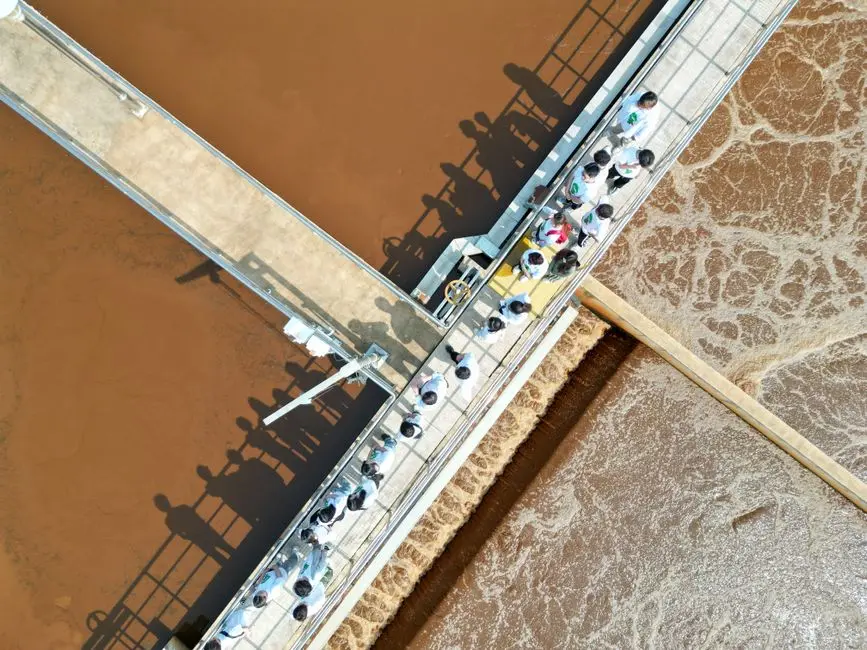
Process train selection depends on the specific sector and the discharge end-point (sewer versus reuse). For pretreatment, the 2026 default is a rotary mechanical bar screen feeding a Dissolved Air Flotation (DAF) system, which removes 70–80% of FOG and TSS before the biological stage and is critical to preventing membrane fouling in food and petrochemical duty (S3). For secondary treatment, an MBR membrane bioreactor system is the preferred choice in Al Wakrah food plants because it delivers near-reuse effluent, achieves 99% pathogen removal, and saves up to 60% of footprint versus conventional activated sludge, an important constraint in the Al Wakrah Industrial Area (S3). For tertiary polishing, a chlorine dioxide generator is generally specified over chlorine gas because of its biofilm efficacy and lower residual toxicity, with nanofiltration or reverse osmosis added when the plant targets irrigation or cooling reuse (S3). Direct nanofiltration of WWTP effluent has been documented by University of Twente research (Schrader, PhD thesis, 2021) as a viable route to agricultural or indirect potable reuse quality (S1). For brine- and metal-bearing sites, a Zero-Liquid Discharge (ZLD) train using thermal evaporation and crystallization recovers 95–99% of the water and is the only path when TDS exceeds 1,000 mg/L or heavy metals cannot meet municipal sewer limits (S3). Sludge handling requires a plate and frame filter press sized against the biological wasting rate, not the influent flow, to cut disposal volume and cost for both hazardous and food-processing sludges (S3, S4).
| Sector / End-Point | Pretreatment | Secondary | Tertiary / Polishing | Sludge Line |
|---|---|---|---|---|
| Food processing → reuse | Bar screen + DAF | MBR | ClO₂ + RO / NF | Plate and frame filter press |
| Petrochemical → sewer | O/W separator + DAF | MBR or activated sludge | ClO₂ (if reuse targeted) | Plate and frame filter press |
| Metal finishing / textiles | Precipitation / IX + DAF | MBR | RO + ZLD (if brine) | Plate and frame filter press (hazardous) |
| Brine or heavy-metal site | Precipitation / IX | MBR (pre-concentration) | ZLD (thermal evap. + crystallizer) | Filter press + crystallization cake handling |
Step 3: Size Equipment to 2026 Discharge and Reuse Targets
Equipment sizing must align with the specific performance metrics required by the RFQ and regulatory bodies. The 2026 industrial compliance floor documented for the Al Wakrah catchment is COD removal ≥92% and TSS ≤10 mg/L, with discharge pH held inside the 6–9 window (S3). Any plant processing more than 50 m³/h must install online pH, TSS, and flow sensors whose data logs are accessible to municipal inspectors, which means the PLC and SCADA layer should be specified at the RFQ stage (S3). The energy budget is dominated by aeration and membrane scouring: MBR systems run 0.8–1.2 kWh/m³ while DAF systems run 0.3–0.5 kWh/m³, and that differential justifies variable-frequency drives on blowers and a PLC-controlled chemical dosing system for pH and coagulant control (S3). Upstream, a rotary mechanical bar screen sized to peak flow protects the entire downstream train from ragging and pump damage. The plant's own FAT, SAT, and performance-test plan should mirror the structure used in Schedule 3 of the Al Wakra & Al Wukair STP RFP: pre-commissioning, commissioning, commercial operation, and availability testing, with separate appendices for biological treatment, membrane filtration, and odour systems (S2). For sites where micropollutants or pharmaceutical residues are a concern, polishing with constructed wetlands or nanofiltration is documented in academic work (Lei, Wageningen University, 2022) as a viable final step before agricultural or indirect potable reuse (S5).
| Parameter | 2026 Target / Range | Source |
|---|---|---|
| COD removal | ≥92% | S3 |
| TSS | ≤10 mg/L | S3 |
| Discharge pH window | 6–9 | S3 |
| Online monitoring threshold | Flows > 50 m³/h require online pH, TSS, flow with inspector access | S3 |
| MBR energy demand | 0.8–1.2 kWh/m³ | S3 |
| DAF energy demand | 0.3–0.5 kWh/m³ | S3 |
| Acceptance-test framework | Schedule 3 (pre-commissioning, commissioning, commercial operation, availability) with appendices for secondary treatment, membrane filtration, odour | S2 |
Step 4: Build the 2026 Commercial Case
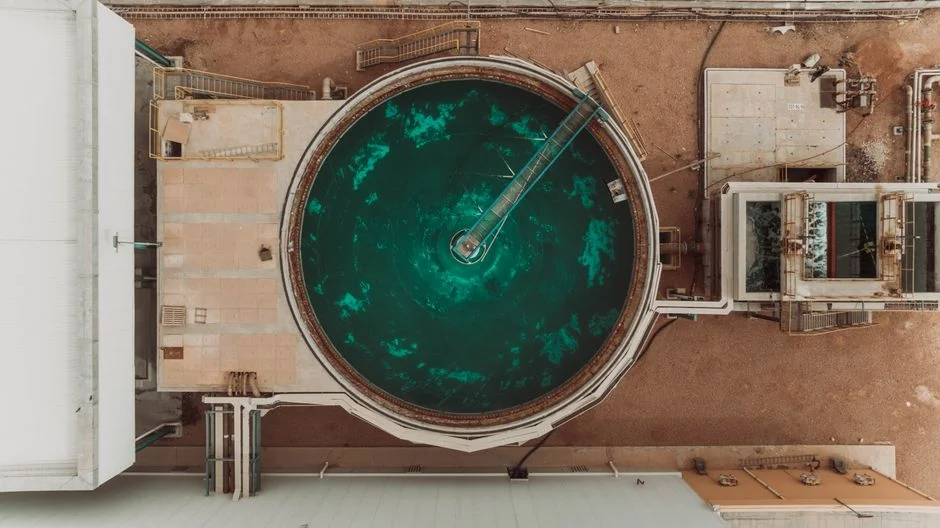
Procurement teams require defensible budget numbers based on Qatar-specific cost data. Industrial system CAPEX in Al Wakrah is documented in a US$0.80–US$2.50 per cubic meter band, with a 100 m³/h MBR-based system explicitly cited as a benchmark including the automation required for Qatar's monitoring standards (S3). OPEX is driven by energy, chemical dosing, and membrane replacement: MBR at 0.8–1.2 kWh/m³ versus DAF at 0.3–0.5 kWh/m³, with the DAF advantage partially offset by higher coagulant and flocculant consumption (S3). Fresh water in Al Wakrah costs US$2.00–4.00/m³ and discharge surcharges can exceed US$0.50/m³ for high-COD effluent, which is the underlying math behind the 3–5 year MBR payback that regional engineering guidance cites (S3). The Qatar Ministry of Environment offers up to 30% subsidy for ZLD and other high-recovery systems, which changes the after-subsidy ROI for brine- or metal-bearing sites and should be applied for concurrently with the MoE engineering review (S3). Avoiding the US$50,000/month non-compliance fine is a financial line item in its own right, and because the MoE review typically takes 6–12 months, projects that start in 2026 with poor influent data will not be commissioned before the 2027 regulatory cycle (S3). For a parallel regional benchmark outside Qatar, the Effluent Treatment Plant in Al Ain 2026 buyer's guide applies a similar four-step logic to a comparable GCC regulatory environment and is a useful cross-check on the cost bands.
Frequently Asked Questions
What budget should we set for a 100 m³/h MBR-based ETP in Al Wakrah in 2026?
Regional engineering guidance places industrial ETP CAPEX in a US$0.80–US$2.50 per cubic meter band, with a 100 m³/h MBR system explicitly cited as a benchmark including the automation required for Qatar's online monitoring standards (S3). The actual line item must be requested from vendors against your specific influent table, but the order-of-magnitude figure above is defensible at first budget review.
How do we choose between suppliers once technical compliance is matched?
Once two or more vendors meet the technical spec, the deciding factor is local service and spare-parts availability, because compliance uptime under the 2025 TSE regime and the US$50,000/month non-compliance penalty makes response time a financial variable (S3). Ask each vendor for documented response-time commitments and a spare-parts holding list inside Qatar before scoring the commercial bid.
Is ZLD mandatory for our facility, or can we discharge to the municipal sewer?
ZLD is not mandatory for every industrial site, but it is required where TDS exceeds 1,000 mg/L or where heavy metals cannot meet municipal sewer limits (S3). Most food processing plants can comply with an