What governs wastewater discharge near Port Townsend
Three nested regulators control what a transportation equipment plant in the Port Townsend area can send to the sewer. At the top, the U.S. EPA sets categorical pretreatment standards under 40 CFR for specific industrial categories, including metal finishing and transportation equipment manufacturing, which establish technology-based effluent ceilings for metals, oil and grease, pH, and total suspended solids. Below that, the Washington State Department of Ecology issues a five-year NPDES permit to the receiving publicly owned treatment works and reissued the City of Port Townsend permit on that cycle, with the next renewal tracked through the General Sewer Plan (Source: City of Port Townsend General Sewer Plan). Since January 2022, the receiving plant also operates under the Puget Sound Nutrient General Permit, which adds a nutrient-reduction obligation to the receiving plant's discharge to the Salish Sea and indirectly constrains industrial loadings (Source: City of Port Townsend General Sewer Plan).
The City of Port Townsend issues a sewer-use authorization to each industrial user and enforces Local Limits through its sewer-use ordinance. The City's biological plant on Kuhn Street treats about 900,000 gallons per day and roughly 286 million gallons per year before discharging through an outfall about 800 feet offshore at North Beach to the Strait of Juan de Fuca, so the Local Limits are calibrated to keep incoming loads within the headroom the plant and outfall can handle (Source: City of Port Townsend General Sewer Plan; City of Port Townsend Public Works — Wastewater). For facilities outside the City collection area, the regulator on the other side of the meter is Jefferson County Public Utility District, which manages community drain fields, large on-site septic systems, and the new Port Hadlock Urban Growth Area (PHUGA) Wastewater System that came online in September 2025 with 33 initial customers and approximately $35.6 million in combined funding (Source: Jefferson County PUD wastewater page). The PHUGA example matters to any industrial user near Port Hadlock because the system was sized for residential flows and an industrial discharger will need a separate capacity review.
The Port Townsend receiving plant in context
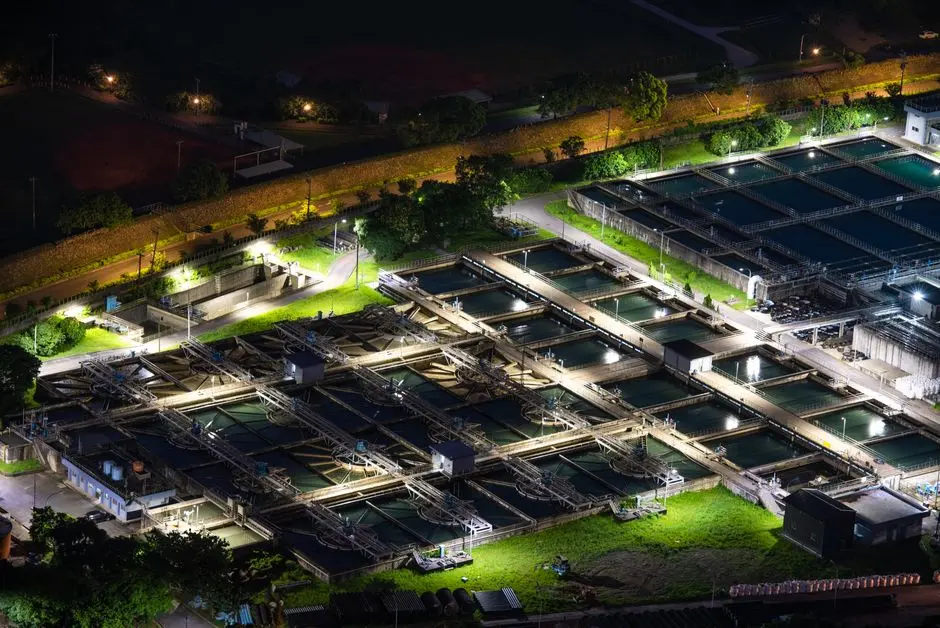
The City of Port Townsend wastewater treatment plant sits on the shore of Chinese Garden Lagoon in the North Beach neighborhood and is staffed by three full-time employees who handle biosolids dewatering, laboratory sampling and analysis, process control, and regulatory reporting (Source: City of Port Townsend Public Works — Wastewater). The plant is nearly 30 years old, applies a combination of mechanical and biological processes, and has received the Washington State Department of Ecology "Outstanding Performance Award" for 30 consecutive years, which is a useful reference point when asking the City for current performance data and any remaining headroom for industrial users (Source: City of Port Townsend Public Works — Wastewater; City of Port Townsend Public Works).
Collection-system capacity constrains industrial operations. The City maintains more than 77 miles of sanitary sewer, about 120 manholes, and 6 lift stations that feed the plant, with much of the system old and affected by root intrusion and stormwater cross-connections in downtown (Source: City of Port Townsend Public Works — Wastewater; City of Port Townsend General Sewer Plan). During heavy rain, inflow and infiltration reduce the hydraulic and treatment capacity available for industrial users, which is why Local Limits and surcharge formulas are enforced at the meter. The outfall pipe that carries treated effluent about 800 feet offshore at North Beach is in disrepair, and the City is working with the Department of Ecology to analyze repair options, so the next permit cycle may carry tighter conditions tied to outfall condition and nutrient control (Source: City of Port Townsend General Sewer Plan). For a plant engineer, the practical implication is that any proposed increase in flow or pollutant load will face closer scrutiny while the outfall program is open.
Matching waste streams to the right unit operations
Transportation equipment manufacturing produces a recognizable mix of process wastewaters that should be segregated at the source before any on-site treatment train is selected. The common streams are machining coolant and parts-washer effluent containing free and emulsified oils, phosphate and alkaline cleaning rinses, metal-bearing rinsewater from pre-paint treatment, stamping and drawing lubricants, occasional solvent spills, and domestic sewage from the same site; flows and concentrations must be confirmed against the facility's own process map. Source control and segregation come first: dedicated oil–water separators and parts-washer units handle the oil-rich streams, metal-bearing rinses are routed to a separate equalization tank, and any contact cooling water is segregated from non-contact cooling water so the discharge volume submitted for billing is minimized.
Flow equalization and pH adjustment are typically required ahead of clarification, both to dampen slug loads from batch operations and to keep instantaneous concentrations below permit ceilings. Dissolved air flotation (DAF) and lamella clarification are the two workhorse options for free and emulsified oil and suspended solids, with the choice usually driven by oil loading, available footprint, and whether the waste stream is also metal-bearing. A rotary mechanical bar screen is commonly placed upstream to protect downstream pumps, biology, or any membrane stage from rags and debris. For metal-bearing rinses, chemical precipitation at the pH of minimum solubility followed by sedimentation or DAF polishing is standard practice, and chemical dosing should be controlled by a PLC-controlled chemical dosing system tied to flow proportioning so that the self-monitoring record reflects actual dose-to-flow ratios.
| Waste stream | Primary concern | Source-control step | Treatment unit operation |
|---|---|---|---|
| Machining coolant and parts-washer effluent | Free and emulsified oil, TSS | Segregated oil–water separator; dedicated parts washer | Dissolved air flotation (DAF) system |
| Phosphate and alkaline cleaning rinses | pH excursion, high pH sludge | Dedicated rinse tank; pH probe interlock | Equalization + pH adjustment + DAF or lamella clarifier |
| Metal-bearing pre-paint rinsewater | Priority metals, TSS, oil | Separate equalization; covered outdoor storage for raw materials | Chemical precipitation + sedimentation, with PLC-controlled chemical dosing for pH swing |
| Stamping and drawing lubricants | Oil, greases | Drip trays; dry clean-up before wet wash-down | Oil–water separator followed by DAF polishing |
| Solvent spills (episodic) | VOC, slug load | Labeled containers; SPCC-style diversion to holding tank | Holding tank; off-site disposal or dedicated treatment |
| Domestic sewage (same site) | BOD, TSS | Sanitary sewer only; no process cross-connections | Handled at the receiving POTW |
The table displays the segregation logic for quick reference. A single combined stream entering the treatment train will dilute the oil signal but raise the metal signal, and it will make it harder to defend slug-control limits in the discharge authorization.
Building a defensible self-monitoring and BMP program
Self-monitoring serves as the link between the treatment train and the permit. Most Port Townsend-area discharge authorizations will require sampling at a designated monitoring point after on-site treatment for pH, temperature, totalized and instantaneous flow, oil and grease, total suspended solids, and any metals flagged in the Local Limits; the exact parameter list, sampling frequency, and grab-versus-composite rules must be mirrored from the discharge authorization (qualitative; confirm against the City's current sewer-use ordinance and the issued permit). Laboratories used for compliance samples should be accredited, and the analytical methods should be the ones specified by 40 CFR Part 136 where applicable.
Best Management Practices for a transportation equipment plant include dry clean-up before any wet wash-down, dedicated and labeled containers for used coolant and solvent, drip trays under stationary equipment, covered outdoor storage for raw materials, and stormwater segregation to keep process water out of the MS4. The BMPs should be tied to a spill prevention and slug control plan: any slug load above a stated threshold automatically diverts to a holding tank, which protects a biological plant of the size in Port Townsend — about 900,000 gallons per day through a small collection system — from inhibitory or shock loads (Source: City of Port Townsend General Sewer Plan). Records are typically retained for at least three years and made available to the City and to the Washington State Department of Ecology on request, and the BMP manual should reference the PLC-controlled chemical dosing system as the primary control point for chemical precipitation so that audit trails line up between the logbook, the PLC, and the lab data.
Permit application and 2026 renewal checklist
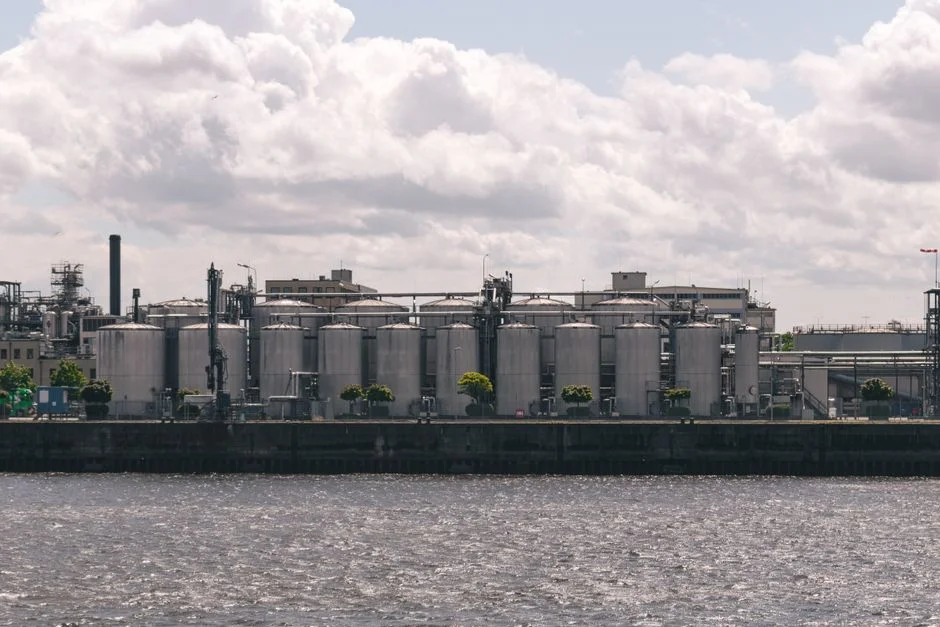
Jurisdiction determines the path for permit applications. Sites inside the City of Port Townsend collection area discharge under a City-issued sewer-use authorization, while sites in East Jefferson County — including any industrial user near the new PHUGA system — work with Jefferson County PUD and Jefferson County (Source: Jefferson County PUD wastewater page). Once the jurisdiction is clear, the engineer should pull the current City of Port Townsend sewer-use ordinance, the Local Limits and categorical standards fact sheet, and the most recent NPDES permit fact sheet for the receiving plant, and should not commit to detailed equipment sizing until those documents are in hand (qualitative; values to be confirmed from the City).
The application package typically contains a baseline wastewater characterization with process descriptions, a flow diagram, expected daily and peak hourly flows, pollutant concentrations, and a mass-balance estimate for oil and grease, TSS, pH, and priority metals; a slug-control plan tied to the BMP manual; a sampling plan with laboratory certifications; and a list of chemicals used on-site with Safety Data Sheets so the City can evaluate compatibility with the receiving plant's biological process. Comparable frameworks for other industrial sectors are described in guides such as how chemical plants near Baton Rouge meet 2026 pretreatment limits and mining pretreatment near Gordon, US (2026 sewer compliance guide), and the structure of a process-train comparison is laid out in DAF vs clarifier for chemicals wastewater (2026 factory guide).
| Item | Who provides it | Why it is needed |
|---|---|---|
| Current sewer-use ordinance and Local Limits fact sheet | City of Port Townsend Public Works | Defines the discharge ceilings the on-site train must meet |
| Most recent NPDES permit fact sheet for the WWTP | Washington State Department of Ecology | Shows the receiving plant's permitted effluent quality and any tightening trends |
| Process descriptions, flow diagram, expected flows and concentrations | Plant engineer | Baseline wastewater characterization required for SIU review |
| Mass-balance estimate for oil and grease, TSS, pH, and priority metals | Plant engineer | Quantifies load to the receiving plant |
| Slug-control plan and BMP manual | Plant engineer / EHS | Demonstrates protection of the receiving biological plant |
| Sampling plan with accredited lab and analytical methods | Plant engineer | Defines self-monitoring and reporting |
| Chemical inventory with Safety Data Sheets | Plant EHS | Compatibility check against the receiving biological process |
| Documentation for non-City collection areas | Jefferson County PUD and Jefferson County | Confirms jurisdiction and capacity for sites outside the City system |
Frequently Asked Questions
What does a transportation equipment plant near Port Townsend actually need to do to meet 2026 pretreatment limits?
Steps include confirming the receiving jurisdiction (City of Port Townsend for in-city sites, Jefferson County PUD and Jefferson County for East Jefferson County), requesting the current sewer-use ordinance and Local Limits fact sheet, characterizing the process waste streams, installing a treatment train that meets the Local Limits, and operating a self-monitoring and BMP program tied to the discharge authorization. The receiving plant on Kuhn Street treats about 900,000 gallons per day and discharges under an NPDES permit and the Puget Sound Nutrient General Permit, so on-site treatment must protect both the biological process and the outfall program (Source: City of Port Townsend General Sewer Plan).
How should a plant engineer budget for the on-site treatment train?
The research does not include equipment pricing, so any budget figure must be built from a written quote rather than a published range. The defensible first step is to ask suppliers for a sized proposal based on measured daily and peak hourly flows, oil loading, and the target effluent quality stated in the Local Limits, and to confirm whether installation, controls integration
Frequently Asked Questions
What is the typical budget range for installing an on-site pretreatment system to meet Port Townsend sewer limits for a small transportation equipment plant?
For a small-scale transportation equipment facility, the capital expenditure for a modular pretreatment system typically ranges from $150,000 to $450,000. This budget accounts for equipment procurement, such as pH neutralization tanks, oil-water separators, and solids handling units, as well as necessary plumbing modifications and electrical integration to meet current industrial pretreatment standards.
Ongoing operational costs, including chemical flocculants, sludge disposal fees, and analytical testing required to verify compliance with Port Townsend’s local limits, generally add $15,000 to $40,000 in annual recurring expenses depending on discharge volume and pollutant load.
How do I size a dissolved air flotation (DAF) unit for a transportation equipment plant that discharges to the City of Port Townsend sewer?
Sizing a DAF unit requires calculating the hydraulic loading rate based on peak daily flow, typically measured in gallons per minute (GPM), and the mass loading of total suspended solids (TSS) and fats, oils, and grease (FOG). For most transportation equipment applications, a unit should be sized to handle 1.5 times the facility's maximum hourly discharge rate to account for batch dumping of process tanks.
Engineers must ensure the air-to-solids ratio is optimized for the specific wastewater characteristics of the facility, often targeting a ratio between 0.01 and 0.10. Failure to properly account for the density of metallic particulates or paint solids common in transport manufacturing can lead to undersized clarification chambers and subsequent permit violations.
What is the realistic lead time from first contact with the City of Port Townsend to receiving an industrial discharge authorization in 2026?
Manufacturers should anticipate a lead time of 6 to 12 months from the initial inquiry to the issuance of a final industrial discharge permit. This timeline includes the necessary period for the City to conduct a technical review of the facility's wastewater characterization study and the development of site-specific pretreatment requirements.
If the facility requires the installation of new pretreatment infrastructure, this period may extend further to allow for the design, permitting, construction, and successful commissioning of the system before the City grants formal authorization to discharge under the 2026 regulatory framework.
What compliance risks should a transportation equipment plant near Port Townsend flag before signing a sewer discharge permit?
Facilities must carefully review the permit’s "Prohibited Discharge Standards," which strictly forbid the introduction of pollutants that cause pass-through or interference at the wastewater treatment plant, specifically regarding heavy metals like copper, zinc, and nickel common in transport equipment fabrication. Flagging the potential for "slug loads"—sudden, high-concentration discharges from cleaning or stripping operations—is critical, as these can trigger immediate enforcement actions.
Additionally, plants should identify any "Best Management Practices" (BMPs) mandated by the permit, such as mandatory secondary containment or spill prevention control and countermeasure (SPCC) plans, which represent significant legal and financial liabilities if not fully documented and maintained.
Where can a Jefferson County manufacturer verify whether it discharges to the City of Port Townsend WWTP or to a Jefferson PUD system such as Port Hadlock?
Manufacturers can verify their service provider by reviewing their utility billing statements or by consulting the Jefferson County GIS mapping portal, which outlines the jurisdictional boundaries of the Port Townsend sewer collection system versus the Jefferson County Public Utility District (PUD) service areas.
For definitive confirmation, plant managers should contact the City of Port Townsend Public Works Department or the Jefferson County PUD engineering division directly to request a service area verification letter. Relying on physical proximity is insufficient, as underground piping infrastructure does not always align with municipal or county political boundaries.