How Qatar Treats Domestic Sewage at National Scale
The Doha North Sewage Treatment Works (DNSTW) is the reference asset for domestic sewage treatment decisions in Qatar. It became operational in December 2015 and received about 46,000 m3/day from Northern Doha's main pumping station in Al Kheesa at the time of commissioning (S5, WaterWorld, 2016). The plant was designed to scale to 245,000 m3/day for a projected population of more than 900,000 by 2020, and it is the first facility in Qatar to use ultrafiltration (UF) and ultraviolet (UV) disinfection to polish effluent specifically for irrigation reuse (S5).
Solids handling is integrated into the national picture rather than left to each site. The second phase of the Doha North project includes a Thermal Drying Plant (TDP) built to receive and treat sludge from the DNSTW and all other Qatari STWs, with four thermal dryers commissioned in 2016 (S5). The contract envelope is approximately 3.63 billion Qatari Riyals (≈ US$988.6m), split between a ~2.49bn QAR design-build package and a ~1.14bn QAR 10-year operate-and-maintain contract awarded to Keppel Seghers on a design-build-operate basis (S5).
For an engineer scoping a community, school, or hospital site, two points follow. First, the process logic that Qatar has validated at 245,000 m3/day scale is BOD/COD removal followed by UF polishing and UV disinfection—that sequence is the country's de facto reuse train. Second, the domestic water sector in Qatar is a defined research and policy domain, with academic work from Gulf Studies publishers treating it as a standalone environment rather than a generic GCC case (S2, Springer Gulf Studies chapter). This framing matters when justifying a spec to Ashghal or a developer client: the country has committed to a membrane-based reuse pathway, and a decentralized plant that ignores that direction requires technical defense, not just pricing.
The Treatment Trains Used in Qatar, From Utility to Compound
Four process trains cover the bulk of decisions a Qatar-based engineer will face, differing in footprint, operator input, reuse quality, and alignment with the Doha North reference train.
- Conventional A/O (anoxic + aerobic) buried package. A single skid combining A/O biological contact oxidation, sedimentation, and disinfection, fully automated, no operator, sized 1–80 m³/h. This is the workhorse for compounds, hotels, hospital campuses, labor camps, and small communities. The buried A/O package sewage treatment plant in the WSZ series sits below grade, can be landscaped over, and can be trailer-mounted for mobile deployment (S6, WSZ spec).
- Submerged MBR (membrane bioreactor). Activated sludge combined with submerged PVDF membranes delivering sub-1-micron solid-liquid separation, sized 10–2,000 m³/day per system. An integrated MBR membrane bioreactor collapses secondary clarification and tertiary filtration into one tank, making it the default choice when reuse-grade effluent is needed on a tight plot.
- UF + UV polishing, downstream of any biological stage. Qatar has adopted UF + UV at national scale at Doha North for irrigation reuse; any decentralized spec that aligns with the country's reference train should plan a stand-alone UF polishing stage ahead of UV rather than relying on chlorination alone (S5).
- Vermifiltration and constructed-wetland hybrids. These are academically documented low-energy options for semi-arid regions, including Qatar-relevant work integrating constructed wetlands with microbial fuel cells (S1, IntechOpen chapter) and earthworm-based vermifiltration pilots (S3, IntechOpen, 2022). Treat these as pilot-grade until a client specifically requests them; they are not 2026 procurement defaults.
| Process train | Typical flow band | Footprint | Operator input | Effluent quality vs Doha North reuse train |
|---|---|---|---|---|
| Buried A/O package (WSZ) | 1–80 m³/h | Smallest — buried, landscaped | None (fully automated) | Discharge-quality; add UF/UV for reuse parity |
| Submerged MBR | 10–2,000 m³/day | Compact — clarification and filtration in one tank | Low; membrane cleaning scheduled | Reuse-ready for most non-potable end uses |
| A/O or MBR + stand-alone UF + UV | Scales with upstream | Adds a polishing hall | Low; membrane CIP and lamp replacement | Mirrors Doha North UF + UV reuse logic |
| Vermifiltration / constructed wetland | Pilot scale | Land-intensive | Moderate; media and ecology management | Below reuse spec; secondary effluent range |
Matching Plant Size to Site: A 2026 Sizing Framework
The buried A/O package sewage treatment plant is the lowest-footprint, no-operator default for sites up to ~80 m³/h, including compounds, hotels, hospital campuses, and labor camps (S6). The unit is buried, landscaping is restored above it, and daily operating costs are dominated by aeration and periodic desludging rather than an operator's salary.
The integrated MBR membrane bioreactor (10–2,000 m³/day) serves as the primary solution for sites targeting reuse-grade effluent on tight plots, such as schools, mixed-use developments, and hospital discharges to TSE networks. MBR's sub-1-micron separation removes most of the colloidal load that chlorination alone cannot, making MBR effluent usable for sub-surface and drip-irrigation applications without a separate clarifier and sand filter (S6, MBR spec).
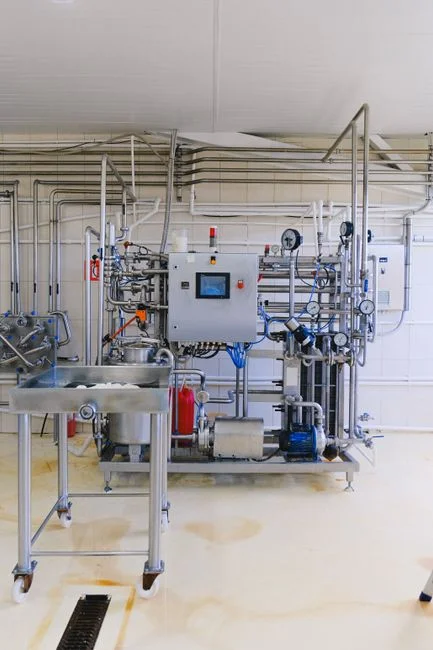
For any Qatar site that wants to mirror Doha North's UF + UV reuse logic, add a stand-alone UF polishing stage ahead of UV. A unit delivering 2,000–40,000 L/h at 0.03 µm with PVDF membranes provides the same colloidal-control logic that protects RO membranes at the utility scale, at a flow suitable for a community plant. Pair that with a UV disinfection stage sized to the post-UF flow to align the spec with the standards validated at Doha North (S5).
Closed-vessel membrane systems are preferred over open maturation ponds because trace-metal accumulation has been documented in Qatar's wastewater ponds (S4, OpenAlex 2002 study, 7 citations). For a 2026 new build, this evidence supports a spec shift away from open ponds toward enclosed biological reactors with a defined sludge stream.
| Site profile | Recommended primary train | Add-on for reuse parity | Reasoning |
|---|---|---|---|
| Villa compound, labour camp (≤80 m³/h) | Buried A/O package | UV disinfection only | Smallest footprint, no operator |
| School, mixed-use development, hospital campus | Submerged MBR | UV disinfection | Reuse-grade effluent on tight plot |
| Developer community discharging to irrigation or TSE | MBR or A/O + UF | UF polishing + UV | Mirrors Doha North UF + UV reuse train (S5) |
| Any site with sludge production | Any of the above | Plate-and-frame dewatering | Aligns with national TDP direction (S5) |
Headworks, Disinfection and Sludge: The Spec Everyone Forgets
While biological reactors often receive the most attention, the front and back of the plant are critical for long-term reliability. Four equipment packages should be on every Qatar spec.
Headworks. A rotary mechanical bar screen for headworks running in continuous duty protects downstream pumps, diffusers, and membrane cassettes from rags and grit. It is the mandatory first unit on any STW headworks and the lowest-cost insurance against ragging events that take a biological train offline.
Disinfection. UV is the only chemical-free option that addresses chlorine-resistant organisms and matches Doha North's UV + UF reuse train. A UV disinfection stage sized to the post-UF flow closes the reuse loop (S5). Where a residual is required downstream—such as in long TSE lines or holding tanks—a chlorine dioxide generator covers the case without producing the THMs associated with chlorine at high organic loads.
Sludge dewatering. The national direction of travel is set by the Doha North TDP, which was designed to receive sludge from all of Qatar's STWs (S5). Package sites cannot send cake to that TDP, so they require their own dewatering step. A plate and frame sludge dewatering press is the standard for producing a stackable cake that can be transported off-site for drying or landfill.
Dosing. A PLC-controlled chemical dosing skid for coagulant and pH correction is a hard requirement for any site polishing through UF. Turbidity spikes foul UF membranes faster than they foul clarifiers; the only practical defense is automated, flow-paced coagulant dosing upstream of the membranes with pH trim. Manual dosing is not a 2026 option for a membrane plant.
A 2026 Procurement Checklist for Qatar Package Plants
Five items should be non-negotiable on any RFQ issued in 2026:
- Documented BOD, COD, and TSS removal curves at the design flow—request curves at minimum, average, and peak diurnal loadings.
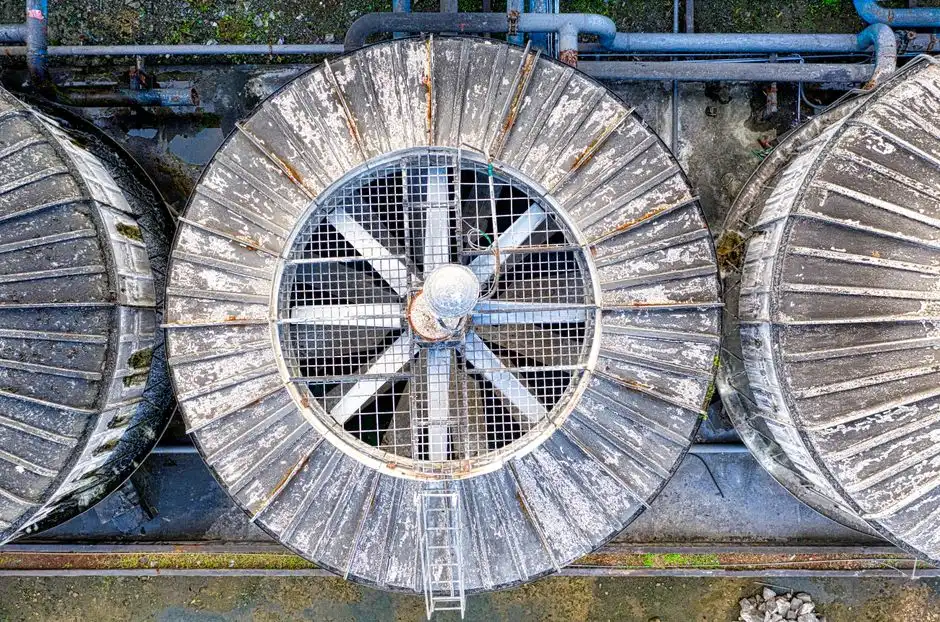
- UF polishing if the site will irrigate, discharge to a Treated Sewage Effluent (TSE) network, or feed cooling towers—this mirrors the Doha North UF + UV reuse logic (S5).
- PLC control with remote telemetry so the plant can be monitored from a centralized estate or an Ashghal interface without dispatching an operator.
- A sludge-handling plan (dewatering or drying)—even a small package plant produces solids, and Qatar's national strategy integrates sludge across STWs (S5).
- Factory-tested skid delivery—site civil works in Qatar are expensive, and every day of on-site assembly avoided pays for the upgrade.
For readers comparing regional procurement environments, the Al Ain effluent treatment plant buyer's guide and the Fujairah effluent treatment plant buyer's guide lay out equivalent checklists for the UAE. For containerized MBR sizing logic, the containerized MBR STP sizing guide walks through flow banding, footprint, and membrane-area selection.
Frequently Asked Questions
How much does a domestic sewage treatment plant cost in Qatar?
Cost is a function of flow band, effluent quality, and the level of factory pre-assembly. A buried A/O package in the 1–80 m³/h range, an integrated MBR in the 10–2,000 m³/day range, and a utility-scale plant with UF + UV polishing each sit in a different cost bracket. Pricing in 2026 is also sensitive to civil-works scope, PLC telemetry scope, and whether the supplier provides a 10-year O&M extension. Request a sized quote with these three line items separated, and ask for a guaranteed BOD/COD/TSS performance at design flow rather than a turnkey lump sum.
Which suppliers deliver package sewage treatment plants to Qatar?
Selection should be driven by four criteria: local service footprint in Qatar, PLC remote-monitoring capability, proven UF polishing capability, and a documented factory-test program. Suppliers that publish verified product specifications for both the buried A/O package and the integrated MBR—and that can ship pre-wired, factory-tested skids—will shorten site work and reduce commissioning risk. Cross-check that the supplier can support membrane cleaning cycles and spare-part logistics inside the country.