Why Manchester Projects Need a Different Sizing Logic
A containerized MBR sewage treatment plant is a packaged, pre-assembled unit shipped in an ISO container with all main mechanical equipment and plant control included for fast availability, easy transportation, and simple site start-up, as described by HUBER for the MENA-Water MBR complete plant range and by MENA-Water's own product page (huber-se.com; mena-water.com). In Manchester, the project types that fit this format are usually residential blocks, gated communities, halls of residence, and temporary or semi-permanent camps — construction workforce camps, scouting and guide camps, seasonal event camps, and military training camps. The engineering question is the same across all of them: how many people, what occupancy pattern, and what peak.
The trap to flag is that suppliers publish container capacity in m³/day, but residential and camp projects do not behave like a steady 24-hour municipal flow. Morning and evening peaks must be added to the design before picking a 20-ft or 40-ft HC unit. A defensible selection starts with an occupancy-driven flow target, not with a container label. For the package itself, the relevant benchmark is a HydropureWater MBR membrane bioreactor system in a 20-ft or 40-ft high-cube ISO format with submerged ultrafiltration and a 1.5 mm drum-screen pre-treatment, sized to peak flow with cold-weather derating applied for a Manchester winter.
Step 1 — Lock Down Population and Occupancy Profile
Design population for permanent residential developments in Manchester — apartments, key-worker housing, military family quarters — is calculated as total bedrooms multiplied by an occupancy factor agreed with the client. UK Building Regulations Approved Document Part H covers sanitary pipework sizing but does not set a per-capita sewage flow figure, so the engineer must declare the per-capita assumption and show the working. For camps, split the calculation into two cases: peak occupied capacity during a full camp session, and base load during set-up, strike, and winter shut-down. A packaged MBR with no continuous biological load will lose mixed-liquor activity, so the design must either avoid the no-load condition or specify a holding or dosing strategy, and the supplier must be told which mode applies.
Document the assumed peak factor. For residential blocks, 2.0–2.5× average dry weather flow is typical for peak hydraulic load on package plants; for camps with simultaneous shower and meal blocks, the peak factor can be higher and must be confirmed from the camp's daily timetable. The two project types also produce different ammonia and BOD profiles: a residential block has a steady 24/7 base load with a morning and evening spike, while a camp's daily peak can be compressed into a few hours of showers, toilets, and catering. This difference drives aeration tank sizing and explains why the same nominal m³/day figure can support very different populations depending on the design case.
Step 2 — Convert Population into a Daily Flow Target
Pure Aqua's MBR-C sizing table uses 50 gallons per capita per day (≈190 L/head·day) as a working population-to-flow benchmark for residential-strength sewage in a containerized MBR (pureaqua.com). Apply the formula directly: Design flow (m³/day) = Population × 0.190 m³/head·day, then multiply by the peak factor from Step 1 to get the peak daily flow the MBR must handle. For a 200-person residential block on this benchmark, average daily flow is 38 m³/day, and at a 2.5× peak factor the design peak is 95 m³/day — a useful sanity check before any container is selected.
The scope of that figure matters. 50 gpd is a supplier's residential benchmark for sizing, not a UK regulatory number, and the engineer should cross-check it against local United Utilities (Manchester's sewerage undertaker) connection guidance and the Environment Agency's small sewage discharge rules for the discharge route being used. If a project is discharging to a United Utilities sewer, the trade-effluent consent will set the legal effluent quality — flow is not capped, but the hydraulic load on the receiving sewer at peak times often is. For a packaged MBR using a DF series PVDF flat-sheet MBR membrane module, the per-capita flow is the demand the membranes have to pass, not the consent's quality figure, so the two numbers must be kept separate in the design report.
Step 3 — Match Flow to a 20-ft or 40-ft HC Container Format
Containerized MBR systems are available in 20-ft and 40-ft high-cube (HC) ISO container formats with insulated walls, zero water leakage, and a seaworthy structure suitable for UK road delivery (pureaqua.com). The capacity range spans a few m³/day at the low end up to several thousand m³/day for very large MBR package plants (huber-se.com), and MENA-Water states that more than 1,200 m³/day can be filtered in one 40-ft ISO container (mena-water.com). A 40-ft HC is the right starting point above the mid-hundreds of m³/day; a 20-ft HC is the right starting point for small residential blocks and most camps.
Standard contents inside the container are a pre-treatment drum screen with 1.5 mm perforation to protect the membranes, an aeration tank with fine-bubble diffusers for biomass growth, submerged hollow-fiber UF membrane modules with coarse-bubble diffusers for membrane scouring, and a built-in membrane cleaning and air-scour system (pureaqua.com). MENA-Water specifies stainless steel sheets for the inside tanks of its containerized MBRs (mena-water.com), which is the correct specification for a 20–30 year Manchester installation. The engineer does not need to design these internals — only to confirm they are present and to size the HydropureWater MBR membrane bioreactor system to the peak flow from Step 2.
| Container format | Typical flow range (m³/day) | Indicative population at 190 L/head·day (average) | Best-fit project type in Manchester |
|---|---|---|---|
| 20-ft HC | Low single digits to low hundreds | Small developments and camps | Small apartment block, scout/guide camp, construction workforce camp under ~200 people at average load |
| 40-ft HC | Mid-hundreds up to >1,200 m³/day (mena-water.com) | Larger developments | Gated community, halls of residence, large seasonal event camp, military training camp at peak |
These ranges are not guarantees — they describe what is available in each container size, and the exact capacity must be confirmed against the supplier's selection curve for the duty point.
Step 4 — Residential Block vs Camp: Same MBR, Different Inputs
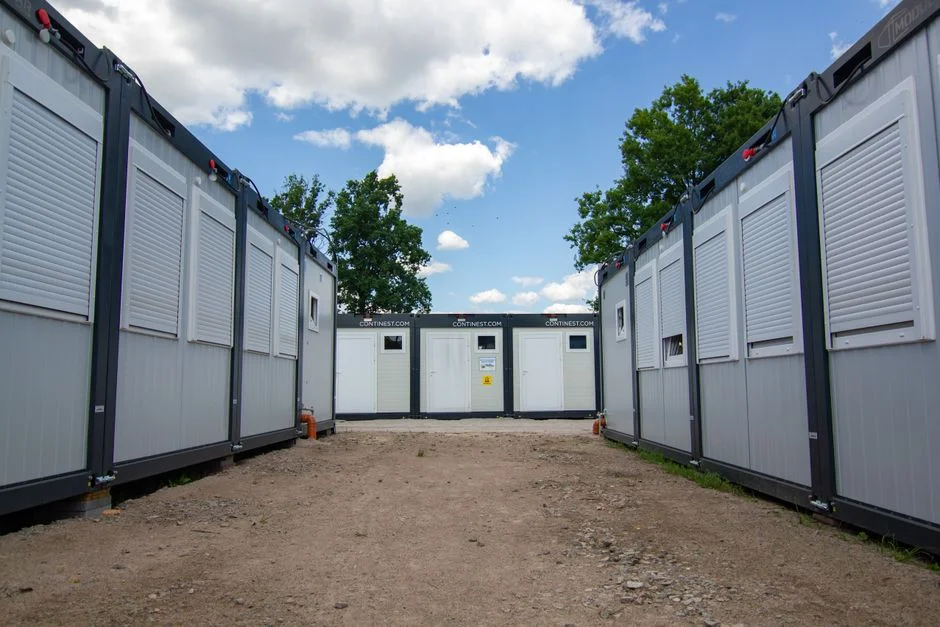
A residential block delivers a 24/7 base load with a predictable diurnal peak and a steady BOD and ammonia profile. The MBR's higher biomass concentration — cited as a key MBR advantage over conventional activated sludge by both MENA-Water and HUBER (huber-se.com; mena-water.com) — provides the nitrification capacity needed in a small footprint. A camp is the opposite case: highly seasonal, often zero or near-zero load in the off-season, with a peak that can be compressed into a few hours of showers, toilets, and catering. The design must therefore specify either a minimum continuous turnover to keep biomass alive, a sludge-seeding procedure at re-start, or acceptance of a longer recovery period after seasonal re-opening. Pure Aqua's submerged membrane modules are designed to allow straightforward re-start because the membranes themselves are not biological (pureaqua.com) — but the biomass around them must be managed, and that belongs in the design report.
Container siting also differs. A residential block usually justifies a buried or semi-buried 20-ft HC to free the surface for landscaping, often using an underground package format such as the WSZ underground integrated sewage treatment plant arrangement when the site can take excavation. A camp often requires a fully above-ground trailer-mounted unit that can be redeployed, which is closer to the I-version mobile configuration that MENA-Water describes for plants that need to be shifted to new locations (mena-water.com).
| Design input | Residential block (Manchester) | Camp (Manchester region) |
|---|---|---|
| Base load | 24/7, design to ADWF | Seasonal; near-zero in off-season |
| Peak factor | 2.0–2.5× typical for package plants | Higher, set from the camp's daily timetable |
| Re-start after idle | Not normally required | Specify seeding or turnover strategy |
| Container siting | Semi-buried 20-ft or 40-ft HC, landscaping above | Above-ground trailer-mounted 20-ft HC for redeployment |
| Compliance route | United Utilities trade-effluent consent for sewer discharge | Environment Agency small sewage discharge rules for ground/surface water |
Step 5 — Effluent Target and Manchester Compliance Check
Submerged UF membranes with a 0.04 µm nominal pore size retain suspended solids, small colloids, bacterial flocs, and viruses (pureaqua.com), and MENA-Water quotes 99.9999% virus and bacteria reduction for its UF membrane core (mena-water.com). This is the technical basis for claiming near-reuse quality from a packaged MBR. Manchester residential projects discharging to sewer will need a United Utilities trade-effluent consent and should aim for a packaged MBR effluent comfortably below the consent's BOD, SS, and ammonia limits — the membrane step is what makes this achievable in a 20-ft or 40-ft HC package, where a conventional activated-sludge plant of the same footprint would not reach the same quality.
Manchester projects discharging to ground or surface water — more likely for a camp without a sewer connection — fall under the Environment Agency's small sewage discharge rules and will need the MBR's effluent to be demonstrated within the relevant permit quality. The exact target must be confirmed with the local EA officer before locking the container size, because the consent quality, not the membrane's capability, is the binding number. The membrane is what makes compliance achievable; the consent is what sets the bar.
Step 6 — Cold-Weather Derating and Container Siting in Manchester
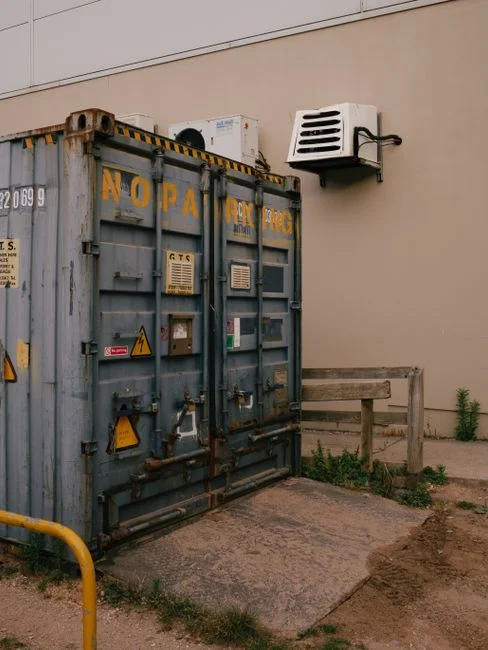
Pure Aqua's MBR-C documentation specifies a design temperature of 20°C and an operating range of 20–30°C (pureaqua.com). Manchester winter sewage temperatures will sit at or below the lower end of that range, so the MBR's biological stage slows and the engineer must either oversize the aeration tank, add enclosure heating, or specify a container with the buffer tank buried for thermal stability. MENA-Water notes that the membrane surface is cleaned by air bubbles flowing over it, with backwash and chemical cleaning only as required, and that the membranes only need one or two maintenance chemical cleanings per year (mena-water.com) — that low cleaning frequency is what makes a containerized MBR viable for an unstaffed or minimally staffed Manchester site. Membrane replacement elements, when eventually needed, can be supplied as HydropureWater RO and UF membrane replacement elements to match the original specification.
Lock the siting decision before ordering. For permanent residential, prefer a semi-buried 20-ft HC or 40-ft HC with landscaping above; for camps, prefer a trailer-mounted 20-ft HC that can be lifted off and relocated. Confirm the access road and crane pad before placing the order with the supplier, and ask the supplier to confirm cold-weather performance at the design sewage temperature for the site, not at the 20°C reference point. For more on the wider trade-offs, the MBR advantages and disadvantages 2026 buyer's guide covers the design decisions a UK engineer has to defend in writing.
Frequently Asked Questions
What per-capita flow should I declare in a UK design report for a packaged MBR?
Declare 50 gpd (≈190 L/head·day) as the working residential benchmark used by containerized MBR sizing tables (pureaqua.com), and state that it is a supplier's residential benchmark rather than a UK regulatory figure. Cross-check it against United Utilities'
Frequently Asked Questions
What per-capita sewage flow should I use to size a packaged MBR for a Manchester residential block?
For residential developments in the UK, you should typically use a design flow of 150 to 200 liters per person per day (l/p/d) in accordance with British Water’s Code of Practice. This figure accounts for typical domestic water usage, including bathing, laundry, and kitchen activities, while incorporating a safety factor for peak flow fluctuations.
It is critical to verify the specific water consumption targets set by the local Manchester planning authority, as new residential builds may be subject to tighter limits (e.g., 110 l/p/d) under Part G of the Building Regulations, which will directly impact the hydraulic loading calculations for the Membrane Bioreactor (MBR).
Should I specify a 20-ft or 40-ft high-cube ISO container for a residential or camp project under 200 people?
For a population of up to 200 people, a 40-ft high-cube ISO container is generally recommended. A 20-ft container is typically limited to a maximum population equivalent (PE) of 50 to 75, whereas a 40-ft unit provides the necessary footprint for the additional membrane surface area, aeration blowers, and chemical dosing pumps required for higher organic and hydraulic loads.
High-cube containers (9ft 6in external height) are preferred as they allow for better internal head height, facilitating easier maintenance access to the membrane cassettes and pipework manifolds, which is essential for long-term operational reliability in a camp or residential setting.
How does a containerized MBR perform in Manchester winter temperatures, and do I need to oversize?
Manchester’s climate, with winter temperatures often dropping near or below 5°C, can inhibit the biological activity of the activated sludge process. You must ensure the container is fully insulated with closed-cell foam or mineral wool and equipped with an internal heater or heat exchanger to maintain a biological process temperature of at least 10°C to 12°C for optimal nitrification.
While you do not necessarily need to "oversize" the tank volume, you must specify a higher aeration capacity and potentially a larger sludge age (SRT) to compensate for slower microbial kinetics during cold months. Failure to regulate the internal process temperature will lead to ammonia spikes and potential non-compliance with Environment Agency discharge limits.
What is the lead time for a containerized MBR package plant delivered to a UK site, and what should I ask the supplier before paying a deposit?
Typical lead times for a containerized MBR plant delivered to a UK site range from 16 to 24 weeks, depending on the availability of long-lead items like membrane modules and specialized PLC control components. Supply chain volatility can extend this period, so firm delivery dates should be contractually linked to penalties.
Before paying a deposit, you must request a detailed process flow diagram (PFD), a site-specific hydraulic profile, and a performance guarantee document signed by their lead engineer. Additionally, ask for evidence of previous UK-based installations that meet Environment Agency (EA) discharge standards and verify that the electrical components are fully compliant with BS 7671 (IET Wiring Regulations).
Can a single 40-ft ISO container MBR meet Environment Agency discharge standards for a small camp without a sewer connection?
Yes, a single 40-ft containerized MBR is capable of meeting strict Environment Agency standards, such as 10mg/L BOD, 10mg/L TSS, and 5mg/L Ammoniacal Nitrogen, provided the system is designed with an integrated denitrification zone and effective tertiary filtration. These systems are specifically designed to treat wastewater to a standard suitable for discharge into sensitive watercourses or for non-potable reuse.
To ensure compliance, you must obtain an Environmental Permit from the EA before installation. The permit application will require detailed documentation of the plant’s effluent quality, the discharge point characteristics, and a robust maintenance schedule, as MBR systems require frequent membrane cleaning cycles to maintain their high-quality discharge output.