
How Dubai Treats Its Domestic Sewage Today
Dubai's domestic sewage network is anchored by two Dubai Municipality plants — Al Awir and Jebel Ali — and roughly 1,200 km of sewerage pipeline (Wikipedia, Sanitation in Dubai). The Al Awir plant's first phase was designed for 260,000 m³/day, and by December 2007 it was handling approximately 500,000 m³/day; a second phase added 65,000 m³ of capacity in January 2008 and a third phase was studied to add another 80,000 m³ (Wikipedia, Sanitation in Dubai).
The Jebel Ali plant was commissioned in two phases, completed in April 2009 and October 2010, with a 300,000 m³/day capacity on a 670-hectare footprint and a project cost above AED 1.5 billion; it was named the MEED Water Reuse Project of the Year in 2011 (Wikipedia, Sanitation in Dubai). Several smaller privately operated plants serve specific districts around the emirate, and an additional 80 km of network was added in 2011 to connect Dubai Industrial City (Wikipedia, Sanitation in Dubai).
Following the April 2024 UAE floods, a new 277 million AED sewage system was completed on 18 June 2025 (Wikipedia, Sanitation in Dubai) — a relevant data point for any developer sizing hydraulic headloss against a possibly re-routed network. In 2013, the Jebel Ali plant received about 30% of its sewage by tanker truck and 70% through the piped network, demonstrating that off-grid collection remains an established operating mode in Dubai (Wikipedia, Sanitation in Dubai). The first decision a 2026 developer must make is binary: is the site inside the Dubai Municipality piped network and capable of a gravity or pumped connection, or is it outside coverage and therefore a candidate for a private or decentralised plant? Only after that question is answered does the process technology choice — A/O package, SBR, or MBR — become relevant.
When a Developer Needs a Private or Decentralised Plant
Private or decentralised sewage treatment plants (STP) are required whenever a site cannot physically or economically connect to the Dubai Municipality sewerage network. Common trigger cases in Dubai include master-developer land outside DM coverage, hospitality projects aiming for on-site TSE irrigation reuse, labour accommodations, schools and hospitals, and remote industrial or logistics parks. In 2013, the Jebel Ali plant was receiving about 30% of its incoming sewage by tanker, with the remaining 70% arriving through the piped network (Wikipedia, Sanitation in Dubai), so off-grid discharge to a private plant — or tanker collection from a private plant — is an established Dubai operating mode.
Specifiers should pull together the following inputs before selecting equipment: average and peak daily flow in m³/day, influent characterisation (BOD, COD, TSS, ammonia, temperature), the required discharge class (sewer, TSE irrigation, or cooling-tower makeup), the available footprint, power availability, and the operator skill level the facility can sustain. Peak flow sizing typically uses a diurnal peaking factor in the 1.5–2× average range as standard practice, but the supplied research contains no Dubai-specific peaking factor — the specifier should request the current peaking factor from Dubai Municipality before finalising hydraulic design. Without these inputs, any quote is just a catalogue number, not an engineered offer.
Process Options for Domestic Sewage in a Gulf Climate
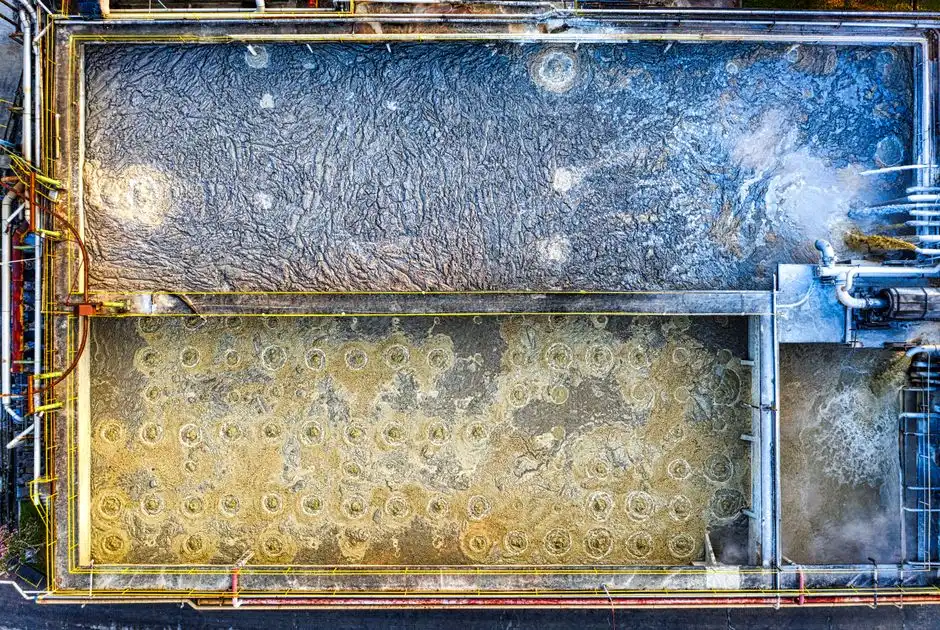
Three process families cover the small-to-mid range that a Dubai developer or hotel operator will encounter: Anoxic/Oxic (A/O) packaged biological contact oxidation, Sequencing Batch Reactor (SBR), and Membrane Bioreactor (MBR). The WSZ underground A/O package plant combines anoxic denitrification, aerobic BOD removal, sedimentation, and disinfection in a single buried unit running 1–80 m³/h on a fully automated basis with no dedicated operator required (HydropureWater WSZ series catalog). For projects where the daily flow exceeds the package range, an SBR runs fill–react–settle–decant in a single tank — robust under variable loads but tank-volume-bound, so the civil footprint scales directly with flow.
MBR couples conventional activated sludge with submerged PVDF membranes, typically at 0.1 μm nominal pore size, to deliver near-reuse effluent in a footprint the manufacturer estimates at roughly 60% smaller than a conventional activated-sludge plant of equivalent capacity (HydropureWater MBR system catalog, 10–2,000 m³/day). The integrated MBR membrane bioreactor is the natural choice where the design intent is on-site TSE reuse for landscape irrigation or cooling-tower makeup. Membrane fouling control in Gulf ambient temperatures requires sustained aeration scouring of the membrane module; the DF series flat-sheet MBR module integrates a dedicated aeration box specifically to address this (HydropureWater DF series MBR module catalog). Disinfection is a baseline requirement; a metagenomic study of a conventional domestic plant in the comparable Gulf city of Jeddah found bacteria dominant in both influent and effluent, with archaea and viruses also detected (Diversity, 2021).
Comparing A/O Package, SBR, and MBR for Dubai Sites
The decision between A/O package, SBR, and MBR turns on flow band, footprint, effluent quality, automation, and operator skill. The following table cross-shops the three against the criteria that drive a Dubai spec.
| Criterion | A/O Package (WSZ) | SBR | MBR |
|---|---|---|---|
| Flow band | 1–80 m³/h (HydropureWater WSZ series catalog) | Scales by tank volume — no fixed upper bound | 10–2,000 m³/day (HydropureWater MBR system catalog) |
| Footprint | Compact buried unit; landscaping possible above | Tank-volume-bound; grows linearly with flow | ~60% smaller than equivalent conventional activated sludge (HydropureWater MBR system catalog) |
| Effluent quality | Sewer-discharge envelope with disinfection | Comparable to A/O when well operated | <1 μm filtrate suitable for TSE reuse |
| Automation | Fully automated, no operator required (HydropureWater WSZ series catalog) | PLC cycle management required | Membrane air-scour plus periodic chemical cleaning |
| Best fit in Dubai | Small residential compounds, hotels, labour camps | Variable-load mid flows, phased developments | On-site TSE reuse, tight footprints, hospitality irrigation |
These technology options provide distinct performance profiles for varying project requirements. The product pages for the WSZ underground A/O package plant, the integrated MBR membrane bioreactor, and the DF series MBR membrane module provide the catalog flow bands that anchor any quote. In practice, the A/O package covers most small residential and hospitality applications up to roughly 80 m³/h, SBR handles variable-load mid-range projects where civil footprint is not a constraint, and MBR is the only realistic option when on-site TSE reuse for landscape irrigation or cooling-tower makeup is a design requirement.
2026 Cost Envelope and Compliance Checklist
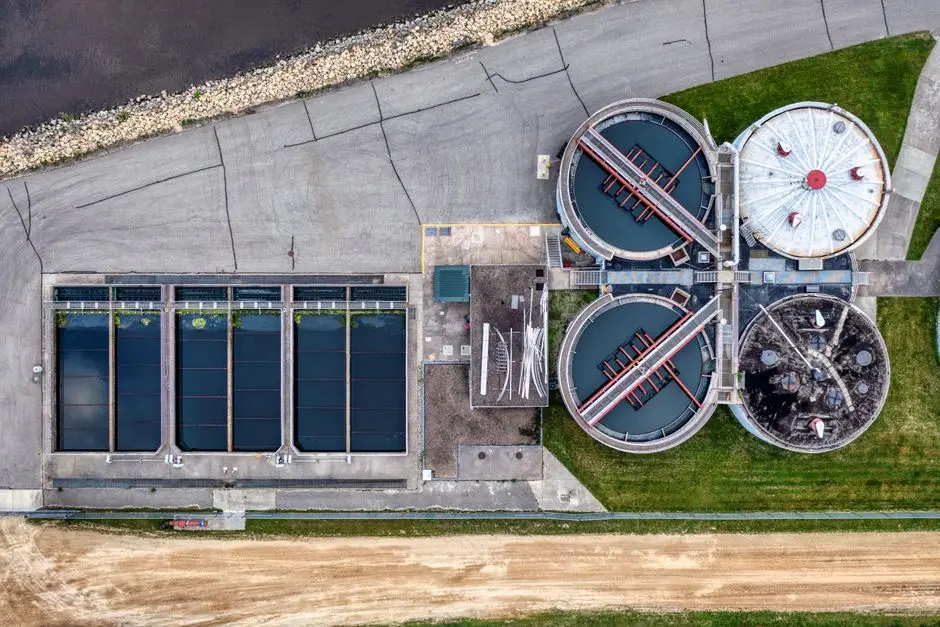
The supplied research does not contain private-project CAPEX or OPEX figures for Dubai, and any AED-per-m³ figure quoted without a site-specific flow band, reuse intent, and tank material specification should be treated as a placeholder. CAPEX scales primarily with the daily flow band, the choice of tank material (concrete, GRP, or carbon-steel epoxy), and whether a TSE reuse loop — pumping, filtration, and irrigation main — is included in the supply scope. The defensible move in 2026 is to request itemised breakdowns from shortlisted suppliers against the developer's own flow band and reuse intent rather than relying on headline price-per-m³ values.
Compliance anchors the specifier should request in writing from any Dubai supplier before signing a purchase order: Dubai Municipality approval for the STP design under the current technical guidelines, the discharge-to-sewer versus TSE reuse permit pathway, and confirmation that the installed automation level matches the operator competency the facility can actually sustain. Reuse intent changes the process envelope — TSE for irrigation or cooling needs the <1 μm MBR-grade effluent, while sewer discharge can accept a conventional A/O plus disinfection package such as the WSZ underground A/O package plant. Operator footprint is a real OPEX line in Dubai labour terms: A/O package plants run with no dedicated operator (HydropureWater WSZ series catalog), whereas an MBR needs trained attendance for membrane maintenance, CIP cycles, and integrity testing. The full UAE residential and domestic-sewage context — including a parallel reading on residential wastewater treatment — is covered in the residential wastewater treatment in UAE 2026 guide and the domestic sewage treatment in UAE 2026 guide.
Frequently Asked Questions
Which Dubai Municipality plant serves my district?
Dubai Municipality operates two main sewage treatment plants, Al Awir and Jebel Ali, connected by roughly 1,200 km of sewerage pipeline (Wikipedia, Sanitation in Dubai). The first action is to confirm piped-network coverage at the site boundary with Dubai Municipality before sizing any private plant; Jebel Ali was receiving 70% of its 2013 inflow by pipeline and 30% by tanker (Wikipedia, Sanitation in Dubai), so absence of a connection does not foreclose a private-plant route.
What is the 2026 cost envelope for a private STP in Dubai?
The supplied research contains no private-project AED figures for Dubai, so a defensible 2026 budget cannot be derived from a generic price-per-m³. The specifier should request itemised quotations from at least three suppliers, broken down by flow band, tank material, TSE reuse loop inclusion, and operator scope, and benchmark the answers against the developer's own peak daily flow and reuse intent before committing.
Which technology fits a small Dubai hotel or labour camp?
For small flows up to 80 m³/h the standard answer is an A/O package plant such as the WSZ series, which combines anoxic, aerobic, sedimentation, and disinfection stages in a single buried unit, runs fully automated, and requires no dedicated operator (HydropureWater WSZ series catalog). The product specification for the WSZ underground A/O package plant gives the catalog flow band to quote against.
What compliance pathway applies to TSE reuse in Dubai?
The supplied research does not cite the specific treated-effluent limit values a Dubai developer must meet, so the first compliance step is to confirm the current TSE reuse limits, irrigation quality classes, and permit pathway directly with Dubai Municipality before locking the process envelope. Any supplier quotation should be conditioned on written confirmation that the offered effluent quality matches the reuse class the project will actually register for.