
Why Lift Station Pump Replacement and Control Panel Upgrades Usually Travel Together
A lift station is three subsystems sharing one enclosure and one power feed: the pumps, the control panel, and the electrical distribution. Atlanta Wastewater groups those subsystems the same way and treats them as inseparable when sizing a replacement (Atlanta Wastewater, 2026). The practical consequence is that a "pump problem" at a lift station is often a panel problem, and the reverse is also true — so a project that only swaps one component can leave the other failure mode intact.
The clearest documented case in the research is the Parris Island Wastewater Treatment Facility SCADA upgrade reported by Pacific Northwest National Laboratory. Before the project, the 32-station fleet was supervised by a legacy Seaboard-style telemetry monitor; local pump controls were still functioning, but alarm reporting was not reliable, meaning the station kept working while remote supervision went dark (PNNL, 2000). The remote panels in the field had been failing at an increasing rate as a result of age, moisture penetration, and heat deterioration of the electronic packages — not pump impeller wear (PNNL, 2000). That is the exact failure mode where replacing only the mechanical pump on an aging panel is a partial fix: the impeller is fine, but the electronics around it are dying.
Treating the pump and the panel as one procurement decision, not two unrelated work orders, is what separates a defensible modernization from a recurring repair cycle.
Signals That the Control Panel — Not the Pump — Is the Real Problem
The fastest way to mis-scope a lift station project is to replace a pump when the panel is the failing component. The Parris Island case is explicit on this point: pre-upgrade, the lift station local controls were still functioning while alarm reporting was not reliable, and the remote panels were failing from age, moisture penetration, and heat deterioration of the electronic packages (PNNL, 2000). Operators in that situation can be fooled into thinking the station is healthy because the pumps still cycle — supervision is what has actually gone silent.
Use this checklist before you approve a pump purchase order:
- Silent or delayed alarms. If your alarm history shows missing entries on dates when the station was clearly running, the SCADA/panel telemetry is failing, not the pump (PNNL, 2000).
- Visible enclosure damage. Condensation inside the cabinet, white corrosion on terminals, or discolored/corroded circuit boards point directly to the documented moisture-plus-heat failure mode (PNNL, 2000).
- Contactor chatter or repeated trips. Chattering contactors, unexplained seal failures, and pump trips that reset on the next cycle often trace to the panel's power supply, relay logic, or level sensing rather than the impeller (PNNL, 2000).
- Chronic overflows or repeated service calls. Atlanta Wastewater treats repeated pump or control issues and chronic overflows as triggers for a full system review rather than another pump swap (Atlanta Wastewater, 2026).
One or more of these signals — without a corresponding drop in pump flow or a bad vibration signature — is reason to inspect the panel before you order a new pump.
What a Modern Lift Station Control Panel Actually Contains
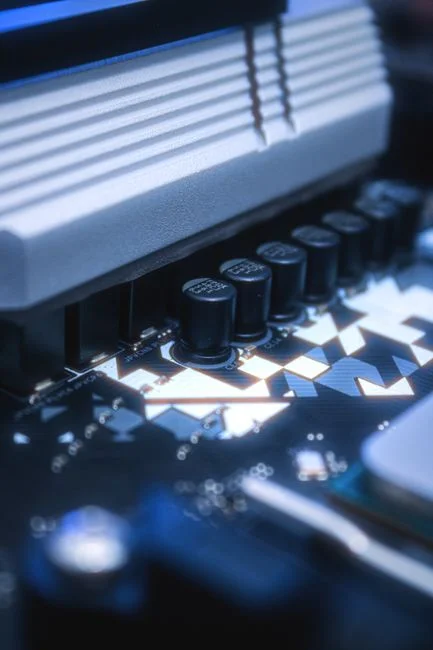
The Parris Island SCADA upgrade gives a usable reference architecture for what a modern lift station control panel actually contains, because the report lists the components PNNL staff designed into each station's cabinet (PNNL, 2000). For a 2026 spec, the components below are the spine a panel shop should be asked to meet or exceed; defaulting to whatever a panel builder happens to stock is how a buyer ends up with the same failure mode in a new enclosure.
| Subsystem | Reference component (Parris Island, PNNL 2000) | What to verify on a 2026 quote |
|---|---|---|
| Enclosure | UL-labeled weatherproof control panel | UL label confirmed; NEMA/IP rating appropriate for the wet-well environment |
| Controller | Allen-Bradley Micro 1000 PLC handling pump start/stop, lead-lag, alarms | PLC platform, I/O count, and programming access for setpoint changes |
| Power & interface | Dedicated power supply and interface relays for each pump | Field wiring isolated from controller I/O; per-pump protection and indication |
| PLC-failure backup | Hard-wired float override so pumps continue to run on rising level if the PLC fails | Override path independent of the PLC, documented on the schematic |
| Level sensing | Milltronics ultrasonic level detection system in each remote lift station sump | Non-contact level sensor with sump-level reporting to SCADA |
| Telemetry / SCADA | Each station graphic shows sump level, pump status, communications status, and remote generator status under loss of power | All four points visible on the operator screen; security-gated setpoint access |
The single most important row is the PLC-failure backup. PNNL explicitly specified override float operations for the case of PLC failure so the station never stops pumping because the controller stopped thinking (PNNL, 2000). A quote that does not show a hard-wired float path independent of the PLC should be sent back for revision. For chemical-feed stations that share a wet well, the same architecture pairs naturally with a PLC-controlled chemical dosing skid on a common SCADA backplane, so dose trim and pump start-stop are supervised from one screen.
Pump Replacement vs. Panel-Only Upgrade vs. Full Modernization
Top-ranking pages blur the pump and the panel into a single "replace the lift station" decision, which is the most common scoping mistake in this kind of project. The research supports three separable options, each with a defined trigger condition:
| Option | Scope | Trigger condition | Risk if mis-applied |
|---|---|---|---|
| A — Pump-only replacement | Swap pump(s) and associated piping; reuse existing panel and SCADA | Pump has reached mechanical end of life; panel is recent, in good condition, and alarms are reliable (Atlanta Wastewater, 2026) | Leaves a moisture- or heat-damaged panel in service, so the next failure is electronic, not mechanical (PNNL, 2000) |
| B — Panel-only upgrade | Replace enclosure, PLC, level sensing, telemetry; reuse pumps if mechanically sound | Local controls still function but alarm reporting is unreliable, or enclosure/electronics show moisture or heat damage (PNNL, 2000) | A pump near end of life will force a second project inside two to three years |
| C — Full modernization | Replace pumps, panel, level sensing, and SCADA; enable remote supervision across the fleet | Frequent failures, chronic overflows, code-compliance gaps, or the operator wants to enable remote supervision across many stations (Atlanta Wastewater, 2026; HTT, 2026) | Higher upfront cost; mitigated by the staffing and reliability outcomes below |
Atlanta Wastewater is explicit that its pre-work is the same regardless of which option is chosen: inspect pumps, control panels, electrical systems, and wet-well conditions to size the right solution (Atlanta Wastewater, 2026). HTT frames the modernization trigger around four factors — aging infrastructure and technology, inefficiency, performance issues, and inability to meet current regulatory and performance standards (HTT, 2026) — which maps directly to Option C. For a buyer comparing bids, this matrix is also the simplest defense against a panel shop that quotes a pump swap when a panel upgrade was really needed, or vice versa.
Planning an Upgrade: From Inspection to Cutover
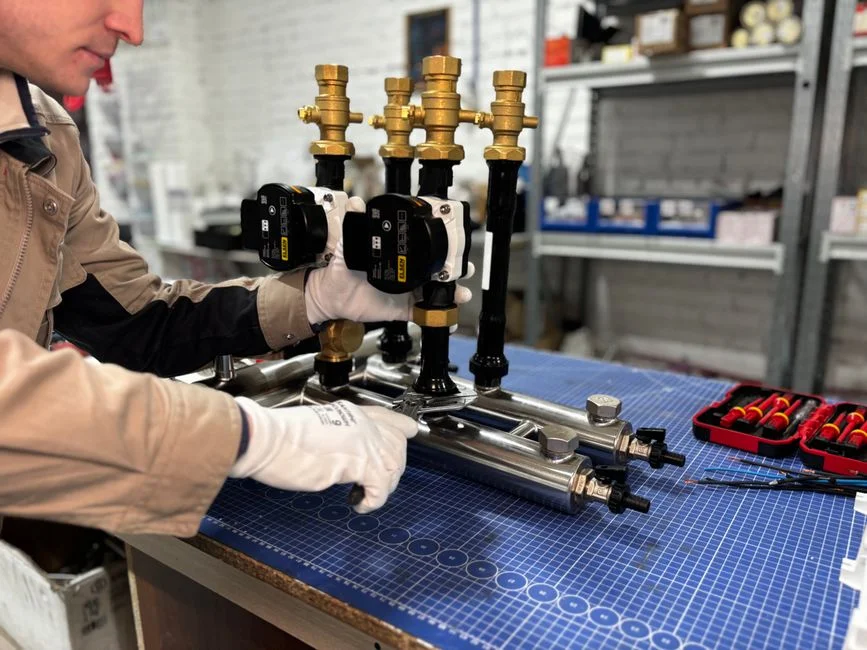
A lift station modernization is a sequenced project, not a single purchase. The research supports the following order, and a contractor who tries to skip steps should be asked why.
- Condition assessment. Inspect pumps, control panels, electrical systems, and the wet well before any equipment is ordered, per Atlanta Wastewater's pre-replacement inspection scope (Atlanta Wastewater, 2026).
- Scope decision. Lock the project to Option A, B, or C above before any equipment is ordered, so procurement and panel fabrication run in parallel against the same specification.
- Panel specification. Specify against the reference architecture in the previous section, including the hard-wired float override that operates independent of the PLC (PNNL, 2000).
- Telemetry integration. Confirm each station surfaces sump level, pump status, communications status, and remote generator status under loss of power to the central SCADA (PNNL, 2000).
- Communications infrastructure. Budget for it. At Parris Island, an antenna tower was added during the upgrade to improve communications reliability between the main plant control room and the more remote lift stations — a known line item that is easy to miss on a panel-only quote (PNNL, 2000).
- Operator permissions and setpoints. Configure security-gated setpoint access so supervisors can change alarm points, auto start/stop points, and level control set points through the SCADA interface, while operators can run but not reconfigure (PNNL, 2000).
For utilities that are also re-evaluating headworks or outsourced operation as part of the same capital cycle, the mechanical screen selection guide for headworks and the outsourced wastewater plant operation buyer's guide sit naturally upstream of the lift station decision. Plants with a chemical-feed pain point can run the panel upgrade in parallel with the pH adjustment system troubleshooting field guide so dose control lands on the same PLC platform.
The Business Case: Reliability Plus Staffing
The Parris Island case is the single best proof point in the research for converting a lift station control panel upgrade into a budget-line item, because it documents both the reliability outcome and the staffing outcome on a real fleet (PNNL, 2000).
Pre-upgrade, the WWTF supervised 32 remote lift stations through a Seaboard-style telemetry monitor; one lift station was added during the project to reach 33, which is a useful order-of-magnitude reference for a multi-station fleet (PNNL, 2000). The remote panels had been failing at an increasing rate from age, moisture penetration, and heat deterioration, and alarm reporting was not reliable (PNNL, 2000). Post-upgrade, replacing the weather-degraded panels and adding ultrasonic level sensing eliminated that unreliable alarm reporting.
The staffing outcome is what makes the 2026 ROI argument. The automation provided by the SCADA upgrades allowed the WWTF supervisor to eliminate backshift and weekend staff and to reallocate hours from 24-hour daily operations to preventive and proactive maintenance (PNNL, 2000). For a 2026 buyer, the ROI conversation is not framed as "fewer pump failures" alone; it is framed as fewer on-site operator hours per station, which compounds with the number of lift stations in the network. A utility running 30-plus stations can treat the Parris Island result as an order-of-magnitude reference and ask suppliers for a station-by-station labor delta before signing a modernization scope.
What to Ask a Control Panel Supplier Before You Sign
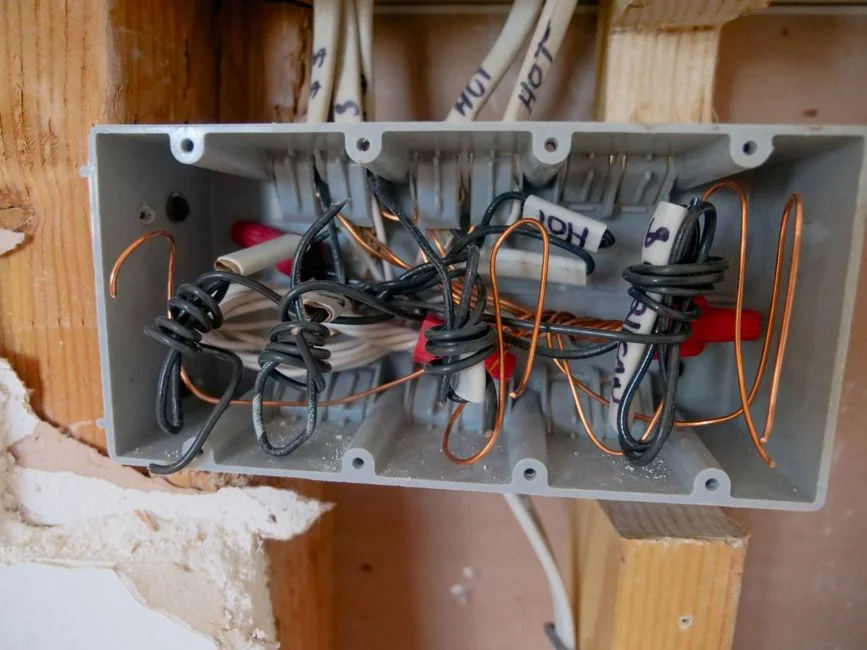
Convert the reference architecture into a procurement checklist and email it to vendors before asking for a price; a quote that does not answer every line is a quote to revise, not a quote to accept.
- Enclosure: confirm UL label and NEMA/IP rating appropriate for the wet-well environment (PNNL, 2000).
- Controller: confirm PLC platform, I/O count, and programming access for setpoint changes (PNNL, 2000).
- PLC-failure backup: confirm a hard-wired float override path that operates independent of the PLC, with the override shown on the schematic (PNNL, 2000).
- Level sensing: confirm ultrasonic or equivalent non-contact level sensor with sump-level reporting to SCADA (PNNL, 2000).
- Telemetry: confirm each station graphic surfaces sump level, pump status, communications status, and remote generator status under loss of power (PNNL, 2000).
- Lead/lag and alarms: confirm supervisor-level access to change auto start/stop points, alarm points, and level set points through a security-gated interface (PNNL, 2000).
For utilities that need chemical trim to land on the same platform, the same vendor conversation can extend to a PLC-controlled chemical dosing skid wired into the same SCADA so dose response is visible on the same screen as pump status.
Frequently Asked Questions
How much does a lift station control panel upgrade cost in 2026?
The research does not provide a current unit price for a UL-labeled weatherproof PLC control panel with ultrasonic level sensing and SCADA telemetry. Buyers should request a station-by-station quote from each shortlisted panel builder using the six-line specification checklist above, and should ask for a separate line item for the antenna/communications infrastructure (PNNL, 2000) rather than letting it disappear into the panel price.
Should I replace the pump, the panel, or both at the same time?
Use the Option A / B / C matrix above. Pump-only is appropriate when the pump has reached mechanical end of life but the panel is recent and alarms are reliable; panel-only is appropriate when local controls still function but alarm reporting is unreliable, or when the enclosure shows moisture or heat damage (PNNL, 2000); full modernization is appropriate when the station shows frequent failures, chronic overflows, or code-compliance gaps (Atlanta Wastewater, 2026; HTT, 2026).
How do I choose a lift station control panel supplier?
Shortlist panel builders who will accept the reference architecture (UL-labeled weatherproof enclosure, PLC, dedicated power supply and interface relays, hard-wired float override, ultrasonic level sensing, SCADA graphic with sump level / pump status / comms status / remote generator status) as a fixed specification (PNNL, 2000), and who will provide a schematic showing the PLC-failure override path. A vendor that asks to substitute a different controller, level sensor, or telemetry stack without justifying the change against that reference list is the wrong vendor.
What staffing change can I expect after a SCADA-led modernization?
The Parris Island SCADA upgrade eliminated backshift and weekend staff and reallocated hours from 24-hour daily operations to preventive and proactive maintenance across a 32- to 33-station fleet (PNNL, 2000). For a 2026 business case, request a per-station operator-hour delta from the integrator and apply it to the size of your own fleet; do not assume the same percentage applies to a single-station project.
