What DAO 2016-08 Actually Regulates in the Philippines
DAO 2016-08 is the DENR's Water Quality Guidelines and General Effluent Standards of 2016, signed 24 May 2016 and effective from June 2016, governing all wastewater discharges to Philippine water bodies (S4, S1). It was partially amended by DAO 2021-19 on 20 June 2021, which updated six parameters: ammonia, phosphate, fecal coliform, boron, copper, and sulfate (S4). Your legal limit is set by the classification of the receiving water body, whether Class SB, B, C, or D, not by your industry sector, so a hotel discharging to a Class C river and a food plant discharging to a Class SB coastal water face different numbers for the same parameter (S4).
The order applies to commercial operations including shopping malls, which are classified as domestic wastewater sources under the 2016 regulations (S1). The full published document runs 25 pages and is the primary reference for both the Water Quality Guidelines (WQG) and the General Effluent Standards (GES) (S2, S3, S5). A complete regulatory walkthrough for facility owners is available in this wastewater compliance guide for Philippine commercial operations.
Which Parameters DAO 2021-19 Quietly Rewrote
DAO 2021-19 amended exactly six parameters: ammonia, phosphate, fecal coliform, boron, copper, and sulfate (S4). Nitrate, BOD, and TSS were not changed by the 2021 amendment, so facilities already passing on those parameters do not need to re-validate (S4). Several nutrient limits became less stringent; for example, the pre-2021 ammonia limit of 0.5 mg/L was raised to 2, 3, or 4 mg/L depending on water class, allowing plants that had been failing ammonia by a small margin to pass without any physical modification (S4).
Not every change was a relaxation. Copper was redefined from dissolved copper to total copper, a stricter basis of measurement (S4). The practical consequence is that a lab report citing total copper will read higher than the same water tested for dissolved copper, so any compliance check written against the pre-2021 dissolved-copper basis must be repeated under the new total-copper method.
Plants that were originally sized to produce exactly the old 0.5 mg/L ammonia limit began passing at 2 to 4 mg/L without modification, but that design margin still matters because operational upset days will push effluent above the legal line, and the relaxed number is a ceiling, not a target (S4). The 2021 amendment updated the published table; it did not change the obligation to design for robustness on bad influent days.
Class-by-Class Effluent Limits: The Master Reference Table
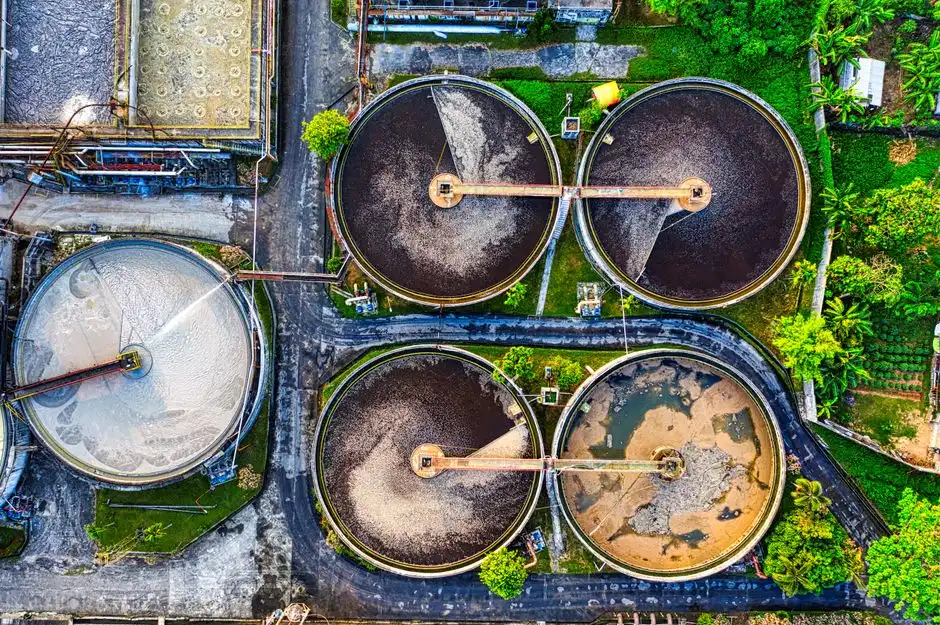
The applicable limit is the one attached to the classification of the receiving water body (S4). Because limits vary by classification, refer to the following guide to understand how your specific discharge point dictates your requirements.
| Parameter | Class SB | Class B | Class C | Class D |
|---|---|---|---|---|
| Ammonia (mg/L) | 3 | — | 4 | 9 |
| Phosphate (mg/L) | 2 | — | 4 | — |
| Nitrate (mg/L) | — | 14 | 14 | — |
| BOD (mg/L) | Unchanged by DAO 2021-19; re-verify against receiving water classification (S4) | |||
| TSS (mg/L) | Unchanged by DAO 2021-19; re-verify against receiving water classification (S4) | |||
| Copper | Redefined from dissolved to total copper in 2021 — stricter basis, not a relaxation (S4) | |||
| Fecal coliform, Boron, Sulfate | Updated by DAO 2021-19; refer to the official table for the class-specific value (S4) | |||
Where the research marks a value as NA, the original DAO 2016-08 table does not state a numerical limit for that class, so the PCO must refer to the official text rather than assume a default. The full official reference text is available as the DAO 2016-08 Water Quality Guidelines PDF.
Why Ammonia and Phosphate Fail When BOD and TSS Pass
Ammonia and phosphate are the two parameters that most frequently fail in laboratory results, while BOD and COD usually pass and TSS passes with reasonable filtration (S4). The pattern is consistent: a conventional extended-aeration plant designed for BOD removal will meet the BOD and TSS numbers, but the same biology will not reliably complete nitrification, so ammonia breaks first (S1, S4). Nitrate rarely fails on its own because its limit of 14 mg/L for Classes B and C did not change in 2021 while ammonia sits at 3 or 4 mg/L, so ammonia is the first parameter to break in the lab report (S4).
The 2016 general effluent regulations introduced stringent limits on nitrate, phosphate, ammonia, and surfactants, meaning plants designed only for BOD and TSS removal are no longer adequate (S1). A facility's limits can also change without the facility doing anything: a reclassification of the receiving water body from Class D (ammonia 9 mg/L) to Class C (ammonia 4 mg/L) can turn an adequate aeration system into an undersized one overnight (S4). A plant sized to produce exactly the legal limit passes only on days when nothing goes wrong, which is why design margin and a tertiary polishing stage matter as much as the headline number (S4).
Design Choices That Keep a Plant Inside the Limit
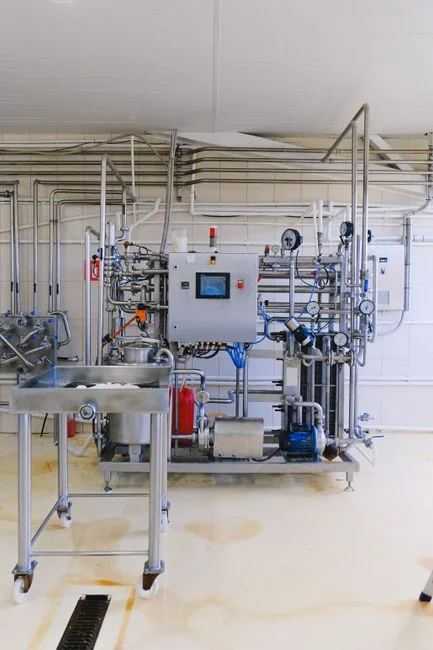
The regulatory numbers only become a working specification when the treatment train is designed to beat them, not match them. Right-sized aeration and dedicated anoxic zones are the primary biological lever for hitting the ammonia and nitrate limits, rather than relying on a single aerobic tank (S4). For a packaged plant on a tight site, an MBR membrane bioreactor system couples the biological stage with a membrane barrier that keeps TSS low even when biology is stressed, and a WSZ underground package sewage treatment plant gives a small-footprint option for sites where the receiving water class is already favourable.
Sludge age must be set for what nitrification actually needs rather than for the cheapest tank, because nitrifying bacteria grow slowly and wash out at short SRT (S4). Alkalinity should be checked at the design stage, not after the plant fails, since nitrification consumes alkalinity and a low-alkalinity influent can crash the biology before ammonia is fully oxidized (S4). Probiotics for start-up and recovery can shorten commissioning, but the design should not build a permanent dependency on a proprietary culture only one supplier can provide (S4). For sites that need to retrofit a polishing stage, a DF series MBR flat sheet membrane module can be added downstream of an existing aeration tank to lift TSS and tighten ammonia margin.
Designing past the discharge minimum, by adding tertiary polishing such as chemical precipitation for phosphate or filtration for residual TSS, gives operating margin on bad days and may also enable water reuse (S4). The certified PCO requirement is triggered at 30 kg BOD per day under DAO 2014-02, so routine laboratory sampling support and document preparation for permit submission fall to the PCO at that scale (S4). Routine preventive maintenance schedules for wastewater tanks are part of the same compliance loop, because grit accumulation is one of the most common hidden causes of an aeration tank losing its rated SRT.
Frequently Asked Questions
How much does it cost to bring an existing plant into compliance with DAO 2016-08?
There is no published price or price range for retrofitting to DAO 2016-08, so any quotation must be requested against the site's specific flow, the receiving water classification, and the gap between the latest lab report and the applicable limit. Buyers should ask suppliers to price against the worst-case influent and the strictest applicable class, and to state the design margin in mg/L for ammonia and phosphate, not just the headline equipment cost.
What should a facility engineer check before signing a purchase order with a wastewater equipment supplier?
Confirm in writing that the supplier has identified the receiving water body's classification from the DENR map or the LGU, and that the quotation is sized against that class, not a generic "Class C" default (S4). Also confirm who owns the PCO documentation, what the warranty excludes, and whether the design depends on a proprietary consumable or culture that only the supplier can supply, because a single-vendor dependency is a long-term compliance risk (S4).
Does a reclassification of the receiving water body change existing equipment obligations?
A facility's limits are tied to the classification of the water body it discharges to, not to the equipment it installed (S4). A reclassification from Class D to Class C cuts the ammonia limit from 9 mg/L to 4 mg/L, which can turn an aeration system that was adequate the day before into an undersized one, and the PCO must request written confirmation of the current classification from DENR or the LGU before sizing any upgrade.
Which parameters fail most often in lab reports submitted under DAO 2016-08?
Ammonia and phosphate are the parameters that fail most frequently in laboratory results, while BOD and COD usually pass and TSS passes with reasonable filtration (S4). Nitrate rarely fails on its own because its 14 mg/L limit for Classes B and C was not changed by the 2021 amendment, while ammonia sits at 3 or 4 mg/L, so ammonia is the first parameter to break in a typical compliance report (S4).