Why Hospital Wastewater in Lobito Requires Specialized Treatment
Hospital wastewater in Lobito requires specialized treatment to meet Angola’s national discharge limits (BOD < 30 mg/L, COD < 125 mg/L, TSS < 35 mg/L) and prevent environmental contamination. Typical hospital effluent contains 500–10,000 CFU/mL of pathogens, 200–1,500 mg/L COD, and 100–800 mg/L BOD, demanding technologies like MBR (95% COD removal) or DAF (95% TSS removal) for compliance. This guide provides Lobito-specific engineering specs, cost benchmarks, and equipment selection criteria for 2025.
For facility managers at institutions like the Hospital Regional de Lobito, the challenge of wastewater management is compounded by high organic loads and the presence of pharmaceutical residues. In Lobito, average wastewater flow rates range from 50 m³/day for small clinics to over 500 m³/day for 1,000-bed facilities. Seasonal variations are significant; during the rainy season, infiltration can increase hydraulic loads by 40%, potentially washing out biological treatment stages if equalization tanks are undersized. Conversely, the dry season concentrates contaminant loads, often pushing COD levels toward the 1,500 mg/L upper limit.
Compliance is governed by Angola’s Environmental Law 5/98 and Decree 5/95, which set strict limits on fecal coliforms (< 1,000 CFU/100 mL) and heavy metals such as mercury (< 0.01 mg/L). Lobito’s municipal water authority (DNAAS) conducts quarterly audits. Failure to meet these standards can result in fines totaling up to 5% of a hospital's operating budget or temporary closure. Beyond legal risks, a 2023 study from Universidade Agostinho Neto highlighted that untreated hospital effluent in Lobito contributes to the proliferation of antibiotic-resistant bacteria in the Benguela Current, threatening local fisheries and public health.
| Parameter | Raw Hospital Effluent (Lobito) | Angola Decree 5/95 Limit | Required Removal Efficiency |
|---|---|---|---|
| COD (mg/L) | 200 – 1,500 | < 125 | 85% – 92% |
| BOD₅ (mg/L) | 100 – 800 | < 30 | 90% – 96% |
| TSS (mg/L) | 150 – 600 | < 35 | 77% – 94% |
| Fecal Coliforms (CFU/100mL) | 10⁵ – 10⁷ | < 1,000 | 99.9% |
| Mercury (mg/L) | 0.01 – 0.05 | < 0.01 | 80% |
Lobito’s Hospital Wastewater Treatment Regulations: What You Must Know in 2025
Angola’s Decree 5/95 remains the primary regulatory benchmark, but 2025 compliance requires hospitals to align with stricter WHO guidelines for pharmaceutical residues and endocrine disruptors. Specifically, emerging requirements target compounds like ciprofloxacin (limit < 1 µg/L) and estradiol (< 0.035 µg/L), which are not fully addressed by traditional septic systems. DNAAS now mandates a multi-barrier approach for Lobito hospitals, including mandatory pretreatment (fine screening and equalization), a secondary biological or chemical stage, and tertiary disinfection using UV or chlorine dioxide.
The permitting process for a new or upgraded Sewage Treatment Plant (STP) in Lobito typically spans 6 to 12 months. Procurement officers must submit detailed engineering drawings, an Environmental Impact Assessment (EIA), and certificates of training for the technical operators. Administrative fees generally account for 1% to 3% of the total project capital expenditure. For existing facilities, the 2025 DNAAS checklist includes mandatory installation of automated sampling ports and flow meters to ensure transparent reporting during quarterly audits.
A notable benchmark in the region is the Clínica Girassol Lobito, which completed a system upgrade in 2024. By transitioning from a conventional activated sludge process to an integrated membrane system, the facility achieved consistent compliance with DNAAS standards even during peak surgical schedules. The project highlights the necessity of robust design; the inclusion of an equalization tank sized at 40% of daily flow allowed the hospital to manage surge loads from laundry and sterilization departments without compromising effluent quality.
Hospital Wastewater Treatment Technologies: A Lobito-Specific Comparison
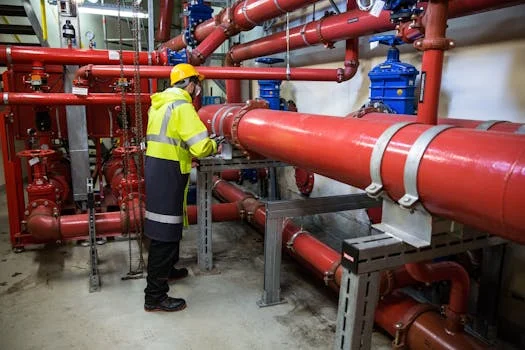
Membrane Bioreactor (MBR) technology provides the highest level of contaminant removal for Lobito’s hospitals, achieving 95% COD and 99% TSS reduction. MBR membrane bioreactor systems for hospital wastewater are particularly effective in removing pathogens and micro-plastics, occupying a footprint 60% smaller than conventional gravity clarifiers. For institutions in Lobito with limited land area, MBR’s ability to produce high-quality effluent suitable for non-potable reuse—such as landscape irrigation or cooling towers—offers a significant operational advantage.
Dissolved Air Flotation (DAF) serves as an essential pretreatment or primary treatment stage, specifically for removing Fats, Oils, and Grease (FOG) and high concentrations of suspended solids. DAF systems for hospital wastewater pretreatment are effective at removing 95% of TSS and 90% of FOG, which prevents the clogging of downstream biological membranes. In the context of Lobito’s high-temperature climate, DAF systems are favored for their mechanical simplicity and resilience against fluctuating organic loads compared to chemical-only precipitation methods.
Electrocoagulation has emerged as a specialized solution for hospitals with large radiology or oncology departments where heavy metal removal (e.g., lead, mercury, silver) is a priority. While it achieves 90% heavy metal removal and 80% COD removal with minimal sludge production, the high energy demand—often $0.25/m³ depending on local grid stability—requires careful integration with the hospital's power management plan. For final disinfection, on-site chlorine dioxide generators for hospital effluent disinfection are superior to liquid bleach due to their 99.99% pathogen kill rate and ability to maintain a residual disinfectant concentration throughout Lobito’s aging municipal sewer networks, preventing bacterial regrowth.
| Technology | COD Removal | Pathogen Removal | Maintenance Level | Best Use Case in Lobito |
|---|---|---|---|---|
| MBR | 95% | 99.9% | High (Skilled) | High-compliance, space-constrained urban hospitals |
| DAF | 40-60% | Low | Moderate | Pretreatment for laundry and kitchen effluent |
| Electrocoagulation | 80% | Moderate | Moderate | Hospitals with high heavy metal/radiology waste |
| Chlorine Dioxide | N/A | 99.99% | Low | Final disinfection for all hospital categories |
Engineering Parameters for Hospital Wastewater Treatment in Lobito
Hydraulic design for hospital STPs in Lobito must account for a wide variation in daily water consumption, ranging from 0.8 m³/bed/day during the dry season to 2.0 m³/bed/day in the rainy season. Engineering specifications should utilize a peaking factor of 2.5 to 3.0 to handle morning discharge surges from patient wards. Equalization tanks must be sized to hold 25% to 50% of the total daily flow to stabilize the organic load (COD 500–1,500 mg/L) before it enters the biological reactor. This prevents "shock loading" which can kill the microbial biomass responsible for nutrient removal.
Treatment efficiency benchmarks are critical for system sizing. For an MBR-based system, the design flux should be maintained between 10–15 liters per square meter per hour (LMH) to prevent membrane fouling in Lobito’s high-TSS environment. Tertiary disinfection using chlorine dioxide requires a dosage of 5–10 mg/L with a minimum contact time of 30 minutes to ensure total coliform destruction. Residual limits must be strictly monitored to stay within the 0.2–0.5 mg/L range at the point of discharge into the municipal network or coastal waters.
Sludge management is frequently overlooked but represents a significant portion of operational complexity. Hospital sludge is categorized as hazardous waste in Angola and requires dewatering before disposal. Utilizing plate-and-frame filter presses for sludge dewatering can reduce sludge volume by 75%, significantly lowering the costs associated with landfilling or incineration in Lobito. The resulting "cake" should reach a solids content of 25% to 35% to be accepted by local waste management contractors.
| Engineering Spec | Value/Range | Unit |
|---|---|---|
| Design Flow (Average) | 1.2 | m³/bed/day |
| Equalization Tank Volume | 8 – 12 | Hours of HRT |
| MBR Design Flux | 12 | LMH |
| ClO₂ Contact Time | 30 – 60 | Minutes |
| Sludge Cake Dryness | > 25% | % DS |
Cost Breakdown for Hospital Wastewater Treatment Systems in Lobito (2025)
Capital expenditure (CapEx) for hospital wastewater systems in Lobito varies significantly by technology, with MBR systems typically costing between $1,200 and $2,000 per m³/day of capacity. DAF systems are more economical for pretreatment, ranging from $800 to $1,500 per m³/day. For a standard 200-bed hospital in Lobito producing roughly 240 m³/day, a complete MBR-based STP including screening and disinfection would require an investment of approximately $350,000 to $480,000. These figures include equipment, shipping to Lobito port, and local installation labor.
Operating expenditure (OpEx) is driven by energy consumption and chemical requirements. In Lobito, energy costs for aeration and membrane scouring range from $0.10 to $0.20 per m³ of treated water. Chemical costs, including polymers for DAF and precursors for chlorine dioxide generation, average $0.05 to $0.15 per m³. Maintenance, including membrane cleaning chemicals and spare parts, should be budgeted at approximately 3% to 5% of the initial CapEx annually. For facilities looking to offset these costs, implementing water purification for non-potable reuse can save up to 30% on municipal water bills by recycling effluent for toilet flushing and irrigation.
Return on Investment (ROI) is primarily realized through the avoidance of DNAAS fines and the reduction of fresh water procurement. With non-compliance fines reaching up to $50,000 per year for major institutions, the payback period for a modern STP in Lobito is typically between 3 and 7 years. Funding is available through Angola’s Fundo Ambiental, which offers environmental grants covering up to 70% of project costs for public health institutions, and World Bank-backed loans with 10-year terms at 5–7% interest.
| Cost Component | Estimated Cost (USD) | Basis |
|---|---|---|
| CapEx (MBR System) | $1,200 – $2,000 | Per m³/day capacity |
| CapEx (ClO₂ Generator) | $5,000 – $50,000 | Per unit (capacity dependent) |
| OpEx (Energy & Chemicals) | $0.15 – $0.35 | Per m³ treated |
| Annual Maintenance | $15,000 – $30,000 | For 250 m³/day plant |
| Payback Period | 3 – 7 | Years |
Step-by-Step Guide to Selecting a Hospital Wastewater Treatment System for Lobito
The selection of a hospital wastewater treatment system begins with a comprehensive characterization of the raw effluent. Procurement teams must commission laboratory testing for COD, BOD, TSS, heavy metals, and specific pharmaceutical markers during both dry and rainy seasons. This data is essential for sizing the equalization and biological stages accurately. Using Lobito’s specific seasonal data ensures the system will not fail during high-flow events or become inefficient during low-flow periods.
Once the contaminant profile is established, the engineering team should apply a decision matrix to compare technologies. If space is limited and high pathogen removal is required, MBR is the preferred choice. If the hospital has high laundry or kitchen output, a DAF unit must be prioritized for pretreatment. When evaluating vendors, prioritize those who provide local after-sales support in Angola, including spare parts availability and operator training. International suppliers without a local service footprint often leave facilities with "orphaned" equipment that becomes inoperable after the first major component failure.
Before full-scale implementation, consider a 3-month pilot study to validate the chosen technology against the hospital's specific waste stream. This pilot testing case study for hospital wastewater systems demonstrates how small-scale validation can prevent costly design errors. Finally, ensure the system design is vetted against Lobito’s industrial wastewater treatment regulations to guarantee that all municipal discharge permits will be approved by DNAAS without delay.
Frequently Asked Questions
What are the primary discharge limits for hospitals in Lobito?
Under Angola’s Decree 5/95, hospital effluent must maintain BOD < 30 mg/L, COD < 125 mg/L, and TSS < 35 mg/L. Additionally, fecal coliforms must be under 1,000 CFU/100 mL. DNAAS also enforces limits on heavy metals like mercury and lead, which are common in medical waste.
How much does a hospital STP cost in Lobito?
Capital costs for a 200-bed hospital system (approx. 240 m³/day) range from $300,000 to $500,000 depending on the technology (MBR vs. DAF). Operating costs typically range from $0.15 to $0.35 per cubic meter of water treated, covering energy, chemicals, and labor.
Is MBR better than DAF for hospital wastewater?
They serve different purposes. MBR is a secondary/tertiary biological treatment that removes dissolved organics and pathogens. DAF is a physical pretreatment used to remove fats, oils, and suspended solids. Most modern hospitals in Lobito require both—DAF for pretreatment and MBR for high-quality discharge.
How often does DNAAS inspect hospital wastewater systems?
DNAAS typically conducts quarterly compliance audits in Lobito. These inspections involve taking grab samples of the treated effluent and reviewing the facility’s internal monitoring logs and operator training certificates. Non-compliance can lead to substantial fines or operational shutdowns.
Can treated hospital wastewater be reused?
Yes, if treated with MBR and proper disinfection (UV or ClO₂), the effluent can be reused for non-potable applications such as landscape irrigation, toilet flushing, and cooling towers. This can reduce a hospital's fresh water consumption by up to 40%.