Why Pharmaceutical Wastewater Pushes Conventional Modules to Their Limits
Pharmaceutical effluent is rarely treated as a generic industrial stream. Influent to a formulation or API plant typically carries residual active ingredients, antibiotic residues, spent solvents, cleaning agents, and shock loads of COD and NH3-N that vary batch-by-batch. A conventional activated-sludge tank depends on a stable, low-toxicity feed; when that feed swings, biomass crashes, settleability collapses, and the secondary clarifier turns into the bottleneck.
According to the 2023 Membranes review (S3, 2023-02), MBR eliminates the secondary clarifier entirely and operates at higher mixed-liquor suspended solids, so the biology can be pushed harder without losing the solid-liquid separation step. An MBR combines a biological stage with microfiltration or ultrafiltration, making module selection a hydraulic, fouling, and materials decision. For a process engineer defending the spec to EHS, that distinction matters: the module is the compliance boundary, and a generic UF cassette from another duty will not carry the same warranty into a pharma audit.
The boundary must be tight to ensure effective separation. Pure Aqua (S5) confirms that MBR modules use 0.1 μm pore size or less, which removes total suspended solids and bacteria in a single step, producing an effluent that can meet reuse or stringent discharge limits without a polishing stage downstream. In practice, that is the line a pharmaceutical buyer should draw: if the module is larger than 0.1 μm, you are back to a clarifier-equivalent and you have lost the reason to install MBR in the first place. The full pharma MBR engineering guide walks through how that boundary is set against Indian and EMA discharge frameworks.
MBR Membrane Module Specifications That Matter for Pharma Duty
Process engineers should pin down specific parameters before issuing an RFQ. Where the supplied research confirms a value, the table states it; where the value is missing, the table flags it as an input to request from the supplier. Pore size, chemistry, geometry and module area are well-documented in the research; flux (LMH) and CIP chemical compatibility for API effluent are not, and a buyer should treat any quoted number on those rows as a vendor claim until it is backed by a pharma reference plant.
| Parameter | Pharma-duty value (per research) | Source | What the buyer should still verify |
|---|---|---|---|
| Membrane chemistry | PVDF (oxidative-tolerance for CIP) | S5, S6 | Solvent resistance to the API on site |
| Pore size | 0.1 μm or less | S5 | Bacteria log-removal validation per module |
| Geometry | Flat-sheet (submerged) or hollow-fiber (submerged/side-stream) | S3, S5 | Cassette vs element-by-element replacement |
| Module area (reference) | 80–225 m² per module | S6 — PVDF flat-sheet MBR membrane module | Modules required at design hydraulic load |
| Daily output (reference) | 32–135 m³/day per module | S6 | Scaling to 100, 250 or 500 m³/day trains |
| Aeration | Integrated aeration box for continuous scouring | S6 | Specific airflow (Nm³/m²·h) for pharma CIP |
| Design flux (LMH) | Not in research | — | Request sustained-flux curve for API effluent |
| CIP recipe | Not in research | — | Request chemical compatibility vs active molecules |
The global MBR market sits at USD 3.35B with a forecast USD 8.78B at a 7.6% CAGR, and more than 5,000 plants now operate worldwide (S3, 2023-02). These market figures confirm the maturity of the technology for procurement boards.
Flat-Sheet vs Hollow-Fiber: Choosing the Right Geometry for API Plants
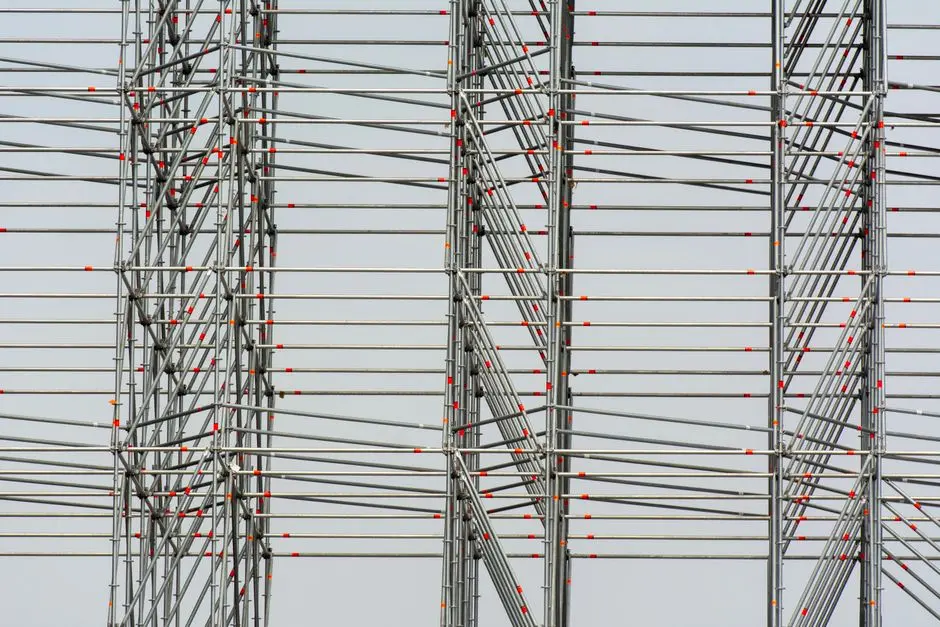
The geometry decision often becomes a point of contention during the specification process. S3 (2023-02) frames it as a power-versus-flux trade: submerged MBR handles lower flux at lower power, while side-stream MBR handles higher flux at higher power. S5 lists flat-sheet and hollow-fiber as the two commercial formats on offer, and S6 positions a flat-sheet PVDF module as the standard submerged format. For API duty, the flat-sheet case usually wins on three operational points: each element can be lifted and replaced without disturbing the rest of the cassette, fouling on one panel does not propagate to the next, and a solvent or antibiotic carryover is easier to isolate and CIP element-by-element. Hollow-fiber packs more area per cassette and can suit a tight plot, but the fibres are more sensitive to fouling shocks and to mechanical damage during cleaning.
| Criterion | Flat-sheet PVDF (submerged) | Hollow-fiber (submerged or side-stream) |
|---|---|---|
| Typical hydraulic regime | Submerged, lower flux, lower power (S3) | Submerged or side-stream, higher flux, higher power (S3) |
| Replaceability | Element-by-element on a stainless frame (S6) | Cassette-level; fibre damage is module-level |
| Fouling tolerance to shock loads | Higher — single panel can be isolated | Lower — fouling distributes across fibres |
| Footprint per m² of area | Larger | Smaller |
| Pharma fouling-rate data | Not in supplied research | Not in supplied research |
The provided research lacks fouling-rate numbers for pharmaceutical effluent under either geometry. A buyer should ask the supplier for a case-history on an API or antibiotic plant of comparable COD and solvent profile, and for a sustained-flux curve at the design temperature before locking the geometry.
Fouling Control and CIP Strategy for Pharmaceutical MBR Modules
Fouling is the dominant operating cost on any MBR and the primary failure mode when influent is hostile. S3 (2023-02) names membrane fouling — solid deposition on the membrane surface — as the principal operational obstacle, with mitigation dependent on membrane material, influent type and process parameters. S4 reinforces that fouling is the main barrier to large-scale MBR adoption, with cleaning protocol, aeration intensity and SRT serving as the primary levers. Because solvent carryover, antibiotic residues and pH excursions accelerate cake formation and damage biomass, the fouling problem and the biology problem must be managed as a single issue. The engineering response is to specify chemical-resistant PVDF, an aeration regime that keeps the panel scoured even at low load, and a CIP recipe that is documented against the active molecules handled on site.
Two essential components are missing from the supplied research and should be added to the RFQ. First, a CIP chemical recipe (typically NaOCl for organic fouling and citric or oxalic acid for inorganic scaling) needs validation against the specific API list. Second, recovery percentages between CIP cycles are not reported in S3–S6, so the buyer must request them on a like-for-like effluent. The automatic chemical dosing for CIP and pH control train provides the supporting package that keeps the recipe reproducible; dosing accuracy directly determines whether the membrane undergoes a clean cycle or suffers damage.
Sizing, Supplier Selection and Total Cost of Ownership in 2026
The technical case requires a financial justification centered on total cost of ownership (TCO) rather than unit price. The MBR market is valued at USD 3.35B with a 7.6% CAGR to USD 8.78B, and more than 5,000 plants are in operation globally (S3, 2023-02), making this a low-risk technology choice for 2026 capex. Sizing logic is straightforward — hydraulic load drives the number of modules — and the S6 reference module spans 80–225 m² of area for 32–135 m³/day of permeate. This bracket accommodates a 100 m³/day formulation train or a 500 m³/day API plant through parallel module scaling.
Supplier selection should rely on four objective criteria. First, pharma references: ask for at least one operating API or formulation plant of comparable size. Second, CIP validation documentation: the supplier should provide chemical-compatibility statements against the specific active molecules on site. Third, regional service: response time on a module swap-out is critical, as downtime is a discharge-permit event. Fourth, energy and chemical consumption: the supplier should publish permeate per kWh and CIP chemical per cycle to allow for TCO comparisons. S3 (2023-02) notes that a conventional activated-sludge plant with tertiary filtration can consume similar energy to MBR once footprint and effluent-quality differences are priced in. The integrated MBR system package consolidates tankage, aeration, modules and control into a single skid, simplifying both TCO tracking and the audit trail. Membrane replacement frequency, CIP chemical consumption, energy per cubic metre of permeate, and downtime for module swap-out are the four TCO line items a buyer should verify using data from the supplier's reference plant.
Frequently Asked Questions
What pore size and membrane chemistry should we specify for a pharmaceutical MBR in 2026?
Specify PVDF with a pore size of 0.1 μm or less, which is the MBR convention confirmed by S5 and consistent with the S6 specification. PVDF is selected for oxidative tolerance during CIP; solvent resistance to the specific API list handled on site is a separate qualification that the supplier must document.
Flat-sheet or hollow-fiber MBR module — which is better for API wastewater?
Flat-sheet PVDF submerged modules are usually easier to inspect, clean and replace element-by-element, which suits a pharmaceutical plant with batch-driven influent. Hollow-fiber packs more membrane area per cassette and can suit a tighter footprint, but the decision should be supported by a supplier case-history on a comparable plant since the research does not include fouling-rate numbers for API effluent.
How much does a pharmaceutical MBR module cost per square metre in 2026?
The supplied research does not publish a cost-per-m² figure for pharmaceutical MBR modules. A 2026 budget should be built from a supplier quotation against the design hydraulic load and benchmarked against TCO line items: membrane replacement frequency, CIP chemical consumption, energy per cubic metre of permeate, and downtime for module swap-out. Request the supplier's reference-plant values for each of those four items before committing.
Which MBR suppliers should be on a 2026 pharma shortlist, and how do we qualify them?
S5 names Memstar, Toray and Hydranautics as established MBR brands. The qualification shortlist should be built on pharma-specific evidence: at least one operating API or formulation reference of comparable size, CIP validation documentation against the active molecules handled on site, regional service coverage that matches the plant's downtime tolerance, and published energy and chemical-consumption data on a like-for-like effluent. Compliance risk on a pharmaceutical discharge permit usually traces back to one of those four checks being absent at the time of purchase.