Why Small Community Wastewater Matters in Russia in 2026
Russia's Ministry of Natural Resources reports that more than 70% of the country's roughly 9,000 municipal treatment plants were built 30 to 50 years ago, and 80% need modernization or full reconstruction — a finding carried forward by WEDC's market intelligence analysis of the Russian water sector. Only 13% of wastewater nationally is treated to standard quality, a figure dragged down by congestion in southern and eastern federal districts and by deteriorating assets across most constituent entities of the Federation. The reconstruction bill is estimated at $20 billion (₽1.3 trillion), and Russia's Ministry of Construction has set an annual investment target of roughly $1.5 billion (₽100 billion) for each of the next five years to bring water supply and sanitation systems into conformity with current standards.
This is the procurement backdrop for a small community wastewater system in Russia in 2026. The U.S. EPA defines a small community as a system serving 10,000 or fewer people with an average daily flow of less than 1 MGD (≈3,785 m³/day) — a benchmark that maps cleanly onto a typical Russian village, a cottage settlement (коттеджный посёлок), or a small industrial township of ≤10,000 residents. Public funds alone cannot close the gap, so the Ministry of Natural Resources and the Ministry of Construction are actively courting private investment through PPP and concession models; the 2015 record set a new high of nearly $1.1 billion (₽71 billion) in private investment commitments, and a parallel market is already active for private sewage treatment plants serving cottage construction and mini-hotels. For decentralized, cold-climate buyers, that means a clear 2026 procurement window — and a Russia-specific equipment and standards reference is now essential reading before a specification is written.
Russian Standards and Discharge Limits for Small Systems (2026)
Any 2026 design starts from the receiving-water and sewer-discharge limits on the outlet, not the inlet. The governing instrument for effluent discharged to water bodies from package and decentralized plants is SanPiN 2.1.3684-21, which sets BOD ≤3.0 mg/L, TSS ≤5.0 mg/L, with parallel limits on ammonia nitrogen, phosphates, and E. coli depending on the receiving-water category. For municipal and industrial discharges into the centralized sewer network, the binding maxima are RF Decree No. 644: BOD5 300 mg/L, COD 500 mg/L, and TSS 300 mg/L — and this is the limit Moscow industrial sewers must meet (the Decree is sometimes confused with the unrelated GOST R 54895-2012 grain-quality standard, which is not a wastewater discharge instrument). Two enforcement bodies sit on top of the regime: Rospotrebnadzor for public-health and drinking-water-zone parameters, and Rosprirodnadzor for effluent discharge permitting, water-body impact, and the MNE 4.01-2021 fee calculation; GOST R 54895-2012 supports both as the underlying water-quality reference.
For scale, EPA's most recent published figure is that about 16,000 municipal WWTFs serve over 75% of the U.S. population — useful as a benchmark because Russia's roughly 9,000 plants serve a comparable urban share but at a much lower standard-compliance rate (13%, per WEDC citing the Ministry of Natural Resources). The compliance gap is the engineering opportunity for a small community wastewater system in Russia: the smaller the flow, the more practical it is to specify a packaged or MBR-based train that meets SanPiN 2.1.3684-21 at the outlet from day one, without inheriting legacy infrastructure risk.
| Standard | Scope | Key limits (2026) |
|---|---|---|
| SanPiN 2.1.3684-21 | Effluent to water body (package & decentralized) | BOD ≤3.0 mg/L; TSS ≤5.0 mg/L; NH₄-N, PO₄, and E. coli per category |
| RF Decree No. 644 | Discharge to municipal/industrial sewer | BOD₅ 300 mg/L; COD 500 mg/L; TSS 300 mg/L |
| GOST R 54895-2012 | Water quality reference | Methodology; not a discharge limit |
| Enforcement | Rospotrebnadzor + Rosprirodnadzor | Public health + discharge permitting / MNE fees |
Designing a Small Community System: Step-by-Step Engineering Workflow
Working from the limits in the previous section, the design sequence below is what a Russian specification engineer will actually run in 2026. The objective is to back-calculate equipment from SanPiN 2.1.3684-21 outlet requirements, not to retrofit a Soviet-era plant.
Step 1 — Population and flow. Apply the EPA small-community definition (≤10,000 residents, <1 MGD ≈ 3,785 m³/day). For Russian villages without metered supply, use a per-capita demand of 130–200 L/p/d and apply a peaking factor of 1.5–2.5 to size biological and hydraulic equipment.
Step 2 — Influent characterisation. For raw domestic sewage, design against BOD₅ 200–400 mg/L, TSS 200–350 mg/L, and FOG 50–150 mg/L. These are the bands you size primary clarification and biological loading against; under-designing here is the most common root cause of failed SanPiN compliance.
Step 3 — Headworks pretreatment. Specify a rotary bar screen with 3–6 mm aperture ahead of the biological stage. Anything coarser lets rags and fibres reach the membrane tank; anything finer creates excessive screenings handling in a small community with no full-time operator.
Step 4 — Biological stage. For flows up to a few hundred m³/day, an A²/O or contact-oxidation package is the workhorse. Where the outlet must hit SanPiN BOD ≤3.0 mg/L and TSS ≤5.0 mg/L — or where the plant footprint is constrained — specify a submerged MBR with 0.1 μm PVDF membranes; expect TSS <1 mg/L and BOD <5 mg/L in routine operation at about 60% of the conventional activated-sludge footprint.
Step 5 — Disinfection. Use UV-C disinfection for small community effluent to avoid chlorine by-products and to inactivate Cryptosporidium and Giardia; chlorine dioxide is the fallback where UVT is poor or where residual is required downstream.
Step 6 — Sludge handling. Dewater with a plate-and-frame filter press ahead of a lamella clarifier to reach 22–28% DS cake — the band that allows transport and landfill without free liquid in Russian winter conditions.
Cold-climate envelope. At -30 to -40°C ambient, bury or enclose the bioreactor, add heat tracing on all exposed piping and valves, and accept a roughly 1× cost premium per HydropureWater Russia field data. Aeration blowers and UV banks go inside insulated enclosures; MBR membrane tanks need heated housing to keep mixed liquor above 8–10°C.
Technology Comparison: Package STP vs MBR vs Constructed Wetlands for Russia
Three technology families dominate the 2026 shortlist for a small community wastewater system in Russia. The decision is driven by flow band, effluent target, footprint, and whether the site can support a seasonal polishing step.
Package STP (WSZ A/O, buried or trailer-mounted). Flow range 1–80 m³/h, fully automatic, no on-site operator required, fast to install in cottage villages and small resorts. Capital cost is typically below $1.4M for the full train, which is why it dominates the cottage-construction market flagged by WEDC.
Submerged MBR (PVDF 0.1 μm). Flow range 10–2,000 m³/day, with verified TSS <1 mg/L and BOD <5 mg/L at roughly 60% less footprint than conventional activated sludge. CAPEX runs ₽80,000–180,000 per m³/day for 100–1,000 m³/day, which is the right envelope for any site that must hit SanPiN 2.1.3684-21 strict BOD/TSS or that is space-constrained (a buried package sewage plant for small communities is the cheaper cousin when the SanPiN ceiling is looser).
Constructed wetlands. The ASABE literature documents them as a low-energy, low-cost option for BOD, TSS, and nitrogen removal in small-community service, with significant energy savings when combined with anaerobic pretreatment and land application. The catch in Russia is the seasonal performance swing: biological activity collapses below freezing, so wetlands are only realistic as warm-season supplementary polishing on sites with more than 2 ha of available land — not as a standalone -30°C train.
Selection rule of thumb. Choose WSZ for flows under 80 m³/h and capital under $1.4M. Choose MBR when the SanPiN ceiling is strict or the site is tight; a submerged MBR module sized with a DAF unit upstream handles high FOG loads from food and resort sites cleanly. Choose wetlands only where land is abundant and effluent is for warm-season discharge.
| Criterion | Package STP (WSZ) | Submerged MBR | Constructed Wetlands |
|---|---|---|---|
| Flow range | 1–80 m³/h | 10–2,000 m³/day | Site-specific (≥2 ha) |
| Typical effluent | Meets Decree 644 inlet; meets SanPiN with polishing | TSS <1 mg/L; BOD <5 mg/L | Season-dependent BOD/TSS/N removal |
| CAPEX band | <$1.4M total | ₽80,000–180,000 / m³/day | Low CAPEX, high land cost |
| Footprint | Compact (buried) | ~60% of CAS | Very large |
| Cold-climate fit (-30 to -40°C) | Good when buried/enclosed | Good with heated housing | Poor below 0°C |
| Best use | Cottage villages, small resorts | Strict SanPiN reuse, tight sites | Warm-season polishing |
Costs, Compliance, and 5-Step Procurement Checklist for 2026
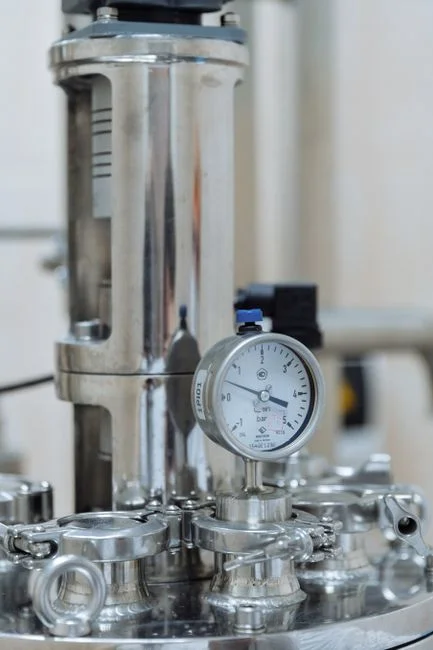
For 2026, package WWTPs across Russian small-community sites land in a $45,000–$1.4M band depending on capacity; MBR trains in the 100–1,000 m³/day range sit at ₽80,000–180,000 per m³/day; the cold-climate package adds roughly a 1× cost factor for housing, heat tracing, and freeze-protected civils (HydropureWater field data). Pre-treatment, post-UV polishing, and sludge dewatering stack on top — a compact integrated purification unit paired with an automatic chemical dosing system is the typical configuration for sites discharging to a sensitive receiving water or operating under tight SanPiN ammoniacal-nitrogen targets.
WEDC's analysis of Russian water-sector concessions is the procurement-model reference: 2015 private investment reached a record ₽71B (~$1.1B), and private operators have since cut accident rates by 21% and loss rates by 14%. Private and concession delivery is now the default for small communities that cannot self-finance a ₽100M+ rebuild.
5-step procurement checklist for 2026:
- Site survey and flow profile. Confirm population, per-capita demand (130–200 L/p/d), peaking factor (1.5–2.5), and the lowest expected winter operating temperature at the equipment location.
- Regulatory mapping. Lock down the applicable outlet — SanPiN 2.1.3684-21 for direct discharge, RF Decree 644 for sewer discharge — and identify the Rosprirodnadzor permit pathway and any basin-specific MNE fee.
- Technology selection. Match the flow/effluent matrix: WSZ <80 m³/h, MBR 10–2,000 m³/day, wetlands only for warm-season polishing on land-rich sites.
- CAPEX + OPEX + 5-year lifecycle. Include the cold-climate premium (≈1×), sludge hauling, energy, and membrane replacement; compare on net present cost, not sticker price.
- Vendor qualification. Verify GOST documentation, Rosprirodnadzor submission track record, and at least one -30 to -40°C reference project; mandate on-site testing of a packaged unit under expected winter low temperatures before scale-up.
| Cost line (2026) | Band | Driver |
|---|---|---|
| Package WWTP (full train) | $45,000–$1.4M | Capacity, effluent target, housing |
| MBR (100–1,000 m³/day) | ₽80,000–180,000 / m³/day | Membrane area, housing, pre-treatment |
| Cold-climate premium | ~1× cost factor | Enclosure, heat tracing, civils |
| Private investment precedent | ₽71B (2015) / -21% accident rate | PPP / concession model |
Frequently Asked Questions
What are the 2026 effluent limits for a small community wastewater system in Russia?
For discharge to a water body, SanPiN 2.1.3684-21 sets BOD ≤3.0 mg/L and TSS ≤5.0 mg/L, with category-specific limits for ammonia, phosphates, and E. coli. For discharge to a municipal-industrial sewer, RF Decree No. 644 sets the maxima at BOD₅ 300 mg/L, COD 500 mg/L, and TSS 300 mg/L — including for Moscow industrial sewers, where these are sometimes misattributed to GOST R 54895-2012 (which is not a discharge standard).
How big is the Russian wastewater modernization problem in 2026?
Per Russia's Ministry of Natural Resources via WEDC, more than 70% of the country's roughly 9,000 treatment plants are 30–50 years old, 80% need modernization or full reconstruction, and only 13% of wastewater nationally is treated to standard quality. The reconstruction program is estimated at $20 billion (₽1.3 trillion), with ₽100 billion (~$1.5B) annual investment targeted by the Ministry of Construction for each of the next five years.
Package STP or MBR — which fits a Russian small community in 2026?
Package STP (WSZ) fits flows from 1–80 m³/h and capital under $1.4M, especially for cottage villages and small resorts. Submerged MBR (0.1 μm PVDF) fits 10–2,000 m³/day at ₽80,000–180,000 per m³/day and is the right choice when SanPiN 2.1.3684-21 strict BOD/TSS must be met, when the site is space-constrained, or when effluent is destined for reuse. Both trains must be buried or enclosed for -30 to -40°C operation, and an on-site winter test of the packaged unit is mandatory before scale-up. For the full Russia standards and equipment matrix, see the Russia wastewater treatment reference.