Why Aeration Operating Costs Demand a 2026 Re-Evaluation
Stationary directional flow aerators (e.g., Titus Twister-FL/TwistLIFT) typically operate at 1.8-2.5 kWh/lb O₂ transferred in lift stations and 2.0-3.0 kWh/lb in lagoons — 15-25% lower energy than surface aspirators but 10-20% higher than fine-bubble diffused air at equivalent depth. 20-year lifecycle cost ranges $120-180/HP/year including bearing rebuilds (every 3-5 yrs) and motor rewinds (every 8-12 yrs), versus $90-140 for diffused air (excluding blower overhauls) and $150-220 for surface aspirators. For lift stations and facultative lagoons — typically the last assets to receive capital attention — these numbers represent the budget gap most operators underestimate when defending a replacement project to a board.
WEF's 2024 benchmark study puts aeration at roughly 22% of total WWTP electricity, with collection-system lift stations adding another 8-12% on top of treatment-plant loads. EPA's 2024 Greenhouse Gas Reporting Rule, Subpart II (40 CFR 98) now requires facility-level CH₄ and N₂O estimates, and inefficient aeration creates the anaerobic zones that drive fugitive emissions — making every kWh of aeration inefficiency both an OPEX line and a compliance exposure. State Revolving Fund 2026 guidance increasingly ties principal forgiveness to documented energy audits, prioritizing projects that demonstrate >15% kWh reduction. A 30-year-old surface aspirator running at 3.5-4.5 kWh/lb O₂ will pay back its replacement in under 4 years even at $0.08/kWh, and under 3 years where peak demand charges apply. Against the backdrop of the 2026 cost benchmarks per MGD for water treatment infrastructure, aeration retrofit is the single line item with the shortest documented payback.
Oxygen Transfer Physics: Directional Flow vs. Diffused vs. Surface Aspiration
The cost differences between aerator classes trace directly to oxygen transfer mechanism, alpha factor (wastewater correction to clean-water OTE), and depth utilization — not vendor claims. Engineers defending a specification need the underlying numbers, which the table below summarizes from ASCE 2-91 standard test conditions and field derating factors.
| Technology | OTE (%/ft depth) | Alpha factor (wastewater) | Surface velocity (ft/s) | Solids/rag handling |
|---|---|---|---|---|
| Directional flow (Twister-FL/TwistLIFT) | 1.5-2.2 | 0.65-0.75 | 0.5-1.5 (FOG/scum control) | Open propeller passes 2-3 in solids |
| Fine-bubble diffused (disc/membrane) | 2.0-3.0 | 0.45-0.55 | Minimal — separate mixers needed | Diffuser fouling in high-FOG |
| Coarse-bubble diffused | 1.0-1.5 | 0.55-0.65 | Moderate | Better than fine; still clogs with rags |
| Surface aspirator (brush/propeller) | 0.8-1.2 | 0.75-0.85 | High (3-5 ft/s) | Good mixing; icing risk below -5°C |
| Jet aerator | 1.8-2.5 | 0.60-0.70 | Driven by recycle flow | Recycle pump clogs — macerator required |
Directional flow units induce a horizontal plume from a submerged propeller, achieving usable surface velocity for FOG and scum control without the depth penalty of diffused systems. Fine-bubble diffused air delivers the highest clean-water OTE per foot but suffers the lowest alpha factor in mixed-liquor environments — its real-world advantage shrinks in lift stations with high BOD or surfactant loading. Surface aspirators score well on alpha (less sensitive to surfactants) but waste energy in shallow operation and expose bearings to weather and ice. Jet aerators need a recycle pump that adds 15-25% to nameplate HP and represents the dominant failure mode in rag- and grit-heavy lift stations. For a deeper process comparison including downstream biological stages, see the engineering notes on submerged MBR systems with integrated aeration.
Parameterized Cost Model: Lift Station Wet-Well Volume to Annual OPEX
Translating wet-well volume and influent BOD into a defensible annual cost forecast requires four parameters: oxygen demand, motor HP, load factor, and a maintenance schedule with cash flows. The simplified sizing formula below lets a procurement lead generate a budget-grade number in 15 minutes.
Sizing formula: HP = (Peak BOD₅ lb/day × 1.5 safety factor) / (OTE × 1.72 lb O₂/HP-hr × 24 hr). For typical municipal lift stations at 200-400 mg/L BOD, this yields roughly 1 HP per 1,500-2,500 gal of wet-well volume. Energy cost: HP × 0.746 kW/HP × 8,760 hr × load factor (0.65-0.85 continuous duty) × $/kWh. A 10 HP unit at $0.10/kWh runs $4,200-5,500/yr before maintenance. Maintenance spend — directional flow: bearing inspection quarterly at $200, bearing replacement at 3-5 yr ($1,200-1,800), motor rewind at 8-12 yr ($2,500-4,000), seal kit annually ($300). Maintenance spend — diffused air: membrane replacement at 5-7 yr ($800-1,200 per diffuser), blower oil and filters quarterly ($150), blower overhaul at 10-15 yr ($8,000-15,000).
| Wet-well volume (gal) | Recommended HP | Annual energy @ $0.10/kWh | Annual maint. (directional flow) | Annual maint. (diffused air) |
|---|---|---|---|---|
| 1,500 | 1-2 | $500-1,100 | $600 | $400 |
| 5,000 | 3-5 | $1,500-2,750 | $700 | $700 |
| 15,000 | 7-10 | $3,500-5,500 | $900 | $1,200 |
| 50,000 | 20-30 | $10,000-16,500 | $1,400 | $2,400 |
FOG-related downtime is the line item missing from every competitor page. Directional flow units reduce wet-well vacuum-truck cleaning frequency from quarterly to annually, saving $3,000-6,000/yr per station in vacuum truck mobilization, confined-space entry labor, and disposed material. Over a 20-year horizon that single line often exceeds the energy savings. For sites that pair aeration upgrades with smart controls, the dual-pump station automation guide documents how VFD and DO-based staging compresses load factor from 0.85 to 0.65.
Lagoon Geometry Decision Map: When Directional Flow Wins vs. Diffused Air
The most expensive specification error in lagoon aeration is selecting equipment from nominal acreage alone. Geometry-driven dead zones, sludge distribution, and depth-to-width ratio determine whether directional flow, diffused air, or a hybrid wins. The map below maps physical constraints to technology.
| Lagoon configuration | Preferred technology | Driver |
|---|---|---|
| Rectangular, L:W >3:1, single inlet/outlet | Directional flow (2-3 units) | CFD shows 30% higher contact time vs. diffused grid; eliminates short-circuiting |
| Round/square, <2 acres, 8-12 ft depth | Fine-bubble diffused air | Best $/lb O₂; add 1-2 directional units only if corner sludge >12 in/yr |
| Facultative converting to partial-mix | Directional flow at 1 HP/0.4 acre | Maintains 1-2 mg/L DO at bottom without resuspending sludge |
| High-strength industrial (BOD >500 mg/L) | Jet aeration or directional flow | Diffused air fouling exceeds 40% OTE loss in 6 months |
| Cold climate design temp <4°C | Directional flow | Prevents icing better than surface aspirators; diffused needs >14 ft submergence for equivalent OTE |
Facultative lagoons converting to partial-mix are the highest-growth application in 2026. At 1 HP per 0.4 acre, directional flow maintains bottom DO at 1-2 mg/L without the over-mixing that diffused air imposes — diffused grids in shallow cells resuspend settled sludge, push TSS over permit limits, and increase downstream filter loading. Where conversion to a higher-effluent-quality process is in the five-year plan, the lagoon-to-MBR conversion guide provides a parallel evaluation framework.
20-Year Lifecycle Cost Comparison: 5 Real-World Scenarios
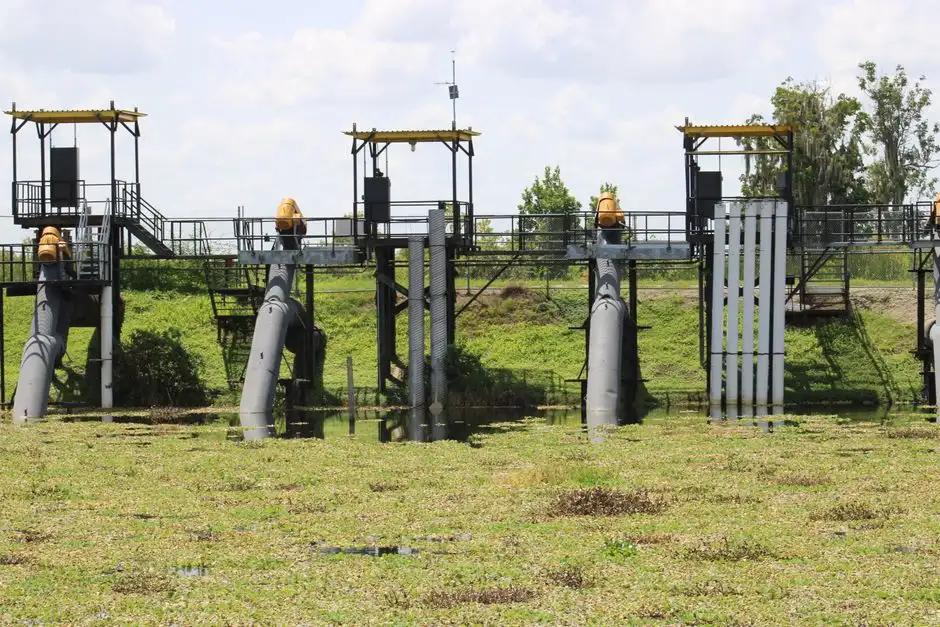
The decision matrix below maps five operating contexts to NPV, using a 3% real discount rate, $0.10/kWh blended energy cost, and 20-year analysis horizon. Each scenario includes a sensitivity check for the dominant variable. The intent is to give a procurement lead a defensible number per context — not a generic "it depends."
| Scenario | Directional flow NPV | Best alternative NPV | Winner | Payback |
|---|---|---|---|---|
| A: Municipal lift station, 8 ft wet well, 15 HP, high FOG (restaurant district) | $185k | Surface aspirator $240k / Diffused air $210k (requires blower room) | Directional flow | 4.2 yr |
| B: 5-acre facultative lagoon, 10 ft depth, municipal | $380k | Diffused air $320k | Diffused air, unless corner sludge >18 in | Diffused wins by 15% |
| C: Industrial lift station, 12 ft wet well, 25 HP, rag/grit heavy | $290k | Jet aerator $310k / Chopper pump + diffused $340k | Directional flow | 5.1 yr |
| D: 12-acre aerated lagoon, 8 ft depth, seasonal load | $610k (hybrid) | All-diffused $680k (extra mixers) / All-directional $720k | Hybrid: diffused base + 2 directional for mixing | 7.0 yr |
| E: Retrofit 30-yr surface aspirators (4×15 HP) at lift station | $140k (reuse mounting) | New surface $190k | Directional flow | 2.8 yr at $0.11/kWh |
Scenario E — the like-for-like retrofit — consistently shows the shortest payback because existing mounting hardware, power conduit, and SCADA wiring are reused. Scenario D demonstrates that hybrid designs are not a compromise; in seasonal lagoons they outperform either single-technology option by 10-15% on NPV. For a deeper treatment of discount rate selection, equipment life assumptions, and sensitivity ranges, the 20-year lifecycle cost estimation guide for UPW systems provides the full methodology.
Procurement Checklist: Sizing, Piloting, and Vendor Evaluation
Translating this analysis into a defensible specification requires three steps. Skipping any of them is the most common reason a project faces change orders or underperforms in commissioning.
Step 1 — Sizing validation. Require the vendor to submit a clean-water OTE curve per ASCE 2-91 covering the full operating depth range, plus a wastewater alpha factor at design temperature AND design submergence. Reject single-point efficiency ratings. For lagoons larger than 2 acres, require CFD modeling or a tracer study with measured T10/T90 ratios; the dominant error in lagoon design is short-circuiting, not oxygen supply.
Step 2 — Pilot protocol. Run a 90-day minimum pilot with continuous DO logging at 0.5 m vertical intervals, weekly FOG layer thickness measurement, and monthly vibration spectra (FFT) on motor and bearing housings. Success criteria: DO above 2 mg/L at 90% of water depth, FOG layer below 1 in, vibration below 0.15 ips RMS. Anything less is a vendor-piloted sales demo, not a process test.
Step 3 — Vendor lock-in mitigation. Specify NEMA Premium motors (IE3/IE4 efficiency class), standard SKF or NTN bearing sizes, and a written 5-year parts availability guarantee. Insist on Modbus TCP or Profinet for the control board — not proprietary protocols. Confirm before signing that the aerator can be retrofitted with aftermarket VFDs without voiding the motor warranty, because most sites will add VFDs within the first 5 years of operation.
Frequently Asked Questions
What is the typical energy consumption of a stationary directional flow aerator per pound of oxygen transferred?
1.8-2.5 kWh/lb O₂ in lift stations (8-15 ft depth) and 2.0-3.0 kWh/lb in lagoons (6-12 ft depth), per ASCE 2-91 clean-water tests derated by an alpha factor of 0.65-0.75 for typical municipal wastewater. Industrial streams with high surfactant or BOD can derate further to 0.55-0.65.
How often do directional flow aerator bearings need replacement?
Every 3-5 years in continuous lift-station duty and 5-7 years in lagoons with seasonal operation. Replacement cost runs $1,200-1,800 per unit including labor, with the bearing itself representing 30-40% of that figure when specified as SKF or NTN standard sizes.
Can directional flow aerators replace diffused air in a lagoon retrofit?
Yes, when lagoon depth is under 12 ft and geometry creates documented dead zones. For depths above 14 ft, fine-bubble diffused air remains more energy-efficient on a pure $/lb O₂ basis. Hybrid designs — diffused grid for base load plus 2-3 directional flow units for mixing — often deliver the lowest 20-year NPV in lagoons larger than 8 acres.
What is the 20-year lifecycle cost per HP for directional flow vs. surface aspirators?
Directional flow: $120-180/HP/yr. Surface aspirators: $150-220/HP/yr. The 25-30% spread is driven by 40% fewer bearing changes, elimination of icing damage in cold climates, and reduced wet-well cleaning frequency where FOG load is significant.
Do directional flow aerators handle rags and grit better than jet aerators?
Yes. Directional flow uses an open submerged propeller that passes 2-3 in solids without maceration. Jet aerators rely on a recycle pump that clogs rapidly in rag- and grit-heavy lift stations and require a chopper or macerator upstream — adding 15-25% to nameplate HP and a parallel failure mode.
Related Equipment
- submerged MBR systems with integrated aeration — specifications, capacity range, and technical data
- WSZ underground package plants with aerobic treatment — specifications, capacity range, and technical data