Why Industrial Stormwater Pump Controller Remote Access Is a 2026 Decision
Remote access to an industrial stormwater pump controller is no longer a convenience — it is a compliance deliverable. EPA-670/2-75-020 (May 1975) concluded that "remote control of pump stations for both dry weather flow and storm wastewater flow is practical, reliable and economical," but the same report added a non-negotiable line: "remotely controlled pump stations should be checked daily by traveling crews even though equipped with automatic, on-site monitoring equipment" (source: EPA-670/2-75-020). Five decades later, that 24-hour field-verification rule still governs alarm-escalation design, because no telemetry path replaces the human confirmation that a wet well actually pumped down after a high-level event.
Three 2026 pressures have turned the question from "should we add remote access?" into "which lane do we commit to before the audit?" First, the 3G/CDMA sunset is complete on all major U.S. carriers, and any controller still talking CDMA, 1xRTT, or 3G/UMTS is now offline. Operators are migrating to LTE-M, NB-IoT, or LTE Cat-1 bis modems, all of which support IPsec/TLS 1.3 tunnels that the legacy paths never could. Second, NPDES industrial stormwater permits (multi-sector general permits) and MS4 audits now expect traceable, time-stamped alarm history — a paper logbook is no longer sufficient evidence for an inspection finding. Third, ransomware incidents against water utilities in 2024–2025 (AWWA and WaterISAC advisories) pushed AWWA J100 RAM scoring and NIST CSF for OT from voluntary guidance into the de facto audit checklist.
Put together, the operational cost of an unmonitored pump station — a flooded wet well, an unreported CSO activation, a missed high-level alarm during a 2 a.m. cell — now carries a permit and cybersecurity penalty on top of the equipment damage. That is why a defensible remote-access architecture is a 2026 capital decision, not an IT add-on.
The Four Connectivity Lanes for Stormwater Pump Controllers
An industrial stormwater pump controller remote access comparison only works if the four lanes are defined crisply. They are not interchangeable, and the wrong lane at the wrong site produces silent failures that show up during the next storm.
Lane 1 — Cellular LTE-M / NB-IoT / LTE Cat-1 bis. This is the default lane for 80% of lift-station retrofits in 2026. LTE-M and NB-IoT modems idle below 1 W and wake on event, which matters at solar-augmented stormwater sites where single-phase power drops out during the storm itself. Coverage is wide on T-Mobile and Verizon, and the radio path survives flooding as long as the antenna is mounted above the 100-year flood elevation. Cybersecurity baseline is IPsec or TLS 1.3 to a vendor cloud, with private APN available for utility fleets.
Lane 2 — Satellite IoT (L-band, NB-IoT over satellite). Used where cellular is genuinely absent — remote pipelines, mining pits, rail spurs, and rural MS4 outfalls. Round-trip latency is typically 5–20 seconds for L-band IoT (e.g., Iridium SBD, Astrocast), and higher for NB-IoT over GEO (30–60 s). That latency is fine for level trending and daily pump-runtime reports but disqualifies the lane for real-time pump-start commands where a wet well could overflow inside the latency window.
Lane 3 — Hardwired SCADA (licensed radio, fiber, leased line). Lowest latency (sub-second), deepest control-room integration, and the most predictable cybersecurity posture because the path is private. The cost is exposure: an above-grade fiber patch panel at a flood-prone wet well is a single point of physical failure, and a copper leased line incurs $200–$800/month per site in many U.S. regions. Hardwired SCADA also assumes the utility already has a control room and trained OT staff.
Lane 4 — MQTT / IIoT cloud platforms. Vendor-managed, typically MQTT v5 with Sparkplug B payload, bridging through OPC UA into existing SCADA or a CMMS. Recurring cost is a per-asset SaaS fee (commonly $10–$40/asset/month in 2026 pricing). This lane is rarely deployed alone — it sits on top of Lane 1, 2, or 3 as the dashboard, historian, and firmware-over-the-air layer. It is the lane that gives plant engineers a single pane of glass across mixed-protocol fleets.
Stormwater-Specific Constraints That Shape the Choice
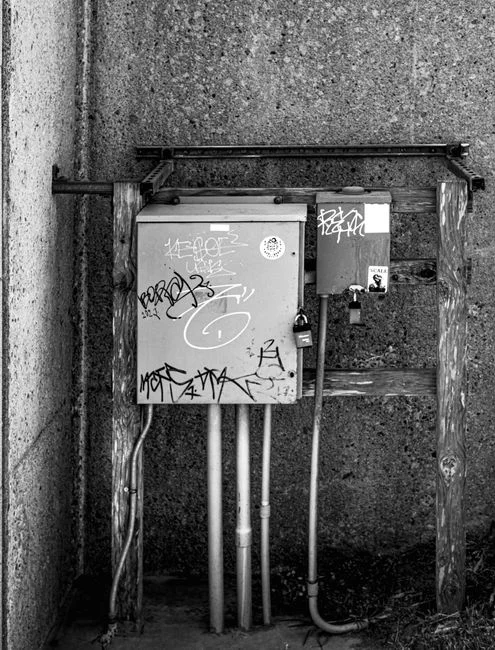
A wet well is not a clean-room instrument air manifold, and treating it like one is the fastest way to burn a controller. Minimum I/O at a stormwater lift station in 2026 is a primary wet well level transducer (4–20 mA hydrostatic or non-contact ultrasonic), a backup high-level float, pump runtime contacts on each pump, a cycle counter, an AC power fail input, and a high-level alarm contact that must latch until acknowledged. A single analog level channel is not enough: the EPA Detroit study lost sensor data to silt deposits at multiple sites (source: EPA-670/2-75-020, sensor-pedestal figures 24–28), and that pattern still drives the modern requirement for a backup float independent of the transducer.
Power is the second hard constraint. Many stormwater pump stations run on single-phase with battery or solar backup, and a brownout during the storm is the rule rather than the exception. LTE-M/NB-IoT modems survive brownouts because they boot in seconds; satellite IoT terminals can take 1–3 minutes to acquire a link after a power cycle, which is exactly when the wet well is most likely to be at peak level. Hardwired SCADA usually has UPS on the RTU but not on the fiber run itself. MQTT/cloud layers need a controller that buffers events locally and backfills when the WAN returns — a controller without store-and-forward is not audit-defensible.
Enclosure rating is the third. Any controller at a stormwater site should be NEMA 4 or 4X rated for moisture, corrosion, and outdoor service. The 2026 PumpLogix Plus reference design, for example, ships in a NEMA 4/4X enclosure with HMI touchscreen and VFD integration, illustrating the current benchmark (source: Smith & Loveless PumpLogix Plus release, 2026-05). For sites with upstream screening, pairing the controller with a rotary mechanical bar screen for stormwater headworks keeps ragging out of the wet well and reduces the false-high-level alarms that overwhelm an IIoT dashboard.
Side-by-Side Parameter Comparison
The matrix below is the screenshot engineers should bring into a vendor meeting. It collapses latency, power, cybersecurity baseline, coverage risk, install cost, recurring cost, best-fit site type, and the single biggest limitation of each lane into one extractable table. The cybersecurity baseline row is anchored to AWWA J100 RAM expectations (10- to 15-year asset life scoring, threat catalog, mitigation tracking) and to NIST CSF 2.0 for OT environments.
| Parameter | Cellular LTE-M / NB-IoT / Cat-1 bis | Satellite IoT (L-band) | Hardwired SCADA (radio/fiber/leased line) | MQTT / IIoT Cloud (over Lane 1–3) |
|---|---|---|---|---|
| Latency (typical) | 1–5 s | 5–60 s | <1 s | Inherits underlying lane + 0.5–2 s broker |
| Typical idle power | <1 W | 1–3 W (L-band) | 5–15 W RTU | +0.3–0.8 W at edge gateway |
| Cybersecurity baseline | TLS 1.3, private APN, IPsec | TLS 1.3, vendor PKI | Private network, AWWA J100 RAM | MQTT v5 + Sparkplug B, signed firmware, RBAC |
| Coverage risk | Cell-tower outage, flood-zone shadowing | Skyline obstruction, heavy rain fade (Ka) | Physical cut, vandalism, flood submergence | Inherits underlying lane risk |
| Install cost (CAPEX) | Low–mid | Mid (terminal + antenna) | High (trenching, radios, RTU) | Low added; mostly subscription |
| Recurring cost (OPEX) | $5–$20/asset/month data | $15–$60/asset/month subscription | $200–$800/site/month leased line or radio licensing | $10–$40/asset/month SaaS |
| Best-fit site | Flood-prone, single-phase, solar-capable | No cellular, low data rate | Utility-owned SCADA, control-room-staffed | Mixed fleet, dashboards, NPDES reporting |
| Notable limitation | Carrier dependency | Too slow for real-time control | Flood-exposed fiber is a single point of failure | Cannot fix a bad underlying WAN |
UL 508A panel construction and NEMA 4/4X enclosure ratings are the physical-layer baseline across all four lanes; the choice above them is the WAN path and the cloud layer, not the panel itself. A common 2026 mistake is to spec a NEMA 4X enclosure and then mount a consumer-grade router inside it — the enclosure protects the wrong device.
Cybersecurity and Permit Defensibility in 2026
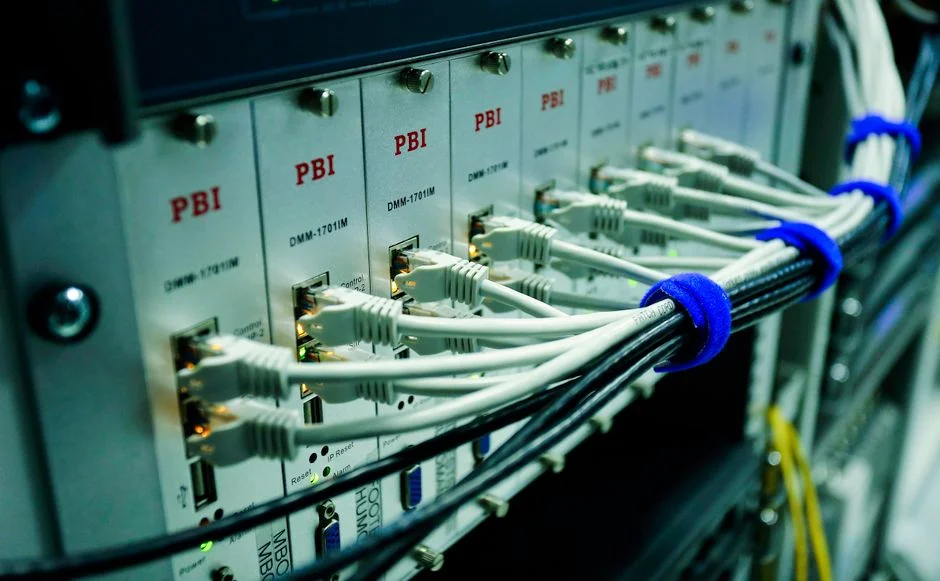
AWWA J100 RAM scoring and NIST CSF 2.0 for OT have effectively merged into the de facto audit checklist for water-sector remote access. The minimum 2026 baseline for any lane is TLS 1.3, role-based access, cryptographically signed firmware, and immutable audit logs. Default passwords remain the most common audit finding at lift stations — the 2025 WaterISAC advisory cited unchanged factory credentials as the entry vector in multiple U.S. incidents. Any controller that ships with a published default password and no forced-change prompt is not defensible, regardless of lane.
Permit defensibility is the other half. NPDES industrial stormwater permits and MS4 audit responses require traceable, time-stamped alarm history: when the high-level float tripped, how long the pumps ran, what the wet-well level trace looked like, and when AC power failed. If the controller cannot export that history as a signed event log (CSV or PDF with hash), the inspector will treat the data as unverified. A parallel point is the EPA-670/2-75-020 recommendation that "for similar future projects, the computer system be large enough to function as a closed loop system" — in 2026 terms, that means an architecture where the local controller and the cloud/SCADA layer can each operate independently, then reconcile. A pure cloud-dependent architecture that goes dark during a WAN outage fails that test.
Decision Framework: Choosing the Right Lane
Four questions, in order, will land a controls engineer on the right lane without re-reading the article. Answer them in sequence — the answer to Q1 constrains Q2, and so on.
| # | Question | If Yes | If No |
|---|---|---|---|
| 1 | Is there reliable cellular coverage at the wet well (RSRP > −100 dBm, sustained)? | Cellular LTE-M / NB-IoT / Cat-1 bis (Lane 1) as primary WAN | Evaluate satellite IoT (Lane 2) or hardwired SCADA (Lane 3) |
| 2 | Is there existing SCADA infrastructure and in-house IT/OT staff? | Bridge Lane 1 or 2 into existing SCADA; add MQTT/IIoT (Lane 4) only where dashboards or firmware OTA are needed | Use Lane 4 (MQTT/IIoT cloud) as the primary operator interface |
| 3 | Is the site flood-exposed, vandalism-prone, or below grade? | Favor cellular or cellular-plus-cloud; avoid exposed fiber runs and copper leased lines | Hardwired SCADA remains viable if the run is protected |
| 4 | Is the site covered by an MS4 or NPDES permit that requires traceable alarm history? | Require signed event logs and store-and-forward buffering on the controller, regardless of lane | Standard telemetry acceptable |
If Q1 is Yes and Q3 is Yes, the answer is almost always Lane 1 + Lane 4 — cellular as the WAN, MQTT/IIoT as the dashboard and audit layer. If Q1 is No and Q4 is Yes, the answer is Lane 2 + Lane 4 with a hard constraint on latency-tolerant alarm rules. If Q2 is Yes and Q3 is No, a Lane 3 SCADA integration with a Lane 4 cloud mirror is the most defensible long-term answer.
Cost Bands and Implementation Roadmap
Procurement needs ranges, not sticker prices, because installation cost depends on conduit runs, antenna mast height, and whether the utility is re-using an existing RTU. In 2026 terms, an entry cellular retrofit controller with telemetry and NEMA 4/4X enclosure sits at the low end of CAPEX; an HMI-ready station controller with VFD integration and a level transducer plus backup float is the mid band; a full SCADA integration with RTU, licensed radio, and backhaul is the upper band. OPEX follows the table above: $5–$20/asset/month cellular, $15–$60/asset/month satellite, $200–$800/site/month leased line or radio licensing, $10–$40/asset/month MQTT/SaaS.
A defensible rollout is 90 days. Days 0–30: site survey, coverage test at the wet well with a spectrum analyzer, and a written cellular-or-satellite determination. Days 31–60: controller retrofit, enclosure upgrade to NEMA 4/4X, transducer and backup-float installation. Days 61–90: cloud/IIoT onboarding, alarm-rule tuning, and tabletop alarm-escalation test against the EPA daily-crew-check rule. Days 91+: NPDES/MS4 audit verification, with the event log exported and hashed as evidence. Plants running PLC-controlled chemical dosing system skids on the same telemetry fabric can fold those sites into the same rollout without re-architecting.
The last step matters because the Detroit study is explicit: even with automatic on-site monitoring, daily field verification is non-substitutable. A remote-access architecture that cannot survive a 24-hour WAN outage and still produce a defensible daily report is not finished.
Frequently Asked Questions
What is the most defensible remote-access architecture for an industrial stormwater lift station in 2026?
A dual-stack design with a local controller that buffers events, a cellular LTE-M or NB-IoT primary WAN, and an MQTT/Sparkplug B cloud layer for dashboards and signed audit logs. This satisfies AWWA J100 RAM expectations and aligns with the EPA-670/2-75-020 closed-loop recommendation for redundant local and remote operation.
Can I retrofit an existing relay-logic stormwater pump panel with modern remote access?
Yes. A 2026 standardized platform such as the Smith & Loveless PumpLogix Plus controller is designed specifically to replace aging relay logic and ships with NEMA 4/4X, level transducer plus backup float, and remote monitoring compatibility (source: Smith & Loveless PumpLogix Plus release, 2026-05). Most retrofits reuse the existing wet well, conduit, and power feed.
How does the 3G/CDMA sunset affect existing stormwater pump telemetry?
Carriers have completed the sunset, so any CDMA, 1xRTT, or 3G/UMTS modem is now offline. Operators are migrating to LTE-M, NB-IoT, or LTE Cat-1 bis modems, all of which support IPsec and TLS 1.3 tunnels that 3G never did — a measurable cybersecurity upgrade alongside the connectivity swap.
Which cellular protocol — LTE-M or NB-IoT — is better for a flood-prone lift station?
LTE-M for sites that need voice fallback or firmware-over-the-air updates; NB-IoT for sites that send small, infrequent level packets and want the deepest in-building penetration. Both idle below 1 W, which is the deciding factor at solar-augmented sites. For broader IIoT guidance, see the disc filter retrofit engineering guide on related controller-selection trade-offs.
How do I make remote-access event history defensible for an NPDES or MS4 audit?
Require the controller to export signed, time-stamped event logs covering level trace, pump runtime, cycle counts, AC fail, and high-level alarms. Buffer locally and backfill to the cloud so a WAN outage does not create a gap. The 2026 expectation is a tamper-evident record, not a paper logbook.
What is AWWA J100 RAM and why does it matter for pump station remote access?
AWWA J100 is the risk and resilience assessment standard for water-sector assets. It scores threats, likelihoods, and consequences over a 10- to 15-year life cycle, and remote-access architecture is now part of that scoring. A controller that ships with default credentials, no firmware signing, and no audit log will fail the J100 review and trigger an inspection finding.
Do I still need daily field checks if I have full remote access and alarms?
Yes. EPA-670/2-75-020 is explicit: remotely controlled pump stations should be checked daily by traveling crews even with automatic on-site monitoring (source: EPA-670/2-75-020). Remote access is not a substitute for the field verification — it is a multiplier on the operator's situational awareness. For plants also handling industrial effluent, the EU industrial effluent compliance guide walks through similar dual-stack audit expectations.