
What the Urban Waste Water Treatment Directive Means for the UK in 2026
The recast Directive (EU) 2024/3019, which entered into force on 1 January 2025, supersedes Council Directive 91/271/EEC (1991) and tightens the obligations that UK water companies, plant managers and EPC consultants use as their design benchmark through retained EU law and the Urban Waste Water Treatment (England and Wales) Regulations 1994. The UK's continued mirroring of the urban waste water treatment directive uk framework matters in 2026 because every Ofwat PR29 business plan, Environment Agency permit review, and EPC tender specification is being written against the same three pressure points the recast opens: total nitrogen and total phosphorus ceilings, an 80% organic-micropollutant (OMP) removal target, and the Art. 20.1(b) reframing of treatment works as a Water Resources Recovery Facility.
Two practical compliance signals should be on a UK plant manager's desk this quarter. First, the European Commission has confirmed that, until 2028, all 27 Member States continue to report under the legacy UWWTD; the reporting switch to the recast is scheduled for 2028, which is the practical horizon for cross-border benchmarking and EU supply-chain decisions in 2026 (EU Commission environment page, 2025). Second, the UK's domestic instrument — the Urban Waste Water Treatment (England and Wales) Regulations 1994, mirrored in Scotland by the Urban Waste Water Treatment (Scotland) Regulations 1994 and in Northern Ireland by the Water and Sewerage Services (Northern Ireland) Order 2006 — has not been opened for a wholesale rewrite post-Brexit, so consultants and water-company compliance leads are working to the recast's design envelope even where the statutory text is unchanged (see also the UK wastewater treatment regulations 2026 compliance guide). The MDPI 2025 paper on the Polish implementation experience confirms that this regulatory pull is already reshaping equipment supply and pricing across Europe, and the UK will feel the same pressure on oxidant, MBR and UV-AOP procurement through 2026.
Agglomeration Thresholds and Size-Class Obligations
The recast pulls every agglomeration ≥1,000 population equivalent (PE) into the regulated perimeter, creates a new small–medium tier at ≥10,000 PE in sensitive areas, and tightens obligations at the ≥150,000 PE large-plant ceiling (MDPI 2025). Plant managers should confirm their site's designated agglomeration PE under the local authority's UWWTD register and place it into one of three obligation bands before scoping 2026 capex.
Three engineering consequences follow. The ≥10,000 PE band is where more stringent total phosphorus (Ptot) and total nitrogen (Ntot) limits first bite in sensitive areas, and the ≥150,000 PE band carries the strictest P and N ceilings to address eutrophication (MDPI 2025). Many present-day small and medium plants do not yet meet the recast's standards — the MDPI 2025 paper quantifies that gap across the Polish voivodeship using compliance data current to 31 December 2024, and the same retrofit gap is visible in UK Water and Sewerage Company (WaSC) AMP8 needs assessments. The conventional cost ratio of sewer construction to WWTP infrastructure is roughly 2.3:1 (MDPI 2025), so for agglomerations where extending the collecting system is the only way to bring smaller settlements into compliance, the 2026 capex will land on treatment upgrades rather than network extension.
| Recast 2024/3019 size class | Population equivalent threshold | Primary obligations triggered |
|---|---|---|
| Small | ≥1,000 PE | Collecting system + secondary treatment in scope for the first time |
| Small–medium (sensitive areas) | ≥10,000 PE | Tighter Ptot and Ntot limits; quaternary / micropollutant scope begins |
| Large | ≥150,000 PE | Strictest P and N ceilings; energy-neutrality and 80% OMP removal are binding |
| All sizes (Art. 15.1) | Any PE | Tertiary requirements can be relaxed where treated effluent is reused in agricultural irrigation |
The agglomeration framework dictates new equipment procurement standards, and the 2025 compliance summary of the new UWWTD rules provides the most defensible starting point for sizing equipment.
Discharge Limits: Nitrogen, Phosphorus and the Eutrophication Driver
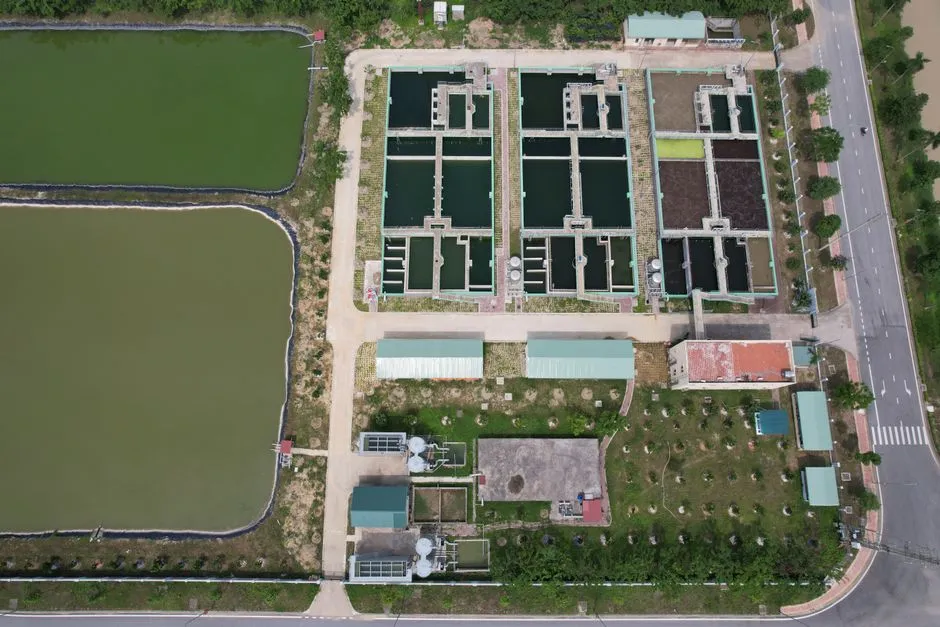
Ptot and Ntot ceilings tighten across the recast, with the most stringent limits applying to ≥10,000 PE plants in sensitive areas and the strictest ceilings reserved for ≥150,000 PE plants (MDPI 2025). The nutrient tightening is calibrated to close the gap on the 'good ecological status' objective of the Water Framework Directive 2000/60/EC.
Two language shifts in the directive change the compliance conversation. Article 20.1(b) requires 'recovery of resources, in particular phosphorus and nitrogen', so meeting a discharge number is no longer enough — the demonstration of a recovery pathway is now embedded in the WRRF concept (MDPI 2025). Article 15.1 also opens an agricultural-reuse derogation from the tertiary treatment requirements in Annex I Table 2 where treated urban wastewater is destined for irrigation, which is a route UK sites adjacent to farmland should evaluate in any 2026 scope review. In a UK context, the practical design envelope remains the UWWTD 91/271/EEC values of 2 mg/L Ptot and 15 mg/L Ntot for the ≥10,000 PE sensitive-area band, pending domestic statutory update.
Quaternary Treatment: Meeting the 80% Micropollutant Removal Target
The recast requires quaternary treatment to deliver 80% average removal of selected organic micropollutants (OMPs), and the 2026 Vullo et al. study in the Journal of Environmental Management provides an engineering benchmark for specifying that train. Across pilot-scale trials on real secondary- and tertiary-treated effluents, ozone-based advanced oxidation processes (AOPs) robustly achieved UWWTD compliance in different wastewater matrices, especially when coupled with biological activated carbon (BAC) post-treatment, while UV/H2O2-assisted AOPs were more sensitive to influent wastewater quality (Vullo et al., J Environ Manage, 2026-07-15).
Two dose-control findings from the same study are operationally critical: an optimal H2O2/O3 ratio of 1–1.5 is recommended, and H2O2 overdosing reduces the likelihood of meeting UWWTD targets — meaning a fluorescence- or ORP-based dose control loop, not a fixed setpoint, should be written into the specification. On-site energy self-sufficiency for AOP-loaded plants is unrealistic, as photovoltaic (PV) supply typically requires areas 2–10× the conventional WWTP footprint. Achieving energy neutrality will in most cases require off-site renewable supply or a power-purchase arrangement rather than an oversized on-site PV array.
| Quaternary option | OMP removal robustness | Dose-control sensitivity | Energy / footprint envelope |
|---|---|---|---|
| O3-based AOP + BAC polishing | Robust across matrices; meets 80% UWWTD target reliably | Sensitive to H2O2/O3 ratio; optimal 1–1.5 | Most efficient AOP option; off-site renewables likely required |
| UV/H2O2 AOP | More sensitive to wastewater quality | H2O2 dose and UV fluence both critical | Higher energy intensity; footprint dominated by UV reactor train |
| BAC polishing alone | Effective for biodegradable organics, partial OMP coverage | EBCT and temperature dependent | Modest energy; carbon replacement cost is the OPEX driver |
The defensible 2026 specification is an ozone-AOP primary stage with BAC polishing and an oxidant dose-control loop, paired with a grid-purchase or off-site renewable strategy. Where the upstream biological stage needs an upgrade to deliver the MBR-class effluent that AOPs assume, an MBR membrane bioreactor system is the most defensible retrofit, and the oxidant train is typically procured as a packaged ozone generator and tank sterilisation system sized to the design HRT and target OMP suite.
From WWTP to Water Resources Recovery Facility
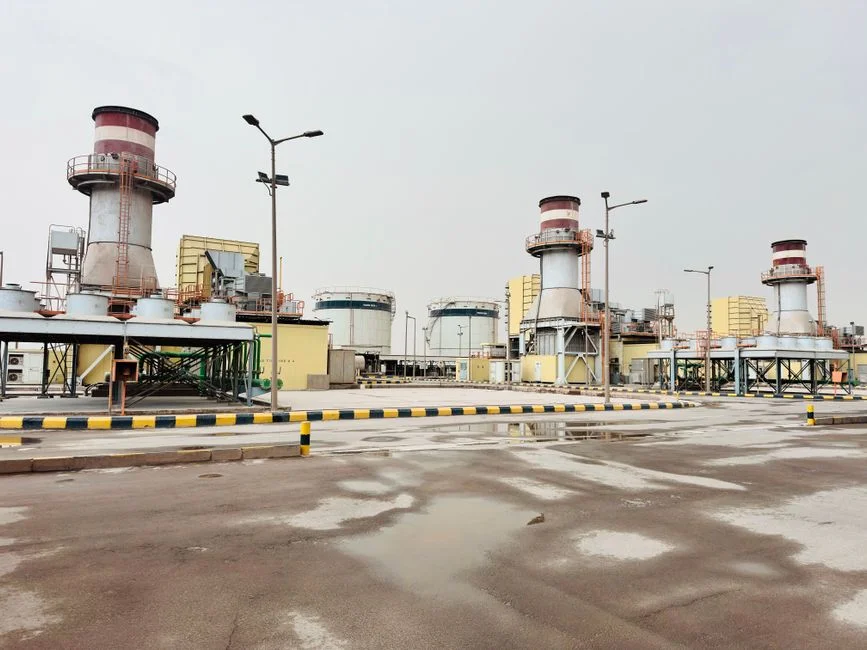
Article 20.1(b) of 2024/3019 moves the objective from 'waste treatment' to 'resource recovery', and the Water Resources Recovery Facility (WRRF) framing is a critical lever for UK plant managers in 2026. Operationally, that means struvite or ammonium-salt recovery, side-stream centrate treatment, and digestate processing move from optional sustainability add-ons to compliance-relevant assets (MDPI 2025).
In the UK, the WRRF concept sits on top of three existing instruments: the Water Framework Directive 2000/60/EC, the Nitrates Directive (91/676/EEC), and the Sewage Sludge Directive (86/278/EEC) — all retained or mirrored domestically. Reframing a P-and-N compliance cost as a resource-recovery value story converts an opex penalty into a capital bid, which aligns with Ofwat's PR29 final methodology and the Environment Agency's WINEP (Water Industry National Environment Programme) process.
2026 UK Compliance Decision Framework
The framework below converts the recast's obligations into four actions a UK plant manager or consultant can take this quarter.
- Classify the site. Confirm the agglomeration PE and the sensitive-area designation. The ≥10,000 PE sensitive-area and ≥150,000 PE thresholds are the decision pivots for P/N tightening, quaternary duty, and energy-neutrality scope.
- Test the Art. 15.1 reuse derogation. If treated effluent can be moved to agricultural reuse, model tertiary limits under Annex I Table 2 against reuse demand rather than full tertiary compliance to defer capex.
- Specify the quaternary train. Ozone-based AOPs with BAC polishing and H2O2/O3 ≈ 1–1.5 dose control are the most defensible UWWTD-aligned choice. Budget for off-site renewables or a power-purchase agreement to meet the energy-neutrality push.
- Embed WRRF metrics in the 2026–2030 plan. Set P- and N-recovery rate KPIs and link capex lines to resource-recovery outputs to ensure the plan is fundable under PR29 and WINEP.
Frequently Asked Questions
Does the recast EU Urban Wastewater Treatment Directive 2024/3019 apply in the UK after Brexit?
The UK retains the UWWTD framework through the Urban Waste Water Treatment (England and Wales) Regulations 1994 and the equivalent Scottish and Northern Irish instruments. Consequently, the recast's P/N limits, ≥1,000 PE agglomeration coverage, 80% OMP removal target, and Art. 20.1(b) WRRF framing serve as the design benchmark for UK consultants and water companies in 2026.
What size of plant now triggers the strictest phosphorus and nitrogen limits?
The strictest Ptot and Ntot ceilings apply to plants ≥150,000 PE, with the first significant tightening biting at ≥10,000 PE in sensitive areas; the recast also pulls every agglomeration ≥1,000 PE into the regulated perimeter for the first time (MDPI 2025).
Which quaternary treatment train reliably meets the 80% organic micropollutant removal target?
Ozone-based AOPs coupled with biological activated carbon (BAC) post-treatment robustly met the 80% target across different wastewater matrices in the 2026 Vullo et al. study, while UV/H2