Why Alarm Notification Is a Compliance System, Not a Convenience
A SCADA alarm notification system for a water treatment plant routes triggered alarms from PLCs, RTUs and instrumentation to the right on-call operator in seconds, escalates if unacknowledged, and logs every event for EPA and consent-decree audit. Modern systems integrate with platforms like Rockwell FactoryTalk, AVEVA, and GE Vernova via OPC UA and Modbus, and deliver alarms to voice, SMS, email, pager and mobile apps. With Clean Water Act civil penalties reaching $64,000+ per violation per day under the 2026 EPA Civil Monetary Penalty Adjustment (40 CFR 19.4) and recent EPA sewer-overflow enforcement actions exceeding $278,000, audit-trail logging is no longer optional infrastructure — it is a regulated record.
The failure mode is well documented. At British Columbia's Comox Valley Regional District, the prior alarm chain relied on keypads, a hard-wire telephone line, and a third-party service that paged on-call operators. When the service was acquired by another firm, pages started routing to the wrong utility. A subsequent power failure at the new water treatment plant left the on-call operator without a page for more than an hour; the clear well plummeted before anyone knew. The response — selecting WIN-911 as the WIN-911 Software platform paired with FactoryTalk View SE — yielded what the control systems technician describes as "virtually 100% reliability" since deployment (CVRD field report, as published in The Journal from Rockwell Automation, 2023-07).
Any modern deployment must prevent three failure categories: missed alarms (the notification chain breaks), unacknowledged alarms (the right person is reached but does not respond, so escalation is required), and unprovable response (no defensible record of who knew what, when). Because pump stations, lift stations, reservoirs, and remote tanks run unmanned 24/7, notification has to reach on-call personnel wherever they are, with enough context to decide drive-out vs. remote-clear. That context — site, parameter, current value, limit, trend, severity — is what separates a notification platform from a phone tree.
How a SCADA Alarm Notification System Actually Works
The data path is fixed by the plant's existing architecture. A sensor (turbidity meter, level transducer, chlorine analyzer) feeds a PLC or RTU. The PLC publishes the tag and its alarm state to the SCADA server — typically FactoryTalk View SE, AVEVA System Platform, GE Vernova Proficy CIMPLICITY/iFIX, or equivalent. The notification middleware subscribes to that server through OPC UA, OPC DA, OPC HDA, Modbus, or Ethernet/IP, evaluates the alarm against its routing and escalation rules, and dispatches the event to the operator across one or more channels: voice (VoIP or analog), SMS, email, mobile app, two-way radio, or announcer. The operator acknowledges. The system writes the event to an append-only log. The cycle from trigger to acknowledgment typically completes in under 60 seconds when designed correctly (HydropureWater field data, 2026).
Priority and severity tagging are first-class design choices, not afterthoughts. CVRD's configuration — one of the most thoroughly documented in the public domain — uses the FactoryTalk Alarm and Events severity function inside FactoryTalk View SE to organize subscriptions. One subscription, called "all alarms," covers everything; others call out specific classes (pump fault, level high, chlorine residual); and a separate subscription is reserved for communication alarms that go to control systems staff only. The same pattern is the basis for any rationalized alarm set: route by severity, not by tag count (CVRD/WIN-911 case study, 2023-07).
The notification payload is what the operator reads on a vibrating phone at 02:47. It must include the site, the parameter, the current value, the limit breached, a short trend direction, the severity, and a clear instruction: drive out, or clear remotely. Chlorine residual, pH, turbidity, conductivity, and disinfection setpoint breaches all fire alarms before they become reportable events; the operator needs the value and the limit in the same message to triage without opening the HMI. The standards backdrop is ISA 18.2 (Management of Alarm Systems for the Process Industries) and its international equivalent IEC 62682 — both of which describe the lifecycle that produces these messages and the records that travel with them.
The Alarm Management Lifecycle: ISA 18.2 as the Backbone
Notification is one cross-cutting capability inside a larger engineering artifact: the alarm management lifecycle defined by ISA 18.2 / IEC 62682. The seven stages are alarm philosophy, identification, rationalization, detailed design, implementation, operation, and management of change / audit. Every alarm that enters the system must clear a stage gate at each step, and the notification platform is the surface where stages five through seven actually run in production.
Alarm philosophy is the plant's written statement of how alarms are designed, prioritized, and operated — it binds the utility to a target of roughly 150 alarms per day per operator (the long-standing ISA benchmark) and a "bad-actor" ratio below 5%. Identification lists every candidate alarm. Rationalization — the most labor-intensive stage — assigns priority, type, consequence, and a documented operator response to every tag, then drops the ones that fail the test (no defined response, no time-to-act, or duplicate of another alarm). Detailed design covers the HMI display, the A&E configuration, the routing policy, and the escalation timers. Implementation deploys the configuration and tests it. Operation is the steady-state, where the notification platform does the work and key performance indicators (alarm rate per day, % unacknowledged, bad-actor list) are tracked. Management of change (MOC) and audit are where every setpoint change, alarm add, or routing update flows through a documented review and lands in the audit trail.
Academic attention to this lifecycle is active. The IJCRT paper "Optimization of SCADA Alarm Systems" (Volume 13 Issue 9, 2026) sits squarely on the same problem: the engineering overhead of keeping an alarm set rationalized, prioritized, and auditable under continuous MOC. Practitioners who skip the lifecycle and buy only a notification tool end up routing a flood of bad actors, which is the failure the lifecycle exists to prevent.
What the System Must Monitor in a Real Plant
The alarm set is grounded in the actual instrumentation on the P&ID, not in vendor defaults. CVRD's new water treatment plant and the broader CVRD raw-water and wastewater system provide one of the most complete public lists. Drinking-water parameters include level, pressure, flow, turbidity, UV transmittance (UVT), pH, and temperature on the raw-water pump station, plus treatment-train parameters for flash mixing, flocculation, filtration, caustic, coagulation, chlorine, UV disinfection, clear wells, and solids dewatering. Wastewater parameters include level, pressure, liquid flow, air flow, dissolved oxygen, total suspended solids (TSS), pH, oxidation-reduction potential (ORP), and temperature across headworks, grit and sludge removal, bioreactors, aeration, RAS/WAS, dewatering, scrubbers, chemical systems, and sewage pump stations. Each tag must carry a defined limit, a priority, and a documented response action before it generates an alarm — otherwise it is a chattering actor and should be removed during rationalization (CVRD case study, 2023-07).
| Process Area | Minimum Alarm Set | Typical Priority | Response Action |
|---|---|---|---|
| Raw-water intake / pump station | Wet-well level (HH/H/LL), pump fault, suction/discharge pressure, power status, intrusion | High (HH), Medium (H), Low (L) | Drive out for HH/LL or pump fault; clear remotely for VFD soft faults |
| Coagulation / flocculation | Flow, pH, streaming current, turbidity (raw & settled) | Medium | Adjust chemical dose remotely; drive out for instrument failure |
| Filtration | Differential pressure, turbidity (filtered), flow | High on filtered turbidity breach | Isolate filter remotely; drive out for backwash failure |
| Chlorine / UV disinfection | Chlorine residual, UVT, UV intensity, lamp status | Critical (off-spec residual or UVT) | Drive out for residual breach; clear lamp-fault remotely if redundant bank available |
| Clear well / finished water | Level, chlorine residual, free vs. total, pump discharge pressure | High | Drive out on low level; clear remotely on analyzer calibration |
| Aeration basin | DO, air flow, MLSS / TSS, pH, temperature, RAS/WAS flow | Medium-High | Adjust aeration remotely; drive out for blower fault |
| Solids dewatering | Belt-press tracking, polymer flow, cake solids, torque | Medium | Drive out for tracking or shear failure; clear polymer fault remotely |
| Lift station / collection system | Wet-well level, pump fault, rising-main pressure, power, intrusion | High (HH/LL), Medium (H) | Drive out for HH/LL; clear remotely for comms transient |
Remote-site tags are the ones most often missed in rationalization. Wet-well level, pump fault status, rising-main pressure, chlorine residual at booster stations and reservoirs, power status, and intrusion are the minimum set; each must generate a defined alarm when violated, not just be visible on a trend. Operators responsible for dozens of lift stations and wells cannot be expected to scan a polling screen — they need a phone call.
Escalation, Routing, and Acknowledgment Logic
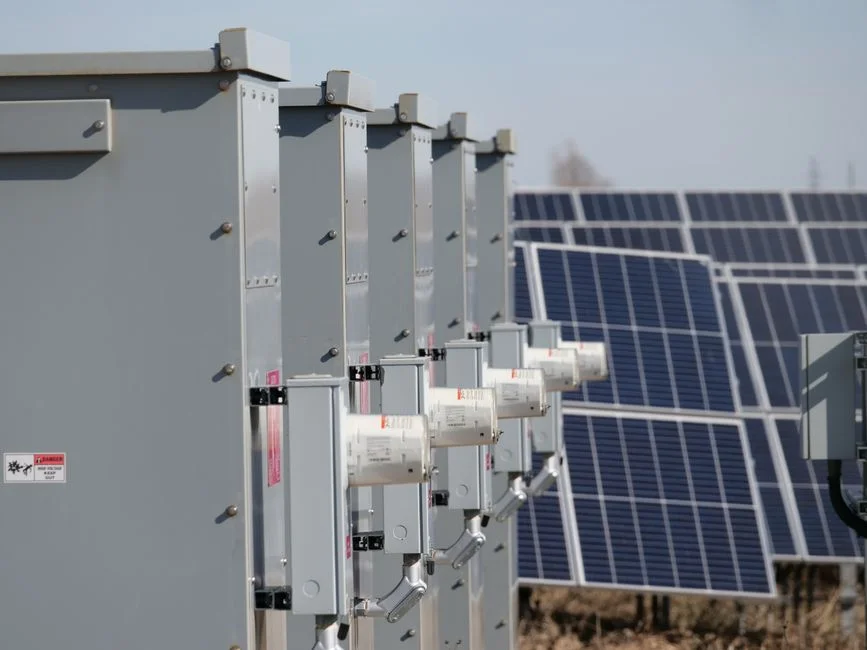
Routing is the policy that decides who gets paged, in what order, and how long they have to respond before the next tier is engaged. Inputs are site, severity, the on-call schedule currently in effect, time of day, day of week, and the current state of the asset. A pump fault on a duty pump when the redundant pump is running is a lower-priority routing target than the same fault on a simplex station. The policy is expressed as subscriptions or notification profiles inside the middleware (e.g., "all alarms," "pump faults only," "communication alarms"); CVRD runs at least three of these against FactoryTalk Alarm and Events (CVRD case study, 2023-07).
| Tier | Recipient | Channel | Acknowledgment Timeout | Fallback |
|---|---|---|---|---|
| 1 (primary) | On-call operator for the affected site | Voice call (primary) + mobile app push | 3–5 minutes | Tier 2 |
| 2 (secondary) | Secondary on-call operator (different rotation) | Voice call + SMS | 3–5 minutes | Tier 3 |
| 3 (supervisor) | Operations supervisor / plant manager | Voice call + email | 5–10 minutes | Tier 4 |
| 4 (controls) | Control systems staff (SCADA/PLC link loss, communication alarms) | Email + mobile app (no voice, by design) | 15–30 minutes | IT escalation |
Acknowledgment channels are deliberately redundant. Voice call is primary at CVRD because a human voice forces a decision and stops escalation. SMS is used only for alarms that are active-and-unacknowledged — it is a reminder, not a first-contact. The mobile app is the catch-all: every alarm lands there, the operator opens it, checks the value and trend, and either acknowledges or drives out. A manual reset, not auto-clear, is the rule for high-severity events so the audit trail captures the resolution method. The SLA target is simple — routing within seconds of trigger, escalation on acknowledgment timeout, and a full audit record on resolution. Faster acknowledgment means more time to intervene before a sanitary sewer overflow becomes a reportable event under 40 CFR 122.41 and standard NPDES permit conditions.
Audit Trail and Compliance Evidence in 2026
When an EPA inspector or a consent-decree monitor asks "show me what happened on March 14 at 02:47," the answer is a database row. The minimum record schema — drawn from the SeQent implementation model and consistent with the records the EPA and consent-decree monitors typically request — includes: parameter breached, SCADA tag and timestamp, person notified, device receiving the notification (voice, SMS, mobile app, email), acknowledgment time, escalation history if any, and resolution method (remote clear, drive-out, or unresolved). Every record must reference the original SCADA tag, the timestamp, and the value that triggered the event so root-cause review is possible months later.
These records support the documented-evidence expectations of EPA reporting and consent-decree obligations, but the utility owns the permit, the monitoring program, and the reporting workflow; the system supplies the underlying event records. Retention must survive operator turnover, phone-log loss, and SCADA server rebuilds — which means writing to an append-only store, ideally with offsite backup, and never relying on operator memory or a phone bill. Under 40 CFR 122.41 and standard NPDES monitoring-report requirements, the alarm record is part of the operational narrative; under a consent decree it is part of the deliverable. The 2026 enforcement environment — with civil penalties indexed to $64,000+ per violation per day and consent-decree monitors reviewing alarm-response times quarterly — is what makes a defensible audit trail a compliance asset rather than a forensic afterthought.
Build vs. Buy: HMI Annunciator vs. Dedicated Notification Middleware
Two questions decide the build-vs-buy outcome. First: does the existing SCADA platform natively provide multi-channel routing (voice, SMS, mobile, email), escalation timers, on-call rotation, and a complete append-only audit record? Second: does the utility operate distributed or unmanned sites that need delivery from a single platform to a rotating on-call staff?
| Capability | Native HMI Annunciator (e.g., FactoryTalk View SE alarm banner) | Dedicated Notification Middleware |
|---|---|---|
| Display in control room | Yes (banner, summary, history) | Optional (often via thin client) |
| Voice / SMS / mobile push | Limited; depends on platform and add-ons | Yes — primary design center |
| Escalation timers | Manual or scripting | Built-in, configurable per subscription |
| On-call rotation integration | External schedule file, manual sync | Native calendar / schedule import |
| Audit trail completeness | Operator-action log; no delivery record | Trigger, delivery, acknowledgment, resolution |
| Distributed unmanned sites | Weak (no delivery outside the HMI) | Strong (single platform, hundreds of sites) |
| Cost / complexity | Lower — already licensed | Higher — additional server, license, integration |
When the SCADA HMI annunciator is enough: single-site plants, fully staffed control rooms, low alarm count, no consent-decree or external audit pressure beyond standard NPDES self-reporting. When dedicated middleware is the right answer: distributed infrastructure with hundreds of unmanned sites, mobile and after-hours operators, consent-decree or rate-payer board reporting, and the need to route by site + severity + on-call rotation. Real reference deployments include WIN-911 at CVRD with one physical plus one virtual server per utility, sitting beside FactoryTalk View SE, and cloud-based alternatives (Cattron RemoteIQ with Messenger W or Messenger BLE telemetry units) for lighter remote-site deployments such as chlorine monitoring at wells and lift stations (Cattron product reference, 2025; CVRD case study, 2023-07). For plants that pair a notification layer with new process equipment, the same logic applies to PLC-controlled chemical dosing systems and to UV disinfection monitoring — both generate alarm streams that the middleware must route and audit.
A 2026 Deployment and Optimization Playbook
Step 1 — Inventory and baseline. Pull every alarm source from every SCADA server, PLC, and RTU. Quantify current alarm load using the three numbers that matter: alarms per operator per day (target ≤ 150 per ISA 18.2), bad-actor ratio (target ≤ 5% of total alarm volume), and percent of alarms unacknowledged within the configured timeout. Without a baseline, improvement is a guess.
Step 2 — Rationalize against the lifecycle. Apply ISA 18.2 / IEC 62682 to every tag: assign priority, type, consequence, and a documented operator response. Remove nuisance and chattering alarms before configuring any new routing logic — routing more alarms to more people only makes the flood louder.
Step 3 — Configure, parallel-run, cut over. Build severity subscriptions, on-call schedules, and escalation timers. Run the new system in parallel with the legacy alarm chain for a defined soak period (CVRD ran WIN-911 in parallel before cutover) and verify the audit trail end-to-end against a forced test event. Only cut over once the parallel run shows parity or better on missed alarms and acknowledgment time.
Step 4 — Operate, measure, re-enter the lifecycle. Review monthly: alarm-rate trends, missed acknowledgments, MOC records, and audit-trail completeness. Feed every setpoint change, alarm add, or routing update through a documented MOC process. Re-enter the lifecycle at the operation stage on a quarterly cadence, and re-run rationalization annually or after any major process change. For plants that touch RO or MBBR process trains, the same audit discipline applies upstream — see the related references on RO system design parameters and on MBBR process instrumentation.
Frequently Asked Questions
What is a SCADA alarm notification system in a water treatment plant?
It is the layer that subscribes to alarms generated by the SCADA platform — typically FactoryTalk View SE, AVEVA System Platform, or GE Vernova Proficy — and routes them to on-call operators across voice, SMS, email, and mobile app, with escalation timers and a full audit trail. The standards backbone is ISA 18.2 / IEC 62682, which define the alarm management lifecycle the notification layer supports.
How fast must an alarm reach the on-call operator?
Routing should complete within seconds of the trigger; the first tier of escalation typically fires after 3–5 minutes of no acknowledgment, with secondary and supervisory tiers stepping in at the same interval. The goal is faster acknowledgment so a wet-well high-level or chlorine residual breach can be cleared before it becomes a reportable sanitary sewer overflow.
Which SCADA platforms are supported for alarm notification?
Production deployments cover Rockwell FactoryTalk View SE, RSView, and PlantPAx; AVEVA System Platform, InTouch, and PI; and GE Vernova / Velotic Proficy CIMPLICITY and iFIX, with RTU connectivity via OPC UA, OPC DA, OPC HDA, Modbus, and Ethernet/IP. Cattron RemoteIQ is a cloud-based alternative for lighter remote-site deployments such as chlorine monitoring at wells and lift stations.
What records does the system need to keep for an EPA or consent-decree audit?
At minimum: the parameter breached, the SCADA tag and timestamp, the person notified, the device that received the notification, the acknowledgment time, the escalation history, and the resolution method. Records must be written to an append-only store so they survive operator turnover, phone-log loss, and SCADA server rebuilds — and every record must reference the source tag and value to support root-cause review months later.