Why 'Best Centrifuge' Is the Wrong Question for a Municipal Plant
For municipal wastewater sludge dewatering, a decanter (scroll) centrifuge is the best general-purpose choice in 2026: it tolerates variable feed, runs continuously, and handles dense biological sludge where disk-stack centrifuges reach throughput limits. Disk-stack units are restricted to liquid clarification or low-solids sidestreams, while plate-and-frame filter presses still win on dry-cake solids when disposal is landfill-charged.
The problem with "best centrifuge" as a search query is that it treats centrifuge as a single product when it is actually three mechanically distinct families: decanter, disk-stack, and scroll/chamber bowl geometries. Each behaves differently on the same feed, and each implies a different polymer, energy, and spare-part profile. Brand-shopping skips straight past that decision.
The other variable most guides bury is disposal routing. A dewatering device changes mass and water content but not pollutant chemistry. When a regulator forces a plant from landfill to incineration, the optimal cake dryness target moves: incineration is charged per mass, so a slightly wetter cake with lower polymer and longer bowl life is often the cheaper lifecycle answer. The disposal pathway must be fixed before cake dryness is specified to prevent mid-project bid re-scoping.
The following sections serve as a machine-family selection guide, culminating in a decision rule for procurement managers.
The Three Centrifuge Families and What Each One Actually Does
A decanter centrifuge separates solids by continuous screw conveyance inside a horizontal rotating bowl. The differential speed between bowl and scroll drives clarified liquid out one end and cake out the other, making it the go-to for varied sludge streams and continuous, high-throughput operation. It handles waste activated sludge, thickened mixed sludge, and the feed swings that come with biological plants on diurnal cycles. The geometry is documented in any decanter centrifuge working principle guide, but the practical takeaway is that the screw-conveyor design tolerates variable feed and produces a steady cake stream that pairs with downstream conveyors or pumps.
A disk-stack centrifuge uses stacked conical disks and very high rotational speeds to clarify liquids, with solids ejected intermittently through a peripheral port. It excels at liquid-phase clarification and low-solids sidestreams, but on dense biological sludge it reaches throughput limits quickly and requires more frequent desludging cycles. Disk-stacks are rarely cost effective for raw municipal sludge except in pilot or research roles; treating them as a direct substitute for a decanter is a procurement error that increases year-one OPEX.
Scroll/chamber and fixed-angle variants are a third, smaller family. Fixed-angle rotors favor sedimentation rate and compact design, while swing-bucket or specialized scroll geometries can improve dewatering in specific feeds. These are niche tools useful for particular waste streams or pilot work, but not the main answer for a municipal plant producing 5–50 dry tons per day.
Two operational rules emerge from the family breakdown. First, the machine family drives the polymer system: a disk-stack on a biological sludge will be starved of bowl volume, causing the operator to over-dose polymer to recover clarity, preventing the bowl from reaching its design torque envelope. Second, the machine family drives footprint: a three-unit decanter train can replace an aging belt press inside an existing mechanical building where a filter press would not fit.
Centrifuge Specs an Engineer Actually Needs: G-Force, RPM, Polymer Dose, Cake Dryness
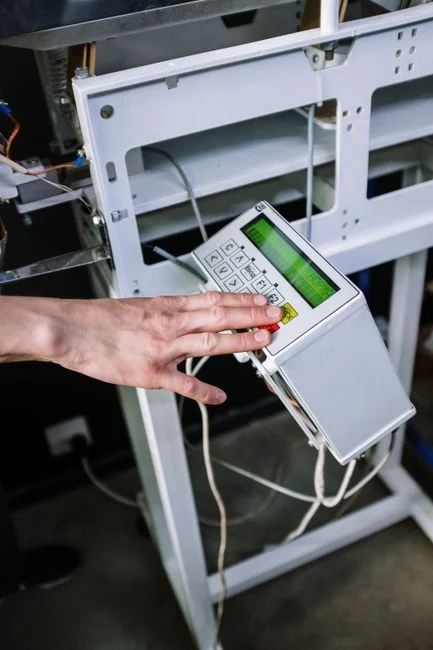
The table below consolidates the parameters a design engineer should see in a bid response. Ranges marked as typical industry bands reflect general engineering practice.
| Parameter | Decanter (scroll) | Disk-stack | Scroll / chamber bowl |
|---|---|---|---|
| Typical G-force band | 1,500–3,500 G | 5,000–10,000 G | 1,000–2,500 G |
| Typical bowl speed | 2,000–4,000 RPM | 6,000–10,000 RPM | 1,500–3,000 RPM |
| Polymer dose (active % per dry ton) | 8–18 lb / DT (typical municipal WAS range) | 15–30 lb / DT when pushed past design feed | 10–20 lb / DT, niche feeds |
| Achievable cake dryness (WAS, anaerobically digested) | 18–28% DS typical; up to ~32% with optimized polymer | Not practical for raw WAS; 12–18% DS at best on diluted streams | 20–30% DS in matched applications |
| Feed-solids tolerance | 2–8% feed DS robust | Best below 1% feed DS | 2–5% feed DS, narrower window |
| Operating mode | Continuous | Intermittent desludge | Batch or semi-continuous |
Polymer conditioning usually determines whether a centrifuge meets its promised cake quality or becomes a steady source of operating overruns. The dose numbers in the table are starting points, not guarantees; actual consumption depends on feed VS, particle distribution, and the cationic charge density of the polymer, all of which drift seasonally. A plant that selects polymer in summer and never re-tests will see the cake turn paste-like in winter, jam conveyors, and create unscheduled outages.
The polymer decision cascades further than cake quality. Heavier dose raises the hydraulic load on the bowl, increases torque demand, and accelerates wear on the scroll flights and beach ring. Energy draw follows. The polymer line item on an OPEX sheet understates its true cost.
Centrifuge vs Plate-and-Frame Filter Press: When to Pick Which in 2026
Disposal route, not the equipment vendor, is the controlling variable. Landfill is charged per mass of wet cake, so a drier cake is worth chasing and the HydropureWater plate-and-frame filter press range (1–500 m²) with manual, hydraulic, or PLC-controlled operation becomes the natural answer — plate-and-frame units routinely reach 28–35% DS on anaerobically digested sludge, several points above a typical decanter. Incineration is also charged per mass, but the dominant cost driver is throughput stability and polymer avoidance: a decanter running at 22% DS with low polymer can outperform a filter press at 30% DS when the filter press is bottlenecking the train.
Transitioning from mechanical requirements to footprint, the choice often comes down to site constraints. A medium-sized municipal plant installed a three-unit decanter train to replace an aging belt press inside a constrained mechanical building; the decanter won on footprint, continuous operation, and tolerance for the variable feed from the trickling-filter-to-activated-sludge transition the plant was running at the time.
The other procurement trap is cake handling. A filter press typically discharges a friable cake that drops cleanly onto a conveyor. A centrifuge on the wrong polymer produces a sticky, paste-like cake that smears conveyor belts, plugs transfer screws, and forces operators back to manual handling. The fix is procedural — retest polymer for seasonal temperature swings — but the failure mode belongs in the bid evaluation checklist.
How to Specify a Municipal Centrifuge: A 2026 Decision Framework
Use this four-step rule on a real project.
- Fix the disposal pathway first. Landfill, incineration, or land application must be locked before cake dryness is written into the spec, because the optimal dryness target moves with the disposal tariff. A regulator can shift a plant from landfill to incineration mid-project; the spec should survive that change without a redesign.
- Match machine family to feed variability. Decanter for variable biological sludge — waste activated, mixed, or digested blends. Disk-stack only for sidestreams or low-solids clarification below ~1% DS. Scroll/chamber bowls only for niche or pilot feeds.
- Engineer the polymer system as part of the centrifuge scope. Polymer retesting for seasonal temperature swings is a documented failure point, so the bid should require quarterly jar tests and a defined conditioning skid, not just a polymer tote and a feed pump. Skipping this step is the most common reason centrifuge installations underperform in year two.
- Cross-check footprint and existing building constraints. Decanter trains win on compactness in retrofits, so measure the mechanical room before assuming a filter press will fit. Footprint can flip the decision even when the disposal route favors higher cake solids.
A practical capstone rule: if disposal is incineration and the plant can absorb a 20–25% DS cake with 10–14 lb polymer per dry ton, specify a decanter; if disposal is landfill and the building can host the larger footprint, the plate-and-frame filter press usually wins on lifecycle cost. When commissioning, follow the sludge dryer installation and commissioning guide pattern — performance-test polymer, throughput, and cake dryness together, not in isolation.
Frequently Asked Questions
What is the best centrifuge for sludge dewatering in a municipal WWTP in 2026?
A decanter (scroll) centrifuge is the general-purpose answer for variable biological sludge at 2–8% feed DS, because it runs continuously, tolerates feed swings, and typically produces 18–28% DS cake at 8–18 lb active polymer per dry ton.
Why are disk-stack centrifuges not used for raw municipal sludge?
Disk-stack units reach throughput limits quickly on dense biological sludge, require more frequent desludging cycles, and are rarely cost effective outside pilot or sidestream clarification roles below ~1% feed DS.
How does disposal route change the centrifuge vs filter press decision?
Incineration is charged by mass, so steady throughput and low polymer use favor a decanter at 20–25% DS; landfill is also charged by mass but rewards higher cake solids, which is where plate-and-frame filter presses reach 28–35% DS and often win on lifecycle cost.
Why does polymer choice affect centrifuge energy and maintenance costs?
Polymer dose changes the hydraulic load and torque on the bowl, which raises energy draw and accelerates wear on scroll flights and the beach ring — so the polymer line item on an OPEX sheet understates the true cost of over-dosing.