
Why the 2020 Law on Environmental Protection, Not the IED, Governs a Vietnam Steel Acquisition
When ArcelorMittal acquires a plant in Vietnam in 2026, the binding wastewater framework is the 2020 Law on Environmental Protection (No.72/2020/QH15, the "2020 LEP"), in force from 1 January 2022 and implemented through Decree 08/2022/ND-CP and Circular 02/2022/TT-BTNMT. The EU Industrial Emissions Directive 2010/75/EU (IED), the Bundes-Immissionsschutzgesetz (BImSchG), the Wasserhaushaltsgesetz (WHG), and the 4. Abwasserverordnung (AbwV) from the parallel Germany compliance guide do not apply; Vietnam has no equivalent horizontal IED directive, no federal-state water law split, and no 2000/60/EC Water Framework Directive overlay. The competent authorities are the Ministry of Natural Resources and Environment (MONRE) at the central level and the Department of Natural Resources and Environment (DONRE) at the provincial level, with EIA scoping decisions and discharge permits split between the two depending on project scale. The 2014 LEP is fully repealed, and any due-diligence file that still references the older Law on Environmental Protection 2005 is using an instrument that has been off the statute book for four years.
The Vietnam Wastewater Standards Stack: QCVN 40, QCVN 52, and QCVN 14
QCVN 40:2011/BTNMT is the national industrial wastewater discharge standard with 34 parameters and two columns: Column A applies when discharge enters a water body used for water supply, aquaculture, or recreation, and Column B applies to all other receiving waters. For an ArcelorMittal steel or scrap-yard site, Column A is almost always the correct benchmark because most industrial-park outfalls in Vietnam discharge into canals that connect to downstream water-supply intakes or aquaculture zones. The headline values are BOD₅ 50 mg/L, COD 150 mg/L, TSS 100 mg/L, total nitrogen 60 mg/L, total phosphorus 8 mg/L, and a 6.5–9 pH window with temperature ≤40°C. QCVN 52:2015/BTNMT is the separate receiving-water protection standard (27 parameters) that applies when the receiving water is used for domestic supply, aquaculture, or recreation, and it sets hardness- and load-based limits for ammonia, sulfide, phenols, and heavy metals that are tighter than QCVN 40 in most cases. QCVN 14:2008/BTNMT controls cooling-water discharges with a 3°C maximum temperature rise above intake and a 0.5 mg/L residual chlorine cap, and it is the right reference for any integrated-mill site with a once-through or closed-loop cooling system.
| Parameter | QCVN 40:2011 Column A | QCVN 40:2011 Column B | German 4. AbwV Annex 25 (reference) |
|---|---|---|---|
| BOD₅ | 50 mg/L | 100 mg/L | Site-specific, typically 15–25 mg/L |
| COD | 150 mg/L | 300 mg/L | Site-specific, often 150 mg/L |
| TSS | 100 mg/L | 200 mg/L | 30 mg/L (qualified random sample) |
| Total Fe | 5 mg/L | 10 mg/L | Site-specific, often 2–3 mg/L |
| Total Zn | 3 mg/L | 5 mg/L | Site-specific, 2.0 mg/L typical |
| pH | 6.5–9 | 5.5–9 | 6.5–9.5 |
| Temperature | ≤40°C | ≤40°C | ≤3 K rise above intake (Annex 31) |
The gap between QCVN 40 and the German AbwV envelope is real and material: a permit that is in compliance at a QCVN 40 Column A BOD₅ of 50 mg/L will fail a German 4. AbwV Annex 25 envelope that typically sits at 15–25 mg/L, and any cross-border M&A team that benchmarks a Vietnam asset against a German peer needs to re-map the numbers, not the framework. For the engineering side of the deal, raw DRI/HBI wastewater runs pH 9–11 from lime addition, 40–60°C, 200–500 mg/L TSS, and 50–150 mg/L oil and grease, well within the operating envelope of a dissolved air flotation system for steel-mill O&G and TSS removal, with a lamella clarifier for Fe/Zn precipitation at 20–40 m/h as the secondary stage and a PLC-controlled pH and coagulant dosing package to hold metals within both QCVN 40 and any site-specific DONRE tightening.
EIA Decision Re-Issuance: The Vietnam Equivalent of Germany's §16 BImSchG

Article 31 of the 2020 LEP requires re-assessment of the EIA Decision (Quyết định phê duyệt Đánh giá tác động môi trường) when there is a change in project scale, technology, or operator, and the trigger is operational rather than transactional, meaning a pure share purchase with no operational change can stay on the existing EIA Decision while a mill-level process change forces a fresh review. Circular 02/2022/TT-BTNMT classifies integrated iron and steel mills with capacity ≥100,000 tonnes per year into Group I, which requires a full EIA report (Báo cáo ĐTM) reviewed by MONRE, while scrap-yard collection, storage, and shredding sites fall into Group II, which route through a simplified environmental registration (Đăng ký môi trường) with the provincial DONRE. The realistic review window is 30–45 working days for a Group II re-registration with DONRE and 90–180 days for a Group I EIA Decision amendment at MONRE, with the longer window covering public consultation under Article 33 of the 2020 LEP and any required community hearing. The decision rule for a 2026 deal team is identical in structure to the German §16 BImSchG test: a change in operator alone does not force a new EIA, but a change in capacity, raw-material mix, wastewater treatment train, or outfall location does.
Vietnam Pathway A vs Pathway B: The 2026 Permit Model
Every Vietnam steel or scrap-yard acquisition in 2026 falls into one of three permit pathways, and the choice is driven by whether the deal changes operations rather than by the deal structure itself. Pathway A covers an ownership-only transfer with no change in process, capacity, or outfall: the deal team files a notification to DONRE under Article 49 of the 2020 LEP, the existing EIA Decision and Discharge Permit (Giấy phép xả nước thải) remain valid, and the realistic processing window is 30–45 days. Pathway B covers an operational change at an integrated mill, where a new or amended EIA Decision plus a new Discharge Permit is required, with public consultation under Article 33 of the 2020 LEP, a BAT-equivalent technology review against Decision 3733/2023/QD-BTNMT on best-available techniques for the iron and steel sector, and a realistic timeline of 90–180 days. Pathway C is a new or restructured discharge (new industrial-park outfall, IED-equivalent capacity threshold crossed, no prior permit on file), requiring a fresh EIA, a fresh Discharge Permit, and an Environmental Protection Plan (Đề án bảo vệ môi trường) with a 180+ day timeline and a possible public hearing.
| Pathway | Trigger | Filing | Authority | Timeline |
|---|---|---|---|---|
| A — Ownership-only | Share or asset transfer, no process change | Notification under Article 49 of 2020 LEP | DONRE (provincial) | 30–45 days |
| B — Operational change | New line, capacity increase, outfall move, new waste stream | Amended EIA Decision + new Discharge Permit; BAT review vs Decision 3733/2023 | MONRE (central) for Group I, DONRE for Group II | 90–180 days |
| C — New outfall or threshold crossed | New outfall, EIA threshold crossed, no prior permit | Fresh EIA + Discharge Permit + Environmental Protection Plan | MONRE (central) | 180+ days, possible hearing |
The decision rule is the same one the deal team will apply in the Hungary compliance guide: if the answer to any of "production-rate change, new line, cooling-water modification, outfall relocation, new waste stream" is yes, the deal moves from Pathway A into B or C. For a scrap-yard inside an industrial park such as VSIP Hai Phong, the most likely scenario is Pathway A with a Group II re-registration; for an integrated mill in Hai Phong or Ba Ria-Vung Tau, Pathway B with a Group I EIA amendment is the realistic base case.
The 2026 Post-Closing Clock: Days -90 to 180 for a Vietnam Acquisition
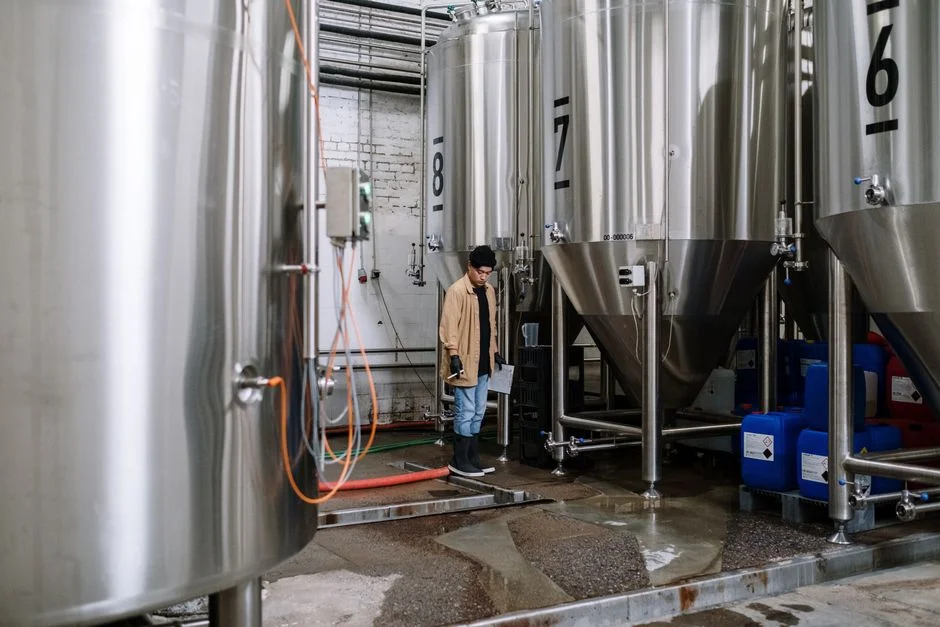
The clock starts on the closing date, not on the date DONRE or MONRE first inspects the plant. From day -90 to day -30 the deal team pulls the existing EIA Decision, the Giấy phép xả nước thải, 36 months of self-monitoring data (quan trắc định kỳ) per Circular 02/2022/TT-BTNMT, and any pending enforcement notices from DONRE, then commissions a compliance gap analysis against QCVN 40 and QCVN 52. From day 0 to day 30 the team files the ownership-change notification with DONRE under Article 49 of the 2020 LEP, maps the receiving water body to QCVN 08:2023/BTNMT surface water classification, and checks for any water-supply protection zone (Vùng bảo hộ vệ sinh nguồn nước) overlay under Decree 43/2015/ND-CP. From day 31 to day 90, if Pathway B applies, the team submits the amended EIA report, commissions a QCVN 40/52 compliance gap analysis, and updates the wastewater treatment concept (phương án xử lý nước thải) per Article 40 of the 2020 LEP. From day 91 to day 180, DONRE or MONRE technical review, public consultation, and a possible community hearing run, and the full decision chain is archived for any future acquirer lookup, including the EIA report, the BAT review, the Discharge Permit, and the self-monitoring log.
Vietnam vs Germany vs Hungary: A Side-by-Side Compliance Comparison
For the same ArcelorMittal deal team reading the Germany and Hungary guides in parallel, the cross-jurisdiction map looks like this: Vietnam runs on the 2020 LEP plus Decree 08/2022/ND-CP and Circular 02/2022/TT-BTNMT, with discharge values set by QCVN 40:2011/BTNMT and QCVN 52:2015/BTNMT; Germany runs on EU IED 2010/75/EU (recast as Regulation 2024/1785 from 2026) transposed into BImSchG, WHG, and 4. AbwV Annex 25; Hungary runs on Government Decree 273/2017 (the Hungarian IPPC transposition) plus the 1995 LIII Act on environmental protection and the 219/2004 Korm. rendelet on integrated permits. The numeric envelope is materially looser in Vietnam on single parameters, with BOD₅ 50 mg/L versus 4. AbwV Annex 25 values typically in the 15–25 mg/L band, but Vietnam has no Water Framework Directive-equivalent and no Schutzgebiet overlay, so the tightening mechanism is the QCVN 52 receiving-water standard and the site-specific DONRE permit rather than a federal ecological-status test. All three jurisdictions converge on the same ownership-only versus operational-change decision rule, and all three expose the same deal-team mistake: treating a share purchase as automatically triggering a fresh permit, which it does not.
| Dimension | Vietnam (2026) | Germany (2026) | Hungary (2026) |
|---|---|---|---|
| Binding instrument | 2020 LEP No.72/2020/QH15 + Decree 08/2022/ND-CP | IED 2010/75/EU (Reg. 2024/1785 from 2026) + BImSchG + WHG + 4. AbwV | Gov. Decree 273/2017 + 1995 LIII Act + 219/2004 Korm. |
| Numeric envelope (BOD₅) | QCVN 40 col A: 50 mg/L | 4. AbwV Annex 25: typically 15–25 mg/L | Integrated permit values, often 25–30 mg/L |
| Ownership-only pathway | Article 49 notification to DONRE, 30–45 days | §16 BImSchG Anzeige + §49 WHG Anzeige, ~30 days | Módosítási engedély light, 30–60 days |
| Operational-change pathway | Amended EIA + new Discharge Permit, 90–180 days | §16 Änderungsgenehmigung + §8 WHG modification, 90–180 days | Full modification permit, 90–180 days |
| Decision rule | Process / capacity / outfall change? | Process / capacity / outfall change? | Process / capacity / outfall change? |
The K-water / Phu My Vinh / GS Minh Hung-Sikico MOA covered in the parallel Germany guide is the most recent evidence that industrial-park wastewater assets inside Vietnamese industrial zones are now active M&A targets, and a 2026 ArcelorMittal move into a VSIP Hai Phong or Phu My 3 asset sits on the same acquisition logic as the Korean state-owned utility's move into Ba Ria-Vung Tau.
Frequently Asked Questions
Does a share purchase of a Vietnam steel or scrap-yard site automatically trigger a new EIA Decision?
No. Under Article 31 of the 2020 LEP, a change in operator alone does not require a fresh EIA Decision; the existing EIA Decision remains valid until there is a change in project scale, technology, or wastewater treatment train, at which point MONRE re-assessment is required for a Group I integrated mill or DONRE re-registration for a Group II scrap-yard site under Circular 02/2022/TT-BTNMT.
Which QCVN applies to a Vietnam integrated-mill outfall discharging into an industrial-park canal?
QCVN 40:2011/BTNMT Column A applies to industrial wastewater (BOD₅ 50 mg/L, COD 150 mg/L, TSS 100 mg/L), and QCVN 52:2015/BTNMT applies on top of it when the receiving water is used for water supply, aquaculture, or recreation, which covers most industrial-park canals in Hai Phong, Ba Ria-Vung Tau, and Dong Nai; QCVN 14:2008/BTNMT additionally caps cooling-water temperature rise at 3°C above intake and residual chlorine at 0.5 mg/L.
How long does Pathway B take for a Vietnam integrated-mill acquisition in 2026?
A realistic Pathway B timeline is 90–180 days from submission of a complete amended EIA report and Discharge Permit application, covering DONRE or MONRE technical review, public consultation under Article 33 of the 2020 LEP, and BAT-equivalent review against Decision 3733/2023/QD-BTNMT; a scrap-yard Group II re-registration under Pathway A runs 30–45 working days.
Is a Vietnam scrap-yard site inside a VSIP industrial park treated differently from an integrated mill?
Yes. Under Circular 02/2022/TT-BTNMT, integrated iron and steel mills ≥100,000 tonnes per year are Group I and require a full EIA report reviewed by MONRE, while scrap-yard collection, storage, and shredding sites are Group II and route through simplified environmental registration with the provincial DONRE; the numeric envelope is the same QCVN 40:2011 Column A in both cases.
What is the equivalent of Germany's §16 BImSchG Anzeige in Vietnam?
The functional equivalent is the ownership-change notification to DONRE under Article 49 of the 2020 LEP, filed within 30 days of closing for a Pathway A deal with no operational change, paired with a map of the receiving water body to QCVN 08:2023/BTNMT and a check for any water-supply protection zone (Vùng bảo hộ vệ sinh nguồn nước) overlay under Decree 43/2015/ND-CP.